TL;DR
Apartment Therapy studio director Vicky Wasik updated her kitchen without replacing its dark wood cabinets. She changed the countertops, added green tile and wallpaper, and refreshed the lighting and accessories; the report does not give a total project cost.
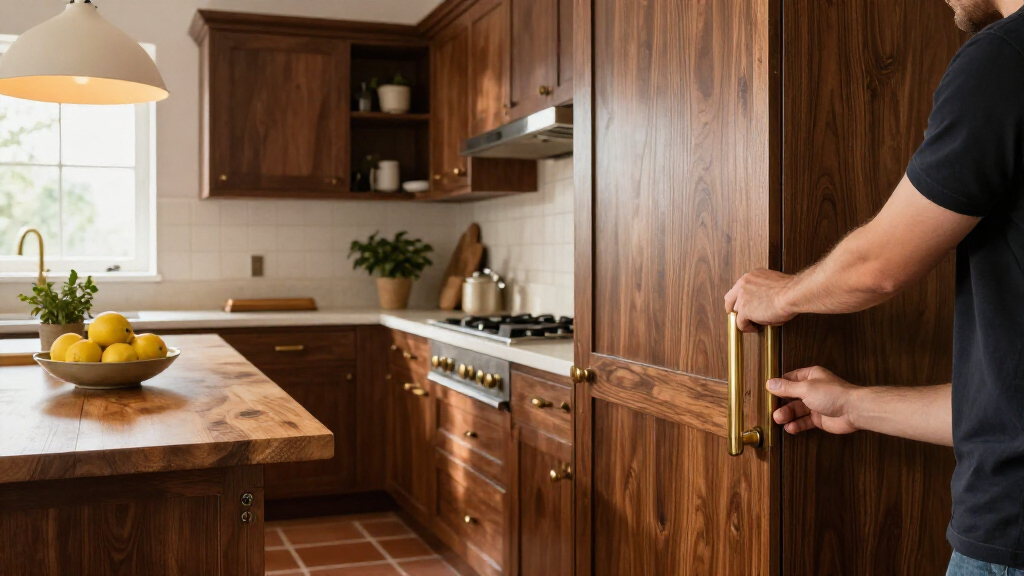
Apartment Therapy studio director Vicky Wasik has shared a kitchen makeover that kept her dark wood cabinets and changed the surfaces and details around them. The project replaced the original granite countertops with white quartz, added dark green backsplash tile and brought in green paint, floral wallpaper, brass accents and updated lighting—an alternative to replacing or painting the cabinetry.

Get business pricing on tools and workshop supplies
- Business-only prices and quantity discounts
- Tax-exempt purchasing
- Multiple users, one account, clear invoices
Wasik said she had often considered painting the cabinets, but reconsidered after seeing rich wood finishes appear in kitchen designs. She used mockups made with tile and countertop design tools, along with Photoshop, to test a different approach: balancing the existing wood with deep green and bright white. The article does not state a total renovation budget or provide a measured estimate of the project’s effect on the home’s value.
The granite countertops were the first major change. Wasik ordered simple white quartz through The Home Depot’s online design tool and paid for removal of the old counters. She described the countertops as the largest cost of the renovation and said they made the room feel brighter and more modern. She also cautioned that delivery to a third-floor walk-up brought extra carrying fees, which she advised asking about in advance.
After the counters went in, Wasik and her father installed green, zellige-inspired tiles on the two walls of the galley kitchen. She said the work took about three days. They raised the cabinets by roughly half an inch to avoid cutting a large number of tiles along the top edge, and cut tiles around outlets. A dark charcoal grout was chosen to distinguish the tiles. The project also included Benjamin Moore’s Dollar Bill Green paint, forest-themed floral wallpaper, brass pot rails and outlet covers, a vintage brass-and-glass shelf, woven wood shades and a washable jute runner.
A Cabinet-Free Route to a New Look
The makeover offers a specific example of how a kitchen’s appearance can change without replacing its cabinets. Wasik’s account shows that the countertops and backsplash became the main visual changes, while paint, wallpaper, lighting and accessories carried the color scheme across the rest of the room. For homeowners who like their cabinet material but dislike how it looks beside other finishes, that approach may help frame renovation choices.
It is not evidence that this route will be less expensive for every kitchen. Wasik said the quartz was her project’s biggest expense, and the report gives no itemized budget, labor total or comparison with a full cabinet replacement. The account is a personal before-and-after, not a cost study. It does, however, show that retaining cabinetry can be a deliberate design decision rather than a temporary compromise.
The practical details also matter: Wasik flagged potential delivery charges for walk-up buildings and described the planning needed around outlets, corners and cabinet height. Her experience suggests that a makeover involving tile and countertops still requires careful measurements and may involve hired services, even when the cabinets stay in place.
Popular right now

Ninja CREAMi 7-in-1 Ice Cream Maker, NC301

KitchenAid Classic Series 4.5-Quart Tilt-Head Stand Mixer, Onyx Black

Dyson V8 Cordless Vacuum
As an affiliate, we earn on qualifying purchases.
How the Existing Wood Shaped the Plan
Wasik’s starting point was not a plan to remove the cabinets, but a question about whether she disliked the wood itself or the way it interacted with the rest of the kitchen. She said the popularity of rich wood finishes helped her reconsider painting them. Rather than treating the cabinets as the problem, she tested other combinations until she settled on wood, white quartz and deep green.
The galley kitchen had no backsplash before the renovation, according to the report, so there was no existing tile to remove. Wasik selected a green tile with tonal variation and used a charcoal grout. She and her father encountered trial and error when planning the layout around outlets and unusual corners. Raising the cabinets slightly was their chosen way to avoid cutting more than 100 tiles to fit the top row.
Other additions extended the palette beyond the work surfaces. Wasik said she had intended to buy peel-and-stick wallpaper but discovered she had ordered traditional wallpaper instead, then learned to install it herself with help from a laser level. She also converted recessed lighting cans to glass pendant lights using a kit. The report describes that installation as harder than she expected; it does not provide a general safety assessment of the method.
“Do I hate my cabinets, or just how they interact with everything around them?”
— Vicky Wasik, Apartment Therapy studio director
Costs and Long-Term Results Remain Unreported
The article does not state the total cost, the separate prices of the quartz, tile, wallpaper and lighting, or whether the work was completed under a particular budget. It also does not compare this project’s expense with cabinet painting or replacement. The countertop cost was described only as the largest part of Wasik’s renovation.
There is no reported information about how the tile, wallpaper, paint or countertop have held up over time, whether the makeover changed the property’s resale value, or whether Wasik would recommend the same materials for other kitchens. Her positive comments are personal impressions. The source also does not give a project completion date or specify whether all installation work was done by Wasik and family members or whether any additional tradespeople were involved.
No Further Project Plans Listed
Apartment Therapy’s report presents the kitchen as a completed before-and-after project and does not announce further renovation work or a follow-up date. Readers considering a similar design can use Wasik’s sequence as a reference—countertops first, then backsplash and finishing details—but the report does not provide a full specification sheet or a complete cost breakdown.
Any decision to copy the work would depend on the kitchen’s existing layout, cabinet condition, materials and installation requirements. Wasik’s account describes her own experience, including extra delivery charges and the challenges of tiling and lighting work; it does not establish that the same choices or sequence will suit every home.
Key Questions
Did Vicky Wasik replace her kitchen cabinets?
No. She kept the dark wood cabinets and changed the surrounding finishes. During the tile installation, she and her father temporarily took the cabinets down and raised them by about half an inch, according to the report.
What were the main changes to the kitchen?
The project added white quartz countertops, dark green backsplash tile, green paint and floral wallpaper. Wasik also added brass hardware and accessories, a vintage shelf, woven shades, a jute runner and glass pendant lights.
How long did the backsplash take to install?
Wasik said she and her father spent about three days installing tile on the two walls of the galley kitchen. The source does not give a total timeline for the entire renovation.
How much did the renovation cost?
The article does not provide a total project cost or itemized prices. Wasik said the quartz countertops were the biggest expense and noted that her third-floor walk-up incurred extra carrying fees.
Why did she choose not to paint the cabinets?
Wasik said she reconsidered painting after seeing rich wood finishes in kitchen designs. She decided to test whether changing the surrounding colors and materials could make the existing cabinets work better in the room.
Source: apartmenttherapy.com