TL;DR

Get business pricing on tools and workshop supplies
- Business-only prices and quantity discounts
- Tax-exempt purchasing
- Multiple users, one account, clear invoices
A Hunker report outlines a DIY compost enclosure built from roughly 30 to 35 concrete blocks, stacked without mortar. The open front allows access for turning and checking compost, while gaps or inward-facing block cavities can help provide airflow. Costs, local rules and the bin’s long-term performance depend on the site and materials.
Hunker has outlined a DIY compost-bin design made from about 30 to 35 concrete blocks, stacked without mortar to form a durable enclosure with an open front. The approach offers gardeners a way to contain a compost pile using readily available masonry blocks, while leaving access to add material, turn the pile and check its condition.
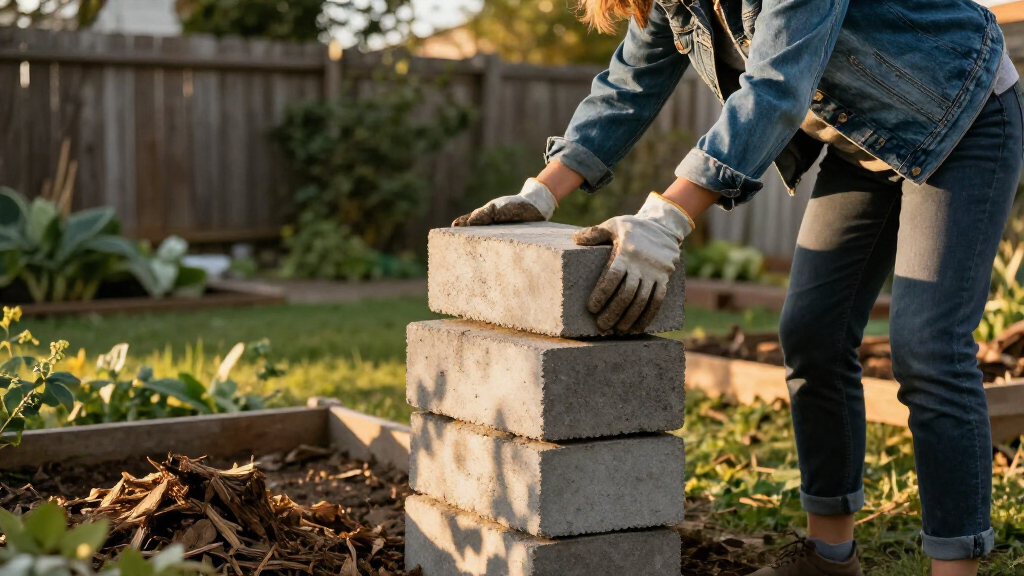
The described build uses blocks to create a back wall and two side walls, with the front left open. Hunker says to begin with a row of four to five blocks for the back and another four to five for each side, adjusting the footprint to suit the intended pile. Additional rows are stacked to raise the walls; the report suggests about four rows at the back, with the sides able to taper toward the front.
The blocks can be arranged with their hollow sides parallel to the ground, or with openings facing inward. Hunker also describes leaving spaces between blocks as another way to allow airflow. The blocks should be staggered rather than stacked in precisely aligned vertical lines, a layout the report recommends for added stability. No mortar is required, and the open front is intended to make it easier to reach the compost.
For sourcing, the report suggests checking local online listings, construction sites, junk haulers and Habitat for Humanity ReStores for used or surplus blocks. It gives a price example of new 8-by-8-by-16-inch blocks at less than $3 each at Home Depot when the article was written; that price is not a current quote and may vary by location and date.
A Reusable Structure for Backyard Compost
The design matters to gardeners who want a fixed place for organic scraps and yard material without building a timber frame or buying a manufactured bin. Concrete blocks can be moved and reconfigured, and the mortar-free layout avoids a permanent masonry installation. In principle, an enclosure can also be expanded by adding more blocks and another section, as the Hunker report describes.
Air access and ease of handling are practical considerations for composting. The report says gaps or block cavities can provide airflow, while an open face makes it possible to turn the pile and inspect it. Those features may help make routine maintenance easier, but the article does not provide comparative testing showing that this design composts faster or performs better than other bins. Readers should treat claims about speed and durability as design rationale, not measured results.
The project also has costs and trade-offs. A need for roughly 30 to 35 blocks can make transport and placement a substantial part of the job, even when blocks are obtained cheaply. The final enclosure’s stability depends on its layout and site, and the report does not specify a foundation, dimensions for every configuration or a tested load limit. A level location and careful stacking are sensible considerations, especially where children, pets or frequent activity could disturb the walls.
Popular right now

Shark AI Ultra Robot Vacuum with Self-Empty Base

LG 85-inch QNED75B Mini LED Smart TV Bundle with HDMI and CPS Protection Plan

De'Longhi Stilosa Compact Manual Espresso Machine with Milk Frother
As an affiliate, we earn on qualifying purchases.
How the Block Bin Is Built
Backyard composting turns suitable organic material into a soil amendment and can keep some organic waste out of landfill disposal. Home composters use many kinds of containers, including wood, plastic and repurposed materials. Hunker’s report focuses on concrete blocks as an alternative for people who want a sturdier enclosure than a simple cardboard setup and do not want to construct a frame from wood and wire.
The proposal is a practical how-to, not a report of a new product launch, scientific trial or local policy change. Its central instructions are to build three sides, keep the front accessible, stack blocks in staggered rows and preserve openings or gaps for airflow. The source suggests the project can be assembled in less than a day, but provides no independent timing data; actual work time will depend on block availability, transport, site preparation and the size of the enclosure.
““you’ll just need some concrete blocks, also known as cinder blocks””
— Hunker report
Costs and Performance Depend on Site
The source does not report testing that compares this block enclosure with commercial compost bins or other DIY designs. It gives no measured composting timeline, airflow rate, service life or evidence that the arrangement will speed decomposition in every setting. Conditions such as moisture, pile contents, turning and local weather can affect composting, but the report does not quantify those effects for this build.
Other details are also left open: the precise footprint and height are adjustable, and the article does not provide a site-preparation specification or guidance for every soil type and climate. The cited retail price is tied to the source’s publication period, which is not provided in the supplied material, so current prices and availability are unknown. Whether a particular placement is permitted may depend on local rules, property conditions and any relevant neighborhood restrictions.
Check Materials and Site Before Building
Readers considering the project can first estimate the enclosure size, then check local resale listings, salvage sources and retailers for blocks and transport costs. Before stacking, they should select a suitable location and plan the open face and gaps or inward-facing cavities so the enclosure remains accessible and allows air to pass through.
The Hunker report does not announce a follow-up test or a scheduled update. For anyone building the design, the next practical step is to monitor the pile after use and adjust its contents and maintenance as needed; the source does not establish a guaranteed performance result or fixed composting schedule.
Key Questions
How many concrete blocks does the design use?
Hunker estimates about 30 to 35 blocks for one enclosure. The total can vary with the footprint and wall height.
Does the block compost bin need mortar?
No. The report describes a dry-stacked design with no mortar. It recommends staggering blocks for stability, but does not provide a foundation specification or a tested stability rating.
Why leave the front open?
The open side provides access to add material, turn the compost and check its temperature, according to the report.
How does the design provide airflow?
The report suggests facing the hollow sides inward, setting openings in another orientation while leaving spaces between blocks, or otherwise keeping gaps that let air pass. It does not provide comparative measurements of airflow or composting speed.
Are concrete blocks free or inexpensive?
They may be available through local listings, construction sites, junk haulers or Habitat for Humanity ReStores, according to Hunker. The report also cited new blocks for less than $3 each at the time it was written, but current prices and availability are not confirmed.
Source: rss