TL;DR

Get business pricing on tools and workshop supplies
- Business-only prices and quantity discounts
- Tax-exempt purchasing
- Multiple users, one account, clear invoices
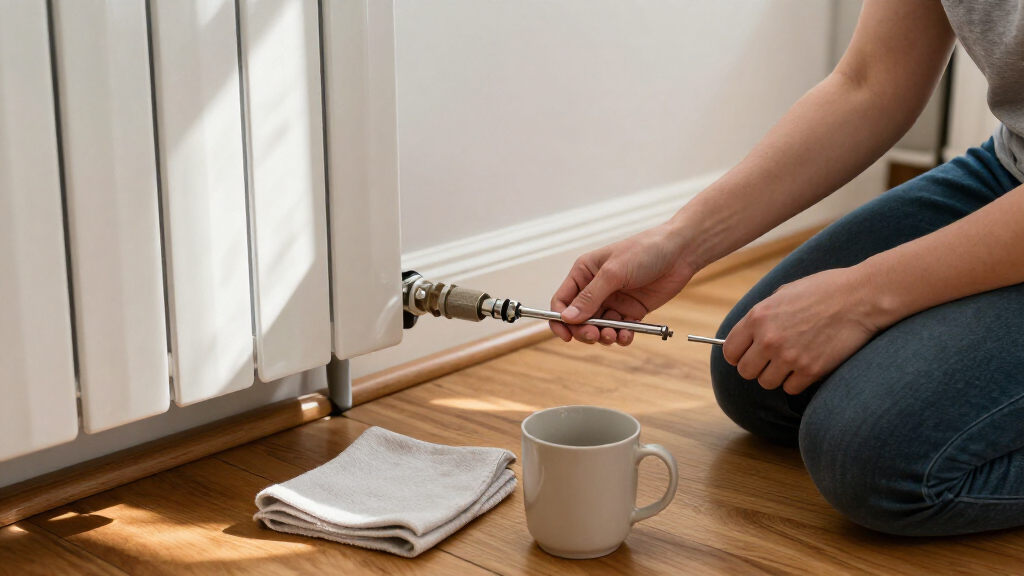
Radiator specialist Nick Duggan says to switch off the heating and wait until radiators are cold before opening a bleed valve, reducing the risk of burns and spills. After bleeding, check the boiler pressure before turning the heating back on; the source gives no fixed waiting time.
Homeowners should switch off central heating and let radiators cool before opening a bleed valve, radiator specialist Nick Duggan advises in an Ideal Home report, following the same basic precautions covered in this guide to bleeding radiators. Bleeding a hot radiator can release hot water and increase the risk of burns, while water may escape faster and make the job messier.
Duggan, director of The Radiator Centre, says the heating should be off and radiators should ideally be completely cold before bleeding. Cooling allows air and water inside the radiator to settle, which he says can help the process work better. The advice distinguishes between identifying a problem and carrying out the repair: running the heating can make it easier to spot a radiator that is warm at the bottom but cold at the top, but the heating should then be switched off before the bleed valve is opened.
After bleeding, there is no set waiting period before the heating can be restarted, according to the report. Duggan advises giving the system a few minutes, checking the boiler pressure and confirming it remains within the boiler’s recommended range. Pressure may drop after several radiators have been bled, so the check should happen before the heating is turned back on.
A cold patch at the top of a radiator can point to trapped air, but it may not reveal every problem. Darren Danks, head of training at Worcester Bosch, says small pockets of air may be present even when radiators feel warm. The report says bleeding radiators takes about 30 seconds per radiator and around 15 minutes for a typical set in a home, though removing radiator covers can add time. Those are estimates, not a guaranteed duration.
Avoid burns and check system pressure
The advice matters because a bleed valve releases water from the heating system. Opening it while hot water is circulating can expose the person doing the work to scalding; faster-flowing water can also spill onto floors or furnishings. Letting the radiator cool is a straightforward precaution before opening the valve.
Bleeding can help address uneven heating caused by trapped air, but it is not a diagnosis for every cold radiator. Checking boiler pressure afterward gives homeowners a chance to spot a pressure change before restarting the system. If the pressure is outside the range specified for the boiler, the report’s advice is to consult its guidance rather than assume the system is ready to run.
As an affiliate, we earn on qualifying purchases.
Spotting air before the heating season
The Ideal Home report frames the advice as a seasonal maintenance step, to do before relying on central heating as temperatures fall. It notes that switching the system on briefly can help identify radiators with a cold area at the top, a common sign of trapped air. That initial check is different from bleeding: the actual valve-opening step should take place with the heating off and the radiator cold.
Danks says trapped air can reduce heating performance and may contribute to corrosion over time, while also cautioning that some air pockets do not create obvious cold spots. The report therefore suggests considering more than only the radiator with a noticeable symptom. It does not establish that every household must bleed every radiator, or provide a technical assessment of each system; conditions can differ between homes.
““You don’t want to be opening the bleed valve while there’s hot water circulating, as you could end up with hot water coming out and potentially burn yourself.””
— Nick Duggan, director of The Radiator Centre, quoted by Ideal Home
As an affiliate, we earn on qualifying purchases.
Pressure limits depend on the boiler
The report does not give a single boiler-pressure figure that applies to all homes. It tells readers to check the recommended range for their own boiler, but does not explain what to do for each model if pressure is too low or too high. The supplied material also provides no fixed number of minutes for cooling a radiator; its practical instruction is to wait until it is cold, then give the system a few minutes after bleeding before checking pressure.
The article does not establish whether a particular radiator’s cold patch is caused by trapped air or another fault. Danks’s warning is that air can be present without obvious cold spots, not that every cold spot confirms trapped air. The guidance is general and does not replace a boiler manual or professional diagnosis where a system continues to perform poorly.
As an affiliate, we earn on qualifying purchases.
Check the system before restarting
For homeowners following the report’s guidance, the sequence is to use the heating, if needed, to identify unevenly warm radiators; switch it off; wait until the radiators are cold; and then bleed them. After closing the valves, wait a few minutes and check boiler pressure against the manufacturer’s recommended range before restarting the heating.
If pressure falls outside that range or radiators remain unevenly heated, the source does not prescribe a remedy. The next step is to consult the boiler instructions or seek advice from a qualified heating professional rather than repeatedly bleeding the system without establishing the cause.
automatic radiator bleeding system
As an affiliate, we earn on qualifying purchases.
As an affiliate, we earn on qualifying purchases.
Key Questions
Should the heating be on or off when bleeding radiators?
Switch it off before opening a bleed valve. The report advises waiting until the radiators are cold to reduce burn risk and limit messy, fast-flowing water.
Can I turn the heating back on straight after bleeding?
There is no fixed wait time in the report. Nick Duggan advises waiting a few minutes, checking the boiler pressure against the recommended range, and then restarting the system.
How can I tell whether a radiator may need bleeding?
A radiator that is warm at the bottom but cold at the top can indicate trapped air. Darren Danks cautions that small pockets of air may not create noticeable cold spots, so a warm surface does not prove that no air is present.
How long does bleeding radiators take?
The Ideal Home report estimates about 30 seconds per radiator and roughly 15 minutes for radiators throughout a home. Covers or other access issues can add time; these are estimates rather than a guaranteed duration.
Source: rss
Halloween Picks
halloween
As an affiliate, we earn on qualifying purchases.