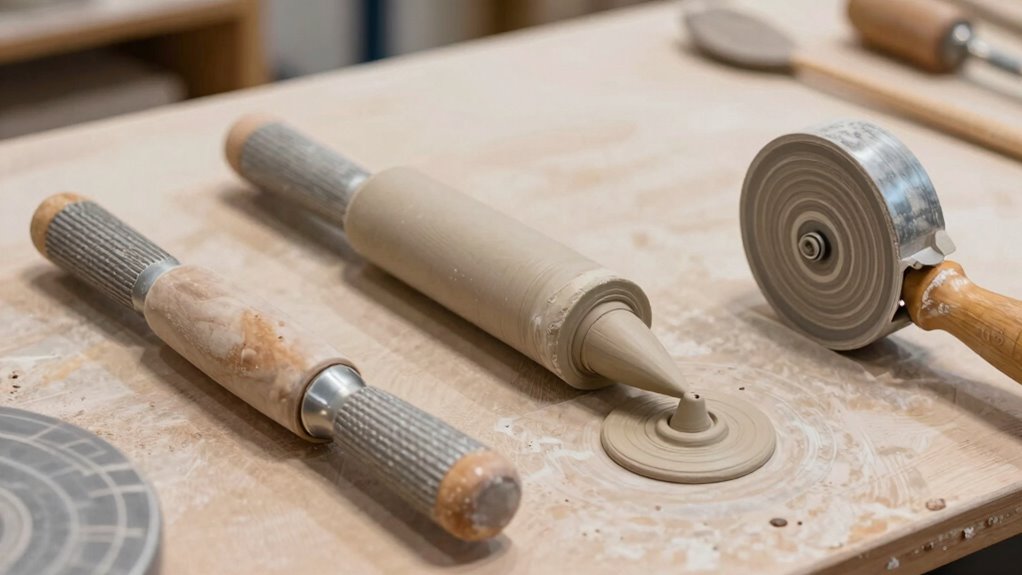
If you’re deciding which pottery upgrade to get first, consider your main focus. A slab roller is ideal if you want consistent, efficient slab construction for tiles or complex forms. An extruder is perfect if you’re excited about adding textures and repetitive decorative shapes. A banding wheel helps with surface details and finishing touches. Choosing depends on your current projects and goals, but staying curious will help you discover the best fit for your creative journey.
Key Takeaways
- Choose a slab roller first if you prioritize efficiency and consistency in slab-based projects like tiles and plates.
- Opt for an extruder initially if surface texture variety and complex forms are your main artistic focus.
- Select a banding wheel first to improve surface decoration skills and refine finishing techniques.
- Consider your current projects; for repetitive, precise slab work, a slab roller offers the most immediate benefit.
- Align your choice with your long-term creative goals—precision tools like the slab roller or texture-focused tools like the extruder.
Upgrading your pottery studio can profoundly enhance your workflow and creativity, but choosing the right tool depends on your specific needs. Whether you’re looking to streamline your handbuilding techniques or expand your glazing methods, investing in equipment like a slab roller, extruder, or banding wheel can make a significant difference. The key is understanding which upgrade aligns best with your current projects and long-term goals.
Choosing the right studio upgrade depends on your projects and creative goals.
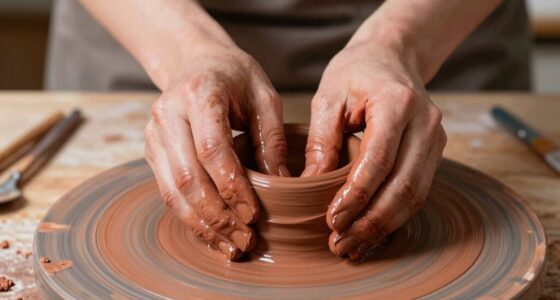
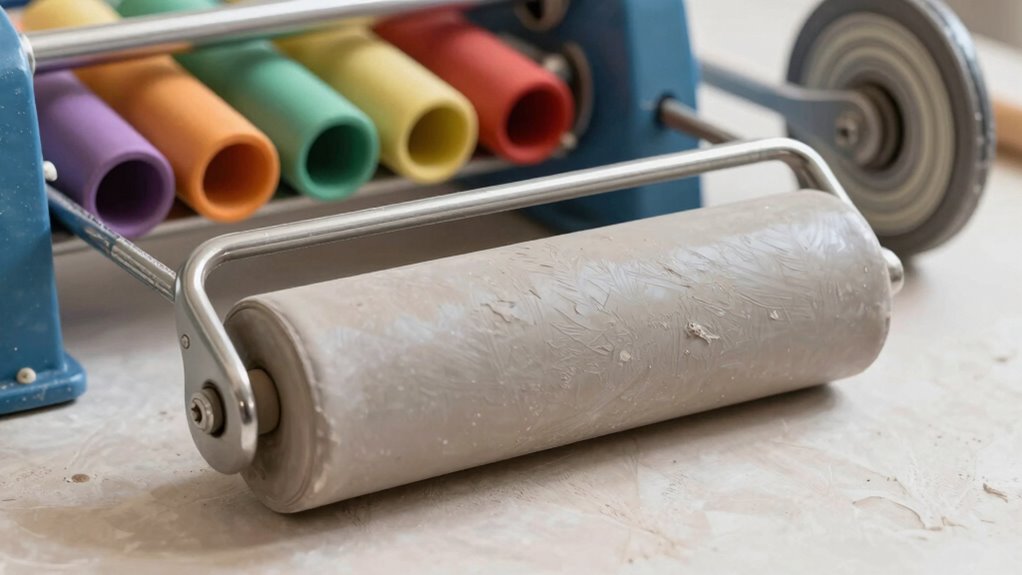
A slab roller is a game-changer if you frequently work with slabs of clay. It allows you to produce consistent, even sheets quickly, saving you time and effort that would otherwise go into manual rolling. If you often incorporate slab construction into your handbuilding techniques—creating plates, tiles, or complex forms—a slab roller can elevate your precision and efficiency. It also opens up new design possibilities by enabling you to experiment with thin, uniform layers that are ideal for intricate surface treatments or detailed glazing methods. This tool is especially valuable if you’re aiming for consistency across multiple pieces or want to focus more on the creative aspects of your work rather than the physical labor of slab preparation.
On the other hand, an extruder is perfect if you’re looking to add variety and texture to your pottery. It allows you to create uniform shapes like coils, ropes, or complex forms with ease, which can complement your handbuilding techniques beautifully. An extruder can also streamline the process of adding decorative elements, such as patterned strips or textured bands, directly into your work. When it comes to glazing methods, an extruder helps you produce consistent surface details that can be accentuated during glazing, giving your pieces a professional finish. This tool offers versatility, especially if you enjoy experimenting with surface textures or want to speed up repetitive construction tasks.
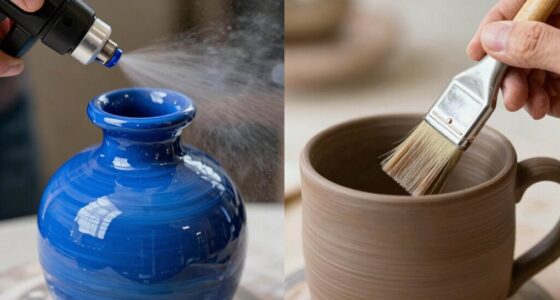
A banding wheel is often the most straightforward upgrade for those focused on refining surface details and achieving precise symmetry. It’s invaluable for decorating and finishing your pieces, whether you’re applying intricate patterns, carving, or smoothing surfaces. For glazing methods, a banding wheel provides better control when applying slip, underglaze, or glaze decoration, ensuring even coverage and sharp designs. If your work emphasizes detailed surface decoration or you want to improve your finishing quality, adding a banding wheel can elevate your craftsmanship.
Additionally, choosing the right tool can help you better understand and utilize pottery techniques that enhance your skill set and artistic expression. Ultimately, the decision hinges on where you want to enhance your studio. If you prioritize efficient slab creation, go for the slab roller. If you’re excited about textured forms or decorative surface work, an extruder might be the best fit. For detailed finish work and decoration, a banding wheel can be a valuable addition. Each tool serves a different purpose, so consider your current projects and future ambitions to choose the upgrade that will best support your creative journey.

Hand cranked Ceramic Slab Machine, Slab Roller for Clay Pottery, Manual Ceramic Clay Press Slab Machine.
1. HIGH QUALITY MANUAL CERAMIC CLAY PLATE MAKING MACHINE: This manual clay plate making machine is designed to…
As an affiliate, we earn on qualifying purchases.
As an affiliate, we earn on qualifying purchases.
Frequently Asked Questions
How Do I Choose the Right Pottery Upgrade for My Skill Level?
Choose an upgrade that matches your skill level and enhances your handbuilding techniques. If you’re a beginner, focus on tools that improve precision and ease, like a banding wheel. As you advance, consider tools like a slab roller or extruder to expand your creative options. Always prioritize proper tool maintenance to keep your equipment in top shape, ensuring consistent results and a smoother learning curve.
What Is the Average Cost of Each Pottery Upgrade?
The average costs vary: a slab roller ranges from $300 to $1,000, an extruder from $100 to $500, and a banding wheel around $50 to $150. While investing in ceramic materials, consider tool maintenance to prolong your equipment’s life. This balance of cost and upkeep helps you choose upgrades wisely, ensuring your pottery journey stays affordable and enjoyable as you develop your skills.
Are There Space Considerations for Installing These Tools?
Yes, space considerations matter when installing these tools. You need to evaluate your workspace layout carefully to guarantee enough room for safe operation and maneuvering. Additionally, consider your storage solutions to keep tools organized and accessible. A larger or more open workspace helps prevent clutter and accidents, especially if you plan to add a slab roller or extruder, which require more space than a banding wheel.
How Do These Tools Impact the Quality of My Pottery?
Did you know that proper clay preparation can improve your pottery’s strength by up to 30%? These tools considerably boost your work quality— a slab roller ensures consistent thickness for decorating techniques, while an extruder helps create uniform shapes. A banding wheel allows precise detailing. Using these tools correctly can elevate your craftsmanship, produce smoother surfaces, and enhance the overall durability of your pottery pieces.
Can I Use These Tools if I’M a Beginner?
Yes, as a beginner, you can definitely use these tools, but prioritize learning proper ceramic techniques and studio safety first. Start with simple projects to get comfortable before using a slab roller, extruder, or banding wheel. These tools can enhance your work, but they require some experience. Always follow safety guidelines and ask for guidance if needed, ensuring a safe and enjoyable pottery journey.

GEOCCI 5 Pcs Pottery Handle Making Tool Pottery Carving Tools Sculpture Scraper Pottery Clay Extruder Tool Handle Shape Tool for Teacup Mug Cup Handle Making
New style Pottery Handle Tools:This set of innovative pottery handle-making tools is specifically crafted for sculpting unique handles,…
As an affiliate, we earn on qualifying purchases.
As an affiliate, we earn on qualifying purchases.
Conclusion
Ultimately, choosing your next pottery upgrade isn’t about rushing to the fanciest tool, but about gently guiding your craft to new heights. Each addition—be it a slab roller, extruder, or banding wheel—serves as a subtle nudge toward refinement. Trust your instincts and let your creative journey lead you softly forward. Sometimes, a quiet step in the right direction can open up a world of possibilities you hadn’t yet imagined.

Yncotte Pottery Wheel, 12 Inch Sculpting Wheel Double-Sided Banding Wheel Pottery Turntable Aluminium Alloy Metal Rotating with Ball Bearings for Ceramics Clay Model Making Cake Decor Paint Spraying
Looking for a corrosion- and scratch-resistant pottery wheel? ——Our sculpting wheel, crafted from high-quality aluminum alloy, naturally forms…
As an affiliate, we earn on qualifying purchases.
As an affiliate, we earn on qualifying purchases.
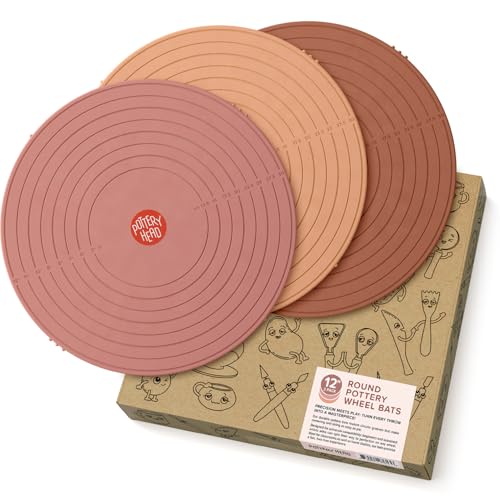
Pottery Head Pottery Bats for Pottery Wheel – Set of 3 Round 12" Pottery Wheel Bats with Guiding Lines – Clay Tools, Ceramic Tools & Pottery Wheel Accessories – New and Improved Version
Craft with Confidence –– This pottery bat serves as a bridge between skill levels, offering support and adaptability…
As an affiliate, we earn on qualifying purchases.
As an affiliate, we earn on qualifying purchases.