
A shop vacuum is versatile and great for quick cleanup of debris, liquids, and tight spots, but it’s less effective with fine dust and needs regular filter maintenance. A dust collector, on the other hand, handles continuous, high-volume dust extraction from power tools and features better air filtration, improving workspace air quality. If you want to understand how each tool meets your specific needs and why one might be better for you, keep exploring what sets them apart.
Key Takeaways
- Shop vacuums are versatile handheld or wheeled devices for quick cleanups, while dust collectors are designed for continuous, high-volume dust extraction.
- Dust collectors typically have higher CFM and better filtration, especially HEPA filters, for capturing fine dust particles.
- Shop vacuums require more maintenance due to filter clogging from heavy or fine dust, whereas dust collectors are built for long-term use with easier upkeep.
- Dust collectors significantly improve air quality by trapping airborne dust, unlike shop vacuums which are less effective on fine particles.
- Choose a shop vacuum for quick, spot cleaning; opt for a dust collector for ongoing dust management from power tools.
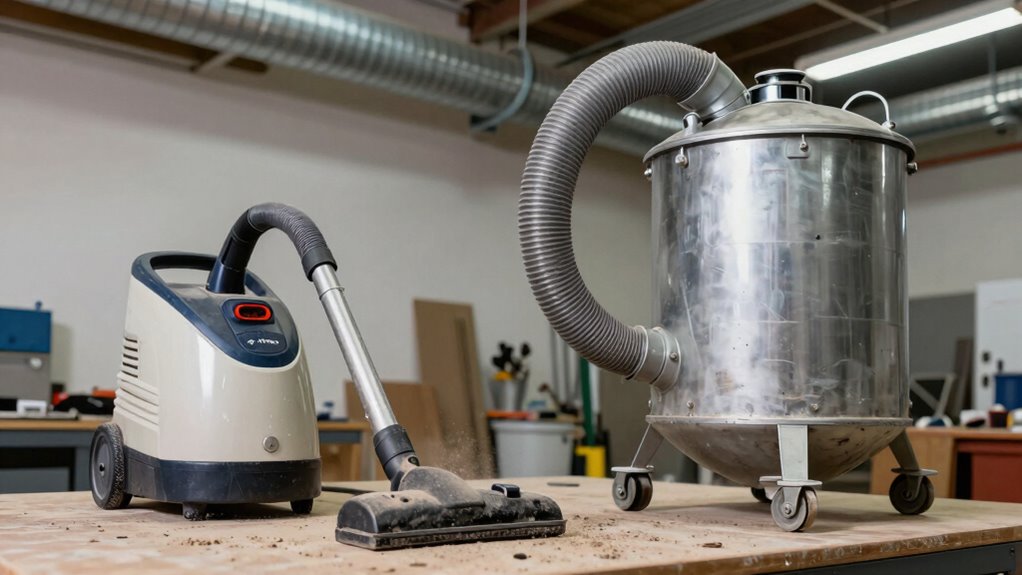
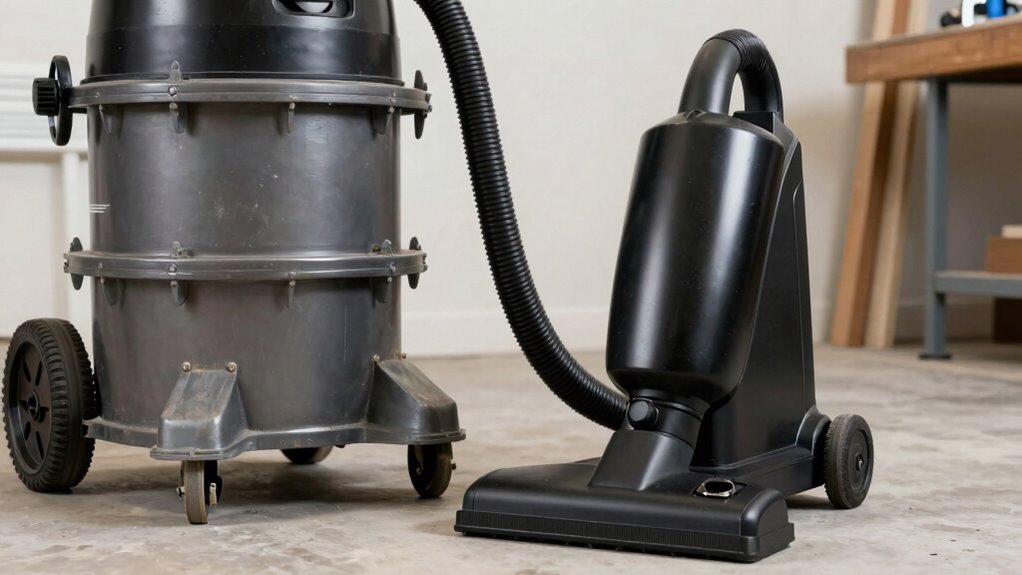
When it comes to keeping your workshop clean, understanding the key differences between a shop vacuum and a dust collector is essential. These tools serve different purposes, and knowing how they compare can help you make the right choice for your workspace. A shop vacuum is a versatile handheld or wheeled device designed to pick up debris, liquids, and small dust particles. It’s great for quick cleanups around the workbench or for reaching tight spots. However, when it comes to air filtration, shop vacuums typically have filters that catch larger debris but are less effective at filtering fine dust particles that can linger in the air. This means you might still be breathing in tiny particles even after a cleanup. Additionally, shop vacuums tend to have higher maintenance requirements because their filters can clog quickly, especially if you’re dealing with fine or heavy dust. Regularly checking and replacing these filters is necessary to keep the vacuum functioning properly, which can become time-consuming.
On the other hand, dust collectors are built for continuous, high-volume dust extraction, especially when working with power tools that generate a lot of fine dust. They operate at higher CFM (cubic feet per minute) rates, pulling in large amounts of airborne particles before they settle on your workspace surfaces. Because air filtration is a primary concern with dust collectors, they often come equipped with high-efficiency filters or even HEPA filters that trap very fine dust particles, improving air quality markedly. This reduces your exposure to harmful dust and keeps your workshop cleaner overall. Maintenance requirements for dust collectors are generally lower than those of shop vacuums because they are designed for long-term use. You’ll still need to empty collection bags or change filters periodically, but these tasks are less frequent and less labor-intensive. Many models also feature self-cleaning mechanisms or easy-to-access filter compartments, making ongoing upkeep straightforward. Proper air filtration is crucial for maintaining a healthy workspace, as it directly impacts the removal of fine dust particles from the air.

Stanley – SL18116P Wet/Dry Vacuum, 6 Gallon, 4 Horsepower Black
- Large Capacity: Over 22 liters for less frequent emptying
- Powerful Motor: 4 peak HP for strong suction
- Versatile 3-in-1 Function: Wet/dry vacuum and blower capabilities
As an affiliate, we earn on qualifying purchases.
As an affiliate, we earn on qualifying purchases.
Frequently Asked Questions
Can a Shop Vacuum Handle Industrial Dust Levels?
A shop vacuum isn’t designed to handle industrial dust levels. It lacks the necessary industrial filtration and dust containment features to safely manage large quantities of fine, hazardous dust. Using one for such tasks could cause health risks and damage the vacuum. For industrial environments, you need a dust collector that offers proper filtration and containment, ensuring safe, efficient removal of dust without compromising air quality or equipment integrity.
What’s the Typical Lifespan of a Dust Collector?
A dust collector typically lasts 10 to 20 years, but its lifespan depends on maintenance costs and how well you care for it. While it’s built to handle heavy-duty use, neglecting regular filter changes and cleaning can shorten its life. Opt for energy-efficient models to reduce operating costs. Proper upkeep guarantees your dust collector stays effective longer, saving you money and maintaining safety in your workspace.
Are There Health Risks With Improper Dust Collection?
Yes, improper dust collection can pose health hazards. When dust isn’t properly managed, airborne particles can reduce air quality and cause respiratory issues. You might inhale fine dust, which can lead to long-term health problems like asthma or lung disease. To stay safe, make sure your dust collector is functioning correctly, use appropriate filters, and wear protective gear to minimize exposure to harmful dust particles.
How Noise Levels Compare Between the Two?
You’ll notice that shop vacuums generally have higher noise levels than dust collectors, making sound comparison important when choosing equipment. Dust collectors tend to operate more quietly because they’re designed for continuous, heavy-duty use with better sound insulation. Shop vacuums, being smaller and portable, produce louder sounds, which can be disruptive over time. Consider your workspace and noise sensitivity when evaluating sound levels to guarantee comfort and safety.
Can They Be Used Together Effectively?
Absolutely, you can use a shop vacuum and dust collector together—think of it as assembling the ultimate cleaning squad! They work harmoniously, with the dust collector handling large debris and air filtration, while the vacuum tackles fine dust and detailed cleanup. Combining their power boosts dust filtration efficiency and keeps your workspace pristine, minimizing airborne particles. Just guarantee their filters and hoses are compatible for seamless operation and maximum dust control.
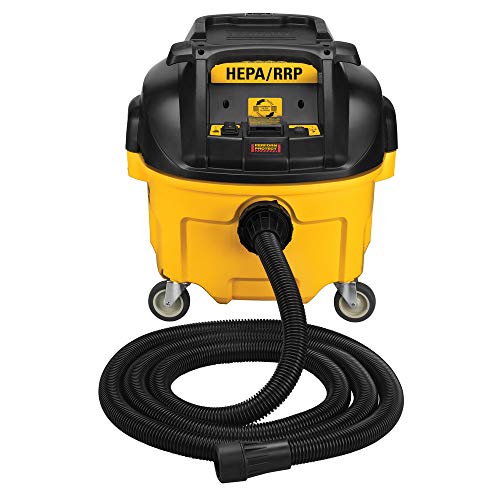
DEWALT DWV010 HEPA Dust Extractor with Automatic Filter Cleaning, 8-Gallon
- Automatic Filter Cleaning: Pulses every 30 seconds for continuous use
- Powerful Motor: 15-amp motor with 150 CFM airflow
- Tool-Activated Control: On/Off operation via power tool
As an affiliate, we earn on qualifying purchases.
As an affiliate, we earn on qualifying purchases.
Conclusion
In the end, understanding the difference between a shop vacuum and a dust collector helps you make smarter choices, guarantees cleaner workspaces, and protects your health. Recognize the versatility of a shop vacuum for cleanup, the power of a dust collector for heavy-duty dust management, and the importance of selecting the right tool for the right job. By choosing wisely, you improve safety, boost efficiency, and create a workspace that’s cleaner, healthier, and better suited to your needs.
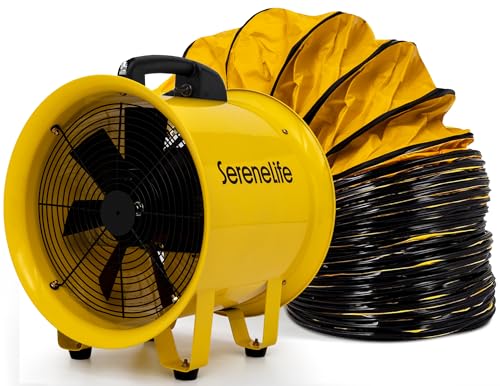
SereneLife Heavy Duty Cylinder Fan 12 inch,Blower Fan with 3200 CFM Airflow, 25ft PVC Ducting, Industrial Exhaust for Warehouses, Workshops, Crawl Spaces, & Basements, Smoke & Odor Removal
- Powerful 550W Motor: Delivers 3200 CFM airflow for smoke and odor removal
- Flexible 25ft PVC Ducting: Versatile intake and exhaust setup for various environments
- Durable Weather-Resistant Build: Steel construction with corrosion-resistant coating, IP44 rated
As an affiliate, we earn on qualifying purchases.
As an affiliate, we earn on qualifying purchases.

DEWALT 20V MAX Cordless Shop Vac, Wet Dry Vacuum Cleaner, Portable 2 Gallon Wet Dry Vac, Strong Suction Shop Vacuum with Hepa Filter, Tool Only (DCV580H)
- HEPA Filter Efficiency: Traps 99.97% at 0.3 microns
- Tank Capacity: 2-gallon for large debris
- Easy Filter Maintenance: Washable and reusable filter
As an affiliate, we earn on qualifying purchases.
As an affiliate, we earn on qualifying purchases.