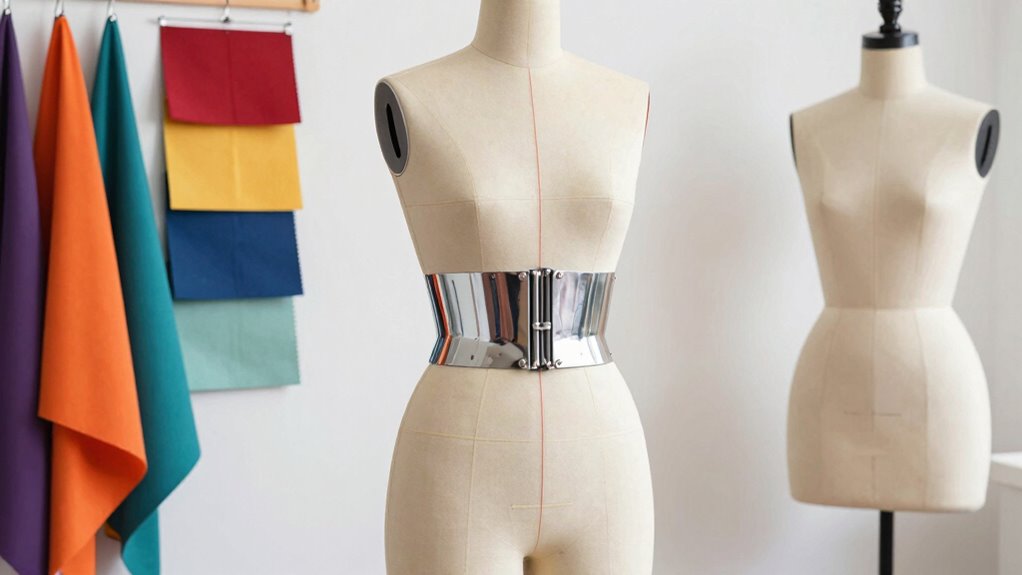

An adjustable dress form helps you visualize how garments fit and lets you easily tweak sizes and shapes, making it great for designing and fitting prototypes. It streamlines your creative process and allows you to experiment with fabric drape and details. However, it can’t replicate human movement, soft curves, or complex body contours, and it shouldn’t replace fitting on real models. To explore more about its strengths and limitations, stay with us.

Get business pricing on tools and workshop supplies
- Business-only prices and quantity discounts
- Tax-exempt purchasing
- Multiple users, one account, clear invoices
Key Takeaways
- Helps visualize garment fit and design on a body-like form, but cannot replicate complex body contours or movement.
- Allows easy size adjustments for prototypes and experimenting with different designs.
- Cannot replace real model fitting for final adjustments or account for body posture and tissue differences.
- Useful for practicing tailoring skills and fabric drape visualization, but limited in achieving high-accuracy final fit.
- Recognizing its limitations ensures realistic expectations and the need to use alongside real models for best results.
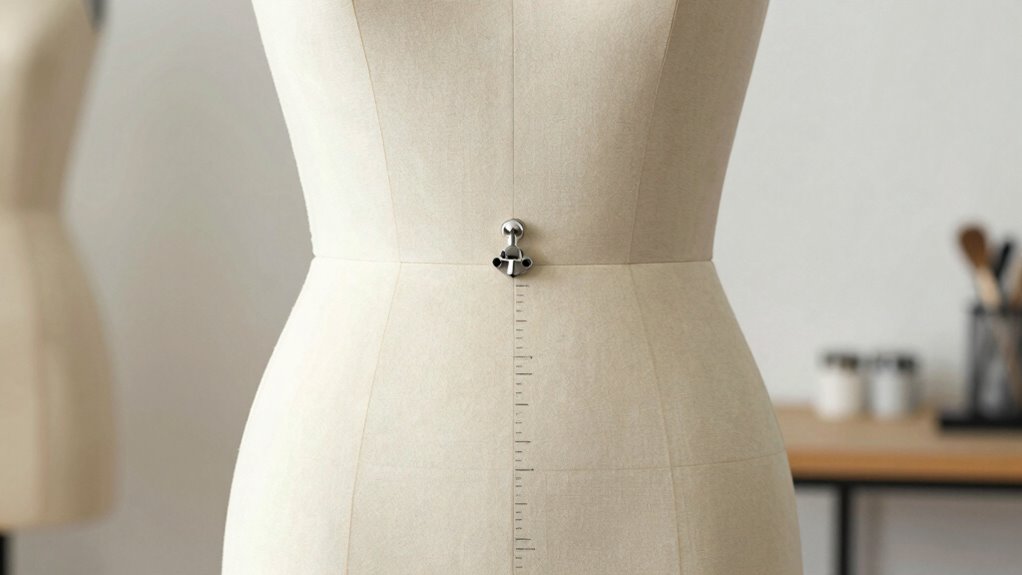
Have you ever wondered whether an adjustable dress form is worth the investment? If you’re serious about fashion design or refining your tailoring techniques, a dress form can be a valuable tool. It allows you to visualize how garments will look and fit on a real body, helping you make adjustments more efficiently. With an adjustable dress form, you can easily modify its dimensions to match different sizes or body shapes, which is especially helpful when working on custom pieces or fitting prototypes. This flexibility makes it a practical choice for those who want to experiment with different design ideas without needing multiple fixed forms.
In terms of fashion design, an adjustable dress form streamlines the creative process. Instead of constantly creating new patterns or trying to visualize fit on a mannequin, you can adapt the form to see how your design will drape and fit. This real-time feedback can inspire new ideas and help you fine-tune details like seam placement, darts, and fullness. When it comes to tailoring techniques, an adjustable form is also beneficial. It allows you to practice and perfect specific skills—such as fitting a bodice or adjusting a sleeve—by mimicking different body sizes. This adaptability ensures you don’t have to purchase separate forms for each size you work with, saving both space and money. Additionally, understanding the limitations of dress forms can help you better integrate their use into your overall design process.
However, there are limitations to what an adjustable dress form can do. It doesn’t replicate the complexities of human movement or body contours perfectly. For example, it lacks the soft curves and tissue that influence how fabrics drape naturally on a person. This means you might still need to test your designs on real models or mannequins for final fitting and fine-tuning. Additionally, adjustable dress forms don’t account for the differences in body posture or weight distribution, which can impact how a garment fits in real life. So, while they’re great for initial design and pattern adjustments, they shouldn’t replace fitting on actual bodies when accuracy is critical. Moreover, body diversity is an important factor to consider, as no dress form can perfectly replicate every unique body shape. Recognizing these limitations can help you set realistic expectations for your project outcomes.
Furthermore, understanding the fitting process and how garments interact with different body types is key to creating well-fitting designs, even when using an adjustable dress form.
adjustable dress form for sewing
As an affiliate, we earn on qualifying purchases.
As an affiliate, we earn on qualifying purchases.
Frequently Asked Questions
Can an Adjustable Dress Form Help With Intricate Fabric Patterns?
An adjustable dress form can assist with fitting and visualizing fabric patterns, but it may not fully capture intricate designs. You can pin and adjust fabric on the form to see how patterns align and fit, making alterations easier. However, for highly detailed or complex patterns, a dress form might not replicate every nuance perfectly. It’s a helpful tool, but you’ll still need careful attention to detail when working with intricate fabric patterns.
How Durable Are Adjustable Dress Forms Over Time?
Did you know that adjustable dress forms can last between 3 to 10 years? Their durability depends on material longevity and how well you maintain them. Over time, wear and tear can affect their stability and adjustments. If you handle them carefully and store them properly, you can extend their lifespan. However, frequent adjustments or rough use may lead to quicker deterioration, so choose a quality model for better long-term durability.
Can Adjustable Dress Forms Be Customized for Plus-Size Figures?
Yes, adjustable dress forms can be customized for plus-size figures. They allow for body shape adaptation, so you can modify the measurements to match a plus-size body. With features like adjustable waist, bust, and hips, you can achieve a more accurate fit for larger sizes. This makes them a practical tool for designing, fitting, or tailoring garments for plus-size clients or personal use.
Are Adjustable Dress Forms Suitable for Professional Tailoring?
Yes, adjustable dress forms are suitable for professional tailoring because they offer material versatility, allowing you to work with various fabrics easily. They’re also cost-effective, making them a practical choice for ongoing projects and adjustments. You can modify the form to match different sizes and shapes, helping you achieve precise fittings. However, verify the form’s durability matches your material choices to maximize its usefulness in your tailoring workflow.
Do Adjustable Dress Forms Improve Fitting Accuracy for All Body Types?
Adjustable dress forms can improve fitting accuracy for many body types, but they aren’t perfect for all. If your fabric has stretch, you might need to adjust the form more carefully to match body contours. For pattern matching, an adjustable form helps you visualize how pieces will fit together, but it’s still essential to fine-tune the fit on actual body measurements. Overall, it’s a useful tool, but not a substitute for custom fitting.
professional dress form with adjustable size
As an affiliate, we earn on qualifying purchases.
As an affiliate, we earn on qualifying purchases.
Conclusion
Think of an adjustable dress form as your trusty compass on a creative journey. It guides your designs and fits, but it can’t navigate every twist and turn. While it’s great for shaping your ideas, it won’t replace your eye for style or the feel of real fabric. Use it as a helpful guide, but trust your instincts to bring your vision to life. After all, even the best compass needs a skilled traveler to reach the destination.
As an affiliate, we earn on qualifying purchases.
As an affiliate, we earn on qualifying purchases.
Evergreen bestsellers Picks
bestsellers
As an affiliate, we earn on qualifying purchases.