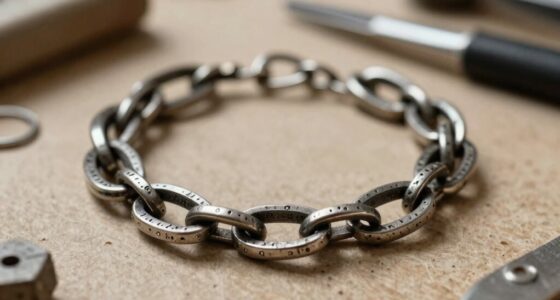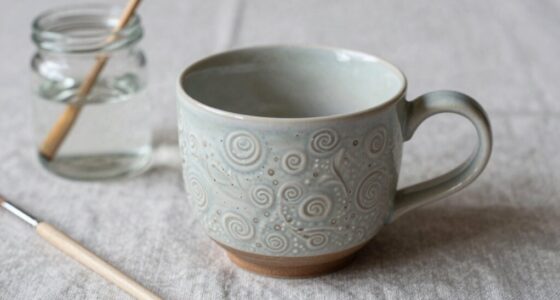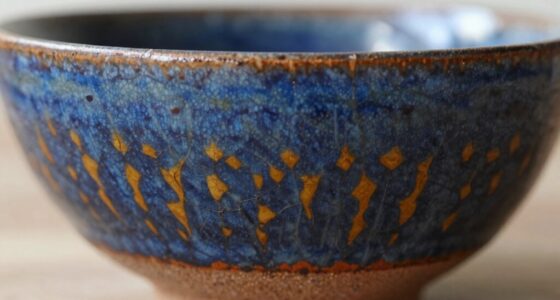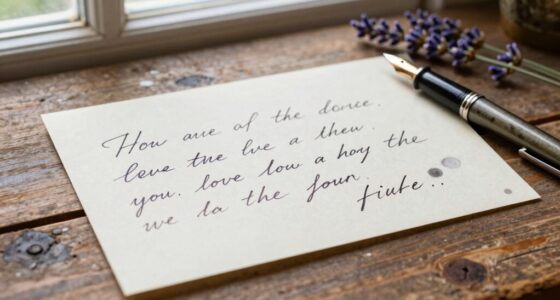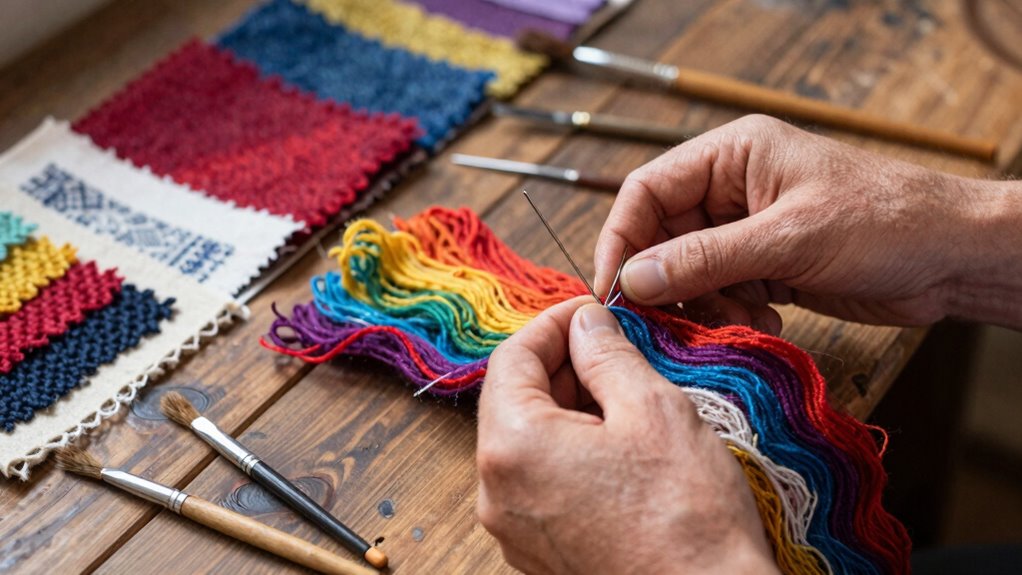

To build a signature look across different craft types, focus on intentionally combining textures that reflect your style. Experiment with contrasting finishes like matte and glossy or soft and hard surfaces to create visual and tactile interest. Use consistent textures, such as natural fibers for rustic pieces or smooth surfaces for modern designs, to reinforce your identity. Paying close attention to how textures interact helps develop cohesion and depth. Keep exploring these principles to enhance your unique craft style.
Key Takeaways
- Develop a consistent style by intentionally selecting and applying specific textures across various craft projects.
- Experiment with contrasting textures to create visual and tactile interest that becomes your signature.
- Use a harmonious color and texture palette to establish cohesion and recognition in your work.
- Balance natural, rustic textures with sleek, modern finishes to diversify your signature look.
- Pay attention to texture interactions, ensuring they enhance depth, dimension, and overall style across different crafts.
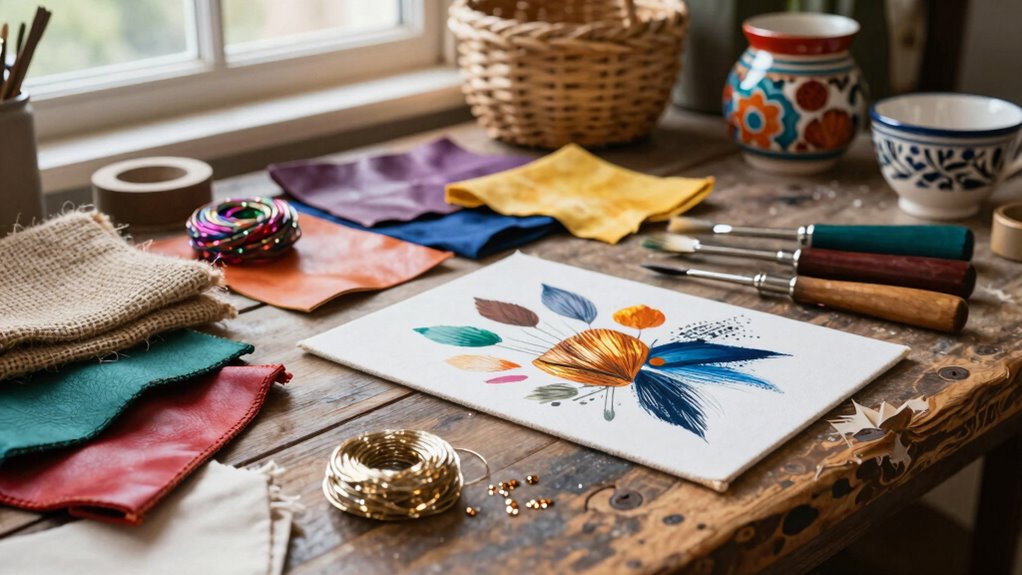
Texture combinations are equally essential in establishing your signature look. Experiment with contrasting textures—smooth with rough, glossy with matte, soft with hard—to create visual and tactile interest. Think of how a glossy bead can stand out against a matte fabric or how a textured paper can add depth to a collage. Developing a signature feel involves understanding how different textures interact and using that knowledge to reinforce your style. Incorporate textures intentionally, not randomly, to maintain harmony across your projects. For example, if you favor a rustic, earthy aesthetic, use natural fibers, rougher surfaces, and matte finishes consistently. Conversely, if your style leans toward modern minimalism, opt for sleek, clean textures and smooth surfaces in all your crafts. Additionally, understanding the significance of visual signatures can help you craft a more cohesive body of work. Practicing deliberate design consistency helps in establishing a recognizable artistic identity over time. Recognizing the importance of visual harmony can guide your choices in combining colors and textures for a unified look. Moreover, embracing stylistic cohesion ensures that your work feels intentional and unified across various projects. Paying attention to texture interactions can further enhance your ability to create a balanced and dynamic signature style.

Apple Barrel, Vibrant Spectrum Collection Acrylic Craft Paint, Promoabiii, each, 16 assorted matte colors, 2 Fl Oz, 16 Count
- Set Includes: 16 assorted matte colors, 2 oz bottles
- Vibrant Matte Finish: Bright colors dry to a matte finish
- Versatile Application: Suitable for wood, Styrofoam, plaster, terra cotta
As an affiliate, we earn on qualifying purchases.
As an affiliate, we earn on qualifying purchases.
Frequently Asked Questions
How Do I Adapt My Signature Style for Emerging Craft Trends?
You adapt your signature style for emerging craft trends by staying current with industry updates and integrating new techniques subtly into your work. Focus on aligning your personal branding with these trends, so your style remains authentic yet fresh. Experiment regularly, blending your unique touch with trending elements, and seek feedback. This approach keeps your craft relevant, distinctive, and evolving, helping you stand out while maintaining your core artistic identity.
What Tools Are Essential for Developing a Consistent Craft Aesthetic?
You need the right tools to keep your craft aesthetic on point. Start with a versatile color palette to guarantee consistency, and choose quality materials that reflect your signature style. A reliable set of brushes, cutting tools, and a color wheel will help you stay on track. Think of these tools as your trusty sidekicks—they make creating your unique look easier and more cohesive, helping your craft stand out.
How Can I Incorporate Cultural Influences Into My Signature Look?
You can incorporate cultural influences into your signature look by integrating cultural symbolism and traditional patterns into your designs. Research the origins and meanings behind these elements to guarantee authenticity and respect. Use traditional patterns as inspiration for textiles, motifs, or color schemes, blending them with your unique style. This approach adds depth and richness to your craft, making your signature look both personal and culturally meaningful.
What Common Mistakes Should I Avoid When Building a Signature Style?
You might think mixing too many styles creates a unique signature, but it often hampers brand consistency. Avoid overcomplicating your look or relying solely on trends; instead, focus on technique development to refine a cohesive style. Be patient, test different elements, and stay true to your core aesthetic. This prevents your signature from becoming inconsistent or forgettable, helping you build a recognizable, authentic presence across your craft.
How Do I Evolve My Signature Look Without Losing Its Core Identity?
To evolve your signature look while maintaining your core identity, focus on refining your personal branding and experimenting with your color palette. You can add subtle updates, like new accessories or textures, that reflect your growth without deviating from your established style. Keep your signature elements consistent, but allow room for fresh ideas that showcase your development. This balance ensures your look remains authentic yet evolving.

Pllieay Natural Pure Linen Fabric 39×55 Inch, Solid Colour for Dressmaking
- Material: 100% Organic Pure Linen
- Size: 39×55 Inches
- Weight: 220 gsm
As an affiliate, we earn on qualifying purchases.
As an affiliate, we earn on qualifying purchases.
Conclusion
By weaving your unique style through every craft, you become a vibrant thread in a rich tapestry. Your signature look isn’t just a stamp—it’s a symphony of colors, textures, and shapes that dance together in harmony. Keep experimenting, blending, and refining until your creations whisper your name with every detail. Like a lighthouse guiding ships home, let your distinctive touch shine brightly across all your craft types, illuminating your creative journey with unmistakable brilliance.

Paltren 21-in-1 3D Printer Smoothing Tool Kit, 80W Soldering Iron
- Complete 21-in-1 Kit: Includes tips, soldering iron, and accessories
- High-Power 80W Iron: Rapid heating with precise temperature control
- Versatile Smoothing Tips: 9 interchangeable brass tips for finishing
As an affiliate, we earn on qualifying purchases.
As an affiliate, we earn on qualifying purchases.

16 Pieces Stencils for Painting, Abstract Texture Mixed Media Art Supplies Crafts Reusable Layering Stencil Brick Pattern Templates for Drawing Card Making Canvas Furniture Paper (Texture)
- Package Includes: 16 reusable texture stencils
- Stencil Size: 5.5 x 8.26 inches each
- Variety of Patterns: Flowers, brick, dots, and more
As an affiliate, we earn on qualifying purchases.
As an affiliate, we earn on qualifying purchases.