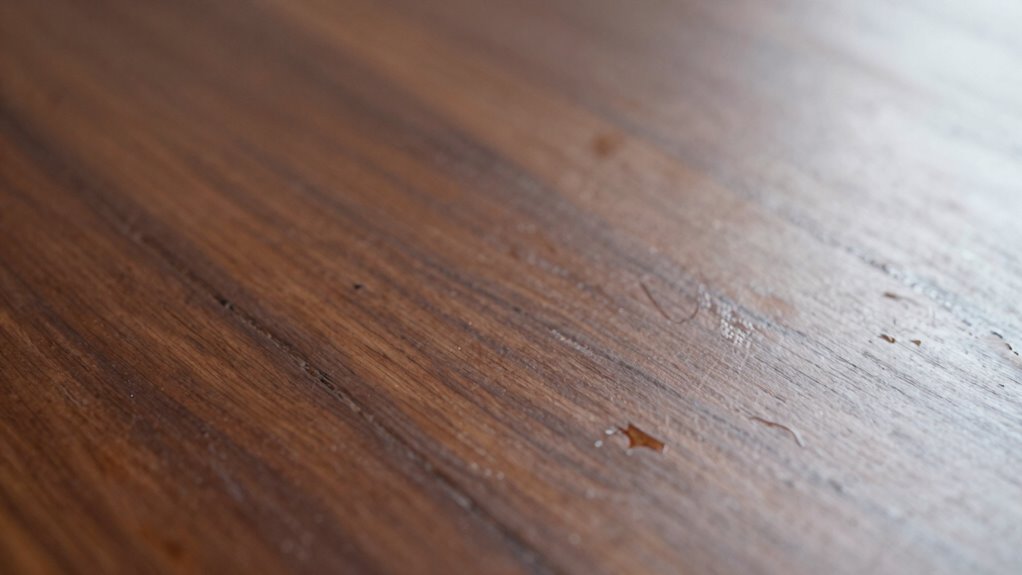

A cloudy or hazy wood finish often signals application or curing issues. Environmental factors like high humidity, temperature fluctuations, or poor ventilation can trap moisture beneath the surface. Applying too much finish, using incompatible products, or rushing the process also contribute. Dust or dirt settling on wet finish adds to the cloudiness. Understanding these causes can help you prevent future problems. Keep exploring to discover effective ways to fix and avoid cloudy finishes in the future.
Key Takeaways
- Cloudiness often results from trapped moisture or impurities during the finishing or curing process.
- High humidity, temperature fluctuations, or poor ventilation can delay drying and cause hazy finishes.
- Over-application or applying incompatible finishes can lead to uneven, cloudy surfaces.
- Dust or airborne particles settling on wet finish can create a hazy appearance.
- Proper ventilation and environmental control are essential to prevent and fix cloudy or hazy wood finishes.
Have you ever noticed your wood finish looking cloudy or hazy? It can be frustrating, especially after putting in so much effort to protect and enhance your furniture or floors. Often, this haziness is linked to application issues or environmental factors that affect how the finish cures and settles. Recognizing the root cause helps you decide whether to fix the problem or prevent it from happening again. Additionally, inadequate ventilation considerations during application can exacerbate these issues, trapping moisture and impurities that lead to cloudiness.
wood finish haze remover
As an affiliate, we earn on qualifying purchases.
As an affiliate, we earn on qualifying purchases.
Frequently Asked Questions
Can Humidity Cause a Cloudy Wood Finish?
Yes, humidity effects can cause a cloudy wood finish. When humidity levels are high, moisture penetrates the wood’s porosity, leading to uneven drying of the finish. This trapped moisture creates a cloudy or milky appearance. You can reduce this issue by controlling indoor humidity, ensuring proper ventilation, and allowing finishes to cure fully. Managing humidity helps maintain a clear, smooth wood finish and prevents cloudiness caused by moisture absorption.
How Long Does a Cloudy Finish Typically Last?
A cloudy finish usually lingers for days to weeks, depending on the cause. Think of it as a fog settling over your wood grain, blurring the beauty beneath. This haze often signals compromised finish adhesion or moisture trapped in the layers. If you catch it early, you can often correct it quickly, but persistent cloudiness might mean you need to sand and reapply, giving your wood its clarity back.
Is It Safe to Sand Over a Cloudy Finish?
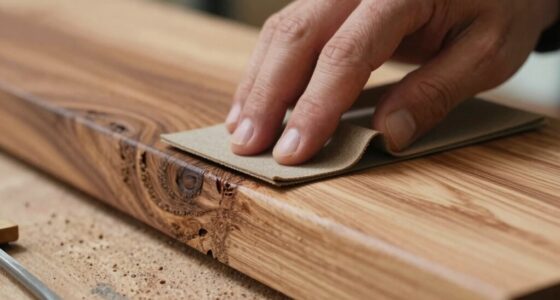
Sanding over a cloudy finish is safe if you take proper sanding safety precautions. You should carefully remove the finish to guarantee a smooth surface before applying a new coat. Use fine-grit sandpaper and work in a well-ventilated area. Proper finish removal helps prevent damage to the wood and ensures a better final look. Just wear a mask and goggles to protect yourself from dust during the sanding process.
Will Applying More Coats Fix a Cloudy Appearance?
Applying more coats might seem like a quick fix, but it’s like trying to patch a leaky boat with duct tape. Instead, focus on proper application techniques and guarantee finish compatibility. If your finish is cloudy, adding more coats could trap air or dust, worsening the problem. For a smooth, clear result, carefully sand between coats and use compatible products, letting each layer fully cure before applying the next.
Does the Type of Wood Affect Cloudiness?
Yes, the type of wood affects cloudiness because different woods have varied grain patterns and natural colors that influence how finishes appear. For instance, open-grain woods like oak may show more cloudiness if the finish isn’t applied evenly, while dense woods like maple tend to look clearer. Your wood grain and color can cause the finish to look cloudy or uneven, so selecting the right finish for your wood type guarantees a smooth, transparent look.
wood finish sanding sponge
As an affiliate, we earn on qualifying purchases.
As an affiliate, we earn on qualifying purchases.
Conclusion
Now that you know why your wood finish turns cloudy—like a fog rolling over a clear lake—you can take action to restore its clarity. Think of your wood as a canvas, and with the right care, you can bring back its original shine and beauty. Don’t let that haze linger as a stubborn shadow; instead, embrace the chance to breathe new life into your furniture. Clear, vibrant wood is just a few steps away.
wood finishing spray
As an affiliate, we earn on qualifying purchases.
As an affiliate, we earn on qualifying purchases.
wood finish repair kit
As an affiliate, we earn on qualifying purchases.
As an affiliate, we earn on qualifying purchases.