Choosing the right sewing machine for thick fabrics and layers requires looking beyond stitch count to focus on motor power, frame stability, and feed dog strength. The Singer 4452 Heavy Duty stands out as the best overall pick for its robust metal frame and high-speed motor that handles denim and canvas without hesitation. For those prioritizing automated features alongside power, the Singer Quantum Stylist 9960 offers computerized precision with sufficient torque for multi-layer projects, though it costs more. The main tradeoff in this category is between raw mechanical simplicity, which offers durability and repairability, and computerized convenience, which adds stitch options but potential electronic failure points. Continue reading to see how these machines compare on penetration power, throat space, and long-term reliability.

Get business pricing on tools and workshop supplies
- Business-only prices and quantity discounts
- Tax-exempt purchasing
- Multiple users, one account, clear invoices
Complete the kit



Key Takeaways
- Metal internal frames are non-negotiable for thick layers; plastic internal parts flex and cause skipped stitches when sewing through denim seams.
- High shank adapters are more valuable than extra presser feet because they allow the use of universal walking feet for even layer feeding.
- Computerized machines often have lower maximum needle penetration force than mechanical heavy-duty models, making them riskier for leather or upholstery.
- A wider throat space (7+ inches) becomes critical when sewing bulky quilts, as the fabric must fit under the arm without folding.
- Servo motors offer better speed control for thick materials than standard clutch motors, reducing needle breakage when starting heavy seams.
| Brother XR9550 Computerized Sewing and Quilting Machine 165 Stitches |  | Best for Quilting Versatility | Built-in stitches: 165 | Buttonholes: 8 auto-size styles | Display: LCD | VIEW ON AMAZON | See Our Full Breakdown |
| Singer 4452 High Speed Heavy Duty Sewing Machine with Accessories |  | Best for Fast, Repetitive Heavy-Fabric Sewing | Built-in stitches: 32 | Stitch applications: 110 | Maximum speed: 1,100 stitches per minute | VIEW ON AMAZON | See Our Full Breakdown |
| SewLaVie 1130 Computerized Sewing and Quilting Machine with 300 Stitches |  | Best for Specified Denim Layer Capacity | Built-in stitches: 300 | Stitch categories: 143 utility patterns, 57 twin-needle setups, 100 alphanumeric fonts | Buttonhole: 1-step auto-size | VIEW ON AMAZON | See Our Full Breakdown |
| Brother HC1850 Sewing and Quilting Machine, 185 Built-in Stitches, LCD Display, 8 Included Feet |  | Best Lightweight Quilting Companion | Built-in stitches: 130 | Alphanumeric stitches: 55 | Buttonholes: 8 auto-size styles | VIEW ON AMAZON | See Our Full Breakdown |
| Brother ST150HDH Strong and Tough Sewing Machine 50 Stitches |  | Best Overall for Thick Layers | Built-in stitches: 50 | Buttonholes: 5 one-step auto-size styles | Feed dogs: Extended 7-point | VIEW ON AMAZON | See Our Full Breakdown |
| Singer Heavy Duty 4423 Sewing Machine with Accessories |  | Best for Fast, Versatile Sewing | Built-in stitches: 23 | Stitch applications: 97 | Maximum sewing speed: 1,100 stitches per minute | VIEW ON AMAZON | See Our Full Breakdown |
| SINGER Heavy Duty 4411 Sewing Machine with Accessories |  | Best for Straightforward Heavy-Duty Sewing | Built-in stitches: 11 | Stitch applications: 69 | Maximum sewing speed: 1,100 stitches per minute | VIEW ON AMAZON | See Our Full Breakdown |
| SINGER HD500 Classic Heavy-Duty Sewing Machine with Accessory Kit |  | Best for Adjustable Fabric Handling | Machine type: Mechanical sewing machine | Frame: Full metal | Motor power: 50% more power than standard models | VIEW ON AMAZON | See Our Full Breakdown |
| Brother CS7000X Computerized Sewing and Quilting Machine |  | Best for Layered Quilting Projects | Built-in stitches: 70 | Buttonholes: 7 one-step auto-size styles | Display: LCD | VIEW ON AMAZON | See Our Full Breakdown |
| Brother Sewing Machine ST371HD, 37 Built-in Stitches, 6 Included Feet | 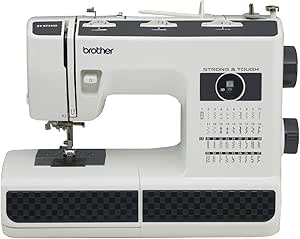 | Best for Beginners Sewing Repairs | Built-in stitches: 37 | Included feet: 6 | Maximum sewing speed: 800 stitches per minute | VIEW ON AMAZON | See Our Full Breakdown |
| Singer Heavy Duty 6800C Computerized Sewing Machine with Accessory Kit |  | Best Heavy-Duty Computerized Pick | Stitch applications: 586 | Motor power: Described as 60% stronger than standard | Maximum stitch speed: Up to 1,100 stitches per minute | VIEW ON AMAZON | See Our Full Breakdown |
| Singer Quantum Stylist 9960 Computerized Sewing & Quilting Machine with Extension Table and Accessories |  | Best for Quilting and Project Variety | Built-in stitches: 600 | Stitch applications: 1,172 | Included presser feet: 13 | VIEW ON AMAZON | See Our Full Breakdown |
| SINGER 4432 Heavy Duty Sewing Machine with Accessory Kit | 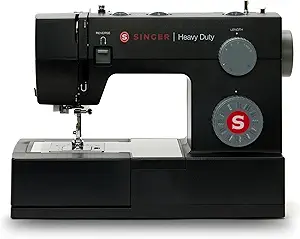 | Best Value for Straightforward Heavy-Fabric Sewing | Motor power: Described as 60% stronger than standard | Maximum speed: 1,100 stitches per minute | Built-in stitches: 32 | VIEW ON AMAZON | See Our Full Breakdown |
| sewing machine for thick fabrics and layer | Built-in stitches | Stitch applications |
|---|---|---|
| Brother XR9550 Computerized Se | 165 | — |
| Singer 4452 High Speed Heavy D | 32 | 110 |
| SewLaVie 1130 Computerized Sew | 300 | — |
| Brother HC1850 Sewing and Quil | 130 | — |
| Brother ST150HDH Strong and To | 50 | — |
| Singer Heavy Duty 4423 Sewing | 23 | 97 |
| SINGER Heavy Duty 4411 Sewing | 11 | 69 |
| SINGER HD500 Classic Heavy-Dut | — | 110 |
| Brother CS7000X Computerized S | 70 | — |
| Brother Sewing Machine ST371HD | 37 | — |
| Singer Heavy Duty 6800C Comput | — | 586 |
| Singer Quantum Stylist 9960 Co | 600 | 1,172 |
| SINGER 4432 Heavy Duty Sewing | 32 | 110 |
More Details on Our Top Picks
Brother XR9550 Computerized Sewing and Quilting Machine 165 Stitches
The Brother XR9550 earns its place for sewists who need room to manage quilt layers and value a broad stitch selection more than a heavy-duty motor. Its wide table supports larger projects, while drop feed allows free-motion quilting; the LCD and automatic needle threader also make routine setup easier. Compared with the Brother ST150HDH, though, the XR9550 is less specifically equipped for thick seams: the ST150HDH includes a walking foot and extended feed dogs aimed at moving layered fabric evenly. The XR9550’s 165 stitches and eight buttonhole styles offer more creative range, but stitch count alone does not mean stronger piercing power. I’d choose it for quilting and occasional bulky sections, not repeated work through dense stacks. Its 120-volt US-only rating also limits where it can be used.
Pros:- Wide table gives larger quilt projects more support.
- Drop feed supports free-motion quilting.
- LCD stitch selection and automatic needle threading simplify setup.
- Includes eight presser feet and a protective hard case.
Cons:- No walking foot is listed, unlike the Brother ST150HDH.
- The supplied information does not specify a heavy-duty motor or thick-fabric layer capacity.
- 120-volt US-only operation limits international use.
Best for: Quilters who want a wide work surface, free-motion capability, and many stitch choices, with only occasional thick-fabric sewing.
Not ideal for: People who regularly sew dense denim or several bulky layers and need a machine with features focused on even feeding through thick material.
- Built-in stitches:165
- Buttonholes:8 auto-size styles
- Display:LCD
- Feed features:Drop feed
- Included presser feet:8
- Work surface:Wide table
- Needle threading:Automatic
- Voltage:120 V, US only
Our verdict“Choose the XR9550 for quilting space and stitch variety; pick the Brother ST150HDH instead if feeding thick layers is your main priority.”
Singer 4452 High Speed Heavy Duty Sewing Machine with Accessories
The Singer 4452 is the clearest choice here for buyers who prioritize speed and a sturdy frame over computerized convenience. Its stated 1,100 stitches per minute, powerful motor, and full-metal frame are geared toward sustained sewing, while the included walking foot can help feed multiple layers more evenly. That makes it a more direct heavy-fabric pick than the Brother XR9550, whose strengths lean toward quilting features and stitch variety rather than specified piercing power. The tradeoff is a simpler selection of 32 built-in stitches and no LCD, so changing settings is less guided. Its accessory set broadens its use, but speed is not a substitute for careful seam setup: bulky intersections may still call for slower control. I’d favor it for practical construction work, not for buyers seeking extensive decorative options.
Pros:- Powerful motor is specified for thick-fabric sewing.
- Stitches at up to 1,100 stitches per minute.
- Full-metal frame provides a sturdy machine structure.
- Accessory kit includes a walking foot and six presser feet.
Cons:- 32 built-in stitches offer less variety than the Brother XR9550.
- No LCD display or computer connectivity.
- High speed may require practice to control around thick seams and corners.
Best for: Sewists who frequently stitch denim, canvas, or layered projects and prefer a mechanical machine with a metal frame and walking foot.
Not ideal for: Quilters or garment makers who want a large computerized stitch library, LCD-guided controls, or extensive built-in lettering.
- Built-in stitches:32
- Stitch applications:110
- Maximum speed:1,100 stitches per minute
- Frame:Full metal
- Motor:Powerful motor for thick fabrics
- Included presser feet:6
- Included specialty foot:Walking foot
- Warranty:1 year
Our verdict“Choose the Singer 4452 for fast, practical sewing through heavier materials, and favor a computerized model if stitch variety matters more.”
SewLaVie 1130 Computerized Sewing and Quilting Machine with 300 Stitches
The SewLaVie 1130 stands apart because its listed fabric capacity gives buyers a concrete reference: it is specified to sew up to nine layers of denim. That claim makes it more directly relevant to layered denim than the Brother XR9550, whose supplied details focus on quilting features and do not state a layer limit. A seven-point feed dog, speed slider, and start/stop button add control, especially for users who prefer sewing without a foot pedal. Its 300 built-in options are extensive, but the main buying case here is the stated denim capacity, not the stitch count. The limitation is that the capacity is only specified for denim, so it does not establish performance on leather, canvas, or every bulky seam. Buyers should also note the two-year warranty and check included-item details, which vary across the supplied product information.
Pros:- Specified capacity of up to nine layers of denim.
- Seven-point feed dog supports fabric movement.
- Speed slider and start/stop button allow control without a foot pedal.
- Wide extension table, free arm, and drop feed support varied projects.
Cons:- The layer-capacity claim is specific to denim, with no equivalent capacity stated for other materials.
- Supplied included-component lists are inconsistent.
- The 300-stitch selection may matter less to buyers focused mainly on heavy-fabric performance.
Best for: Sewists who want computerized controls and a stated capacity for sewing up to nine layers of denim.
Not ideal for: Buyers who need proven capacity for several different heavy materials or prefer a long-established brand and fully consistent accessory details.
- Built-in stitches:300
- Stitch categories:143 utility patterns, 57 twin-needle setups, 100 alphanumeric fonts
- Buttonhole:1-step auto-size
- Feed dog:7-point
- Specified fabric capacity:Up to 9 layers of denim
- Controls:LCD, start/stop button, speed slider, reverse sewing
- Work features:Wide extension table, drop feed, free arm
- Warranty:2 years
Our verdict“Choose the SewLaVie 1130 if its stated nine-layer denim capacity and pedal-free controls match your projects, but do not assume the same limit for other fabrics.”
Brother HC1850 Sewing and Quilting Machine, 185 Built-in Stitches, LCD Display, 8 Included Feet
The Brother HC1850 is better suited to quilting and everyday sewing around occasional bulky seams than to repeated heavy-duty work. Its detachable wide table supports quilt panels, and the jam-resistant drop-in bobbin and automatic needle threader make setup straightforward. Compared with the Brother ST150HDH, however, it lacks the listed walking foot and extended feed dogs that target thick, layered fabric. The HC1850 instead offers 130 built-in stitches, including alphanumeric options, plus eight buttonhole styles, giving it more decorative flexibility than the Singer 4452. Its lightweight design is useful for a machine that may need to be moved or stored, but it is not evidence of greater strength through dense stacks. I’d pick it for a mixed quilting-and-craft workspace, not as my first choice for frequent denim or canvas construction.
Pros:- Detachable wide table supports larger quilting work.
- 130 built-in stitches include 55 alphanumeric options.
- Eight auto-size buttonhole styles expand garment-making options.
- Automatic needle threading and jam-resistant drop-in bobbin simplify setup.
Cons:- No walking foot or extended feed-dog feature is listed, unlike the Brother ST150HDH.
- The supplied details do not specify a thick-fabric layer capacity.
- 120-volt US-only operation limits use abroad.
Best for: Quilters and hobby sewists who want a lightweight computerized machine for varied projects and occasional thick seams.
Not ideal for: People who regularly sew multiple layers of denim or canvas and want a walking foot or other listed heavy-fabric feeding aids.
- Built-in stitches:130
- Alphanumeric stitches:55
- Buttonholes:8 auto-size styles
- Display:Backlit LCD with push-button selector
- Included presser feet:8
- Work surface:Detachable wide table
- Bobbin:Jam-resistant drop-in top bobbin
- Voltage:120 V, US only
Our verdict“Choose the HC1850 for lightweight quilting and stitch variety, but look to the Brother ST150HDH for more explicit support with thick layers.”
Brother ST150HDH Strong and Tough Sewing Machine 50 Stitches
The Brother ST150HDH is my strongest fit in this group for buyers whose main concern is keeping thick layers moving evenly. Its walking foot and extended seven-point feed dogs are more directly aimed at that job than the wide tables and quilting-focused features on the Brother XR9550 or HC1850. The LCD, 50 stitches, and five one-step buttonholes preserve useful everyday flexibility without making stitch variety the main attraction. An automatic needle threader and drop-in bobbin also reduce setup friction. The Singer 4452 has a specified 1,100-stitch-per-minute speed and full-metal frame, which may appeal more for fast mechanical sewing; the ST150HDH instead offers a more guided computerized interface and explicit fabric-feeding features. Its listed details do not give a layer-count capacity, and US-only voltage limits its audience.
Pros:- Walking foot helps feed thick or layered fabric evenly.
- Extended seven-point feed dogs support fabric control.
- LCD displays stitch selection, size, and recommended foot.
- Automatic needle threader and drop-in top bobbin ease setup.
Cons:- No maximum fabric-layer capacity is stated in the supplied specifications.
- 120-volt US-only operation restricts international use.
- Its footprint may be difficult to accommodate in a small sewing area.
Best for: Home sewists who regularly work with denim, canvas, or multiple fabric layers and want a walking foot with computerized stitch selection.
Not ideal for: International buyers, or sewists who need a published maximum layer count or a dedicated industrial-style machine for continuous heavy production.
- Built-in stitches:50
- Buttonholes:5 one-step auto-size styles
- Feed dogs:Extended 7-point
- Included specialty foot:Walking foot
- Included feet:9
- Display:LCD
- Bobbin:Drop-in top bobbin
- Voltage:120 V, US only
Our verdict“Choose the ST150HDH for its combination of a walking foot and extended feed dogs when thick-layer handling matters more than maximum stitch speed.”
Singer Heavy Duty 4423 Sewing Machine with Accessories
The Singer Heavy Duty 4423 pairs a 1,100-stitch-per-minute maximum speed with a metal frame, making it a good fit for sewists who regularly move through denim, canvas, or layered repairs. Its 23 built-in stitches and 97 applications offer more choice than the 4411, which has 11 stitches and 69 applications. That extra range can help when a project needs more than a basic straight stitch, while the fast motor keeps long seams moving.
The tradeoff is that speed and extra settings may feel like more machine than a beginner needs, and the description does not specify adjustable presser-foot pressure for fine control across varying thicknesses. Compared with the HD500 Classic, the 4423 gives less detail about fabric-adjustment features. Its included accessories add convenience, but its weight makes it a less appealing pick for anyone who needs to store or carry a machine often.
Pros:- 1,100 stitches per minute supports efficient work on long seams.
- Metal frame provides a stable base while sewing thicker projects.
- 23 built-in stitches and 97 applications offer more variety than the Singer 4411.
- Includes accessories for starting different sewing tasks.
Cons:- The faster pace and broader stitch selection may be harder for beginners to manage.
- Heavy construction makes it less convenient to move or store.
- Product details do not specify adjustable presser-foot pressure.
Best for: Experienced home sewists who want a fast mechanical machine for frequent denim, canvas, and layered sewing, with more stitch options than a basic heavy-duty model.
Not ideal for: Beginners who want the simplest controls, or sewists who need a portable machine or documented presser-foot pressure adjustment for varied fabric thicknesses.
- Built-in stitches:23
- Stitch applications:97
- Maximum sewing speed:1,100 stitches per minute
- Motor:60% stronger motor
- Frame:Metal
- Voltage:120 V
- Frequency:60 Hz
Our verdict“Choose the 4423 if you want a fast, sturdy machine with broader stitch options than the 4411 and do not need a lightweight or beginner-focused design.”
SINGER Heavy Duty 4411 Sewing Machine with Accessories
The SINGER Heavy Duty 4411 is the more stripped-back choice for sewists who mainly need to stitch through denim, leather, or sturdy repair fabrics. Its metal frame and maximum speed of 1,100 stitches per minute give it a stable, quick-working setup, while 11 built-in stitches cover everyday sewing without the larger selection found on the Singer 4423. That simplicity can be a plus if decorative options are not part of the job.
It is less adaptable than the HD500 Classic, which lists adjustable presser-foot pressure and 110 stitch applications. The 4411’s 4-step buttonhole and lack of computerized controls also keep it firmly in basic mechanical territory. Buyers get a focused machine for tough, practical sewing, not a broad feature set for quilting or varied techniques. Its weight may also be inconvenient if the machine needs to be moved regularly.
Pros:- Metal frame adds stability when working with heavier fabrics.
- Maximum speed of 1,100 stitches per minute suits long, straightforward seams.
- Designed for materials such as denim and leather.
- 11 built-in stitches keep routine sewing controls relatively simple.
Cons:- Its stitch selection is narrower than the Singer 4423 and HD500 Classic.
- Four-step buttonhole takes more manual steps than a one-step style.
- No computerized controls or LCD display, and the machine is not especially portable.
Best for: Sewists who mostly repair or make sturdy garments and gear and want a fast mechanical machine with a limited, practical stitch selection.
Not ideal for: Quilters or detail-focused sewists who want computerized functions, many stitch choices, a one-step buttonhole, or a more portable machine.
- Built-in stitches:11
- Stitch applications:69
- Maximum sewing speed:1,100 stitches per minute
- Frame:Metal
- Buttonhole:4-step
- Controls:Mechanical; no computerized controls or LCD display specified
Our verdict“Pick the 4411 for fast, no-frills sewing on tough materials, but choose the HD500 Classic if you need more stitch and fabric-adjustment options.”
SINGER HD500 Classic Heavy-Duty Sewing Machine with Accessory Kit
For thick fabrics and stacked layers, the SINGER HD500 Classic stands out for the range of adjustments it documents: stitch length, width, needle position, and presser-foot pressure. That last control gives sewists more ways to adapt the machine’s handling as fabric thickness changes. Its full metal frame and motor described as 50% more powerful than standard models are aimed at sturdy materials such as denim and canvas.
It is a more adjustable mechanical option than the Singer 4411, and its 110 stitch applications and one-step buttonhole add flexibility for varied projects. The tradeoff is a more involved set of choices than a basic machine may need; buyers seeking computerized convenience should look instead at the Brother CS7000X. The HD500’s vintage-inspired styling is a matter of taste, and its dimensions and weight are not specified, making it harder to judge storage needs.
Pros:- Adjustable presser-foot pressure helps tailor handling to different fabric thicknesses.
- Full metal frame and a motor specified as 50% more powerful than standard models suit heavier work.
- 110 stitch applications and a one-step buttonhole offer more range than the Singer 4411.
- Includes an automatic needle threader, free arm, and a broad accessory kit.
Cons:- The many adjustable settings may be more than a beginner wants to manage.
- Vintage-inspired styling may not suit every sewing space.
- Dimensions and weight are not provided, making storage and portability harder to judge.
Best for: Sewists who switch between denim, canvas, and other fabric weights and want a mechanical machine with explicit presser-foot pressure and stitch adjustments.
Not ideal for: Beginners who want minimal setup choices, or buyers who prefer computerized controls and known dimensions for planning a compact sewing space.
- Machine type:Mechanical sewing machine
- Frame:Full metal
- Motor power:50% more power than standard models
- Stitch applications:110
- Adjustable settings:Stitch length, stitch width, needle position (3 positions), and presser-foot pressure
- Buttonhole:One-step
- Needle threader:Built-in automatic
- Feed system and free arm:Drop feed; free arm
- Included accessories:All-purpose, zipper, buttonhole, blind hem, and satin stitch feet; 4 bobbins; spool holders and pins; screwdriver; brush/seam ripper; soft cover; needles
Our verdict“Choose the HD500 Classic if fabric-adjustment controls matter more to you than computerized convenience or a compact, clearly specified footprint.”
Brother CS7000X Computerized Sewing and Quilting Machine
The Brother CS7000X earns its place for projects where thick fabric is only part of the challenge: quilting and other large pieces also need room to maneuver. Its wide table and larger needle-to-arm workspace give bulky layers more support than the Brother ST371HD’s free-arm-focused setup. A metal frame adds structure, while the LCD and automatic needle threader make setup and stitch selection less manual than on the Singer 4411.
This is not the most focused pick for repeated heavy-duty repairs. The product details do not specify a high-speed motor or adjustable presser-foot pressure, features that matter when matching a machine to dense stacks. Its 70 stitches and seven one-step buttonhole styles add versatility, but buyers sewing mostly thick denim may prefer the Singer HD500 Classic’s stated fabric-adjustment controls. The CS7000X is intended for 120-volt use in the US, and its manual is listed in English, Spanish, and French.
Pros:- Wide table and larger needle-to-arm workspace support bulky quilt layers.
- Metal frame provides structure for larger sewing projects.
- LCD, automatic needle threader, and jam-resistant drop-in bobbin simplify routine setup.
- Includes 10 presser feet, a quilt guide, and a protective hard case.
Cons:- Product details do not specify a high-speed motor or presser-foot pressure adjustment for dense fabrics.
- Its quilting-oriented workspace may be more than needed for simple garment repairs.
- Designed for 120 V use in the US; other use or sale may void the warranty.
Best for: Quilters and home sewists who need to guide large, layered projects through a machine with a wide table and larger work area.
Not ideal for: People whose main task is frequent sewing through dense denim or canvas and who want specified heavy-duty motor performance or adjustable presser-foot pressure.
- Built-in stitches:70
- Buttonholes:7 one-step auto-size styles
- Display:LCD
- Needle threader:Automatic
- Bobbin:Jam-resistant drop-in top bobbin
- Frame and workspace:Metal frame; larger needle-to-arm workspace
- Included accessories:Wide table, 10 presser feet, quilt guide, protective hard case
- Voltage:120 V; intended for sale and use in the US
- Warranty:25-year limited warranty
Our verdict“Choose the CS7000X for roomy quilting and layered projects, but favor the HD500 Classic for more explicitly documented adjustments for thick fabrics.”
Brother Sewing Machine ST371HD, 37 Built-in Stitches, 6 Included Feet
The Brother ST371HD is a practical entry point for buyers who want to tackle thick-fabric repairs without stepping up to a faster, more specialized machine. Its metal needle plate and included heavyweight needles suit work on sturdier materials, while the automatic needle threader and drop-in bobbin reduce routine setup steps. The free arm is useful for cuffs and sleeves, a different kind of everyday task from the large quilt handling supported by the Brother CS7000X.
Its 37 stitches offer more variety than the Singer 4411’s 11, but its 800-stitch-per-minute maximum is lower than the 1,100-stitch speed listed for the Singer 4423 and 4411. That makes it less appealing for long production runs. The ST371HD also lacks advanced electronic and quilting features, so buyers planning large quilt sandwiches may be better served by the CS7000X’s wide table and larger work area.
Pros:- Metal needle plate and included heavyweight needles are suited to sturdier fabric work.
- Automatic needle threading and a drop-in top bobbin make routine setup more approachable.
- Free arm helps with cuffs and sleeves.
- 37 built-in stitches provide more choice than the Singer 4411.
Cons:- Maximum speed of 800 stitches per minute is lower than the Singer 4423 and 4411.
- Mechanical operation lacks advanced electronic features.
- Does not include the wide table or larger quilting workspace of the Brother CS7000X.
Best for: Newer sewists who need a manageable machine for garment repairs, cuffs, sleeves, and occasional thick-fabric projects.
Not ideal for: Sewists handling long runs of dense material or large quilts who need faster stitching, a wide table, or advanced quilting features.
- Built-in stitches:37
- Included feet:6
- Maximum sewing speed:800 stitches per minute
- Needle threader:Automatic
- Bobbin:Drop-in top bobbin
- Free arm:Yes
- Needle plate and needles:Metal needle plate; heavyweight needles included
- Warranty:25-year limited warranty
- Support:Free technical support for the life of the machine
Our verdict“Pick the ST371HD for approachable garment repairs and occasional thick-fabric sewing, not for fast production or bulky quilting.”
Singer Heavy Duty 6800C Computerized Sewing Machine with Accessory Kit
The Singer Heavy Duty 6800C pairs a motor described as 60% stronger than standard with computerized controls, making it a fit for sewists who want to tackle denim or leather without giving up stitch choice. Its 586 stitch applications and built-in lettering offer much more decorative range than the simpler SINGER 4432, while the LCD and touch controls make selecting settings more direct than relying on manual controls. At up to 1,100 stitches per minute, it can also move through long seams briskly. The tradeoff is complexity: beginners focused mainly on straight seams may find the extra settings distracting, and its heavier body is less convenient to move. The listed motor strength suggests added capability, but it does not replace choosing suitable needles, thread, and seam thickness.
Pros:- Motor is specified as 60% stronger than standard for work involving thicker materials
- 586 stitch applications and built-in lettering offer broad decorative options
- LCD screen and touch controls make stitch selection easier to follow
- Includes a comprehensive accessory kit and free-motion capability
Cons:- The large number of settings can add a learning curve for complete beginners
- Heavy construction makes it less convenient to transport
- Motor strength alone does not establish how well it will handle every bulky seam or leather project
Best for: Sewists who regularly work with denim or leather and also want computerized stitch variety, lettering, and an LCD interface.
Not ideal for: Beginners who want a straightforward machine for occasional basic repairs, or sewists who need a lightweight model to carry between workspaces.
- Stitch applications:586
- Motor power:Described as 60% stronger than standard
- Maximum stitch speed:Up to 1,100 stitches per minute
- Buttonhole styles:9 one-step styles
- Maximum stitch length:6 mm
- Maximum stitch width:5 mm
- Controls:LCD screen with touch controls
- Convenience features:Built-in needle threader and drop-in bobbin
- Other capability:Free-motion sewing
Our verdict“Choose the 6800C if you want heavy-fabric capability paired with computerized controls and extensive stitch options, and can accept added complexity and weight.”
Singer Quantum Stylist 9960 Computerized Sewing & Quilting Machine with Extension Table and Accessories
The Singer Quantum Stylist 9960 is the most quilting-oriented choice here: its extension table supports larger pieces, while 13 included presser feet and 1,172 stitch applications give it range for quilting, fashion sewing, and home décor. That breadth exceeds the 6800C’s 586 applications, but the 9960’s appeal is project flexibility rather than a specifically stated heavy-duty motor. For repeated work through thick denim, canvas, or stacked seams, the SINGER 4432 has a clearer heavy-duty focus and a stated motor strength advantage. Automatic needle threading and a transparent bobbin make routine setup easier, though they do not remove the learning curve created by its many functions. Its bulky build and hard case suit a dedicated sewing space better than frequent transport.
Pros:- Extension table gives larger quilting and home décor pieces more support
- 600 built-in stitches and 1,172 applications offer extensive project variety
- 13 included presser feet provide options for different techniques
- Automatic needle threading and a transparent bobbin simplify setup checks
Cons:- The supplied product details do not specify a heavy-duty motor for thick-layer sewing
- Advanced features may take time for beginners to learn
- Bulky construction can be difficult to transport or store
Best for: Quilters and home sewists who handle large projects and want extensive stitch choices, an extension table, and a broad presser-foot selection.
Not ideal for: Buyers whose main priority is repeatedly sewing thick fabric layers, or beginners looking for a compact, uncomplicated machine.
- Built-in stitches:600
- Stitch applications:1,172
- Included presser feet:13
- Extension table:Included
- Hard case:Included
- Buttonhole styles:13 automatic one-step styles
- Needle threading:Automatic needle threader
- Bobbin system:Transparent bobbin system
- Lettering:Built-in lettering
Our verdict“Pick the 9960 for quilting and varied projects with large work surfaces, but favor the 4432 if thick-fabric handling is your main priority.”
SINGER 4432 Heavy Duty Sewing Machine with Accessory Kit
For buyers who care more about sewing through sturdy material than building an elaborate stitch library, the SINGER 4432 is the more focused choice. Its motor is described as 60% stronger than standard, and its speed reaches 1,100 stitches per minute, giving it a clear heavy-duty brief compared with the quilting-oriented Quantum Stylist 9960. The 4432 offers 32 built-in stitches and 110 applications—far fewer than the computerized 6800C, but enough variety for many utility and everyday projects without centering the machine on extensive programmed options. An included accessory kit adds practical starting pieces. The supplied details do not list stitch-length controls or a computerized display, so buyers seeking precise digital selection or a wide decorative library should compare the 6800C instead. Its weight also makes it less suitable for a portable setup.
Pros:- Motor is specified as 60% stronger than standard for sturdy fabric projects
- Maximum speed of 1,100 stitches per minute supports faster work on long seams
- 32 built-in stitches and 110 applications cover more than basic straight stitching
- Accessory kit includes multiple presser feet, bobbins, needles, a seam ripper, a quilting guide, and a dust cover
Cons:- Its 110 stitch applications are limited compared with the 6800C’s 586
- The supplied specifications do not identify computerized stitch selection or an LCD screen
- Heavy construction is inconvenient for frequent transport
Best for: Home sewists who frequently repair or make projects from denim and canvas and prefer a simpler heavy-duty machine over extensive computerized stitch options.
Not ideal for: Quilters seeking an extension table and broad decorative choices, or sewists who need a lightweight machine for classes and shared workspaces.
- Motor power:Described as 60% stronger than standard
- Maximum speed:1,100 stitches per minute
- Built-in stitches:32
- Stitch applications:110
- Included accessories:Multiple presser feet, bobbins, needles, seam ripper, quilting guide, and dust cover
Our verdict“Choose the 4432 for a heavy-duty-focused machine with useful stitch variety, but look to the 6800C for far more computerized options.”
How We Picked
I evaluated these thirteen machines by prioritizing mechanical integrity and penetration power over decorative stitch variety. My ranking logic centers on three specific criteria: motor torque, frame construction, and feed system capability. Machines with all-metal internal chassis ranked higher than those with hybrid plastic-metal frames, as flexing under pressure is the primary cause of skipped stitches in thick layers. I also weighed the availability of adjustable presser foot pressure, a feature that allows users to compensate for varying thicknesses without manual intervention.
Secondarily, I considered ease of maintenance and part availability. Heavy-duty machines are prone to timing issues if misused, so models with accessible bobbin cases and clear threading paths received preference. I excluded machines that rely heavily on electronic sensors for fabric detection, as these often malfunction with non-standard materials like vinyl or leather. The final ranking reflects a balance between raw power for industrial-style tasks and sufficient versatility for home garment sewing.
Factors to Consider When Choosing Sewing Machine For Thick Fabrics And Layers
Selecting a machine for heavy fabrics requires understanding how mechanical components interact with dense materials. Here are the critical factors that determine whether a machine will handle your specific projects.Motor Power and Torque vs. Speed
Many buyers mistake high stitches-per-minute (SPM) ratings for power, but torque is what drives the needle through layers. A machine with 1,100 SPM but low torque will stall or break needles when hitting multiple layers of denim. Look for machines rated at 100 amps or higher, or those explicitly marketed as ‘heavy duty’ with industrial-grade motors. Clutch motors provide immediate power but can be noisy and hard on needles at low speeds. Servo motors, found in higher-end models, offer precise speed control, allowing you to start slowly through a seam and accelerate once the needle is through, which significantly reduces needle breakage.
Frame Material and Vibration Control
The internal frame acts as the anchor for all moving parts. All-metal frames maintain alignment between the needle bar and hook, which is critical when the needle deflects slightly through thick fabric. Machines with plastic internal frames may seem fine on cotton, but they flex under pressure, causing timing shifts and skipped stitches. This flexing also generates excess vibration, which fatigues the user and loosens screws over time. When comparing specs, ignore the exterior casing material; focus on whether the internal chassis is cast iron or aluminum. A heavier machine often signals a more stable frame, though this comes with a tradeoff in portability.
Feed Dog Strength and Presser Foot Pressure
Thick layers resist movement. Weak feed dogs slip, causing the fabric to bunch up. Six-piece feed dogs provide better grip than four-piece versions. More importantly, adjustable presser foot pressure is a key differentiator. Standard machines have fixed pressure, which is either too light for thin fabrics or too heavy for thick ones. Adjustable pressure allows you to lighten the foot for delicate layers or increase it for bulky seams. If a machine lacks this dial, you will struggle to maintain even stitch length on mixed materials, such as a wool coat lining sewn to a denim shell.
Throat Space and Bed Size
Throat space is the distance between the needle and the right-hand side of the machine. For thick garments, standard 4-5 inches may suffice. However, for quilts or large upholstery projects, you need 7-9 inches. A larger throat space prevents the bulky fabric from folding under the arm, which creates drag and uneven feeding. Some machines offer extension tables to increase the effective bed size, but these do not increase throat depth. If you plan to sew large blankets or jackets, prioritize throat width over decorative stitch counts.
Needle Compatibility and Clearance
Thick fabrics require larger needles (size 16-20 or 100-120). Ensure the machine has sufficient needle clearance to accommodate these sizes without hitting the presser foot shank. High-shank machines generally offer better clearance and compatibility with universal attachments like walking feet or roller feet. Low-shank machines may restrict accessory options, limiting your ability to manage difficult layers. Always check if the machine supports top-loading or drop-in bobbins; top-loading systems often provide more consistent tension on heavy threads, which is common in denim and canvas work.
Frequently Asked Questions
Can I sew leather and vinyl on a heavy-duty home machine?
Yes, but with specific limitations. Home heavy-duty machines can handle thin leather (up to 2-3 ounces) and vinyl if you use a leather needle and a teflon or walking foot. However, thick upholstery leather or multiple layers of vinyl often exceed the motor’s torque capacity, leading to skipped stitches or motor burnout. If you plan to sew thick leather regularly, you need an industrial machine or a specialized leather sewing machine. For occasional light leather projects, a Singer 4452 or Brother ST371HD with a walking foot attachment will perform adequately without damaging the machine.
Do I need a computerized machine for thick fabrics?
No, and often a mechanical machine is better. Computerized machines rely on electronic sensors to regulate motor speed and needle position, which can malfunction when the needle encounters unexpected resistance from thick seams. Mechanical heavy-duty machines offer direct motor control, allowing the user to manually push through difficult spots without electronic interference. Computerized models like the Singer 6800C offer convenience for beginners but may lack the raw penetration force of a mechanical Singer 4411. Choose mechanical for pure utility and durability; choose computerized only if you need automated buttonholes or complex stitch patterns alongside heavy sewing.
Why does my machine skip stitches on thick layers?
Skipped stitches on thick layers are usually caused by needle deflection. When the needle hits a thick seam, it bends slightly away from the hook, missing the thread loop. This is exacerbated by dull needles, incorrect needle size, or a machine with a weak frame that flexes under pressure. To fix this, use a fresh, sharp needle sized for the fabric (e.g., size 18/110 for denim), slow down the sewing speed, and ensure the presser foot is fully engaged. If the problem persists, the machine likely lacks the structural rigidity to handle the thickness, indicating a need for a heavier-duty model.
Is a walking foot worth the extra cost for thick fabrics?
A walking foot is not just worth it; it is often mandatory for thick, layered projects. A standard presser foot presses down while the feed dogs move the fabric from below, causing the top layer to lag behind the bottom layer. This results in uneven seams and fabric bunching. A walking foot adds a set of feed dogs on top that move in sync with the bottom feed dogs, gripping both layers equally. While some heavy-duty machines have stronger feed dogs, they still cannot replicate the dual-action grip of a walking foot. If you sew quilts, coats, or canvas, budget for a high-quality universal walking foot compatible with your machine’s shank type.
How does oiling frequency change with thick fabric sewing?
Sewing thick fabrics generates more heat and friction than sewing cotton, requiring more frequent lubrication. Standard recommendations for light sewing may leave the hook area dry when sewing denim or canvas. I recommend oiling the hook race and moving parts every 8-10 hours of heavy-duty use rather than the typical 20-30 hours. Use high-quality sewing machine oil, not household oils, which can gum up and attract lint. Accumulated lint from thick fabrics like denim and wool can also clog the bobbin case, so clean it with a small brush after every large project to prevent thread jams and timing issues.
Conclusion
Choosing the right sewing machine for thick fabrics and layers depends on your specific project volume and material types. For the best balance of power, durability, and price, the Singer 4452 Heavy Duty is the clear winner for most home sewists. It offers the metal frame and motor torque needed for denim and canvas without the complexity of electronics. If you need automated features and have a higher budget, the Singer Quantum Stylist 9960 provides computerized convenience with enough power for moderate thick-layer work, though it requires more careful maintenance.
For beginners on a tight budget who still need to sew through jeans, the Singer Heavy Duty 4411 is the best value pick, stripping away unnecessary features to focus on mechanical reliability. If you prioritize portability without sacrificing too much power, the Brother ST371HD is a strong contender, though it may struggle with very dense upholstery materials. Ultimately, avoid plastic-framed machines for this use case; invest in metal construction and proper accessories like a walking foot to save time and frustration in the long run.