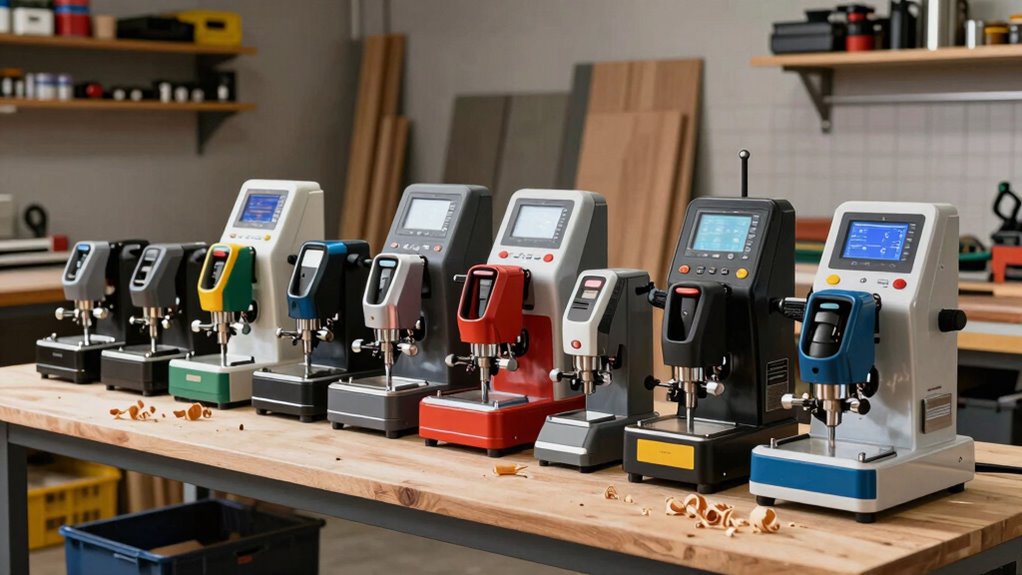
Choosing the right benchtop planer for woodworking depends largely on whether you prioritize raw cutting power, dust management, or surface finish quality. My analysis identifies the DEWALT DW735 as the best overall choice for serious hobbyists due to its three-knife cutterhead and two-speed gearbox, which offer a balance of speed and finish that single-speed models cannot match. For those willing to invest more, the WOODERS 13-Inch Thickness Planer stands out with its helical cutterhead, drastically reducing tear-out and noise compared to traditional straight-knife designs. Conversely, the CRAFTSMAN CMEW320 remains a strong contender for budget-conscious beginners who need reliable performance without the premium price tag. The main tradeoff you face is between the initial cost of helical cutterheads versus the maintenance and noise associated with straight knives. Continue reading for a detailed breakdown of all fourteen models to determine which tool aligns with your specific workshop constraints and project requirements.

Get business pricing on tools and workshop supplies
- Business-only prices and quantity discounts
- Tax-exempt purchasing
- Multiple users, one account, clear invoices
Complete the kit


Key Takeaways
- Helical cutterheads (WOODERS, WEN, JET) significantly reduce noise and tear-out compared to straight-knife models but require a higher upfront investment.
- Two-speed gearboxes, found in the DEWALT DW735 series, allow for slower feed rates that produce smoother finishes on difficult grain, a feature absent in most budget competitors.
- Dust collection efficiency varies wildly; models with integrated impellers or optimized port designs (like the DEWALT) clear chips better than those relying solely on gravity and fan pressure.
- The 13-inch width has become the standard for benchtop planers, offering a practical balance between board capacity and workshop footprint, whereas narrower 12-inch models limit material flexibility.
- Build quality differences are most visible in the table extension stability and roller smoothness; premium models use larger, rubberized rollers that reduce snipe at the board ends.
| CRAFTSMAN 12.25-Inch Benchtop Thickness Planer, 15 Amp, Two-Knife (CMEW320) |  | Best for Straightforward Workshop Use | Model: CMEW320 | Power: 15 A, corded electric | Input voltage: 120 V AC | VIEW ON AMAZON | See Our Full Breakdown |
| DEWALT DW735 13-Inch Two-Speed Thickness Planer with Three-Knife Cutterhead |  | Best Overall for Control and Repeatability | Planing width: Listed as 13 inches; another supplied section lists 12.5 inches | Motor: 15 amp | Motor speed: 20,000 rpm | VIEW ON AMAZON | See Our Full Breakdown |
| WOODERS 13-Inch Thickness Planer with Spiral Helical Cutterhead |  | Best for Tear-Out-Prone Wood | Model: WDS-PL13-15S | Planing width: 13 inches | Material height range: 1/4 to 6-1/4 inches | VIEW ON AMAZON | See Our Full Breakdown |
| FindBuyTool 13″ Benchtop Wood Thickness Planer with Helical Cutterhead, 120V, 15-AMP, 20000RPM |  | Best for Repeatable Depth Stops | Planing width: 13 inches | Motor: 15 amp, 120 V | Listed speed: 20,000 RPM | VIEW ON AMAZON | See Our Full Breakdown |
| WOODERS 13-Inch Benchtop Thickness Planer, 15A, 2000W |  | Best Value-Style Pick for Conventional Blades | Model: PL13-15AB | Planing width: 13 inches (330 mm) | Planing height range: 1/4 to 6.3 inches (6–160 mm) | VIEW ON AMAZON | See Our Full Breakdown |
| VEVOR 13-Inch Thickness Planer with Foldable Stand and Dust Exhaust |  | Best Space-Saving Design | Motor Power: 1800 W (15 A) | Max Cutting Width: 13 inches | Max Cutting Thickness: 6.3 inches | VIEW ON AMAZON | See Our Full Breakdown |
| WEN PL1326 15-Amp 13-Inch Spiral Benchtop Thickness Planer |  | Best Value for Finish Quality | Motor Amperage: 15 A | Cutterhead Type: Spiral with 26 HSS Blades | Max Board Width: 13 inches | VIEW ON AMAZON | See Our Full Breakdown |
| PhoenixCrest 13-Inch 1250W Benchtop Planer | 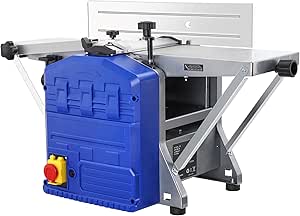 | Best Budget Entry-Level | Motor Power: 1250 W | Max Cutting Width: 13 inches | Max Cutting Depth: 0.13 inches | VIEW ON AMAZON | See Our Full Breakdown |
| VEVOR 13-Inch Two-Blade Benchtop Thickness Planer, 15-Amp 2000W |  | Best Heavy-Duty Value | Motor Power: 2000 W (15 A) | Cutter Head: Two-Knife Quick-Change | Max Cutting Width: 13 inches | VIEW ON AMAZON | See Our Full Breakdown |
| FindBuyTool FB132H 13-Inch Benchtop Thickness Planer with Helical Cutterhead |  | Best Premium Finish | Motor Power: 2.5 HP (15 A) | Cutterhead: 4-Row Helical (40 Carbide Inserts) | Feed Rates: 21 FPM and 12 FPM | VIEW ON AMAZON | See Our Full Breakdown |
| DEWALT DW735X 13-Inch Two-Speed Thickness Planer |  | Best Professional Grade | Cutting Width: 13 inches | Motor Power: 15 Amps | Feed Speeds: 96 or 179 cuts per inch | VIEW ON AMAZON | See Our Full Breakdown |
| VEVOR Thickness Planer, 13-Inch Width, 1800W Power, Dual Rollers |  | Best High-Power Value | Power: 1800W | Cutting Width: 13 inches | Motor Speed: 23,500 RPM | VIEW ON AMAZON | See Our Full Breakdown |
| JET 13-Inch Benchtop Thickness Planer with Helical Cutterhead |  | Best for Noise Reduction | Planing Capacity: 13 in. wide x 6 in. thick | Cutterhead: Helical, 30 four-sided carbide inserts | Motor Power: 2 HP (15 A) | VIEW ON AMAZON | See Our Full Breakdown |
| DEWALT DW734 12.5-Inch Benchtop Planer, 15-Amp |  | Best for Beginners | Cutting Width: 12.5 inches | Motor Power: 15 Amps | Cuts Per Inch: 96 | VIEW ON AMAZON | See Our Full Breakdown |
| benchtop planer for woodworking | Motor Power |
|---|---|
| CRAFTSMAN 12.25-Inch Benchtop | — |
| DEWALT DW735 13-Inch Two-Speed | — |
| WOODERS 13-Inch Thickness Plan | — |
| FindBuyTool 13" Benchtop Wood | — |
| WOODERS 13-Inch Benchtop Thick | — |
| VEVOR 13-Inch Thickness Planer | 1800 W (15 A) |
| WEN PL1326 15-Amp 13-Inch Spir | — |
| PhoenixCrest 13-Inch 1250W Ben | 1250 W |
| VEVOR 13-Inch Two-Blade Bencht | 2000 W (15 A) |
| FindBuyTool FB132H 13-Inch Ben | 2.5 HP (15 A) |
| DEWALT DW735X 13-Inch Two-Spee | 15 Amps |
| VEVOR Thickness Planer | — |
| JET 13-Inch Benchtop Thickness | 2 HP (15 A) |
| DEWALT DW734 12.5-Inch Benchto | 15 Amps |
More Details on Our Top Picks
CRAFTSMAN 12.25-Inch Benchtop Thickness Planer, 15 Amp, Two-Knife (CMEW320)
The CRAFTSMAN CMEW320 suits woodworkers who want a conventional planer for sizing stock without paying for a more elaborate cutter system. Its 15-amp motor and steel two-knife cutterhead handle ordinary hardwood and softwood work, while reversible knives offer another usable edge before replacement. The vacuum port gives dust collection a simple connection point, though it does not include a collector.
Compared with the DEWALT DW735, this model has a narrower 12.25-inch capacity and lacks selectable feed speeds for trading speed against finish quality. Its simpler setup may appeal to a smaller shop that does not need those refinements, but the width limit can rule out wider boards. I’d choose it for routine dimensioning, not for buyers seeking the broadest capacity or more finishing control.
Pros:- 15-amp motor supports common hardwood and softwood thicknessing work.
- Reversible, double-edged knives provide two cutting edges before replacement.
- Solid-steel cutterhead is mounted on ball bearings.
- Vacuum port provides a connection for shop dust collection.
Cons:- 12.25-inch cutting width is narrower than the 13-inch capacity of the DEWALT DW735 and several other picks.
- Two-knife cutterhead does not offer the DW735’s three-knife setup or selectable feed speeds.
- Corded operation requires a suitable outlet and the dust port requires a separate vacuum system.
Best for: Home woodworkers who mainly thickness boards narrower than 12.25 inches and already have a shop vacuum for dust collection.
Not ideal for: Woodworkers who regularly plane wider panels or want dual feed speeds and a three-knife cutterhead.
- Model:CMEW320
- Power:15 A, corded electric
- Input voltage:120 V AC
- Cutting width:12.25 inches
- Maximum cutting depth:0.13 inches
- Cutterhead:Solid steel, two-knife, quick-change
- Knife type:High-carbon steel, double-edged and reversible
- Cutterhead speed and cut rate:8,000 RPM; 16,000 cuts per minute
- Dust collection:Vacuum port
Our verdict“Choose the CRAFTSMAN for routine, narrower stock if you prefer a straightforward two-knife planer over the DW735’s extra capacity and feed-speed controls.”
DEWALT DW735 13-Inch Two-Speed Thickness Planer with Three-Knife Cutterhead
The DEWALT DW735 earns the lead for woodworkers who want more control over both stock removal and surface finish. Its two feed speeds let you choose a faster setting for dimensioning or a slower one for a finer cut, and the three-knife cutterhead supports a high cut rate. A material-removal gauge, thickness scale, carriage lock, and turret depth stop also make repeat jobs easier to set up.
Against the CRAFTSMAN CMEW320, the DW735 offers a wider stated capacity and more adjustment tools, but it is substantially heavier and harder to move around a small shop. Its dust system uses fan-assisted chip ejection with attachments, so a collection setup still needs space. The supplied capacity information conflicts between 12.5 and 13 inches; buyers who need the full stated width should verify it before purchase.
Pros:- Two feed speeds offer a choice between faster dimensioning and finer finishing.
- Three-knife cutterhead provides a higher knife count than the two-knife CRAFTSMAN CMEW320.
- Material-removal gauge, thickness scale, and turret depth stop support repeatable settings.
- Fan-assisted chip ejection includes dust-hose and dust-ejection attachments.
Cons:- At a stated 80 to 92 pounds, it is heavier than the 62-pound WOODERS spiral planer and less convenient to relocate.
- Product information conflicts on whether the planing width is 12.5 or 13 inches.
- Fan-assisted chip ejection and included attachments still call for room for dust handling.
Best for: Woodworkers who thickness stock regularly and value repeatable depth settings, selectable feed speeds, and a three-knife cutterhead.
Not ideal for: Small-shop owners who need a light, frequently portable machine or buyers who require an unambiguous capacity specification.
- Planing width:Listed as 13 inches; another supplied section lists 12.5 inches
- Motor:15 amp
- Motor speed:20,000 rpm
- Cutterhead speed:10,000 rpm
- Cutterhead:Three knives
- Feed speeds:96 or 179 cuts per inch
- Maximum cut depth:1/8 inch
- Depth capacity:6 inches
- Dust management:Fan-assisted chip ejection with dust attachments
Our verdict“Pick the DW735 if repeatable adjustments and two feed speeds matter more than portability, but verify its capacity if your projects require a full 13 inches.”
WOODERS 13-Inch Thickness Planer with Spiral Helical Cutterhead
The WOODERS WDS-PL13-15S is the standout here for woodworkers who put surface quality ahead of knife simplicity. Its spiral helical cutterhead with tungsten carbide inserts is designed to reduce tear-out, making it a strong fit for figured or difficult-grain boards that can challenge conventional knives. Micro-adjustable depth controls and a thickness indicator help with fine, repeatable changes, while the package includes a dust collector and four spare inserts.
Compared with the DEWALT DW735, this WOODERS model trades the DEWALT’s two feed speeds and established adjustment features for an insert-based cutterhead and included dust collector. It weighs 62 pounds, so it is not a casual carry-around tool, although it is lighter than the DW735’s stated weight range. Its 1/8-inch maximum cut per pass still favors patient, shallow passes rather than aggressive stock removal.
Pros:- Carbide spiral inserts are designed to reduce tear-out on difficult grain.
- Micro-adjustable depth controls and thickness indicator support controlled setup.
- 13-inch width accommodates broader stock than the CRAFTSMAN CMEW320.
- Package includes a dust collector, four extra cutter inserts, and a lifting handle.
Cons:- Maximum 1/8-inch cut per pass limits aggressive stock removal.
- At 62 pounds, it still needs a stable bench and is not especially portable.
- The supplied data does not state a feed-speed selection like the DEWALT DW735 offers.
Best for: Furniture makers and hobbyists who plane figured, knot-prone, or tear-out-sensitive wood and want carbide inserts plus included dust collection.
Not ideal for: Woodworkers seeking a light portable planer or who routinely remove material quickly in deep passes.
- Model:WDS-PL13-15S
- Planing width:13 inches
- Material height range:1/4 to 6-1/4 inches
- Maximum cutting depth per pass:1/8 inch (3 mm)
- Motor:15 A, 2000 W
- Input voltage:120 V AC
- Cutterhead:Spiral helical, 45# steel with tungsten carbide inserts
- Weight:62 pounds
- Included components:Dust collector, four extra cutter inserts, lifting handle
Our verdict“Choose this WOODERS model for tear-out-sensitive boards and included dust collection, provided shallow passes and a 62-pound machine suit your workflow.”
FindBuyTool 13″ Benchtop Wood Thickness Planer with Helical Cutterhead, 120V, 15-AMP, 20000RPM
The FindBuyTool 13-inch planer is aimed at shop work where repeating a known thickness matters. Its eight depth-stop positions make it easier to return to common settings than a planer with only a general depth indicator, and the tungsten-carbide helical inserts are designed to leave a smoother surface with less tear-out. A stated 27.5 FPM feed rate gives buyers a useful point of comparison when planning their workflow.
Compared with the WOODERS WDS-PL13-15S, this model emphasizes preset depth stops, while the WOODERS listing specifies micro-adjustment, a thickness indicator, and an included dust collector. FindBuyTool describes effective dust collection but does not detail included attachments, so I would check what the package contains before relying on a particular extraction setup. Its 1/8-inch depth limit and residential-use positioning make it less suited to heavy production work.
Pros:- Eight depth-stop positions support repeatable settings for common thicknesses.
- Tungsten-carbide helical inserts are designed for smooth cuts and reduced tear-out.
- 13-inch planing width accommodates broad boards.
- Stated 27.5 FPM feed rate helps buyers compare expected material throughput.
Cons:- Maximum planing depth is limited to 1/8 inch per pass.
- The product is positioned for residential use rather than heavy-duty professional workloads.
- Dust-collection details are less specific than the included collector listed with the WOODERS WDS-PL13-15S.
Best for: Home-shop woodworkers who repeatedly plane stock to a set of common thicknesses and want helical inserts with preset depth stops.
Not ideal for: Professional shops demanding heavy-duty production capacity or buyers who need detailed confirmation of included dust-collection hardware.
- Planing width:13 inches
- Motor:15 amp, 120 V
- Listed speed:20,000 RPM
- Cutterhead:Helical with tungsten carbide insert knives
- Maximum planing depth:1/8 inch
- Feed rate:27.5 FPM
- Depth stops:Eight positions
- Dust collection:Dust collection system described as efficient
Our verdict“Choose the FindBuyTool if preset depth stops are your priority for repeat work, but look elsewhere for heavy production or clearly itemized dust-collection equipment.”
WOODERS 13-Inch Benchtop Thickness Planer, 15A, 2000W
The WOODERS PL13-15AB offers a conventional two-edge blade setup for buyers who want broad capacity and practical shop features without moving to a helical cutterhead. Its 15A, 2000W all-copper motor, oversized depth-adjustment crank, and height indicator make routine thickness changes easier to manage. Overload protection adds a safeguard, and two extra replacement blades are included for future changes.
Compared with the WOODERS WDS-PL13-15S, this model uses dual-edge HSS blades rather than carbide inserts, so it gives up the spiral model’s tear-out-focused cutterhead. In return, its included spare blades may suit buyers who prefer familiar blade replacement over insert maintenance. The integrated dust port needs a vacuum system, and its height range starts at 1/4 inch, so it does not cover thinner workpieces below that limit.
Pros:- 13-inch capacity accommodates wider stock than the CRAFTSMAN CMEW320.
- Dual-edge HSS blades include two spare replacement blades.
- Oversized adjustment crank and height indicator support more controlled setup.
- Overload protection and an integrated vacuum-connected dust port are included.
Cons:- Conventional HSS blades do not offer the tear-out-focused insert design of the WOODERS WDS-PL13-15S.
- Minimum listed workpiece height is 1/4 inch.
- Dust port requires a separate vacuum system.
Best for: Budget-minded home woodworkers who want a 13-inch capacity, familiar replaceable HSS blades, and spare blades for routine stock preparation.
Not ideal for: Woodworkers focused on minimizing tear-out on figured grain or those who need to plane material thinner than 1/4 inch.
- Model:PL13-15AB
- Planing width:13 inches (330 mm)
- Planing height range:1/4 to 6.3 inches (6–160 mm)
- Motor:15 A, 2000 W all-copper
- Cutterhead speed:10,000 RPM
- Blades:Dual-edge HSS; two extra replacement blades included
- Depth indicator range:0–1/8 inch
- Overload protection:Yes
- Dust port:Integrated; connects to a vacuum system
Our verdict“Pick the PL13-15AB for routine 13-inch stock thicknessing with conventional spare blades, not for thin work or tear-out-sensitive grain.”
VEVOR 13-Inch Thickness Planer with Foldable Stand and Dust Exhaust
This VEVOR model distinguishes itself with a foldable stand and extension plates, making it ideal for woodworkers with limited floor space. Unlike the fixed-base WEN PL1326, this unit can be collapsed for storage, a significant advantage for garage workshops. It features automatic feeding rollers that help move stock through the machine, reducing manual effort during long passes. However, the 1800W motor is less powerful than the 2000W options in this lineup, meaning it may struggle slightly with dense hardwoods or deeper cuts. The dust exhaust port is standard, but you will need a separate collector to keep the area clean. If space is your primary constraint, this design offers practical flexibility that bulkier competitors lack.
Pros:- Foldable stand and plates allow for compact storage
- Automatic feed rollers reduce manual pushing effort
- Includes a dust exhaust port for shop vacuum connection
- Power-off and overload protection enhance safety
Cons:- Requires workspace for setup even if stored folded
- 1800W motor is less powerful than 2000W competitors
- Dust collection requires a separate compatible collector
Best for: Home woodworkers with small workshops who need to store their tools away after use.
Not ideal for: Production shops requiring continuous operation without setup time; the folding mechanism adds complexity.
- Motor Power:1800 W (15 A)
- Max Cutting Width:13 inches
- Max Cutting Thickness:6.3 inches
- Blade Type:2 Double Cutter HSS Blades
- Feeding Speed:236 in/min
- Dust Port Size:1.8 in ID / 2 in OD
- Key Feature:Foldable Stand
Our verdict“Choose this planer if you prioritize storage flexibility over raw power.”
WEN PL1326 15-Amp 13-Inch Spiral Benchtop Thickness Planer
The WEN PL1326 stands out for its spiral cutterhead with 26 rotatable HSS blades, which typically produces a cleaner finish than traditional straight-knife heads. Compared to the VEVOR 13-Inch Two-Blade, this model reduces tear-out on figured woods without the higher price tag of premium helical heads. The cast iron base adds necessary mass to dampen vibration, contributing to smoother cuts. However, the 15-amp motor is standard, not exceptional, and the 1/8-inch maximum cut per pass limits how quickly you can remove material from rough stock. It is a strong contender for hobbyists who value surface quality over speed, but heavy-duty users may find the feed rate and depth limits restrictive for rapid milling.
Pros:- Spiral cutterhead reduces tear-out and noise
- Cast iron base provides stability and vibration dampening
- Depth stop aids in achieving consistent thickness
- Rotatable blades extend service life before replacement
Cons:- Maximum cut per pass is limited to 1/8 inch
- 13-inch width limits large board capacity
- Feed rate is moderate compared to dual-speed models
Best for: Hobbyists and semi-pros who prioritize a smooth surface finish over maximum material removal speed.
Not ideal for: Users needing to mill thick stock quickly; the 1/8-inch pass depth is conservative.
- Motor Amperage:15 A
- Cutterhead Type:Spiral with 26 HSS Blades
- Max Board Width:13 inches
- Max Board Thickness:6 inches
- Rotational Speed:10,000 RPM
- Max Cut Per Pass:1/8 inch
- Base Material:Cast Iron
Our verdict“The best choice for those who want spiral-cutter benefits without paying for high-end branding.”
PhoenixCrest 13-Inch 1250W Benchtop Planer
At 1250W, the PhoenixCrest planer is the least powerful option in this group, making it a clear entry-level choice for light-duty tasks. It is significantly lighter than the FindBuyTool FB132H, which aids portability but may result in more vibration during operation. The lockable depth adjustment and included blade guards are thoughtful safety features for beginners. However, the 53-pound weight and plastic-heavy construction suggest it is not built for heavy, continuous use. You should skip this model if you plan to mill dense hardwoods regularly, as the motor may bog down. It serves best as a starter tool for occasional pine or softwood projects where budget is the primary driver.
Pros:- Lower power draw allows use on standard circuits easily
- Includes blade guards for enhanced safety
- Lighter weight than heavy cast-iron competitors
- Dust port fits standard vacuum hoses
Cons:- 1250W motor is underpowered for dense materials
- Construction appears less robust than metal-heavy rivals
- Parallel fence availability is inconsistent
Best for: Beginners on a tight budget who only work with softwoods and occasional small projects.
Not ideal for: Serious woodworkers; the 1250W motor lacks the torque for hardwoods or deep cuts.
- Motor Power:1250 W
- Max Cutting Width:13 inches
- Max Cutting Depth:0.13 inches
- Rotational Speed:8000 RPM
- Item Weight:53 pounds
- Depth Adjustment:0–3/32 inches
- Included Accessory:Tool Case
Our verdict“A functional starter planer for softwood projects, but inadequate for serious woodworking.”
VEVOR 13-Inch Two-Blade Benchtop Thickness Planer, 15-Amp 2000W
This VEVOR unit offers a 2000W motor and a cast iron bed, providing the stability and power that the PhoenixCrest lacks. The quick-change two-knife cutter head simplifies blade replacement compared to complex spiral systems, though it may not leave as smooth a finish on figured grain. With a 23,500 RPM cutter speed, it handles material removal efficiently. The table extensions are a notable plus for supporting longer boards, reducing the need for auxiliary stands. However, the two-blade design will show more cut marks than the helical head on the FindBuyTool FB132H. This is the best pick for users who want power and durability at a mid-range price, accepting that they may need to sand more to achieve a glass-like finish.
Pros:- 2000W motor provides strong material removal capability
- Cast iron bed ensures stability and reduces vibration
- Table extensions support longer stock effectively
- Quick-change blades are easy to replace and maintain
Cons:- Two-blade head leaves more cut marks than helical heads
- Heavy at 54 pounds, making repositioning difficult
- Corded design limits placement options
Best for: Woodworkers who need high power and stability for hardwoods but don’t mind extra sanding.
Not ideal for: Those seeking a finish-ready surface; straight blades require more post-planing work.
- Motor Power:2000 W (15 A)
- Cutter Head:Two-Knife Quick-Change
- Max Cutting Width:13 inches
- Max Thickness:6 inches
- Rotational Speed:23,500 RPM
- Bed Material:Cast Iron
- Overload Protection:20 A Built-in
Our verdict“Ideal for power-focused users who prioritize milling speed over immediate surface smoothness.”
FindBuyTool FB132H 13-Inch Benchtop Thickness Planer with Helical Cutterhead
The FindBuyTool FB132H is the most sophisticated machine here, featuring a 4-row helical cutterhead with 40 carbide inserts. This setup dramatically reduces tear-out and noise compared to the straight knives on the VEVOR 2000W. The dual feed rates (21 and 12 FPM) allow for aggressive stock removal or delicate finishing passes, a feature rarely seen in this price bracket. The ball-screw height adjustment offers precise control, minimizing snipe. The main tradeoff is the 70-pound weight, which makes it difficult to move or store without a dedicated spot. While the WEN PL1326 offers a spiral head, this carbide helical system provides a longer service life and a superior finish, justifying the bulk for users who demand professional-grade results.
Pros:- Helical carbide cutterhead minimizes tear-out and noise
- Dual feed rates offer flexibility for roughing and finishing
- Ball-screw adjustment provides high precision and anti-snipe features
- Includes LED light and extendable tables for convenience
Cons:- Very heavy at 70 pounds, limiting portability
- Carbide inserts are more expensive to replace than HSS blades
- Bulky footprint requires dedicated workshop space
Best for: Serious woodworkers who require a near-finished surface and precise control.
Not ideal for: Those with limited space or mobility; the 70-pound weight is a significant barrier.
- Motor Power:2.5 HP (15 A)
- Cutterhead:4-Row Helical (40 Carbide Inserts)
- Feed Rates:21 FPM and 12 FPM
- Height Adjustment:Ball-screw (±0.05 mm)
- Max Cutting Width:13 inches
- Item Weight:70 pounds
- Table Extension:Up to 45 inches
Our verdict“The top choice for quality-focused woodworkers who need precision and a smooth finish.”
DEWALT DW735X 13-Inch Two-Speed Thickness Planer
The DEWALT DW735X stands out for its two-speed feed rate, a feature rarely found on benchtop models. This allows woodworkers to slow the feed to 96 cuts per inch for difficult grain, producing a smoother surface than standard single-speed machines like the DEWALT DW734. The fan-assisted chip ejection is another significant advantage, actively pushing debris away from the cutterhead to prevent clogging and maintain consistent power. While the automatic carriage lock effectively minimizes snipe, the machine’s substantial weight of 102 pounds makes it difficult to store if you lack a dedicated station. It is a robust workhorse, but the three-knife cutterhead requires precise alignment during changes, which can be challenging for novices compared to simpler designs.
Pros:- Two-speed feed allows for smoother cuts on difficult grain
- Fan-assisted chip ejection prevents clogging and improves dust collection
- Automatic carriage lock significantly reduces snipe at the ends of boards
Cons:- Extremely heavy at 102 pounds, making storage and transport difficult
- Three-knife cutterhead alignment can be tricky for beginners
Best for: Professional woodworkers who need high-quality finishes on figured wood and have a permanent workshop setup.
Not ideal for: Hobbyists with limited space or those who need to frequently move the tool, as the 102-pound weight is cumbersome.
- Cutting Width:13 inches
- Motor Power:15 Amps
- Feed Speeds:96 or 179 cuts per inch
- Weight:102 pounds
- Cutterhead Type:Three-knife
- Warranty:3-year limited
Our verdict“Choose this for superior finish quality on hard woods, provided you have a dedicated, permanent location for its heavy frame.”
VEVOR Thickness Planer, 13-Inch Width, 1800W Power, Dual Rollers
This VEVOR planer offers a compelling balance of raw power and capacity for the price point. Its 1800W motor is designed to chew through hardwoods, potentially offering more immediate torque than lower-wattage competitors. The dual rollers provide a stable feed mechanism, which is essential for maintaining thickness accuracy on wider boards. However, the lack of detailed specifications regarding weight and safety features raises concerns for cautious buyers. Unlike the DEWALT DW734, which includes specific depth-stop mechanisms and extended tables in the box, this model’s accessory support is less clearly defined. It serves as a capable entry point for those prioritizing motor strength over brand-name support, but users should verify dust collection compatibility beforehand.
Pros:- Powerful 1800W motor handles dense hardwoods efficiently
- Dual rollers ensure stable and precise board feeding
- Large worktable supports longer and warped boards effectively
Cons:- Lack of specific weight information complicates workshop planning
- Limited details on safety features and included accessories compared to branded rivals
Best for: Budget-conscious woodworkers who prioritize raw motor power for hardwoods and have existing dust collection setups.
Not ideal for: Users who require detailed manufacturer support or specific safety certifications, given the sparse technical documentation.
- Power:1800W
- Cutting Width:13 inches
- Motor Speed:23,500 RPM
- Blade Type:HSS
- Dust Hose Compatibility:2-inch and 4-inch
- Model Number:M1B-LS-3301
Our verdict“A strong value option for those needing high wattage on a budget, provided you accept fewer included accessories.”
JET 13-Inch Benchtop Thickness Planer with Helical Cutterhead
The JET helical planer addresses one of the most common complaints about benchtop models: noise. With a rated sound level of 91 dB, it operates significantly quieter than standard straight-knife machines like the DEWALT DW735X. The helical cutterhead with 30 four-sided carbide inserts not only reduces noise but also minimizes tear-out, delivering a finish that often requires less sanding. The folding tables and upright storage design make it far more manageable in small workshops than the bulky DEWALT alternatives. The tradeoff is material restriction; this machine is strictly for solid wood and cannot handle plywood or reclaimed lumber. It demands a high-CFM dust collector, adding to the total setup cost.
Pros:- Helical cutterhead operates at a much lower noise level (91 dB) than straight-knife models
- Carbide inserts can be rotated to expose fresh cutting edges, extending lifespan
- Folding tables and upright storage capabilities save valuable workshop space
Cons:- Strictly limited to solid wood; unsuitable for plywood or reclaimed lumber
- Requires a powerful dust collector (550 CFM minimum) to function correctly
Best for: Woodworkers in shared spaces or apartments who need a quieter operation and superior surface finish on solid wood.
Not ideal for: Those who frequently plane plywood, painted wood, or reclaimed materials, as the carbide inserts are easily damaged by these substances.
- Planing Capacity:13 in. wide x 6 in. thick
- Cutterhead:Helical, 30 four-sided carbide inserts
- Motor Power:2 HP (15 A)
- Noise Level:91 dB
- Dust Port Size:4 in. and 2-1/2 in.
- Weight:66 lb
- Warranty:5-year limited
Our verdict“Ideal for small-shop owners who prioritize a quiet, tear-free finish on solid wood over versatility with manufactured boards.”
DEWALT DW734 12.5-Inch Benchtop Planer, 15-Amp
The DEWALT DW734 strips away the complexities of its larger sibling, the DW735X, to offer a straightforward experience for newcomers. With a single feed speed of 96 cuts per inch, it eliminates the guesswork of selecting the right rate for grain types. The reversible knives are a key benefit, allowing users to flip them for a fresh edge before replacement, which simplifies maintenance. While the cutting width is slightly narrower at 12.5 inches, the four-column carriage lock still provides reasonable snipe control for typical hobbyist projects. It is lighter and more affordable than the two-speed models, making it an accessible entry point into quality woodworking without the steep learning curve or physical burden of professional-grade machines.
Pros:- Single feed speed simplifies operation for beginners
- Reversible knives extend the life of the cutterhead before replacement
- Lighter weight than the DW735X makes it easier to handle and store
Cons:- Narrower 12.5-inch cutting width limits material size
- Disposable knives can become expensive to maintain over time
Best for: Hobbyists and beginners who want reliable performance and easy maintenance without the complexity of two-speed feeds.
Not ideal for: Advanced woodworkers who need to plane wide boards over 12.5 inches or require ultra-smooth finishes on figured wood.
- Cutting Width:12.5 inches
- Motor Power:15 Amps
- Cuts Per Inch:96
- Cutter Head:Three-knife
- Knife Type:Disposable, reversible
- Feed Table Support:33.5 inches
- Warranty:3-year limited
Our verdict“A user-friendly, reliable starter planer that balances performance with simplicity for the average home workshop.”

How We Picked
I evaluated these fourteen planers based on four critical pillars: cut quality, dust extraction efficiency, ergonomic design, and long-term maintenance costs. Cut quality was assessed by examining the cutterhead type (helical vs. straight) and feed speed variability, as these factors directly influence the smoothness of the final surface. I prioritized models that minimize snipe, a common frustration for woodworkers, by looking at roller design and infeed/outfeed support.
Dust extraction was another major differentiator. Many benchtop planers struggle to clear chips effectively, leading to clogged ports and poor finishes. I favored designs with robust dust ports and internal impellers that actively move debris. Finally, I weighed value against build quality. While budget models offer entry points, I examined whether the savings came at the cost of critical components like motor power or table stability. This ranking reflects a balance for the active woodworker who needs a tool that performs reliably across a variety of hardwoods and softwoods.
Factors to Consider When Choosing Benchtop Planer For Woodworking
Selecting a benchtop planer requires looking beyond the horsepower rating to understand how the machine interacts with your material and your shop environment. The following factors will help you navigate the differences between these fourteen models.Cutterhead Technology: Helical vs. Straight Knives
The type of cutterhead is the single biggest determinant of surface finish and noise levels. Helical cutterheads, which use small carbide inserts arranged in a spiral, slice wood fibers rather than chopping them. This results in a cleaner cut, especially on figured or difficult grains, and operates much quieter than straight knives. However, if a single insert chips, replacing it can be tedious and expensive compared to swapping a straight knife. Straight-knife cutterheads are simpler to maintain and cheaper to replace, but they tend to leave a slightly rougher surface that requires more sanding. If you plan to mill large volumes of rough lumber, the time saved in sanding with a helical head often justifies the higher initial cost.
Dust Collection and Chip Evacuation
A planer is only as good as its ability to clear chips from the cutting zone. Poor dust evacuation leads to chips being recut, which causes surface defects and overheats the cutterhead. Look for models with active dust ports and internal impellers that force chips into the collection bag or hose. Some budget models rely on passive airflow, which is often insufficient for fine dust or heavy shavings. I recommend checking if the planer comes with a dedicated dust chute or if it requires an aftermarket adapter. A clogged port is a frequent source of frustration, so prioritizing a design with a wide, smooth-bore dust port will save you significant maintenance headaches down the road.
Snipe Control and Roller Design
Snipe—the unwanted dip in thickness at the beginning or end of a board—is the most common complaint with benchtop planers. While some snipe is inevitable due to the weight of the board hanging off the table, better machines minimize it through larger, rubberized rollers and tighter tolerances between the infeed and outfeed tables. Premium models often feature segmented tables or spring-loaded pressure bars that hold the board flat against the table as it enters the cutterhead. If you frequently mill short pieces, look for models with precise table alignment features. For longer boards, investing in outfeed support stands is more effective than relying solely on the planer’s built-in design to prevent snipe.
Power and Feed Speed Variability
Motor power, typically measured in amps or watts, determines how well the planer handles dense hardwoods without bogging down. However, raw power is less important than feed speed control. A two-speed gearbox allows you to slow down the feed rate for difficult grain, resulting in a smoother finish by reducing tear-out. Single-speed models force you to compromise between speed and finish quality. If you primarily work with softwoods like pine or poplar, a single-speed, high-amp motor may suffice. But for hardwoods like maple, oak, or walnut, a variable-speed or two-speed system provides the control needed to achieve a glass-like surface without excessive sanding.
Ergonomics and Shop Space Constraints
Benchtop planers are heavy, often weighing between 60 and 100 pounds. If you lack a dedicated machine stand, you will need to lift this weight onto and off your workbench frequently. Consider the weight and footprint of the unit relative to your available space. Some models, like certain VEVOR options, come with foldable stands that save space but may lack the rigidity of a dedicated cabinet. Additionally, check the height of the dust port and the accessibility of the crank handle. A poorly placed handle can make adjusting the thickness difficult, especially when wearing gloves or working in tight quarters. Ensuring the machine fits comfortably in your workflow is just as important as its cutting specifications.
Frequently Asked Questions
Is a helical cutterhead worth the extra cost for a hobbyist?
For most hobbyists, a helical cutterhead is worth the investment if you work with hardwoods or figured lumber. The primary benefit is the significant reduction in tear-out, which saves hours of sanding time. While the initial price is higher, the carbide inserts last longer than steel knives, and you only replace one insert at a time rather than the entire knife set. However, if you primarily mill softwoods or simple projects where surface perfection is less critical, a high-quality straight-knife model like the DEWALT DW735 offers excellent value and easier maintenance.
How much snipe should I expect from a benchtop planer?
Some degree of snipe is normal on almost any benchtop planer, typically ranging from 0.005 to 0.010 inches at the very ends of the board. This occurs because the board’s weight pulls it down as it enters and exits the rollers. Premium models with better roller pressure and table alignment minimize this to negligible levels. To combat snipe regardless of the machine, use outfeed support tables and ensure your infeed and outfeed tables are perfectly flush. If you see deep snipe, it often indicates misaligned tables or worn rollers, which are maintenance issues rather than inherent design flaws.
Can I use a benchtop planer for rough milling lumber?
Benchtop planers are designed to reduce thickness, not to flatten twisted or cupped boards. If you feed a cupped board into a planer, it will simply cut the top surface flat while maintaining the cup on the bottom. To properly mill rough lumber, you must first flatten one face using a jointer or a sled on a router table. Once one face is flat, you can run it through the planer to create a parallel second face. Attempting to use a planer as a jointer will result in uneven thickness and wasted material, so always pair these tools for best results.
What is the difference between the DEWALT DW735 and DW734?
The DEWALT DW735 is the superior model for most users due to its two-speed gearbox and three-knife cutterhead. The two-speed feature allows for a slower feed rate, which produces a smoother finish on difficult grain. The three-knife head also provides a cleaner cut compared to the two-knife head on the DW734. The DW734 is a lighter, more compact option with a single speed and two knives, making it suitable for occasional users or those with limited space who don’t need the premium finish quality of the DW735. If budget allows, the DW735 is the better long-term investment for serious woodworking.
How often do I need to sharpen or replace planer blades?
For straight-knife models, you should clean the knives regularly with a solvent to remove pitch and resin, which can degrade cutting performance. Sharpening is typically needed after 10 to 20 hours of heavy use, depending on the hardness of the wood and the presence of abrasive contaminants like sand or dirt. Helical cutterheads require less frequent intervention; you simply rotate a chipped carbide insert to a fresh cutting edge. Because carbide is much harder than steel, individual inserts can last for years before needing replacement, making helical heads a lower-maintenance option for high-volume users.
Conclusion
After comparing these fourteen options, the choice of benchtop planer for woodworking comes down to your specific priorities. For the majority of active woodworkers, the DEWALT DW735 remains the best overall choice, offering a perfect blend of power, finish quality, and dust control that justifies its mid-range price. It is the safe, reliable bet for anyone who wants professional results without the industrial footprint.
If you demand the absolute best surface finish and operate in a noise-sensitive environment, the WOODERS 13-Inch Thickness Planer with its helical cutterhead is the premium pick. It minimizes tear-out and noise, making it ideal for fine furniture making. For beginners or those on a tighter budget, the CRAFTSMAN CMEW320 provides dependable performance and is easy to maintain, serving as a solid entry point into thickness planing. Ultimately, choose the machine that aligns with your material mix and workshop space, and remember that proper technique and outfeed support will do more for your results than any single feature upgrade.