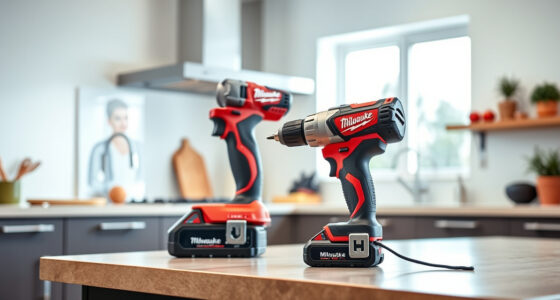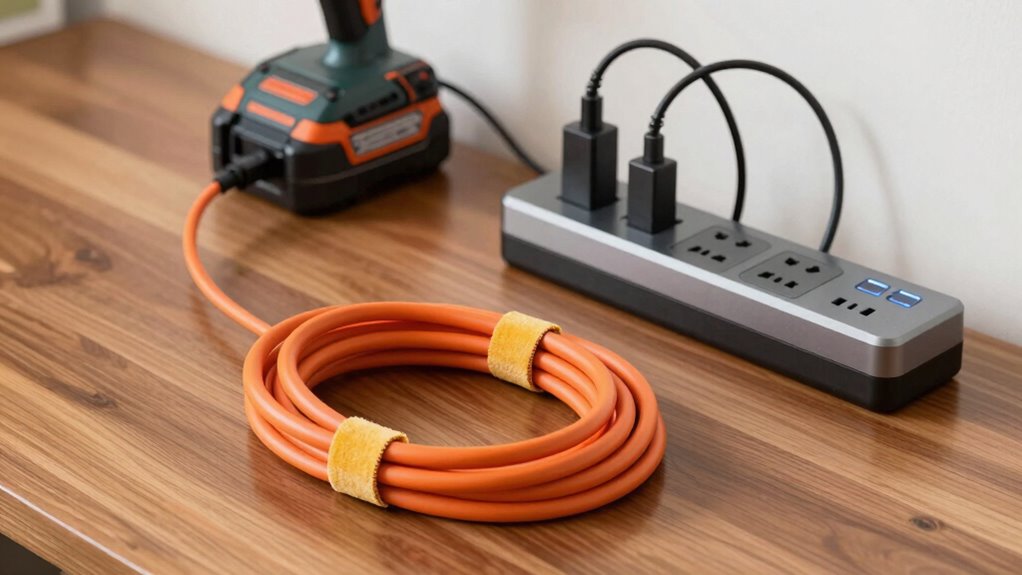

To keep extension cords, power strips, and machines under control, neatly route cords along walls or baseboards, securing them with clips or Velcro straps to prevent tangling and trip hazards. Avoid overloading outlets by distributing power evenly and unplugging unused cords. Regularly inspect for damage or wear, and keep cords away from water and high-traffic areas. Proper organization and safety practices help you maintain a safer workspace—exploring these tips further can make a real difference.

Get business pricing on tools and workshop supplies
- Business-only prices and quantity discounts
- Tax-exempt purchasing
- Multiple users, one account, clear invoices
Key Takeaways
- Organize cords with clips, Velcro straps, or cable ties to prevent tangling and make them easy to manage.
- Avoid overloading power strips and extension cords by distributing devices across multiple outlets.
- Regularly inspect cords and power strips for damage, replacing any worn or frayed wiring immediately.
- Label cords to easily identify and disconnect specific devices, reducing confusion and clutter.
- Keep cords away from water, high-traffic areas, and heat sources to prevent hazards and ensure safety.
Are you struggling to keep your extension cords and power strips organized and safe? It’s a common challenge, but taking control starts with understanding how to manage these power sources effectively. The key is focusing on cord safety and overload prevention. When cords are tangled or left strewn across walkways, you risk tripping, damage to the cords, or even electrical fires. To prevent accidents, always route cords neatly along walls or baseboards, secured with clips or cord covers. Keep cords off the floor in high-traffic areas to reduce trip hazards, and avoid pinching or bending them sharply, which can damage insulation and create potential sparks.
Overload prevention is equally critical to maintain a safe environment. Power strips and extension cords have limits on how much current they can handle. Overloading them can lead to overheating, short circuits, or fires. Always check the wattage rating of your extension cords and power strips, and ensure you don’t plug in too many devices at once. Distribute the load evenly across multiple outlets if needed, rather than stacking multiple power strips. When using multiple devices, prioritize high-power equipment—like space heaters or power tools—and plug them directly into wall outlets whenever possible. This minimizes the risk of overloads and extends the lifespan of your cords and power strips.
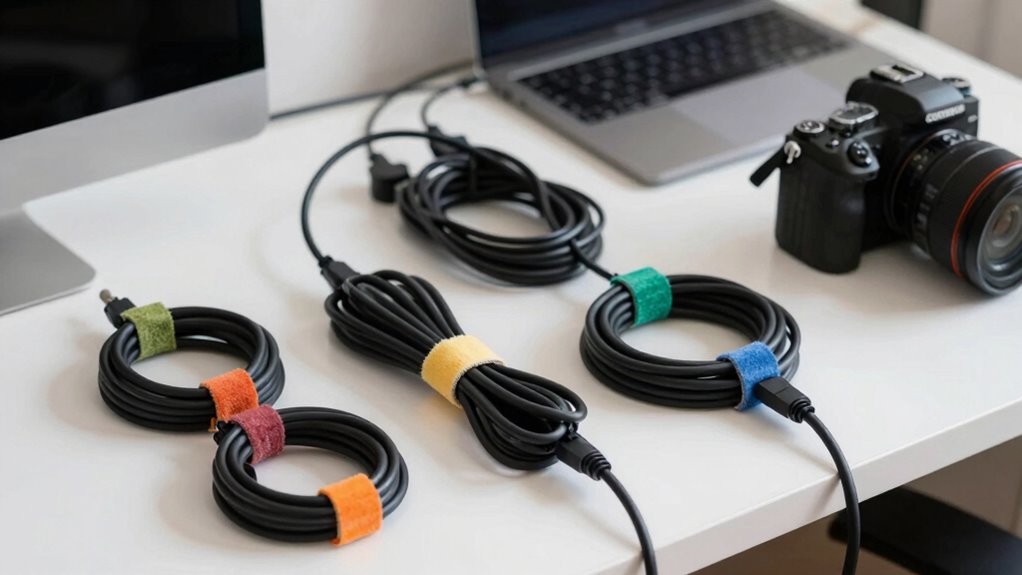
Another way to keep everything under control is to organize your cords using cable ties, clips, or Velcro straps. These tools help keep cords tidy, prevent tangling, and make it easier to identify which plug goes where. Label your cords if you have many similar-looking ones, so you know exactly which device they belong to. Regularly inspect your cords and power strips for signs of wear, fraying, or scorch marks. Damaged cords are a fire hazard and should be replaced immediately. Additionally, understanding the importance of circuit capacity can help you prevent overloads and maintain a safe setup. Employing circuit breakers or other safety devices can also provide additional protection against overloads and surges. Proper grounding methods further enhance safety by reducing the risk of electrical shock. Remember that proper wiring is essential for ensuring your electrical system functions safely and efficiently. Additionally, being aware of the electrical code requirements in your area can help you ensure your setup complies with safety standards.
Lastly, consider investing in surge protectors for sensitive electronic devices. They offer an added layer of safety by preventing power surges that can damage your equipment. Keep cords and power strips away from water or damp areas, and unplug unused cords to reduce clutter and potential hazards. By maintaining proper cord safety and practicing overload prevention, you create a safer, more organized space. Taking these simple steps keeps your electrical setup under control, reducing risks and extending the life of your devices and cords.
cable management clips for extension cords
As an affiliate, we earn on qualifying purchases.
As an affiliate, we earn on qualifying purchases.
Frequently Asked Questions
How Can I Prevent Extension Cords From Tripping Hazards?
To prevent extension cords from becoming tripping hazards, practice good cord management by securing cords along walls or under rugs with tape or cord covers. Use safety tips like avoiding overloads, unplugging cords when not in use, and keeping cords away from high-traffic areas. Regularly inspect cords for damage, and never run them across doorways or hallways. These steps help minimize accidents and keep your space safe.
Are There Specific Safety Standards for Power Strips?
Yes, there are specific safety standards for power strips. Look for models with proper electrical grounding and surge protection features, which help prevent electrical shocks and damage from power surges. Make certain they meet UL 1363 standards, indicating they’ve been tested for safety. Using power strips with these safety features minimizes risks, keeps your devices protected, and ensures safer operation in your home or workspace.
How Often Should I Inspect Cords for Damage?
Think of inspecting your cords like tending a garden—you need to do it regularly to catch weeds early. You should inspect your cords for damage at least once a month, focusing on signs like fraying, cuts, or scorch marks. Frequent inspection helps prevent accidents caused by cord damage, ensuring safety. Don’t wait until something sparks; staying vigilant keeps your workspace safe and damage-free.
Can Using Multiple Power Strips Cause Overloads?
Using multiple power strips can cause overloads because they may exceed the electrical capacity of your circuit. When you connect several devices, the total current drawn might surpass safe limits, increasing overload risks. To stay safe, avoid daisy-chaining power strips and check each strip’s maximum load capacity. Keep an eye on the total amperage, and never plug high-power appliances into multiple strips, ensuring your electrical system stays within safe limits.
What Are the Best Practices for Storing Extension Cords?
You should never let your extension cords turn into tangled monsters! To keep them under control, use proper cord organization techniques like winding them neatly and securing with Velcro straps. Store cords in designated storage solutions such as wall-mounted hooks or labeled bins, avoiding damp areas. This way, your extension cords stay safe, tangle-free, and ready for next use—saving you time and preventing accidents.
Velcro straps for cable organization
As an affiliate, we earn on qualifying purchases.
As an affiliate, we earn on qualifying purchases.
Conclusion
By staying organized and mindful of your extension cords, power strips, and machines, you can greatly reduce fire hazards and electrical mishaps. Did you know that nearly 30% of residential fires are caused by electrical failures or misuse? Keeping cords untangled, avoiding overloads, and regularly inspecting your equipment not only safeguards your home but also prolongs the lifespan of your devices. Take control today—your safety and peace of mind are worth it.
surge protector power strips with overload protection
As an affiliate, we earn on qualifying purchases.
As an affiliate, we earn on qualifying purchases.
As an affiliate, we earn on qualifying purchases.
Fall Picks
fall essentials
As an affiliate, we earn on qualifying purchases.