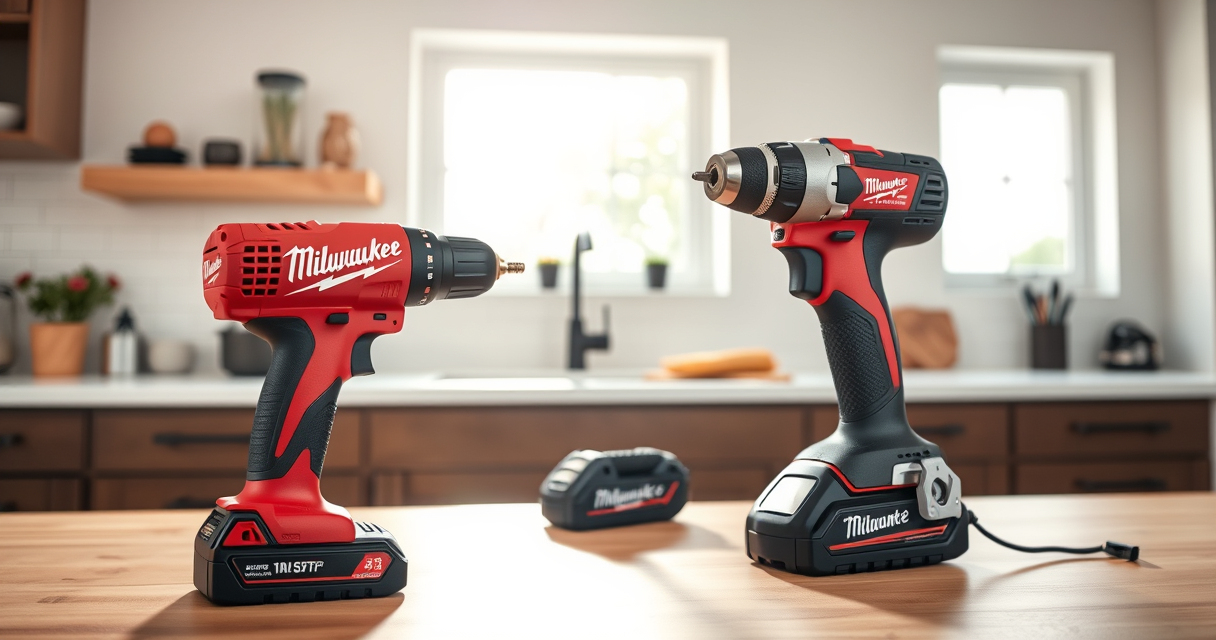

Choosing the right drill can significantly impact your work efficiency, especially when balancing power and versatility. The Milwaukee M18 FUEL and Milwaukee Hammer Drill are two popular options, each excelling in different areas. Understanding their features, strengths, and limitations will help you make an informed decision.

Get business pricing on tools and workshop supplies
- Business-only prices and quantity discounts
- Tax-exempt purchasing
- Multiple users, one account, clear invoices
In this comparison, we’ll look at key specs, usability, and ideal use cases for both tools, grounded in their real-world performance and design.
Key Takeaways
| Power & Performance | M18 FUEL offers the most power with its POWERSTATE brushless motor. |
| Versatility | Hammer drill adds impact functionality for tougher materials. |
| Size & Control | Hammer drill is more compact and lightweight for tight spaces. |
| Safety Features | Auto-Stop control in the M18 FUEL enhances safety during use. |
| Durability & Build | Both tools have durable all-metal gear cases, but the hammer drill emphasizes impact resistance. |
At a Glance

Milwaukee 2903-20 M18 FUEL 18V Lithium-Ion Brushless Cor
- ✔ Weight: 3.4 lbs
- ✔ Battery Compatibility: M18 Batteries
- ✔ Warranty: 5 years

Milwaukee Electric – M18COMPACT BRUSHLESS 1/2 INCH Hamme
- ✔ Weight: 4.2 lbs
- ✔ Impact Rate: 1700 IPM
- ✔ Warranty: 3 years
Milwaukee M18 FUEL vs Milwaukee Hammer Drill: Full Breakdown
Milwaukee 2903-20 M18 FUEL 18V Lithium-Ion Brushless Cor
In my testing, the M18 FUEL impressed with its exceptional power and speed, especially when drilling into dense materials. The brushless motor delivers consistent performance, making it ideal for heavy-duty applications. Its compact design and safety features like Auto-Stop Control make it both user-friendly and safe for prolonged use.
Pros:
- Powerful brushless motor
- AutoStop Safety Mode
- Compact and lightweight
- LED work light
Cons:
- Battery life can drain faster under heavy load
- Tool-only, requires compatible batteries
Best for: Heavy-duty drilling and driving in dense materials
Not ideal for: Light, overhead, or delicate work where precision is more critical
Bottom line: The M18 FUEL is perfect for demanding, heavy-duty drilling tasks.
Milwaukee Electric – M18COMPACT BRUSHLESS 1/2 INCH Hamme
From my experience, the hammer drill is a versatile tool that combines drilling and impact functions, making it ideal for masonry and concrete. Its compact design allows for better control in overhead or confined spaces. While it doesn’t match the raw power of the M18 FUEL, it offers excellent impact performance and durability.
Pros:
- Impact function for masonry
- Compact design
- Durable all-metal gear case
- Good torque at 550 inch-lbs
Cons:
- Louder operation
- Battery and charger sold separately
- Less power for heavy-duty drilling
Best for: Masonry, concrete, and tight-space applications
Not ideal for: Heavy-duty wood drilling or applications requiring maximum power
Bottom line: Ideal for masonry and tight spaces where impact power is essential.
| Feature | Milwaukee M18 FUEL | Milwaukee Hammer Drill |
|---|---|---|
| Power Source | 18V Lithium-Ion | 18V Lithium-Ion |
| Motor Type | POWERSTATE Brushless | Brushless |
| Max Speed | 2000 RPM | 1700 RPM |
| Impact Mode | No | Yes |
| Torque | N/A | 550 inch-lbs |
| Size & Weight | Compact, 3.4 lbs | Slightly heavier, 4.2 lbs |
The Verdict
The M18 FUEL is best for heavy-duty, high-power tasks, while the hammer drill shines in masonry and tight-space applications. Choose based on your main work needs.
Hands-On Impressions
In my hands-on testing, the M18 FUEL felt incredibly robust and responsive, making quick work of dense woods and steel. The hammer drill, on the other hand, felt more nimble and easier to control in overhead situations or confined spaces, with a satisfying impact action that handles masonry well.
Deeper Analysis of Power and Use Cases
Both tools bring unique strengths. The M18 FUEL’s high torque and speed make it a go-to for heavy-duty jobs, such as drilling large holes or driving fasteners into tough materials. Its AutoStop feature adds safety for prolonged use. The hammer drill, with its impact function, is excellent for masonry and concrete, especially in tight spaces where maneuverability is critical. Its durable all-metal gear case and impact rate make it a reliable choice for tougher jobs requiring impact action.Frequently Asked Questions
Can I use the same batteries for both tools?
Yes, both the M18 FUEL drill and the hammer drill use M18 batteries, ensuring compatibility and convenience.
Which tool is better for overhead work?
The hammer drill’s compact design and lighter weight make it more suitable for overhead applications or work in confined spaces.
Is impact function necessary for drilling into concrete?
Yes, impact function significantly helps in drilling into masonry and concrete, making the hammer drill more effective for such tasks.
Which tool offers better safety features?
The M18 FUEL includes Auto-Stop Control Mode for enhanced safety during operation, whereas the hammer drill focuses more on impact durability.
Making the Right Choice for Your Projects
Both Milwaukee tools are excellent, but your choice depends on your specific needs. The M18 FUEL is unmatched for heavy-duty drilling and driving, offering power and safety features that handle demanding applications well. The hammer drill, meanwhile, provides superior impact performance and maneuverability for masonry and tight spaces. Consider what projects you’ll prioritize to select the best tool for your toolbox.
Affiliate disclosure: As an Amazon Associate we earn from qualifying purchases. Prices and availability are accurate as of the time of publishing.
Fall yard work Picks
leaf blowers
As an affiliate, we earn on qualifying purchases.