

To keep dust out of a fresh finish at home, start by controlling airflow—use portable HEPA air purifiers near your workspace and turn off HVAC or recirculating filters to prevent dust from spreading. Before applying any topcoats, thoroughly clean surfaces with a tack cloth or vacuum. Applying a light seal coat creates a protective barrier that locks in residual dust. For more tips on achieving a flawless finish, keep exploring these helpful techniques.

Get business pricing on tools and workshop supplies
- Business-only prices and quantity discounts
- Tax-exempt purchasing
- Multiple users, one account, clear invoices
Key Takeaways
- Use a portable HEPA air purifier near the work area to capture airborne dust during finishing.
- Seal the surface with a light coat before applying the final finish to lock in dust particles.
- Clean the workspace thoroughly with a tack cloth or vacuum to remove dust before finishing.
- Minimize airflow and avoid recirculating HVAC systems to prevent dust circulation in the room.
- Keep movement and activity to a minimum in the space during and after finishing to reduce dust settling.
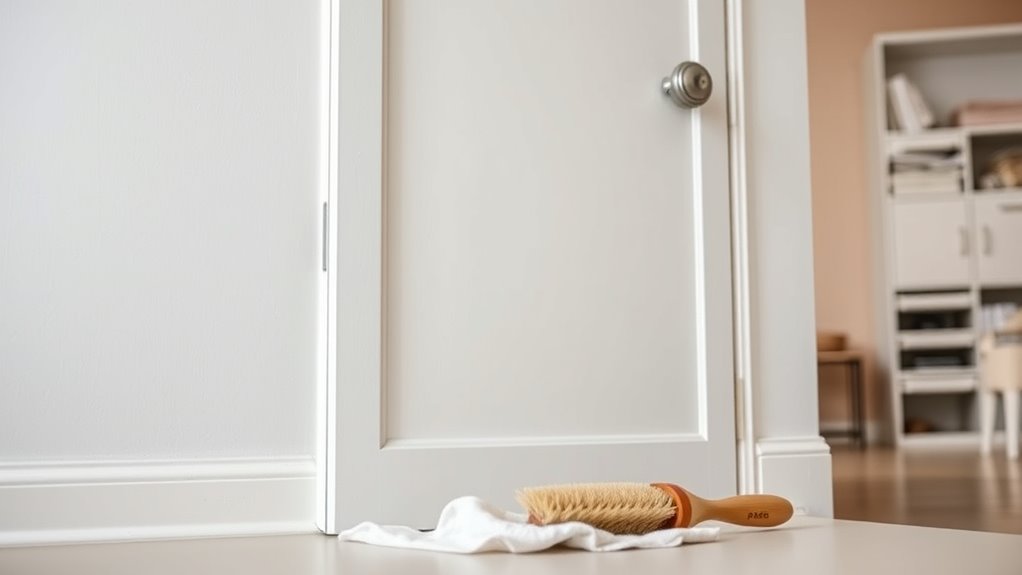
Have you ever finished a woodworking project only to find dust settling into the freshly applied finish? It’s frustrating, especially after all the time and effort you put in. Fortunately, there are straightforward ways to keep dust out of your finish, even in a typical home environment. The key is controlling airborne particles before they land on your work. This starts with good air filtration. Using a portable air purifier with a HEPA filter can considerably reduce dust and other airborne contaminants. Position it close to your workspace but out of the way of your work area to maximize its effectiveness. Running the purifier during and after sanding helps clear the air of dust particles that could settle on your surface before it cures. Additionally, consider turning off HVAC systems that circulate dust-laden air, or at least setting filters or vents to recirculate rather than draw in unfiltered air from outside. This step minimizes the amount of dust floating around during your finishing process. Proper air filtration is essential for maintaining a dust-free environment in your workspace.
Surface sealing is another essential step in preventing dust from embedding into your finish. Before you start applying your topcoat, make sure the surface is thoroughly cleaned of dust and debris. Use a tack cloth or a vacuum with a soft brush attachment to remove any loose particles. Once clean, you can apply a light seal coat—think of it as a barrier that locks in any residual dust particles and prevents them from mixing into your finish. This surface sealing layer acts as a safeguard, especially if you’re working in a less-than-ideal environment where dust is unavoidable. It’s a simple step that can save you hours of sanding or rework later. When applying this sealer, do so in a dust-free zone, and avoid any unnecessary movement that could stir up airborne dust.
Popular right now

Breville Bambino Espresso Machine, Brushed Stainless Steel

Roborock Robot Vacuum and Mop with LiDAR Navigation and 10,000 Pa Suction

Dyson Ball Animal 3 Extra Upright Vacuum
As an affiliate, we earn on qualifying purchases.
Frequently Asked Questions
How Long Should I Wait Before Applying a New Coat?
You should wait at least the recommended drying time before applying a new coat, usually around 4 to 6 hours, but check the product label for specifics. The ideal recoat interval varies depending on the finish, but generally, wait 24 hours to ensure the first coat is fully dry. Rushing the process can lead to uneven results or dust getting trapped, so patience guarantees a smooth, durable finish.
Can I Use a Vacuum on Wet Surfaces?
You shouldn’t use a vacuum on wet surfaces because it’s unsafe and can damage your device. Vacuum safety is vital, especially during wet surface cleaning, as liquids can cause electrical shorts or other hazards. Instead, use a damp cloth or mop to clean wet areas. Always make certain surfaces are dry before vacuuming to keep your equipment in good shape and avoid potential accidents.
What Types of Masks Are Best During Sanding?
Think of respirator masks as your shield against dust storms during sanding. You should choose high-quality respirator masks with proper filters for fine particles, offering the best protection. Dust masks are good for lighter tasks, but for serious sanding, a full-face respirator provides a better seal and filtration. Always guarantee your masks fit snugly and wear them correctly to keep dust out and breathe easy.
How Often Should I Clean the Surrounding Area?
You should clean the surrounding area at least once a week to prevent dust buildup. Use an air purifier with good airflow control to capture airborne dust particles effectively. Regular dusting and vacuuming also help keep the environment clean. By maintaining consistent cleaning, you minimize dust settling on your fresh finish, ensuring it stays pristine longer. Incorporating an air purifier guarantees cleaner air and reduces dust circulation around your work area.
Are There Specific Dust Barriers Recommended?
Are dust barriers really necessary? Absolutely. You should use protective coverings like plastic sheeting, painter’s tarps, or specialized dust barriers around your work area. These prevent dust from drifting onto your fresh finish, especially during renovations or painting. Make sure to seal edges well and secure the coverings tightly. Don’t underestimate the power of proper dust barriers—they’re your best defense against unwanted dust settling where it shouldn’t.
Conclusion
By following these simple steps, you’ll find that keeping dust out of your fresh finish becomes almost effortless. Sometimes, it’s the small things—like covering furniture or delaying heavy foot traffic—that make all the difference. It’s funny how a little extra care can prevent days of rework, almost like the dust itself conspires to settle only when you’re least prepared. Stay vigilant, and you’ll enjoy a flawless finish that stays pristine longer—proof that attention to detail truly pays off.