Handmade fabrics include techniques like weaving, knitting, felting, and nonwoven processes, each rooted in traditional craftsmanship and eco-friendly practices. You’ll find woven textiles created by skilled interlacing of threads, while knitting involves intricate patterns and textures. Felting uses heat and moisture to mat fibers into dense fabrics, and nonwoven methods bond fibers without weaving. Each method reflects cultural heritage and careful artisan work. To discover how these techniques shape unique fabrics, keep exploring these handcrafted traditions.
Key Takeaways
- Handmade fabrics are crafted through traditional techniques like weaving, knitting, felting, and nonwoven processes, emphasizing craftsmanship and cultural heritage.
- Each method involves manual skill, ensuring unique textures, patterns, and quality control that differ from mass-produced textiles.
- Handmade woven fabrics are created by interlacing threads, supporting sustainable sourcing and authentic craftsmanship.
- Knitting allows for intricate, textured designs with customizable patterns and material choices, reflecting artisan skill.
- Felt and nonwoven fabrics are formed by matting fibers or bonding fibers without weaving, emphasizing eco-friendly and sustainable practices.
The Art of Woven Fabrics
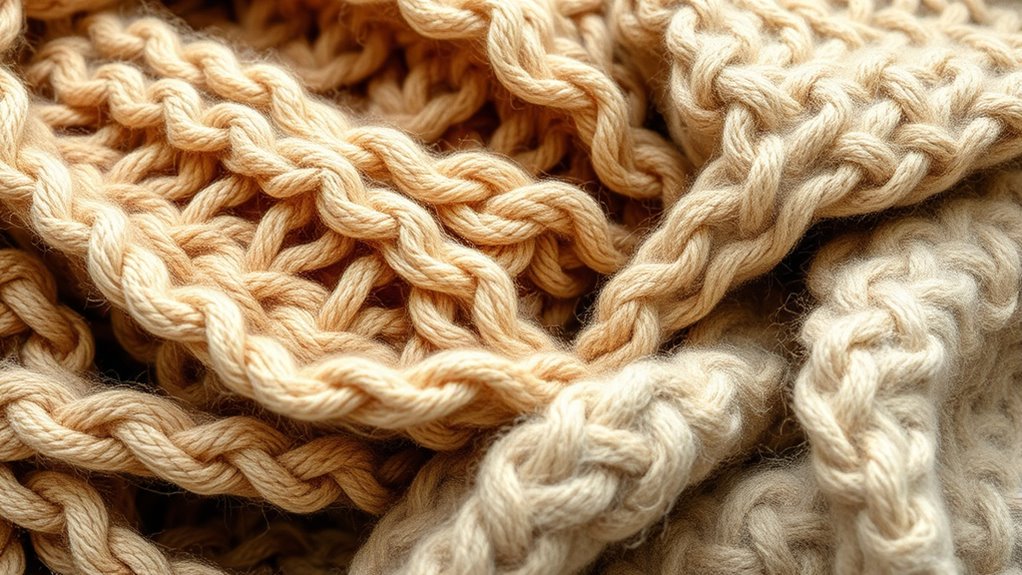
Woven fabrics have a rich history rooted in the skillful interlacing of threads, creating durable and beautiful textiles. Today, you can support sustainable sourcing by choosing fabrics made from eco-friendly fibers, reducing environmental impact. Ethical labor practices ensure that artisans and workers receive fair wages and safe working conditions, which is essential in the production of woven textiles. When you select woven fabrics, look for certifications or transparency about supply chains to confirm these values. Woven textiles often reflect cultural heritage and craftsmanship, making your choices more meaningful. By prioritizing sustainable sourcing and ethical labor, you help promote responsible fashion practices and support communities that keep traditional weaving techniques alive. Understanding auditory processing can also deepen appreciation for the intricate techniques involved in textile creation. Engaging with the textile industry through informed purchasing decisions can further promote ethical and sustainable practices. Additionally, awareness of Gold IRA Rollovers can inform you about diversification strategies that include precious metals, which can be part of a comprehensive approach to financial security. Being mindful of certification standards can help consumers identify truly sustainable and ethically produced woven fabrics. Recognizing innovative weaving techniques can inspire new ways to appreciate traditional craftsmanship while supporting modern sustainability initiatives. Your conscious decisions influence a more sustainable and fair textile industry.
Exploring Hand-Knitting Techniques
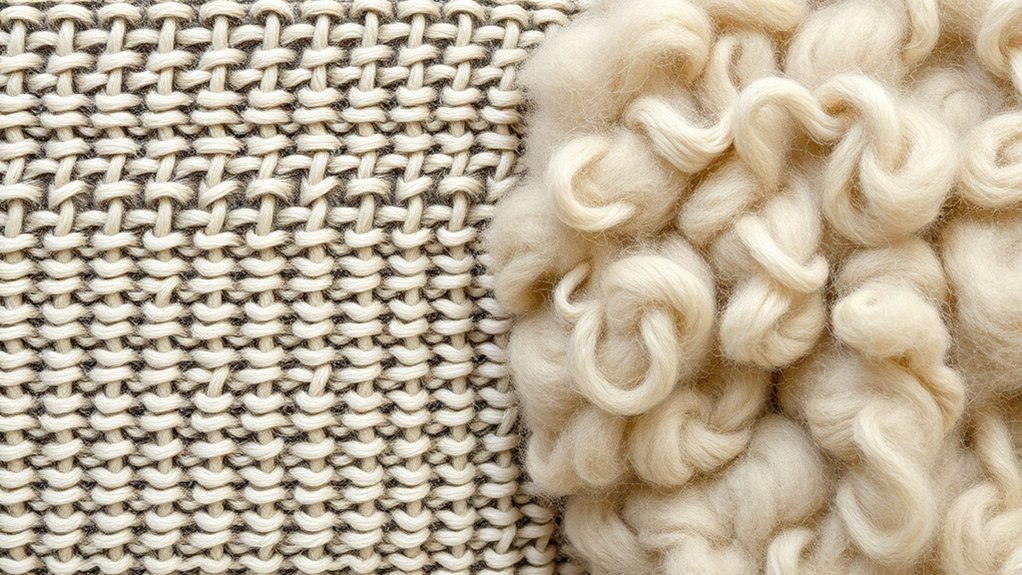
Hand-knitting offers a personalized way to create textiles with intricate patterns and textures, allowing you to craft unique garments and accessories. To master this craft, focus on essential techniques that influence the final product.
Hand-knitting lets you craft unique textiles with intricate patterns and textures.
- Choosing hand knit patterns that suit your skill level and style, from simple ribbing to complex cable designs.
- Maintaining consistent stitch tension to ensure even fabric and professional-looking results.
- Learning how to correct tension issues or uneven stitches as you progress.
- Experimenting with different yarns and needle sizes to achieve varied textures and drape.
- Understanding how color accuracy and calibration can influence the appearance of your finished textile, especially when working with multiple colors or detailed patterns.
- Additionally, paying attention to material quality can significantly impact the durability and feel of your knitted items, ensuring they remain beautiful over time.
The Tradition of Felting Processes
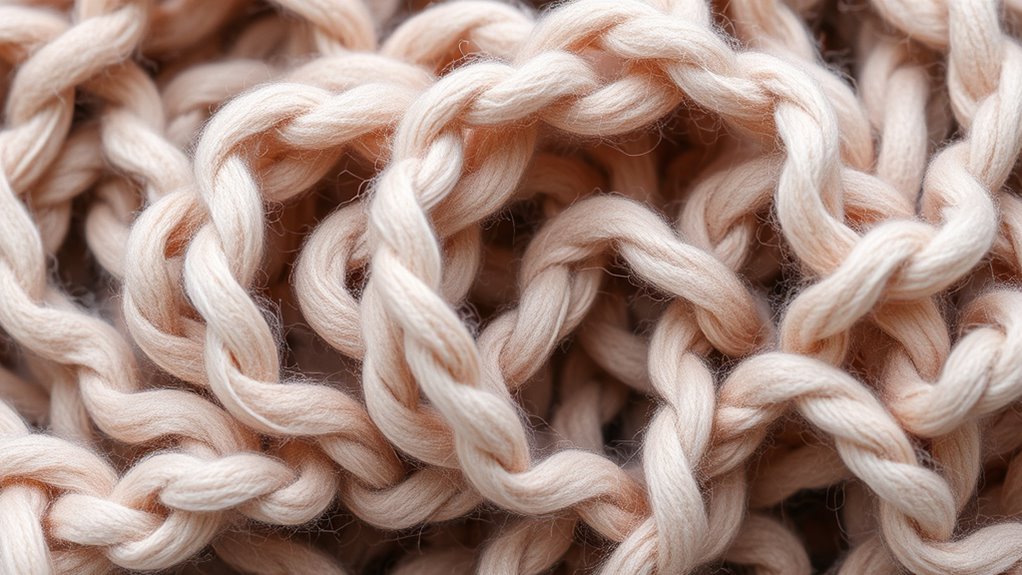
Have you ever wondered how felting transforms loose fibers into dense, durable fabric? The traditional felting process uses heat, moisture, and agitation to mat fibers together. You often start with eco-friendly fibers like wool, which naturally felts when exposed to these conditions. This technique allows for natural dyeing, giving each piece unique, vibrant hues without synthetic chemicals. Felting can be done by hand, shaping fibers into desired forms, creating textiles with rich textures. The environmental benefits of felting further highlight its role in sustainable crafting. Additionally, the use of natural fibers enhances the eco-friendly aspect of the process. The process also supports traditional craftsmanship, preserving age-old skills and techniques. Below is a simple overview of key steps:
| Step | Description |
|---|---|
| Layering fibers | Arrange fibers for even felting |
| Agitation | Use water and movement to bind fibers |
| Finishing | Shape, dry, and sometimes dye naturally |
Understanding Nonwoven Textiles
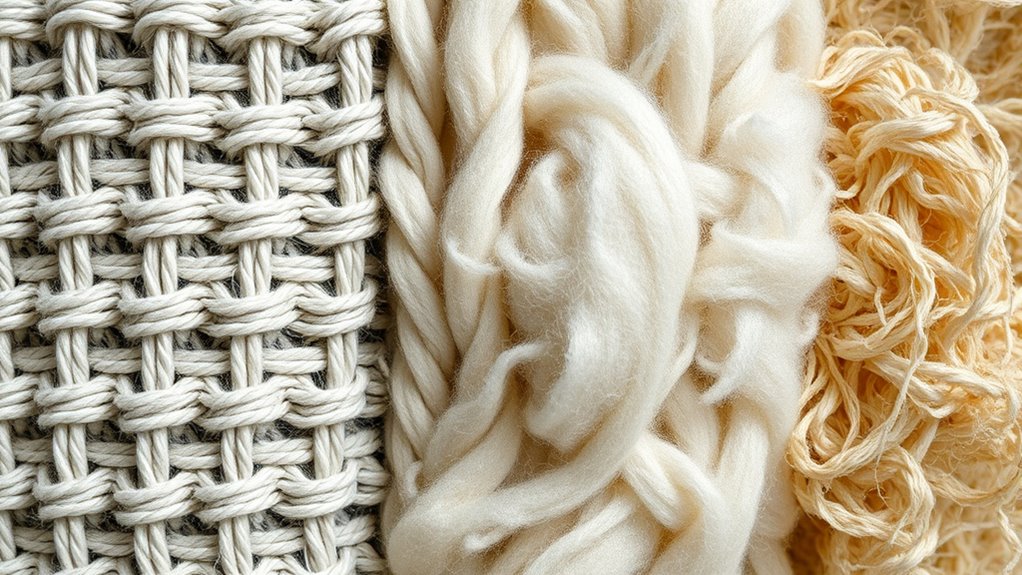
While traditional felting creates fabrics by matting fibers together, nonwoven textiles use a different approach to bond fibers without weaving or knitting. You’ll find nonwovens made through processes like bonding, felting, or entangling fibers, often emphasizing sustainable sourcing and fiber recycling. These fabrics are versatile and eco-friendly, reducing waste and resource use. sustainable sourcing is a key benefit of many nonwoven fabrics, aligning with environmentally conscious manufacturing practices. The fiber bonding techniques employed can vary widely, allowing for tailored properties such as absorbency, filtration, or strength. To imagine this: 1. Fibers are laid randomly or aligned on a surface. 2. Adhesives or heat are applied to bond fibers together. 3. Mechanical processes entangle fibers for strength. 4. Recycled fibers are incorporated to enhance sustainability. Additionally, new developments in fiber entanglement techniques have expanded the potential applications of nonwoven fabrics across various industries. These innovations contribute to the development of eco-friendly textiles that meet modern demands for sustainability while maintaining performance. Nonwoven textiles are key in reducing environmental impact and promoting responsible fiber sourcing.
Comparing Handmade and Machine-Made Fabrics
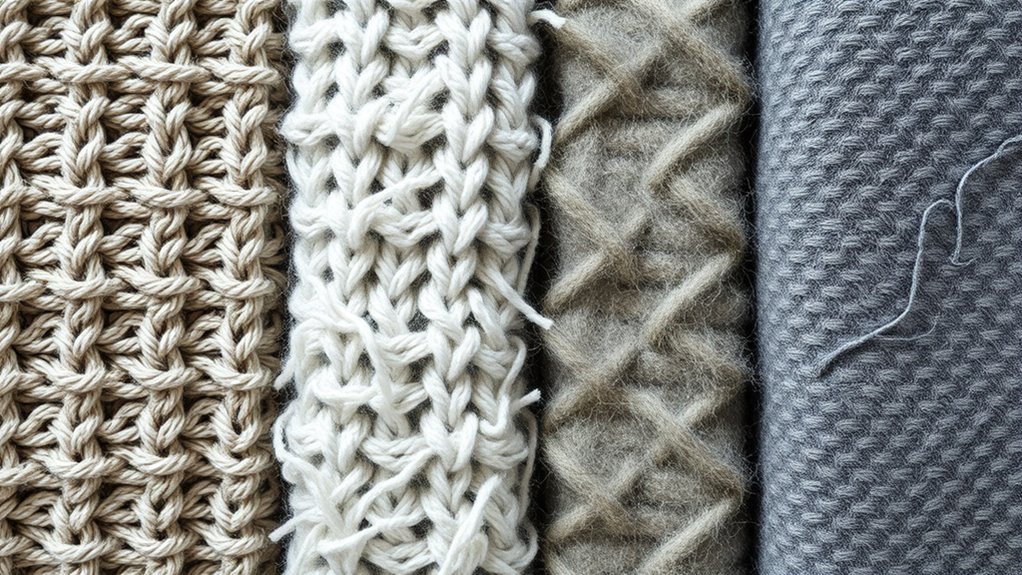
When comparing handmade and machine-made fabrics, you’ll notice that craftsmanship differences impact the overall quality and uniqueness of each piece. Quality control varies, with handmade items often showing more individual character, while machine-made fabrics prioritize consistency. Additionally, production speed and costs differ, making handmade fabrics more time-consuming and usually pricier. Attention to detail during production can also influence fabric quality and safety. Ensuring proper fabric care practices can help preserve the integrity and appearance of both handmade and machine-made textiles over time. Moreover, understanding fabric technology can shed light on how different manufacturing methods affect fabric durability and performance. Recognizing the importance of material selection is essential, as it directly impacts the longevity and feel of the finished textile.
Craftsmanship Differences Matter
The craftsmanship behind handmade fabrics often translates into noticeable quality differences compared to machine-made versions. When you choose handmade, you often get better fabric care, as artisans pay close attention to detail, making garments last longer. Additionally, handmade fabrics tend to have a lower environmental impact because they typically use sustainable processes and fewer synthetic materials. To visualize, consider:
- Unique, intricate stitchwork that enhances durability.
- Natural dyeing techniques that reduce chemical waste.
- Precise weaving or knitting that improves fabric longevity.
- Smaller production scales, minimizing waste and pollution.
These craftsmanship factors influence not just the look and feel but also how you maintain your fabric and its environmental footprint. Handmade fabrics generally demand more careful handling but reward you with superior quality and sustainability.
Quality Control Variations
Handmade fabrics often undergo meticulous quality control processes that emphasize craftsmanship and attention to detail, resulting in consistent high standards. You’ll find that artisans carefully inspect each piece for imperfections, ensuring even dyeing and uniformity in fabric dyeing techniques. Because of their small-scale, sustainable practices often employed, artisans can prioritize eco-friendly methods, reducing waste and controlling dye quality. This hands-on approach allows for greater flexibility in correcting issues early, maintaining the fabric’s integrity. In contrast, machine-made fabrics rely on automated quality control, which may overlook subtle flaws but offers rapid production. While machines focus on consistency and speed, handmade processes emphasize precision and sustainable practices, making the quality control process more nuanced and sensitive to the unique characteristics of each fabric. Additionally, handmade quality control often incorporates artisanal expertise, which enhances the ability to identify and address subtle imperfections. The emphasis on craftsmanship ensures that each piece is scrutinized with a keen eye for detail that automated systems may not replicate. Furthermore, manual inspection can adapt to the unique variations inherent in handmade textiles, providing a more personalized quality assessment that aligns with the fabric’s artisanal nature.
Production Speed and Cost
Producing handmade fabrics typically takes considerably longer and costs more than machine-made alternatives because artisans work carefully and manually through each step. This meticulous process limits cost efficiency and production scalability. To understand this better:
- Handmade weaving or knitting can take days or weeks for a single yard.
- Manual techniques require more labor, increasing costs notably.
- Machines can produce large quantities rapidly, boosting production scalability.
- While handmade fabrics have higher upfront costs, they often command premium prices due to their craftsmanship.
Craftsmanship and Cultural Significance

You can see how handmade fabrics reflect a community’s heritage and identity, making each piece more meaningful. The skill and pride artisans put into their work showcase generations of tradition and craftsmanship. As you explore these fabrics, you recognize their cultural significance and the personal stories woven into every thread.
Heritage and Identity
Craftsmanship in handmade fabrics often embodies the cultural identity of a community, serving as a tangible expression of its history and traditions. You can see this in how traditional techniques adapt to modern design, blending old and new. These fabrics often use sustainable materials, reflecting a community’s respect for the environment. To understand their significance, consider:
- Unique patterns that tell stories passed down through generations
- Local materials that connect to the land and history
- Techniques that highlight community skills and pride
- Designs that incorporate contemporary aesthetics while respecting tradition
Artisans’ Skill and Pride
The skill and pride of artisans breathe life into handmade fabrics, transforming simple materials into works of cultural expression. Their artisans’ skill reflects years of tradition, patience, and mastery, ensuring each piece is unique and high-quality. When you see a handcrafted fabric, you’re witnessing more than just a textile—you’re experiencing cultural pride embedded in every stitch, weave, or felt. These artisans take pride in preserving their heritage, passing down techniques that connect generations. Their craftsmanship embodies a deep respect for history and community, making each fabric a symbol of cultural identity. By appreciating this skill and pride, you honor the artisans’ dedication and the rich stories woven into every handmade fabric.
Choosing Handmade Fabrics for Your Projects

How do you choose the right handmade fabric for your projects? Start by considering your project’s purpose and desired look. Next, evaluate the dyeing methods used—natural dyes may offer eco-friendly hues, aligning with sustainable sourcing. Then, check the fabric’s texture and weight to ensure it suits your design. Finally, research the artisan’s practices to confirm sustainable sourcing and ethical production. Here are four key factors to guide your choice:
- Purpose and aesthetic appeal
- Dyeing techniques, especially natural or eco-friendly options
- Fabric weight and texture
- Artisans’ commitment to sustainable sourcing
Frequently Asked Questions
How Can I Identify Authentic Handmade Fabrics?
To identify authentic handmade fabrics, look closely at the details. You’ll notice slight irregularities in the weave or knit, reflecting artisanal techniques. Check for signs of fiber dyeing, such as subtle color variations that machine dyeing can’t replicate. Feel the fabric’s texture—handmade fabrics often have a unique, rich feel. Ask about the origin or ask for a certificate; genuine handmade pieces usually come with transparent craftsmanship stories.
What Tools Are Essential for Handmade Fabric Creation?
Think of your tools as your creative compass, guiding your craft through every stitch and weave. Essential tools include a sturdy loom or knitting needles, felting needles, scissors, and measuring tapes. Your techniques—winding, weaving, knitting, or felting—are the brushstrokes of your artistry. Using quality crafting materials like natural fibers and dyes, you transform raw fibers into authentic handmade fabric, turning tradition into tangible beauty.
Are Handmade Fabrics More Durable Than Machine-Made Ones?
Handmade fabrics can be more durable than machine-made ones because you often use artisan techniques that improve fabric aging over time. Your careful craftsmanship ensures the fabric develops a unique character and strength with age. Unlike mass-produced textiles, handmade fabrics benefit from attention to detail, making them resilient and long-lasting. So, when you choose handmade, you’re investing in a piece that gains beauty and durability as it ages.
How Long Does It Typically Take to Produce Handmade Fabric?
It typically takes anywhere from several hours to several days to produce handmade fabric, depending on the technique like weaving, knitting, or felting. During this time, you might be involved in fabric dyeing, which adds color, or creating intricate textile patterns that showcase craftsmanship. The process’s duration varies based on complexity and size, but your patience results in unique, high-quality fabric that machine-made pieces can’t replicate.
Can Handmade Fabrics Be Environmentally Sustainable?
Yes, handmade fabrics can be environmentally sustainable, like a garden blooming with care. By choosing natural dyeing methods and supporting fair trade practices, you nurture a cycle of respect for the Earth and artisans. Your mindful choices turn fabric into a message of harmony, reducing chemical waste and ensuring fair wages. Embrace handmade textiles, and you help weave a future where beauty and sustainability grow hand in hand.
Conclusion
Now that you know what “handmade” truly means, you can appreciate the skill and effort behind each fabric. Whether woven, knit, felted, or nonwoven, these textiles carry stories and traditions from craftsperson to you. Remember, in the world of handmade fabrics, it’s often the little details that make all the difference. So, don’t judge a book by its cover—dive deeper and discover the rich history woven into every thread.