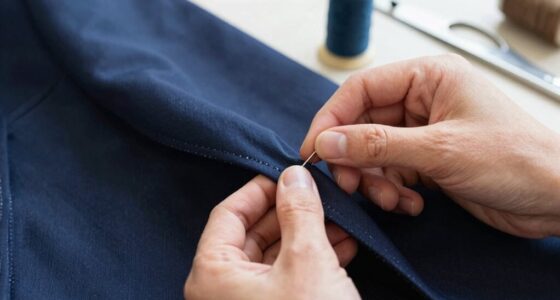
To prevent fabric from shifting while you cut, first secure it with pins, clips, or pattern weights along the edges and curves to keep everything aligned. Work on a stable, flat surface and use sharp scissors or rotary cutters for precise cuts. Keep the fabric taut but not overstretched, and make slow, deliberate cuts to avoid slipping. If you’d like more tips on achieving perfect cuts, there’s plenty more you can learn.
Key Takeaways
- Use fabric stabilizers or spray adhesive to temporarily hold fabric in place before cutting.
- Secure fabric with pins, clips, or pattern weights along edges and curves for stability.
- Work on a sturdy, well-lit surface to prevent movement during cutting.
- Keep fabric taut but not overstretched to avoid distortion while cutting.
- Cut slowly with sharp scissors or rotary cutters to maintain control and accuracy.

When you’re cutting fabric, even the slightest shift can ruin your project. To avoid this, fabric stabilization becomes essential. Proper stabilization keeps your fabric steady, ensuring clean, accurate cuts. Before you start cutting, consider applying a spray adhesive, interfacing, or starch to temporarily hold the fabric in place. These methods add weight and grip, reducing the likelihood of slipping. You can also use washable fabric stabilizers that are specifically designed for sewing projects, giving you a firm base to work on. The key is to choose the right stabilizer based on your fabric type and project needs.
In addition to stabilization, mastering proper cutting techniques makes a significant difference. Always start by laying your fabric on a flat, smooth surface. Use a rotary cutter, scissors, or a straight ruler to guide your cuts precisely. When using scissors, hold the fabric firmly with your non-cutting hand, and make smooth, steady cuts without pressing down too hard. For rotary cutters, ensure your blade is sharp and run it smoothly along the edge of your ruler. The ruler or straight edge acts as a guide, preventing the fabric from shifting as you cut. Keep your fabric taut but not stretched; pulling too tight can distort your pattern and lead to inaccuracies. Additionally, using fabric stabilization techniques can significantly improve your cutting accuracy.
Another tip is to pin or clip your fabric before cutting. Place pins or clips along the edges of your pattern pieces, especially at corners or curves, to keep everything aligned. This prevents fabric from creeping as you maneuver your cutting tool. When working with slippery or delicate fabrics, consider using pattern weights instead of pins; these help hold the fabric in place without causing distortion.
Additionally, pay attention to your cutting environment. Make sure your workspace is well-lit, uncluttered, and stable. A steady surface minimizes vibrations or shifting that might occur during cutting. If your table wobbles, stabilize it with a cloth underneath or work on a sturdy table. To improve precision, cut slowly and deliberately, maintaining control over your cutting tool at all times. Rushing increases the risk of slipping or misalignment.
Frequently Asked Questions
Can Using a Rotary Cutter Help Prevent Fabric Shifting?
Yes, using a rotary cutter can help prevent fabric shifting. The rotary cutter benefits include clean, precise cuts and better control, which reduce movement during cutting. When combined with a self-healing cutting mat and proper grip, it markedly enhances fabric shifting prevention. You’ll find that a rotary cutter allows you to cut smoothly and accurately, minimizing fabric slips and ensuring your pieces are perfectly aligned for your project.
What Type of Cutting Mat Is Best for Stability?
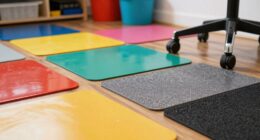
You want a cutting mat that’s as steady as a rock, so choose one with a high-quality surface. Look for mats made from self-healing materials that offer durability and smoothness. Non-slip surface options, like mats with a textured or rubberized backing, keep fabric from sliding around. These mats provide excellent stability, making your cutting precise and safe. A good choice keeps everything in place so you can focus on your project without worry.
Does the Weight of the Fabric Affect Shifting?
Yes, the weight of the fabric affects stability. Heavier fabrics tend to stay put better during cutting, reducing shifting, while lighter fabrics are more prone to movement. To enhance fabric stability, use proper cutting techniques like pinning or weighing down the fabric. These methods help keep your fabric steady, ensuring precise cuts. Adjust your approach based on fabric weight to achieve the best results and prevent shifting during your sewing project.
Are There Specific Pins That Reduce Movement During Cutting?
Yes, specific pins can help reduce fabric movement during cutting. Use fine, sharp pins and apply proper pinning techniques—like placing pins perpendicular to the edges—to secure layers firmly. Incorporate fabric grip products or double-sided adhesive sprays for extra stability. These methods keep your fabric steady, preventing shifting and ensuring precise cuts. Always double-check that pins are secure before starting to cut for the best results.
How Does Fabric Grain Influence Shifting During Cutting?
Imagine cutting a woven fabric with perfect grain alignment, but it suddenly shifts because of uneven fabric stretch. The grain influences shifting during cutting because it determines how fabric behaves—cutting along the grain keeps it stable, while cutting against it causes movement. To prevent this, always align your pattern with the fabric’s grain line, and be mindful of fabric stretch, especially on knits or stretchy fabrics.
Conclusion
By securing your fabric properly, you turn a formidable task into a smooth, almost effortless process. Remember, each careful cut brings your creative vision closer to life—like a painter’s steady hand guiding their brush. Don’t let shifting ruin your masterpiece. Stay vigilant, use the right tools, and trust your skills. With patience and precision, you’ll craft flawless pieces that stand the test of time—proof that your dedication truly makes all the difference.