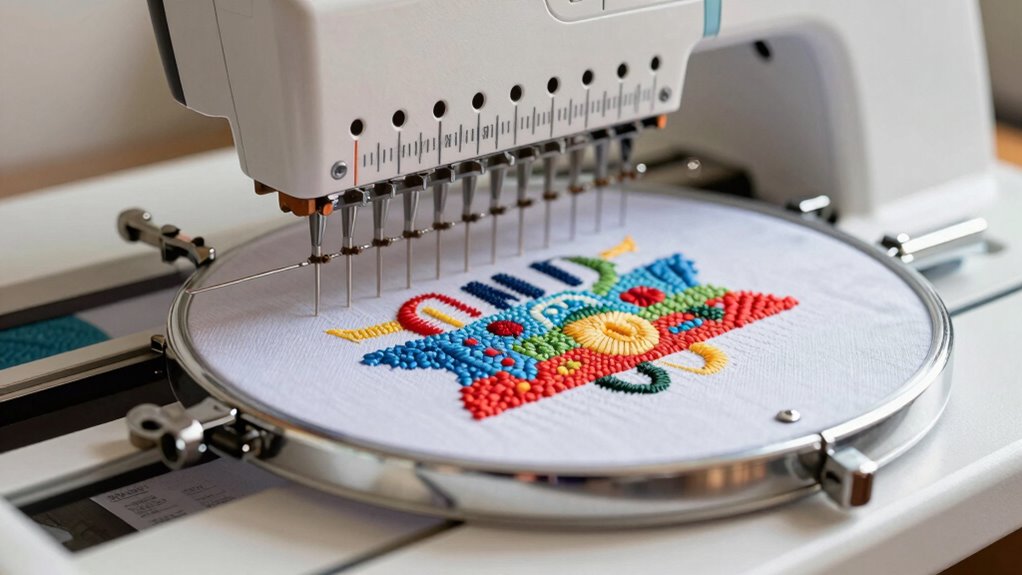
The amount of hoop space you need depends on your typical projects. If you do small designs like logos or monograms, a smaller hoop, around 4×4 inches, might suffice. For larger projects, such as quilt blocks or home decor, look for hoops that offer more space, like 6×10 or 8×12 inches. Having a range of hoop sizes can give you more flexibility and better results—if you keep exploring, you’ll discover how to choose what’s right for you.
Key Takeaways
- Match hoop size to your typical project dimensions for optimal results and efficiency.
- Larger hoops support detailed, multi-color designs but may be less suitable for quick, simple projects.
- Ensure your embroidery machine supports the hoop size you plan to use to prevent stitching issues or damage.
- Choose smaller hoops for monograms, logos, or small items to save time and improve quality.
- Having a variety of hoop sizes increases versatility and allows for a broader range of embroidery projects.
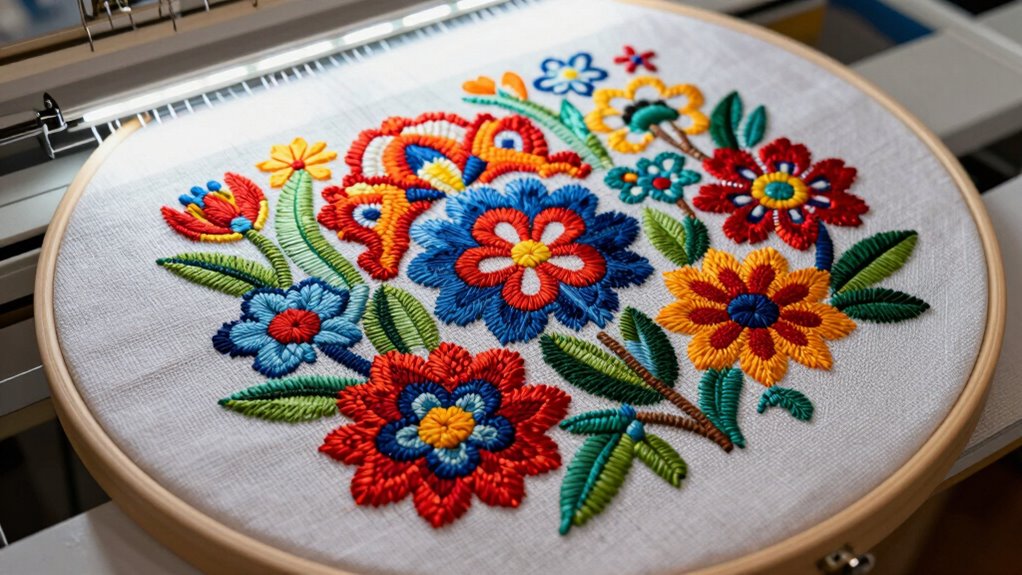
When working with an embroidery machine, understanding the hoop space is essential to achieving precise and professional-looking designs. The size of the hoop determines the maximum embroidery area you can work within, directly influencing what projects you can tackle. If you frequently create detailed or intricate embroidery designs, you’ll need a hoop large enough to accommodate the complexity of your work without sacrificing quality. Larger hoops provide more space for complex embroidery designs, which often require more room for fine details and multiple color changes. Smaller hoops, on the other hand, are perfect for quick, simple projects or embroidery on small items. Knowing your embroidery design complexity helps you choose the right hoop size, ensuring your machine can handle the detail without limitations. Additionally, understanding the embroidery machine compatibility** is crucial to avoid issues during your projects. Another critical factor to consider is machine compatibility. Not all hoops fit every embroidery machine, so it’s vital to check the specifications of your specific model. Some machines are designed to work with a range of hoop sizes, while others are compatible only with certain dimensions. Using a hoop that’s incompatible can lead to uneven stitching, shifting, or even damage to your machine. Always review your machine’s manual to understand which hoop sizes are supported. If you’re planning to upgrade or buy additional hoops, verify that they are compatible with your embroidery machine to prevent any frustration or wasted investment. The decision on hoop size also depends on the types of projects you want to create. For small logo embroidery or monograms, a compact hoop will suffice, and it’s often easier to maneuver around smaller items. However, for larger designs like quilt blocks, garments, or home decor, you’ll need a bigger hoop to avoid dividing your design into multiple sections or losing detail. It’s advisable to consider project size when selecting your hoop to ensure it aligns with your typical work. Having a variety of hoops on hand allows for greater project versatility and helps you adapt to different embroidery tasks more efficiently. This flexibility allows you to work efficiently and achieve professional results without sacrificing embroidery quality. It’s also helpful to understand the range of hoop sizes available to better plan your projects and expand your creative options. Ultimately, there’s no one-size-fits-all answer to how much hoop space you need. Your choice should be guided by the complexity of your embroidery designs, the compatibility of the hoops with your machine, and the size of your typical projects. Understanding hoop size and its relation to project scope is essential for maximizing your embroidery potential. By understanding these factors, you ensure your machine operates at its best, producing precise, detailed embroidery every time. Invest in the right hoops, and you’ll unlock new creative possibilities** while maintaining the quality and efficiency you desire.
embroidery hoop set 4×4 5×7 6×10 8×12 inches
As an affiliate, we earn on qualifying purchases.
As an affiliate, we earn on qualifying purchases.
Frequently Asked Questions
Can I Use a Larger Hoop Than Recommended for My Machine?
You shouldn’t use a larger hoop than recommended for your embroidery machine. It can cause issues with hoop tension, leading to uneven stitches or fabric slippage. Additionally, a larger hoop may require you to slow down embroidery speed for better control, preventing damage to your machine or design. Always stick to your machine’s specified hoop size to guarantee peak performance, quality, and to avoid unnecessary wear or errors.
Does Hoop Size Affect Embroidery Quality?
Yes, hoop size can affect embroidery quality. A larger hoop may cause uneven stitch density if tension isn’t properly adjusted, leading to loose or puckered stitches. Conversely, a smaller hoop guarantees better control and consistent tension, resulting in cleaner designs. Always match hoop tension to your fabric and design, and avoid forcing larger hoops into your machine, as this can compromise stitch quality and overall embroidery results.
Are There Universal Hoops Compatible With All Machines?
Universal hoops are rare because hoop compatibility varies between embroidery machines. Most brands design their hoops for specific models, so universal options are limited. However, some manufacturers offer adaptable or multi-brand compatible hoops, making it easier to switch between machines. Before buying, always check your machine’s hoop compatibility to guarantee a secure fit and peak embroidery quality. Using the right hoop ensures consistent results and better embroidery performance.
How Do I Choose the Best Hoop Size for Complex Designs?
To choose the best hoop size for complex designs, consider your project’s size and intricacy. Focus on fitting finesse, flexibility, and frame. Match hoop tension to prevent puckering, and use sturdy embroidery stabilizers to support detailed designs. Small hoops suit intricate details, while larger hoops handle expansive artwork. Balance size with stability, ensuring your machine’s capabilities and your design’s demands align for flawless finishing.
Can I Combine Multiple Hoops for Larger Projects?
Yes, you can combine multiple hoops for larger projects. To do this effectively, focus on proper hoop alignment to guarantee the design stays in place. You’ll want to maintain embroidery stability across the joins, preventing shifting or misalignment. Take your time lining up the hoops carefully, and consider using adhesive or stabilizer to keep the fabric secure. This approach allows you to create larger, seamless designs without sacrificing quality.
adjustable embroidery hoops for machine
As an affiliate, we earn on qualifying purchases.
As an affiliate, we earn on qualifying purchases.
Conclusion
Ultimately, choosing the right hoop space depends on your projects. Sure, smaller hoops are easier to manage, but larger hoops open up more creative possibilities without sacrificing ease of use—especially if you take the time to learn proper hooping techniques. Don’t let fear of complexity hold you back; with some practice, you’ll find that the right hoop size can turn your embroidery ideas into reality, no matter how big or small they are.
embroidery hoop compatibility with Brother Singer Janome
As an affiliate, we earn on qualifying purchases.
As an affiliate, we earn on qualifying purchases.
professional embroidery hoop sizes
As an affiliate, we earn on qualifying purchases.
As an affiliate, we earn on qualifying purchases.