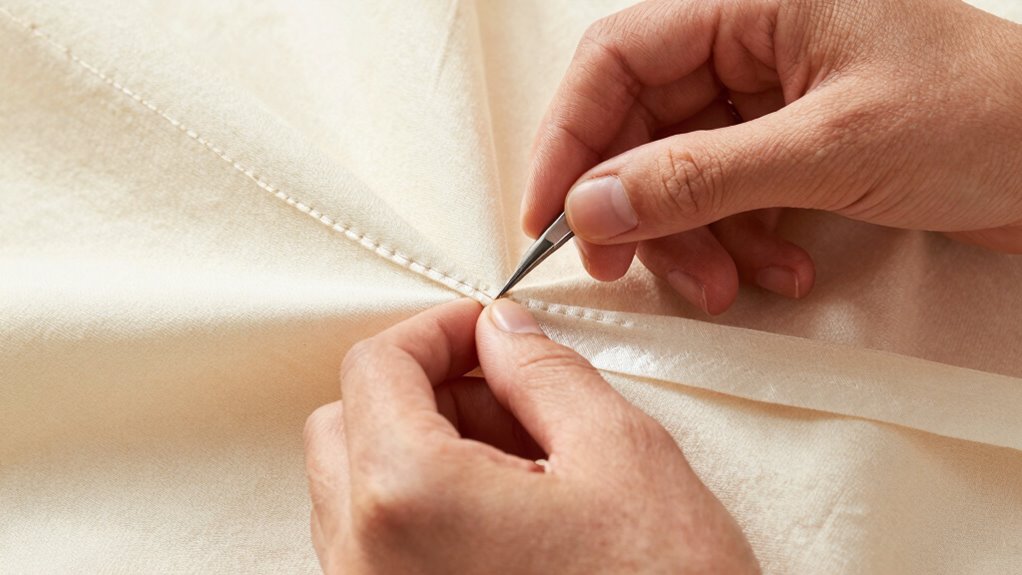

To hand-finish a seam, start by choosing the right technique for your fabric, like slip stitches for delicate fabrics or whip stitches for sturdier ones. Thread a needle with matching thread and work carefully along raw edges or inside seams. Use gentle, even stitches to make certain of durability and a neat appearance. With practice, your seams will look professional and last longer—keep exploring to discover more tips for perfect finishes.
Key Takeaways
- Choose the appropriate hand-stitching technique (e.g., slip stitch, whip stitch, hand-overcast) based on fabric type and seam purpose.
- Thread a needle with matching or suitable thread; keep stitches small, even, and consistent for a neat finish.
- For delicate fabrics, use gentle stitches like slip stitch to create nearly invisible, secure seams.
- For heavier or fraying fabrics, employ stronger stitches such as whip stitch or hand-overcast to reinforce seams.
- Finish seams securely by knotting or weaving thread ends, then press or trim excess threads for a professional look.
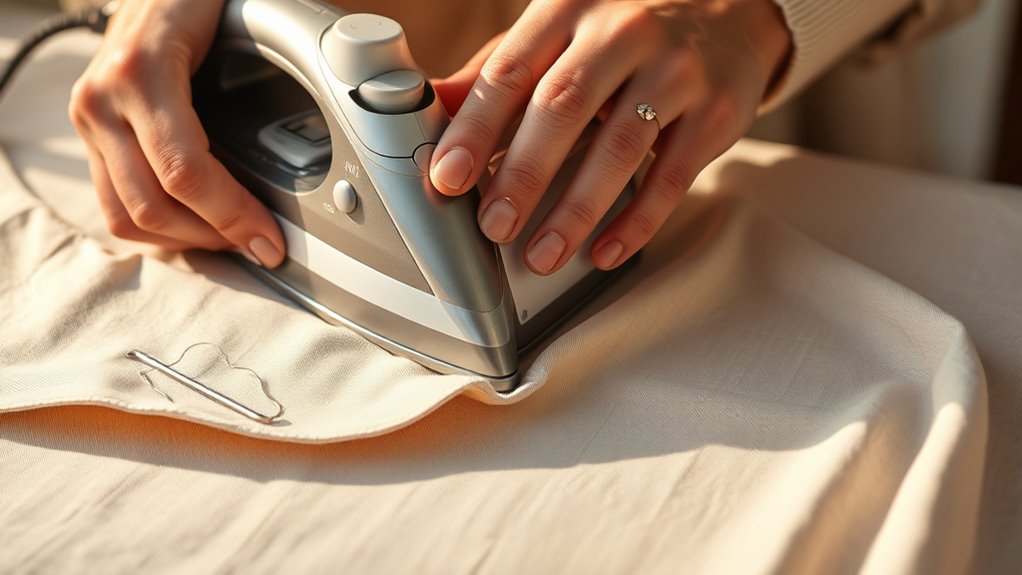
Finishing a seam by hand is an essential skill that can give your sewing projects a polished, professional look. When you master hand-finishing, you confirm your garments and crafts not only look neat but also last longer. The key to a flawless finish involves understanding various sewing techniques suited for different fabric types. Different fabrics demand specific approaches, so knowing which techniques work best will help you achieve durable, clean seams that withstand wear and washing.
Start by evaluating your fabric type before choosing your finishing method. Lightweight fabrics like chiffon or silk are delicate and require gentle handling. For these, a simple hand-stitched hem or a narrow rolled hem works well. Heavier fabrics like denim or canvas are more robust and can handle stronger finishes such as a hand-overcast stitch or a zigzag stitch using a sewing machine, which you can mimic by hand. Understanding these distinctions helps you select the most appropriate sewing techniques, confirming your seam finishes match the fabric’s characteristics.
Evaluate fabric types to choose the best hand-finishing techniques for durable, neat seams.
One common hand-sewing technique for finishing seams is the slip stitch, which creates a nearly invisible seam. To do this, thread a needle with a length of thread matching your fabric color. Insert the needle into the fold of the seam allowance, then take small, even stitches through the fold and the seam allowance, alternating sides. Keep your stitches close together for strength and a clean look. This technique works well for hemming lightweight fabrics or finishing raw edges inside garments, giving a seamless appearance.
Another effective method is the whip stitch, which is simple and quick. It involves passing the needle over the edge of the fabric in a circular motion, creating a series of diagonal stitches. This technique is excellent for securing raw edges on thicker fabrics or preventing fraying. For more delicate fabrics, avoid pulling the stitches too tight, as this can cause puckering or distortion.
For fabrics prone to fraying, you might also consider a hand-overcast stitch. This involves looping the thread over the raw edge, effectively binding it and preventing unraveling. It’s especially useful for finishing seams inside garments or on raw edges that won’t be visible. This technique provides a durable, clean finish, although it may be more time-consuming.
Amazon Product B004RDH7Y8
As an affiliate, we earn on qualifying purchases.
Frequently Asked Questions
Can Hand-Finishing a Seam Be Done on All Fabric Types?
You can hand-finish a seam on most fabric types, but your approach depends on fabric stretch and seam durability needs. For stretchy fabrics like knits, use gentle stitches to maintain elasticity. For delicate or lightweight fabrics, opt for delicate hand-finishing to prevent damage. Hand-finishing enhances seam durability across fabrics, but adjusting your technique guarantees the seam remains flexible and strong, suited to each fabric’s unique properties.
What Tools Are Essential for Hand-Finishing a Seam?
You’ll need essential tools like sewing needles and a seam ripper for hand-finishing a seam. Use sewing needles suited for your fabric type, ensuring smooth stitching. A seam ripper helps correct mistakes or remove stitches cleanly. These tools make the process easier and more precise, allowing you to finish seams neatly and professionally. Keep them handy, and you’ll find hand-finishing becomes much more manageable and enjoyable.
How Long Does Hand-Finishing a Seam Typically Take?
Hand-finishing a seam usually takes anywhere from 10 to 30 minutes, depending on your sewing speed and the seam’s complexity. If you’re working with delicate or intricate seams, it may take longer to guarantee a clean, professional finish. For simpler seams, you can finish more quickly. Your pace and the detail involved directly influence how long the process lasts, so take your time to achieve the best results.
Is Hand-Finishing Stronger Than Machine Finishing?
Think of hand-finishing as giving your seams a personal touch—it’s often stronger than machine finishing because you control every stitch, ensuring better seam durability. Plus, it adds an aesthetic appeal that machines can’t quite replicate, like a signature on your work. While it may take more time, your hand-finished seams tend to hold up longer and look more polished, making your project truly stand out.
Can Hand-Finishing Be Done on Curved or Complex Seams?
Yes, you can hand-finish curved or complex seams. Using curved seam techniques, you carefully follow the shape to make certain a smooth, professional finish. Hand-finishing helps you navigate complex seam challenges where machine stitching might struggle, especially in tight curves or intricate designs. Take your time, use small stitches, and adjust your tension to maintain accuracy. This approach gives you better control and a cleaner, more polished result on difficult seams.
Amazon Product B08BH5GTNC
As an affiliate, we earn on qualifying purchases.
Conclusion
Now that you know how to hand-finish a seam, you’ll enjoy sewing with cleaner, more professional results. Did you know that properly finished seams can increase your garment’s durability by up to 30%? Taking the time to master these finishing techniques not only boosts your confidence but also extends the life of your projects. Keep practicing, and soon hand-finishing will become a simple, satisfying part of your sewing routine. Happy sewing!
Amazon Product B00JBKVN8S
As an affiliate, we earn on qualifying purchases.
Amazon Product B0000CBK1L
As an affiliate, we earn on qualifying purchases.