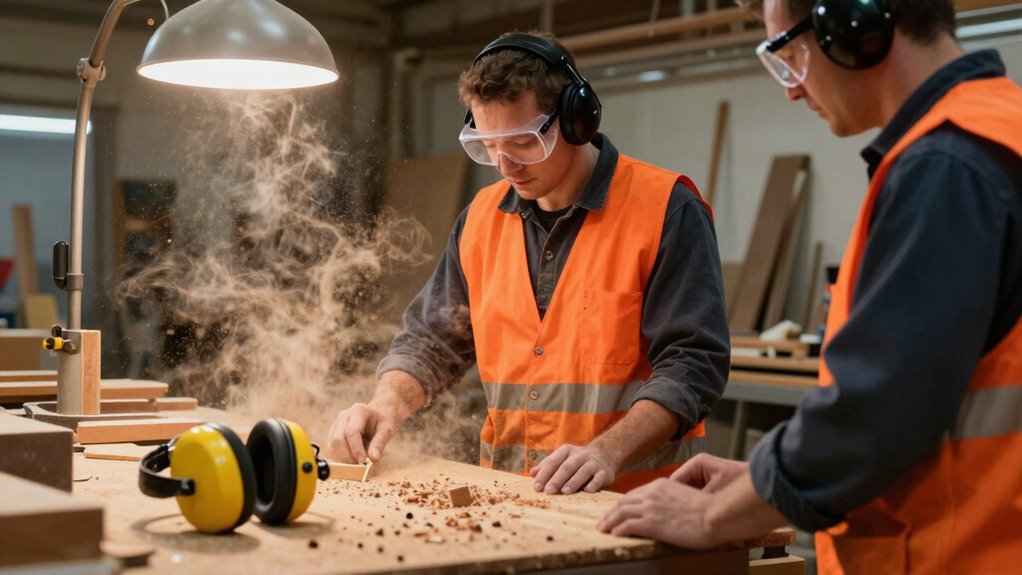

You should wear ear protection anytime you’re working with loud machinery, power tools, or welding to prevent permanent hearing loss. If noise levels make you raise your voice or if you feel ringing or muffled sounds afterward, it’s a clear sign to protect your ears. In quieter areas or tasks with minimal noise, protection might not be necessary. Understanding when to shield your hearing can save you from future harm—discover more tips to keep your ears safe.
Key Takeaways
- Wear ear protection when operating loud machinery or power tools to prevent noise-induced hearing loss.
- Use ear protection in high-noise environments even if noise initially seems tolerable.
- Avoid ear protection in quiet areas or tasks with minimal noise levels to prevent unnecessary discomfort.
- Properly fit and regularly maintain earplugs or earmuffs to ensure maximum effectiveness and comfort.
- Monitor noise levels with a decibel meter to determine when ear protection is necessary.

Working in workshops exposes you to loud noises that can damage your hearing over time. The constant exposure to high-decibel sounds puts you at risk of developing noise-induced hearing loss, a permanent condition that can affect your ability to hear conversations, alarms, or even enjoy music. To protect yourself effectively, it’s vital to understand when you need ear protection and how to choose the right gear. One of the most important factors is making sure that your ear protection fits properly. Ill-fitting earplugs or earmuffs won’t provide the level of noise reduction you need and can even be uncomfortable enough to discourage consistent use. Proper fitting ensures a tight seal around your ears or inside your ear canal, which minimizes sound leakage and maximizes protection. Take the time to try different sizes and styles to find what works best for you. When you’re working around loud machinery, power tools, or during specific tasks like grinding or welding, you should definitely wear ear protection. Even if the noise seems tolerable at first, prolonged exposure can still cause damage. Remember, noise-induced hearing loss doesn’t happen overnight; it accumulates gradually, and once lost, it can’t be restored. So, don’t wait until you notice ringing or muffled hearing to start protecting your ears. It’s better to be proactive and wear your hearing protection consistently in high-noise environments. That said, there are times when ear protection might not be necessary. If you’re working in a quiet area or performing tasks that generate minimal noise, you can usually skip wearing earplugs or muffs. However, it’s important to stay aware of the noise levels around you. A good rule of thumb is to use a sound level meter app or a simple rule: if you have to raise your voice to be heard over the noise, your environment is loud enough to warrant hearing protection. Also, be mindful of the duration you spend in noisy settings. Short periods of exposure generally pose less risk, but cumulative exposure over days or weeks can still lead to hearing loss. Proper maintenance of your ear protection gear is equally important. Clean and replace earplugs regularly to keep them effective and hygienic. Earmuffs should fit snugly each time you wear them, without causing discomfort or pressure. Regularly checking the noise levels in your workshop with a decibel meter can help you determine when hearing protection is truly necessary. Taking these precautions ensures that you’re not only protecting your hearing but also maintaining comfort so you’ll actually wear your gear consistently. Protecting your ears is a small but significant investment in your long-term hearing health.
Frequently Asked Questions
How Do I Choose the Right Ear Protection for Specific Tools?
To choose the right ear protection, consider the noise reduction level needed for your tools. Look for options that fit snugly and comfortably, so you’re more likely to wear them consistently. For loud tools like saws or drills, opt for earplugs or earmuffs with high noise reduction ratings. Try different styles to find the best fit and comfort, ensuring you stay protected without discomfort during extended use.
Can Wearing Ear Protection Affect Communication in the Workshop?
Imagine trying to hear a whisper across a noisy room—that’s what wearing ear protection can feel like in your workshop. While it reduces noise effectively, it can also hinder communication clarity, making it harder to hear commands or alerts. To balance safety and communication, choose ear protection with features like ambient sound or communication features, so you stay aware without sacrificing noise reduction.
Are There Any Health Risks From Prolonged Headphone Use?
Prolonged headphone use can pose health risks like hearing loss and ear infections. When you wear headphones for extended periods, you risk damaging your hearing due to high volume levels, which can lead to permanent hearing loss. Additionally, sharing headphones or not cleaning them properly can cause ear infections. To protect your health, limit usage, keep headphones clean, and avoid listening at loud volumes for long durations.
How Often Should I Replace or Clean My Ear Protection?
Think of your ear protection as your trusty shield—it needs regular care. You should replace ear protection when it shows signs of wear or damage, usually every 6 to 12 months, depending on use. Clean it regularly with soap and water, following hygiene tips to prevent bacteria buildup. Proper ear protection maintenance keeps your hearing safe and guarantees peak performance, so don’t ignore signs it’s time for a fresh set or a good cleaning.
Is Ear Protection Necessary for Low-Noise Workshop Environments?
If the noise levels in your workshop are low, you might not need ear protection, but you should still be aware of your hearing sensitivity. Prolonged exposure to even moderate noise can affect your hearing over time. If you notice ringing or muffled sounds after working, it’s wise to wear ear protection. Always assess your environment, as even low-noise areas can sometimes pose risks depending on your personal hearing sensitivity.
Conclusion
Remember, responsible hearing protection safeguards your skills and serenity. Don’t dismiss dull drills or deafening noise; delay could damage your ears and diminish your days. When you wear ear protection wisely, you’ll work with confidence and calm. Be vigilant, choose courageously, and champion your hearing health every day. Protecting your ears isn’t just about noise—it’s about nurturing your future. Stay smart, stay safe, and safeguard your sound so your skills stay sharp and your silence stays sacred.