
To practice sustainable crafting on a budget, focus on repurposing what you already have around the house. Use old textiles to create new decor, or upcycle furniture with natural dyes and simple updates like paint or hardware. Embrace the ‘use what you have’ approach to save money and reduce waste while making unique, eco-friendly pieces. If you want to discover more eco-conscious ideas and tips, keep exploring how you can turn everyday items into beautiful crafts.
Key Takeaways
- Repurpose existing household items like textiles and furniture to create unique, eco-friendly crafts without extra costs.
- Use natural dyes from garden plants to color projects sustainably, avoiding chemical dyes and reducing expenses.
- Upcycle old furniture with simple updates such as sanding, painting, or new hardware for stylish, budget-friendly pieces.
- Transform unused textiles into new items like pillows or tote bags, minimizing waste and embracing resourcefulness.
- Adopt a ‘use what you have’ mindset by creatively modifying current items for fresh, personalized decor and crafts.
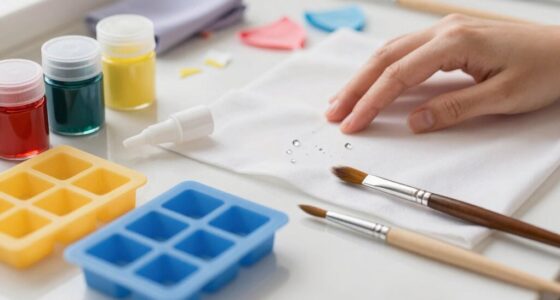
Creating sustainable crafts doesn’t have to drain your wallet. In fact, you can make beautiful, eco-friendly projects using what you already have around the house. The key is embracing the “use what you have” mindset, which not only saves money but also reduces waste. One effective way to do this is by exploring DIY natural dyes, which allow you to give new life to old textiles and fabrics without relying on chemical-laden store-bought dyes. You can harvest plant materials like onion skins, turmeric, or indigo from your garden or local markets, then simmer them to create vibrant, eco-friendly colors. These natural dyes not only produce stunning hues but also ensure your crafts remain sustainable from start to finish.
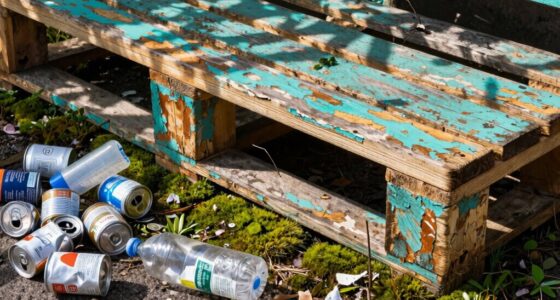
Another popular method is upcycling furniture, transforming old or discarded pieces into stylish, functional items. Instead of buying new furniture, look around your home or visit thrift stores for items that need a little love. Sand down scratched or worn surfaces, then repaint or stain with leftover paint or natural finishes. You can even add new hardware or decorative details to give a piece a fresh look without spending much. Upcycling furniture is a creative way to reduce waste, preserve resources, and create unique pieces that reflect your personality. Plus, it’s satisfying to see a tired old chair or table turn into a centerpiece of your space.
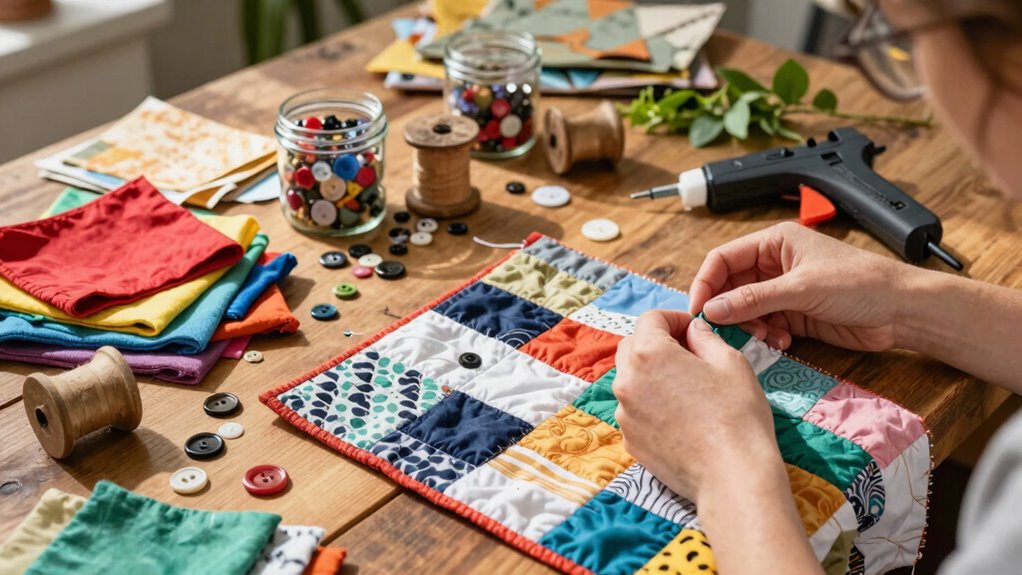
Using what you already own doesn’t mean you need to compromise on style or quality. Sometimes, a simple change like replacing knobs, adding a new cushion, or applying a fresh coat of eco-friendly paint can completely revitalize a piece. When it comes to textiles, you can also repurpose old clothing or linens into new items, like tote bags or decorative pillows. This approach minimizes waste and prevents perfectly good materials from ending up in the landfill. It’s all about reimagining and repurposing what’s already available in your home. Additionally, understanding the history of pinball machines can inspire creative, nostalgic upcycling projects by integrating vintage elements into your crafts.
Frequently Asked Questions
How Can I Start Sustainable Crafting With Limited Supplies?
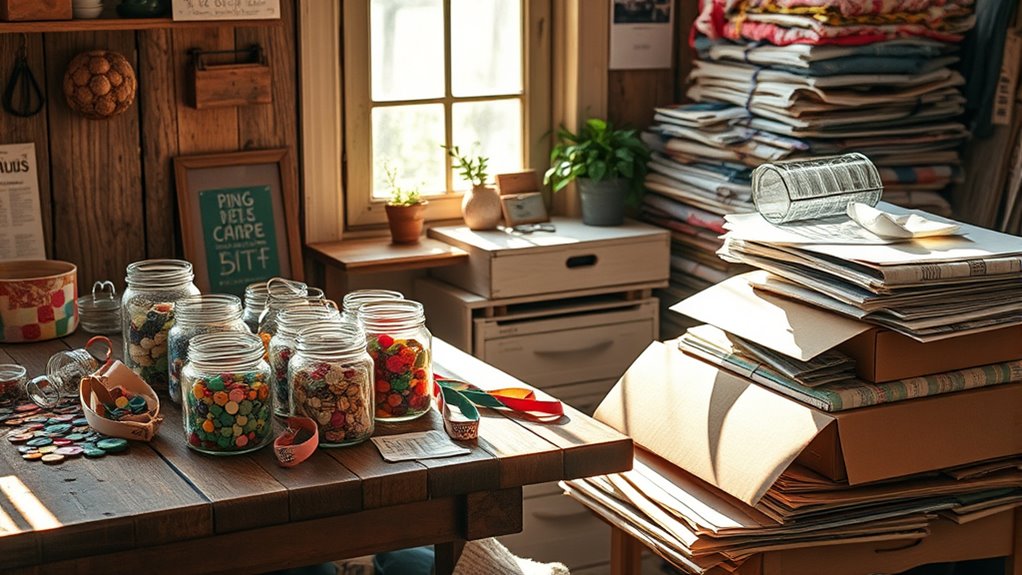
You can start sustainable crafting with limited supplies by exploring recycling techniques and upcycling ideas. Look around your home for items like jars, old clothing, or cardboard, and think creatively about transforming them into new crafts. Use what you already have to minimize waste and save money. This approach not only helps the environment but also sparks your creativity as you discover innovative ways to repurpose materials.
What Are the Best Materials to Repurpose for Crafts?
Imagine turning everyday trash into treasure; recycled textiles and repurposed plastics are your best allies. Old t-shirts become vibrant quilts, and plastic containers transform into quirky planters. These materials are plentiful and versatile, offering endless creative possibilities. By giving new life to what’s discarded, you craft sustainably and save money. Let your imagination run wild with these eco-friendly treasures, creating beautiful, meaningful projects from the materials most people overlook.
How Do I Avoid Waste When Crafting on a Budget?
To avoid waste when crafting on a budget, focus on recycling techniques and waste reduction. Repurpose materials you already have, like old jars or fabric scraps, instead of buying new supplies. Plan your projects carefully to minimize leftovers, and reimagine scraps into new elements. By consciously incorporating recycling techniques, you stretch your resources further, save money, and make your crafting more sustainable and eco-friendly.
Are There Eco-Friendly Adhesives Suitable for DIY Projects?
Yes, there are eco-friendly adhesives suitable for DIY projects. You should look for biodegradable glues or plant-based adhesives, which are gentle on the environment and safe to use. These options come from natural ingredients, reducing chemical waste. Using biodegradable glues not only helps you craft sustainably but also ensures your projects stay eco-friendly without sacrificing strength or quality. Always check labels to confirm they’re biodegradable or plant-based.
How Can I Find Inspiration for Budget-Friendly Sustainable Crafts?
Imagine your creativity as a garden waiting to bloom. You can find inspiration for budget-friendly sustainable crafts by exploring upcycling ideas online, browsing thrift stores, or repurposing recycled materials around you. Look around your home—old jars, fabric scraps, or cardboard can spark new ideas. Join crafting communities or social media groups where folks share their innovative projects, turning everyday items into beautiful, eco-friendly treasures.
Conclusion
By embracing the ‘use what you have’ approach, you turn everyday items into beautiful, eco-friendly crafts without breaking the bank. It’s about more than just saving money — it’s about making mindful choices that reduce waste and spark creativity. So, why not start today? Imagine your space transformed by your own resourcefulness, each piece telling a story of sustainability. Are you ready to craft a greener world with what’s already in your hands?