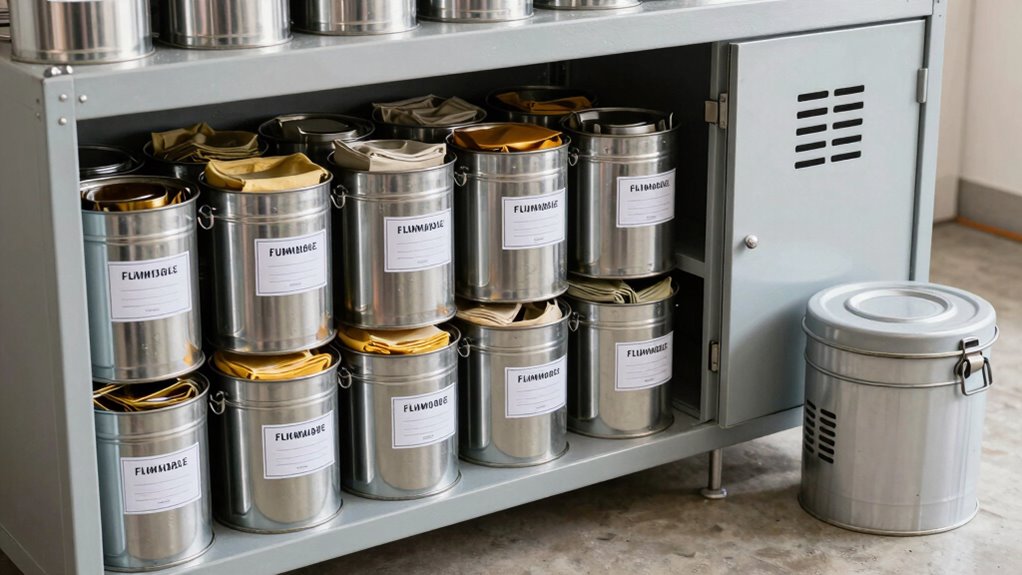
To store rags and oily finishes safely, guarantee that all rags are thoroughly dried before disposal or storage in a metal, fireproof container designed for oily materials. Keep the container tightly sealed, away from heat sources, open flames, and static electricity, in a well-ventilated area. Organizing your workspace and following proper handling practices are key to preventing fires. Staying vigilant and understanding best storage methods will help you avoid risks—continue to learn more about safety measures.
Key Takeaways
- Dry oily rags completely before storage to prevent heat buildup and spontaneous combustion.
- Use designated, fireproof metal containers with tight-fitting lids for storing oily rags.
- Keep storage containers in well-ventilated areas away from heat sources, sparks, and open flames.
- Deposit rags immediately after use to minimize fire risk and prevent clutter.
- Regularly inspect and maintain storage containers for damage or leaks to ensure safety.

Storing rags and oily finishes safely is essential to prevent fire hazards and guarantee your workspace remains safe. Many people underestimate the danger posed by flammable materials like oily rags, which can ignite unexpectedly if not stored properly. When you handle these items, you need to be proactive about fire prevention. That means understanding the risks and taking steps to minimize them, especially since oily rags are notorious for spontaneous combustion if left in piles or in improper containers.
First, always let oily rags dry completely before storing or disposing of them. If you fold or bunch them up while still damp with solvent or oil, you’re increasing the risk of heat buildup, which can lead to ignition. Once they’re dry, you should store them in a fireproof container made of metal. These containers are designed specifically to contain any residual heat and prevent ignition, unlike plastic or paper alternatives that can easily catch fire. Keep the container tightly sealed and in a well-ventilated area away from heat sources, open flames, or electrical equipment.
Proper organization is key. Never leave oily rags lying around on surfaces or in cluttered piles. Instead, designate a specific, fire-resistant container for oily materials and make it a habit to deposit rags immediately after use. This minimizes the chance of accidental ignition and keeps your workspace tidy. Remember, even small amounts of residual solvent can be enough to cause a fire if the rags aren’t stored correctly. Always check the manufacturer’s instructions for specific storage recommendations for the finishes or solvents you’re using.
Regularly inspect your storage area and containers for signs of deterioration or leaks. If you notice any leaks or damage, replace the container immediately. Keep flammable materials away from sources of static electricity or sparks, which can ignite vapors present in the air or on the surface of oily rags. If you’re working in a commercial or woodworking setting, establish a clear fire prevention protocol, including training for all staff on how to manage and store flammable materials properly. Additionally, understanding the fire safety principles related to storage can further enhance your safety practices.
Ultimately, taking these precautions isn’t just about following safety rules; it’s about protecting yourself, your coworkers, and your workspace. Proper storage of rags and oily finishes considerably reduces the risk of fire, ensuring that your environment remains safe and that you can focus on your work without worrying about preventable accidents. Remember, safety starts with awareness and responsible handling of flammable materials.
Frequently Asked Questions
Can I Reuse Oily Rags After They Dry?
You shouldn’t reuse oily rags after they dry because residual oils can ignite if mishandled. For safe rag disposal, let them dry completely outdoors or in a well-ventilated area, using drying methods like hanging or spreading them flat. Once fully dried, avoid reusing them for other projects, as they may still pose a fire risk. Proper disposal minimizes hazards and keeps your workspace safe.
What Signs Indicate a Rag Is a Fire Hazard?
You should toss a rag if it’s still damp with flammable materials or has oily finishes, as these increase fire risk. Signs include lingering odor, dampness, or visible oil residue. To prevent fires, always store used rags in a metal container with a lid, keep them away from heat sources, and guarantee proper disposal. Recognizing these signs helps you practice effective fire prevention and keeps your workspace safe.
How Long Can Oily Finishes Be Stored Safely?
Oily finishes are like ticking time bombs, and you must be cautious. Typically, you should store them safely for no more than a few days to a week. Chemical reactions can cause spontaneous combustion if stored too long. Always make certain rags are fully dry, stored in a metal container with a lid, and kept away from heat sources. Proper storage durations minimize fire risks and keep your workspace safe.
Are There Eco-Friendly Storage Options for Oily Rags?
Yes, there are eco-friendly storage options for oily rags. You can opt for biodegradable options, like compostable bags or wraps, to reduce environmental impact. Reusable containers made from stainless steel or glass are also excellent choices; they’re durable and can be easily cleaned for multiple uses. Just guarantee you store rags properly to prevent fire hazards, and always follow safety guidelines when handling oily finishes.
What Should I Do if a Stored Rag Catches Fire?
If a stored rag catches fire, act quickly to prevent damage. First, call emergency services. Use a fire extinguisher if it’s safe and appropriate, focusing on chemical reactions involved in oily rags. Never throw water on the fire, as it can intensify it. Follow fire safety tips by removing nearby combustibles and smothering the flames with a metal lid or fire blanket. Stay safe and evacuate if needed.
Conclusion
By storing your rags and oily finishes safely, you’re creating a fortress against fire hazards, turning potential chaos into calm. Think of your workspace as a garden—tend it carefully, and it’ll flourish without danger. With just a little diligence, you’re weaving a safety net that catches any sparks before they ignite. Keep these habits tight, and your projects will stay vibrant and secure, shining like a well-tended flame—bright, warm, and safe.