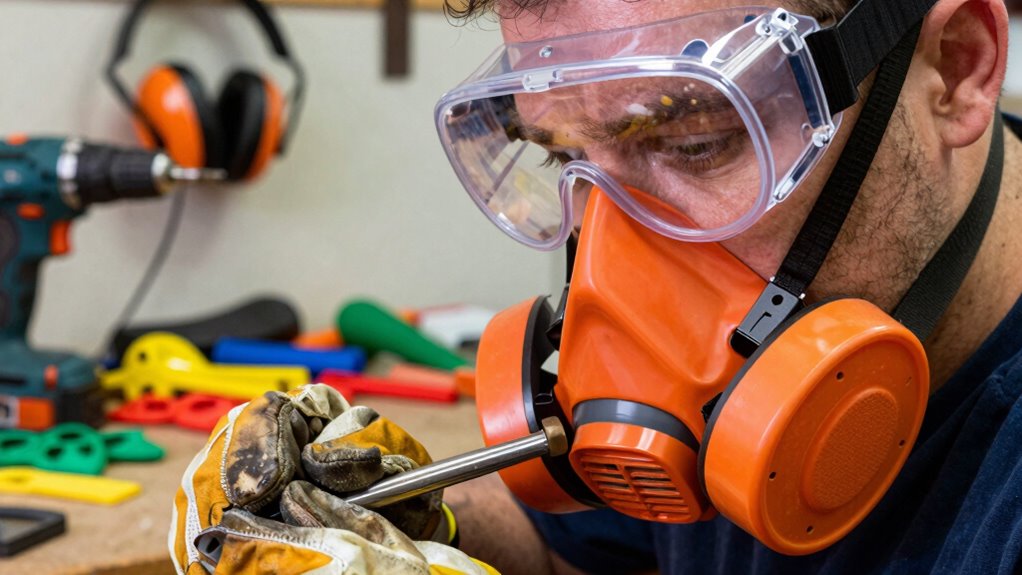
Protecting yourself as a maker involves using key PPE like safety goggles to shield your eyes from splatters and debris, and gloves to prevent cuts, burns, or chemical exposure. Depending on the task, you might also need masks, ear protection, or aprons. Not all PPE offers the same level of safety, and choosing the right gear is essential for your health. Keep exploring to discover how to choose PPE that keeps you safe during various maker activities.
Key Takeaways
- PPE like safety goggles and gloves protect against common hazards such as debris, splashes, and cuts during maker activities.
- Properly fitted PPE ensures maximum protection and prevents accidents caused by loose or inappropriate gear.
- PPE should be selected based on task-specific hazards, including chemical exposure, heat, or flying particles.
- Adequate ventilation complements PPE use by reducing airborne hazards and enhancing overall safety.
- Not all protective gear offers complete safety; understanding what PPE protects against and its limitations is essential.
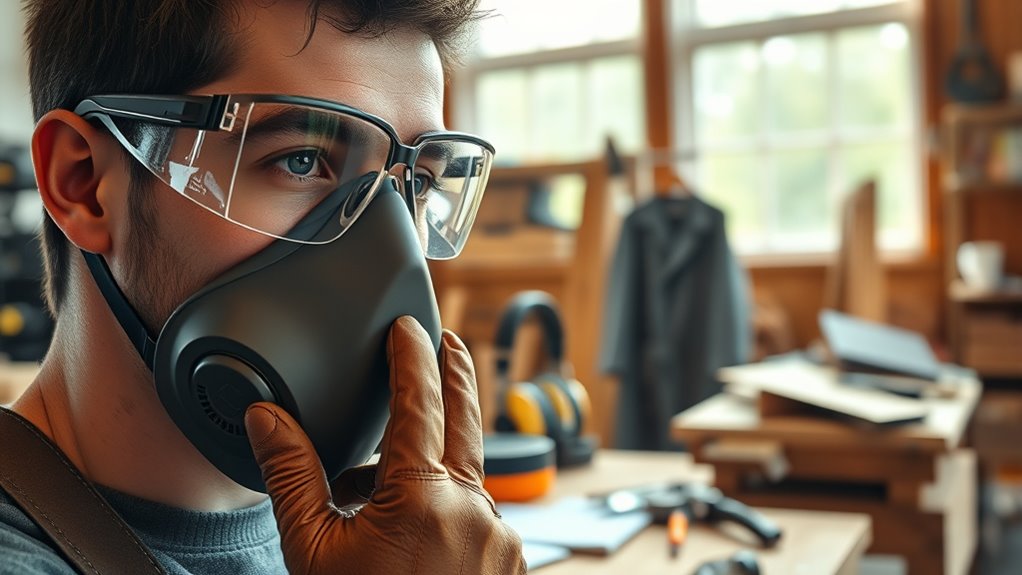
Ever wondered why Personal Protective Equipment (PPE) is indispensable for makers? It’s because your safety depends on it. Whether you’re cutting, soldering, or assembling, hazards are everywhere. Without proper protection, you risk injuries that could be avoided with the right gear. The most common and essential pieces of PPE for makers include safety goggles and protective gloves. These items are your first line of defense against unexpected accidents and should never be overlooked.
Safety goggles are essential when you’re working with materials that can splatter, fly, or release particles. For example, if you’re grinding metal or cutting wood, tiny shards and dust can easily get into your eyes. Safety goggles provide a clear, snug fit that shields your eyes from debris, sparks, and chemical splashes. They’re designed to stay securely in place, even during fast-paced work, and can prevent serious injuries like eye cuts or chemical burns. Wearing goggles isn’t just a recommendation; it’s a necessity for maintaining your vision and avoiding costly medical issues down the line.
Protective gloves are equally important. When handling sharp tools, hot surfaces, or chemicals, your hands are at constant risk. Good quality gloves act as a barrier, reducing the chance of cuts, burns, or chemical absorption. Different tasks require different glove types—leather gloves for heavy-duty work, nitrile or latex gloves for chemical handling, and heat-resistant gloves for soldering or working with high temperatures. It’s essential to select the right gloves for the job because ill-fitting or inappropriate gloves can be more of a hazard than no gloves at all. Proper gloves allow you to maintain dexterity while protecting you from potential injuries.
While safety goggles and gloves are critical, don’t forget other PPE like masks, ear protection, and aprons, depending on what you’re working on. It’s tempting to skip protective gear when you’re passionate to finish a project, but doing so increases your risk of accidents. Always assess the hazards beforehand and choose the appropriate PPE to mitigate them. Remember, PPE isn’t just about compliance; it’s about protecting your health and ensuring you can continue creating safely. Investing in good safety gear pays off by preventing injuries that could sideline you for weeks or even permanently affect your ability to make. Stay vigilant, and make PPE an integral part of your maker routine.
Additionally, understanding the importance of ventilation considerations can significantly enhance your safety by reducing exposure to harmful fumes and dust generated during various tasks.
Frequently Asked Questions
How Often Should I Replace My PPE Gear?
You should replace your PPE gear regularly based on PPE maintenance and hygiene practices. Inspect your equipment often for signs of wear, damage, or contamination. Replace items like gloves, masks, or goggles immediately if they’re torn, dirty, or compromised. For reusable gear, clean and sanitize it as recommended, and replace it if it shows signs of deterioration or after a certain period, typically every few months, to guarantee maximum protection.
Can PPE Be Reused Safely?
Yes, reusable PPE can be safely used again if you keep it in shipshape condition. Think of PPE cleaning like tending a garden—regular care keeps it thriving. Wash and inspect your gear thoroughly, removing any signs of wear or damage. Proper PPE cleaning guarantees your gear remains effective, so you stay protected. When in doubt, replace rather than risk, because your safety’s worth more than any shortcut.
What PPE Is Necessary for Woodworking?
When woodworking, you need essential PPE like dust masks to protect your lungs from sawdust and airborne particles. Hearing protection is also vital to guard against loud noises from power tools. Always wear a properly fitted dust mask and earplugs or earmuffs. These items prevent health issues and guarantee your safety while working. Remember, using the right PPE keeps you safe and comfortable during every project.
Are There PPE Options for People With Allergies?
If you have allergies, you can find PPE options that suit your needs. Look for hypoallergenic masks and gloves designed to reduce exposure to allergenic materials, such as latex or certain chemicals. Choose respirators with adjustable filters, allergy-friendly fabrics, and dust masks made from hypoallergenic materials. By selecting these specialized PPE options, you protect yourself from irritants, minimize allergic reactions, and work comfortably and safely in your crafting environment.
How Do I Store PPE Properly?
You should store PPE in a clean, dry place away from contaminants, following proper storage guidelines. Keep items in sealed containers or designated storage bins to prevent dust, dirt, and moisture from impairing their effectiveness. Regular PPE maintenance involves inspecting for damage, cleaning according to manufacturer instructions, and replacing worn or expired gear. By taking these steps, you ensure your PPE remains protective and ready whenever you need it.
Conclusion
Remember, PPE is your shield in the workshop, a trusty armor against hidden dangers. It’s like wearing a safety net beneath your creative acrobatics—protecting your hands, eyes, and lungs from unexpected tumbles. While PPE isn’t foolproof, it’s your first line of defense, turning chaos into control. So gear up confidently, and let your passion for making soar safely, knowing you’ve wrapped yourself in the armor of knowledge and protection.