
To dispose of rags, solvents, and finishing waste safely, you should first identify whether they’re hazardous by checking labels and residues. Store them in approved, tightly sealed containers in a cool, well-ventilated area away from ignition sources. Always dry or evaporate liquids completely before disposal. Use certified disposal services that follow environmental regulations, and avoid placing hazardous waste in regular trash. Want to make sure you’re handling everything properly? Keep exploring to learn more about safe disposal practices.
Key Takeaways
- Store solvent-soaked rags in labeled, airtight metal containers to prevent spontaneous combustion.
- Allow rags and finishing waste to dry completely before disposal to reduce fire risks.
- Use certified hazardous waste disposal services that comply with EPA and OSHA regulations.
- Avoid disposing of rags and solvents in regular trash; follow local hazardous waste disposal guidelines.
- Keep storage areas well-ventilated, away from ignition sources, and regularly inspect for leaks or deterioration.
Understanding the Risks of Improper Disposal
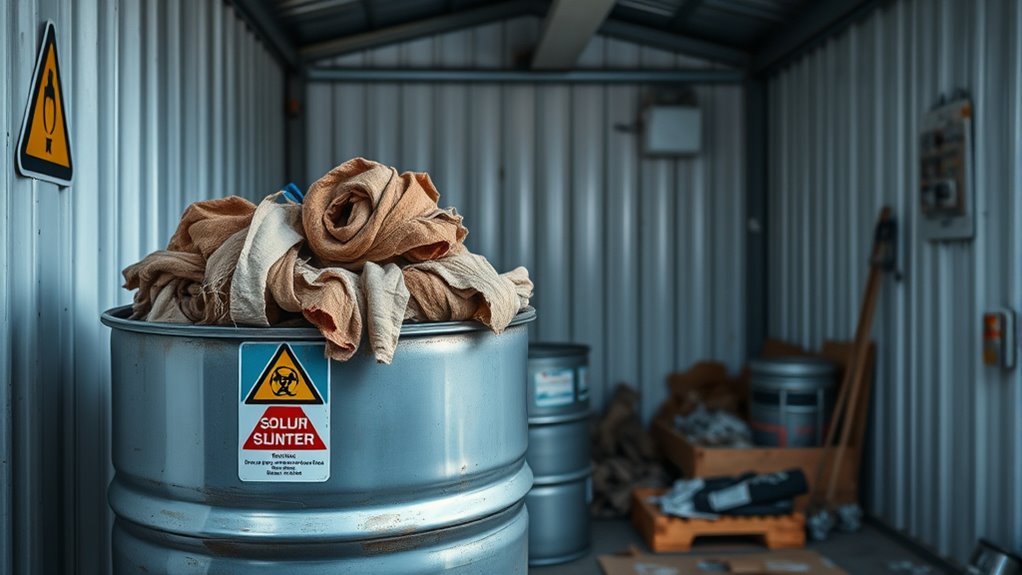
Improper disposal of rags, solvents, and waste can pose serious health and environmental hazards. When these materials aren’t handled correctly, they can undergo dangerous chemical reactions, such as combustion or the release of toxic fumes. This can lead to fire hazards and environmental contamination if not managed properly. Wearing personal protective equipment (PPE) is essential to minimize exposure to harmful substances and prevent skin irritation or respiratory issues. Without proper disposal, hazardous residues can contaminate water sources and soil, affecting ecosystems and public health. Recognizing these risks underscores the importance of following safe procedures, including storing materials properly and avoiding spontaneous combustion. Implementing proper disposal methods can prevent chemical accidents and reduce environmental impact. Staying aware of these hazards helps you prevent accidents and protects both yourself and the environment. Additionally, understanding the chemical properties of solvents and waste can aid in choosing the correct disposal techniques. Being informed about natural pool filtration systems and other sustainable practices can also contribute to safer and more environmentally friendly backyard maintenance.
Identifying Hazardous Materials in Rags and Waste
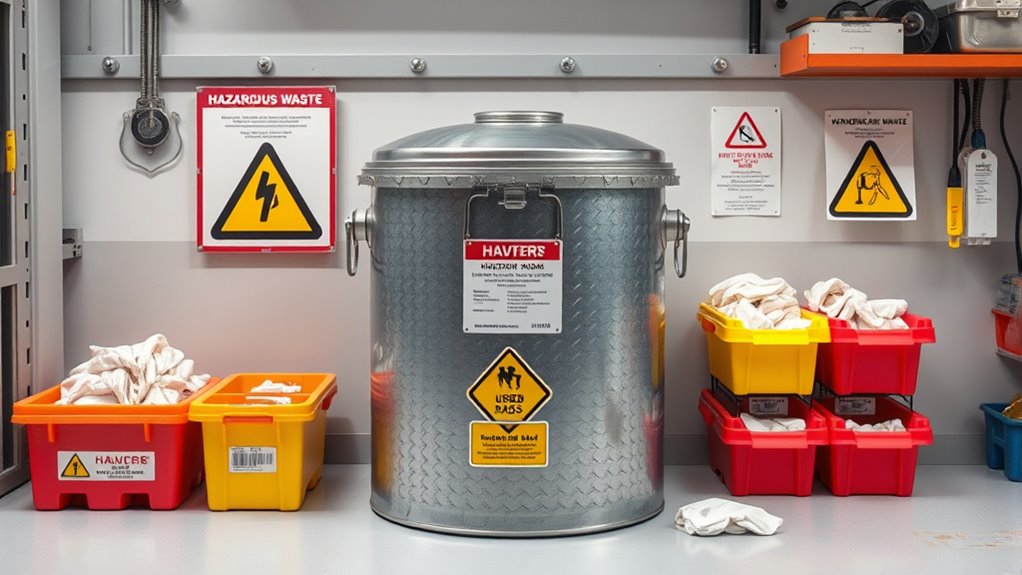
To guarantee safe disposal, you need to be able to identify which materials are hazardous. Understanding the chemical composition of your rags and waste helps you distinguish between safe and dangerous items. Look for signs like strong odors, unusual colors, or residue that indicates chemicals or solvents. Material identification involves checking labels, labels, and the origin of waste to determine if it contains flammable, toxic, or reactive substances. Use this table as a quick guide:
| Material Type | Hazardous Indicators |
|---|---|
| Solvent-soaked rags | Strong chemical smell, residue, or stains |
| Paint or finishing waste | Visible paint, varnish, or chemical residue |
| Used cleaning rags | Odor, stains, or chemical smell |
| Unlabeled waste | Uncertain composition, suspicious appearance |
Proper identification guarantees safe handling and disposal. Additionally, understanding hazardous waste disposal guidelines ensures you follow proper procedures to protect health and the environment. Being aware of proper disposal procedures helps prevent accidents and environmental contamination. Recognizing chemical hazards in waste materials is crucial for implementing appropriate safety measures during disposal.
Proper Storage of Flammable and Toxic Materials
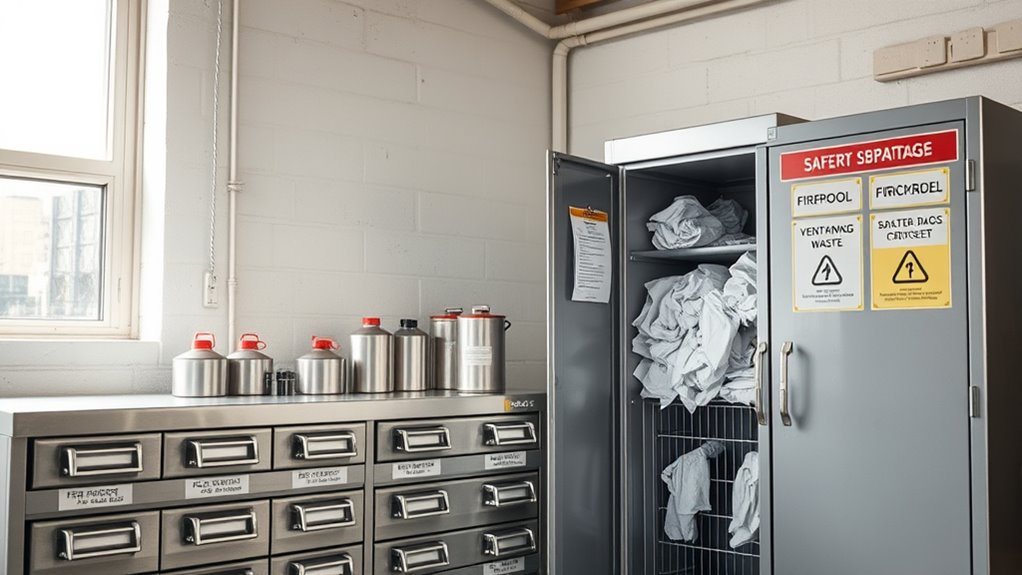
To keep hazardous materials safe, you need to store them properly. Use approved containers and place them in cool, well-ventilated areas away from any ignition sources. Doing so minimizes risks and helps prevent accidents or fires. Additionally, it’s important to regularly inspect storage areas for leaks or deterioration to maintain safety. Proper air filtration can also help reduce the buildup of fumes and contaminants in storage zones, enhancing overall safety. Incorporating connected safety devices can provide real-time monitoring and alerts for hazardous conditions, further improving storage safety. Ensuring storage safety practices align with your home’s ventilation systems can help mitigate potential risks and improve overall hazard control.
Use Appropriate Containers
Have you ever considered how essential it is to store flammable and toxic materials in the right containers? Selecting appropriate containers ensures safety and prevents spills or accidents. Use containers made from materials compatible with the substances you’re storing—metal or specific plastics often work best. Always label hazardous waste clearly, including the contents and date of disposal, to avoid confusion or misuse. Proper labeling helps you and others identify dangers quickly and handle materials safely. Make sure containers have tight-fitting lids to prevent leaks and limit exposure. Avoid overfilling them, which could cause spills or chemical reactions. Choosing suitable containers and properly labeling hazardous waste helps you create a safer workspace and reduce the risk of fire, exposure, or environmental contamination. Proper storage techniques, such as using appropriate storage containers, are a key part of hazardous materials management to ensure ongoing safety. Additionally, referring to security zone info can guide you in implementing safety measures for handling hazardous materials. Proper storage practices further minimize risks related to chemical reactions or accidental exposure.
Store in Cool, Ventilated Areas
Storing flammable and toxic materials in cool, well-ventilated areas is crucial for safety. Proper storage conditions help prevent overheating and reduce the risk of fire or explosion. Ensure the storage space maintains a consistent, cool temperature to slow chemical reactions and minimize hazards. Ventilation requirements are equally important; good airflow disperses vapors and prevents dangerous buildup. Use exhaust fans or open windows to promote air circulation, especially in enclosed spaces. Keep materials off the floor and away from heat sources or direct sunlight. Regularly inspect storage areas for leaks or spills, and maintain clear access. Incorporating ventilation standards ensures ongoing safety compliance. Proper storage practices, including segregation of chemicals, further reduce the risk of dangerous reactions. By adhering to ideal storage conditions and ventilation standards, you markedly lower risks associated with handling flammable and toxic substances. Additionally, understanding proper storage practices and pool chemistry can further enhance safety in pool-related environments. Proper labeling and segregation of materials also help prevent accidental mixing or misuse, and maintaining adequate airflow can further reduce vapor accumulation and potential hazards.
Keep Away From Ignition Sources
Keeping flammable and toxic materials away from ignition sources is essential to prevent fires and explosions. Always wear fire resistant clothing when handling or storing these substances to reduce the risk of injury. Store solvents, rags, and waste in approved containers, away from heat or open flames. Use spark free tools for tasks involving flammable materials, ensuring no sparks can ignite vapors. Keep storage areas free of clutter and remove any sources of static electricity. Proper grounding of containers helps prevent static buildup. Regularly inspect storage areas for leaks or spills and clean them promptly. Proper storage of flammable materials and waste is crucial to maintaining a safe workspace. By following these precautions, you minimize the chance of accidental ignition, keeping yourself and your workspace safe from fire hazards.
Safe Disposal Procedures for Rags and Solvents
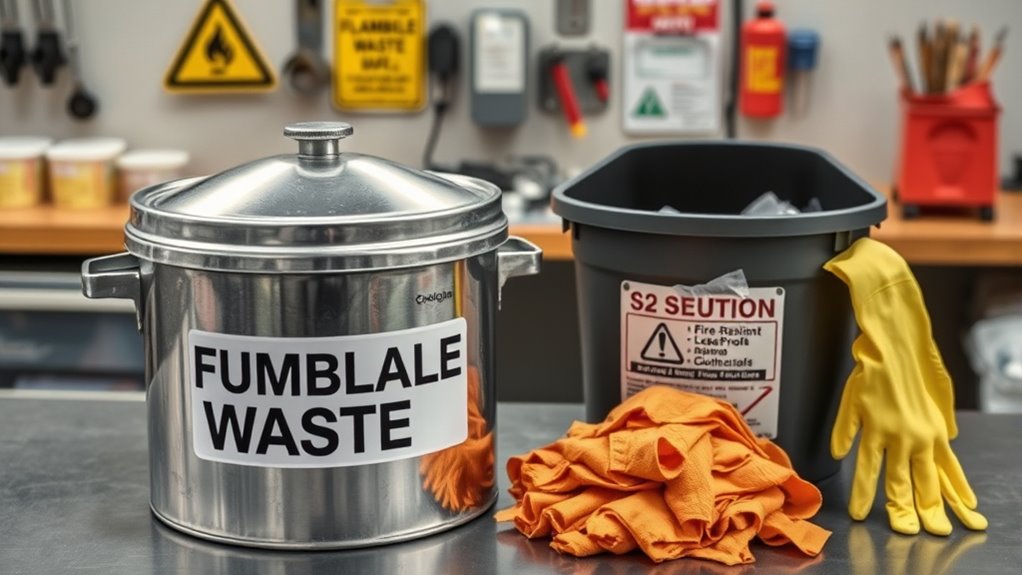
Proper disposal of rags and solvents is essential to prevent fires and environmental contamination. When handling oily or solvent-soaked rags, ensure they are stored in a designated, closed metal container to minimize risk. For biodegradable cleaning rags, follow eco friendly disposal methods, such as composting if appropriate and permitted locally. Never throw contaminated rags or solvents into regular trash, as they can ignite or pollute water sources. Always allow solvents to evaporate in a well-ventilated area before disposal, or use approved containers for safe storage. Use absorbent materials to soak up excess liquids, reducing waste volume. By following these safe disposal procedures, you protect yourself, others, and the environment from potential hazards associated with solvents and finishing waste.
Using Certified Disposal Services and Facilities
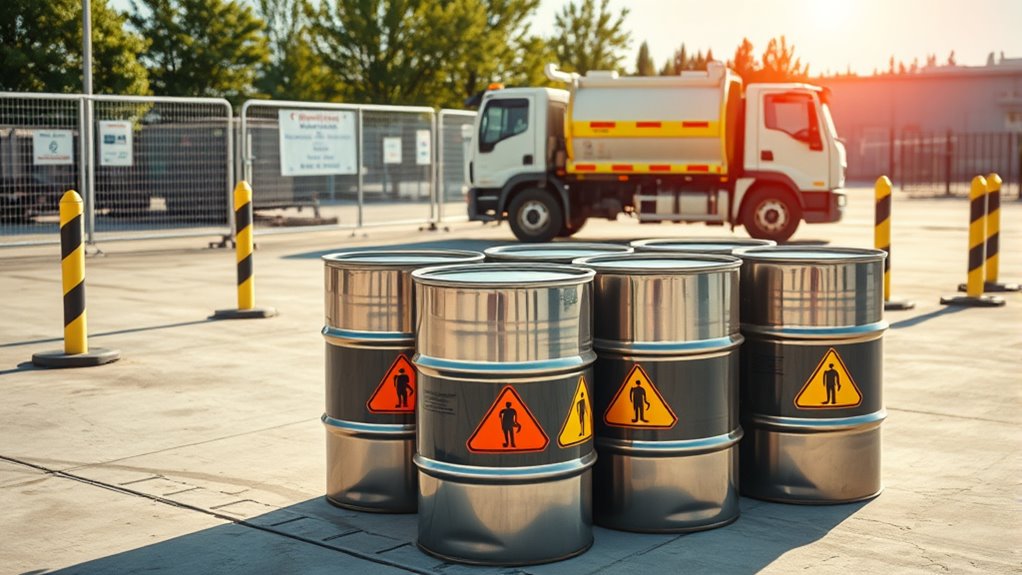
Using certified disposal services and facilities guarantees that hazardous rags, solvents, and waste are handled safely and in compliance with environmental regulations. Certified providers meet strict industry standards, ensuring proper handling, transportation, and disposal. By choosing these services, you reduce the risk of violations related to industrial regulations and protect your workspace and the environment. It’s essential to verify that disposal facilities meet certification standards, which demonstrate adherence to legal and safety requirements. Here’s a quick overview:
| Certification Standards | Industrial Regulations |
|---|---|
| Ensures compliance with EPA and OSHA | Enforces legal waste handling procedures |
| Validates safety protocols | Mandates environmental protection measures |
| Promotes responsible disposal | Prevents pollution and hazards |
| Builds trust and accountability | Ensures legal operation of disposal facilities |
Best Practices for Preventing Fire and Environmental Incidents
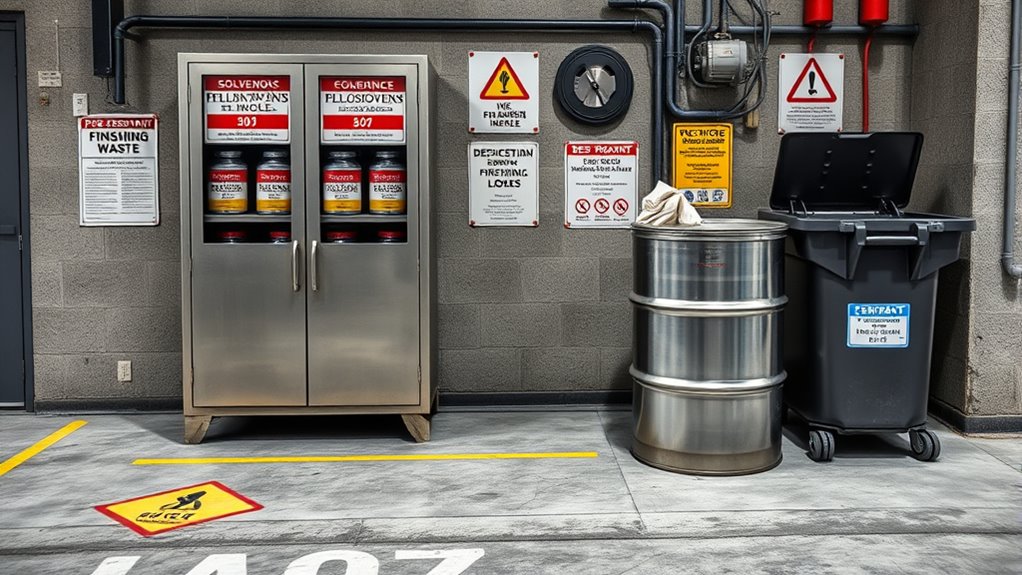
To prevent fire and environmental incidents, implementing effective safety practices is essential. Store flammable materials like rags and solvents in fire-resistant storage containers to reduce fire risk. Always label hazardous waste clearly with proper hazardous waste labeling to guarantee quick identification and proper handling. Keep storage areas well-ventilated and free of ignition sources, such as open flames or sparks. Regularly inspect storage containers for leaks or deterioration, and dispose of waste promptly to prevent accumulation. Train employees on safety procedures, emphasizing the importance of proper storage and labeling. Maintaining these practices minimizes the chance of fires and environmental contamination, protecting both your team and the surrounding environment. Consistent adherence to these safety measures creates a safer, compliant workspace.
Frequently Asked Questions
How Often Should Hazardous Waste Containers Be Inspected?
You should inspect hazardous waste containers at least weekly to guarantee compliance with storage regulations and prevent leaks or spills. Regular inspections help you identify any issues early, allowing you to take prompt spill response actions if needed. By maintaining a consistent inspection schedule, you reduce risks, stay compliant with regulations, and ensure safe storage of rags, solvents, and finishing waste. Keep detailed records of each inspection for added safety and compliance.
Can I Reuse Contaminated Rags Safely?
You can reuse contaminated rags safely if you follow proper procedures, but contamination risks increase if you don’t. Studies show that improper reuse can lead to fires or chemical exposure in over 20% of cases. Always inspect rags thoroughly, store them in designated containers, and limit reuse to prevent hazards. Reuse safety depends on understanding these risks and handling rags with care to avoid dangerous contamination.
What Training Is Required for Staff Handling Disposal?
You need to undergo proper training that covers the use of personal protective equipment and spill response procedures. This guarantees you handle disposal safely and respond quickly to any accidents. Your training should include identification of hazardous materials, proper disposal methods, and emergency protocols. Regular refreshers are essential to stay updated on safety standards, helping you prevent injuries and environmental contamination during disposal.
Are There Specific Regulations for Small-Scale Disposal Businesses?
Yes, small-scale disposal businesses must follow specific regulations, including obtaining proper disposal licensing and adhering to local, state, and federal laws. You need to understand small business regulations related to hazardous waste management, guarantee proper storage, and maintain accurate records. Failing to comply can lead to fines or shutdowns. Always check with environmental agencies to stay updated on licensing requirements and ensure your disposal practices meet all legal standards.
How Do I Verify a Disposal Facility’s Certification?
To verify a disposal facility’s certification, start by checking their licensing status through your state’s environmental agency or solid waste management department. Request documentation of their certification process, guaranteeing they meet federal and state regulations. Confirm that their licenses are current and valid. You can also contact the agency directly to verify their credentials. This ensures the facility adheres to proper disposal standards, keeping your waste management compliant and environmentally safe.
Conclusion
Just as Prometheus brought fire with caution, handling rags, solvents, and waste demands respect and care. By following proper storage, disposal procedures, and partnering with certified services, you prevent fires and protect the environment. Remember, safety isn’t just a rule—it’s a responsibility you hold in your hands. Stay vigilant, act wisely, and guarantee your workspace remains secure for everyone, turning the myth of chaos into a legend of safety.