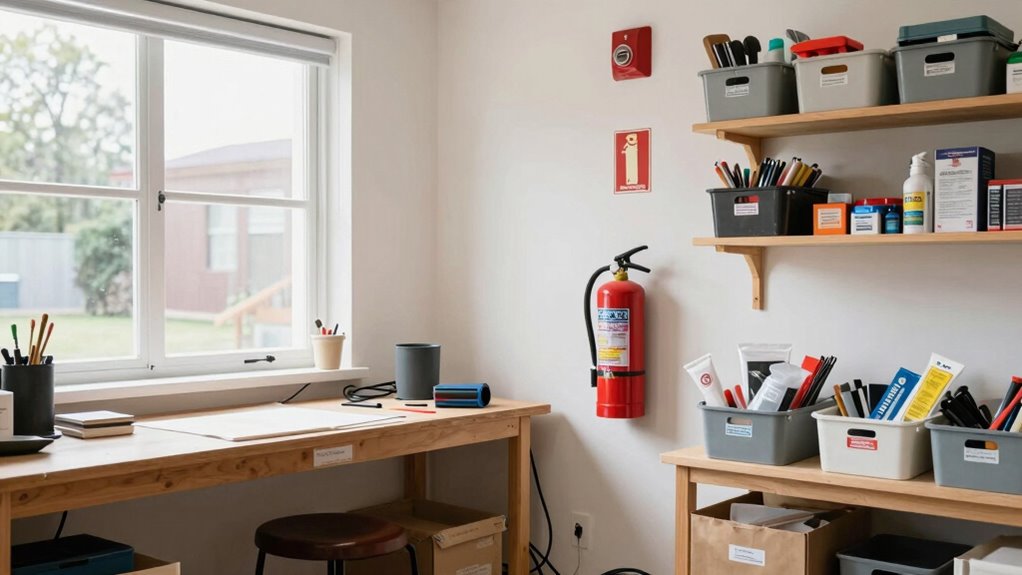
To prevent big fire problems in your craft room, develop small habits like unplugging unused devices, organizing cords neatly, and storing flammable materials properly. Keep clutter to a minimum and check cords regularly for damage. Store chemicals in fire-resistant containers away from heat sources, and use surge protectors instead of multiple outlets. Making these simple yet consistent choices can markedly reduce fire risks. Keep exploring how to keep your space safer with more practical tips.
Key Takeaways
- Regularly inspect and replace damaged cords to prevent electrical sparks and fires.
- Unplug unused equipment to avoid overloads and reduce fire risk.
- Keep cords organized and away from rugs or furniture to prevent overheating.
- Store flammable materials in fire-resistant cabinets, away from heat sources and electrical outlets.
- Maintain a clutter-free workspace to minimize hazards and ensure quick access in emergencies.

Have you ever considered how quickly a craft room fire can spread? It’s a frightening thought, especially since many of your crafting supplies and tools can become fire hazards if not handled properly. One of the leading causes of fires in craft rooms comes down to electrical hazards. Overloaded outlets, frayed cords, and improperly plugged-in equipment can all spark dangerous flames in an instant. To prevent this, it’s essential to practice good storage tips. Keep electrical cords neat and avoid running them under rugs or furniture where they can overheat. Use surge protectors for multiple devices instead of plugging everything directly into a single outlet. Regularly inspect cords for signs of damage, such as cracking or fraying, and replace them immediately. Never force a plug into an outlet if it doesn’t fit comfortably, as that can cause sparks and short circuits. Ensuring your workspace is electrically safe is a small habit that can save you from a major disaster.
Beyond electrical hazards, proper storage tips are crucial for fire prevention. Cluttered shelves and stacked materials can easily catch fire if a spark or heat source is nearby. Keep flammable items, like paper, fabric, and aerosol sprays, stored in fire-resistant cabinets or away from heat sources. Organize your supplies so that no items are precariously stacked or piled up. This not only reduces fire risk but also makes it easier to spot potential hazards. For example, if you notice a pile of old rags near a lamp or heater, move them immediately. Always keep your work area clean and free of unnecessary clutter, especially around electrical outlets and appliances. Proper storage tips aren’t just about neatness; they’re about minimizing the risk of accidental fires from combustible materials coming into contact with heat or sparks.
In addition to these habits, be conscious of where you place your tools and supplies. Store paints, solvents, and other chemicals in well-ventilated areas, away from electrical devices. Never keep flammable liquids near open flames or heat sources. Regularly review your storage practices and update them if you add new equipment or supplies. A disciplined approach to electrical safety and storage tips forms the backbone of your craft room’s fire safety. It’s about making small, consistent choices—like unplugging unused devices, keeping cords organized, and storing hazardous materials properly—that collectively prevent big problems. Incorporating fire-resistant storage solutions can further enhance your safety measures. Taking these simple but effective precautions ensures your creative space remains a safe haven rather than turning into a dangerous fire hazard.
Frequently Asked Questions
How Often Should Fire Drills Be Conducted in a Craft Room?
You should conduct fire drills in your craft room at least every three to six months to guarantee preparedness. Regular fire drill frequency helps you and anyone else in the space practice emergency procedures effectively. Make sure to schedule these emergency practice sessions consistently so everyone knows what to do in case of a fire. Staying proactive with these drills reduces panic and increases safety, keeping your craft room a secure environment.
What Are the Best Fire Extinguishers for Craft Room Fires?
Think of your craft room as a safe harbor; the right fire extinguisher is your shield. For craft room fires, ABC extinguishers are best—they handle paper, wood, and electrical fires effectively. Always choose safety equipment with clear labels and easy-to-use handles. Keep them accessible and regularly check their pressure. This simple step guarantees you’re prepared to protect your creative space from unexpected flames.
How Can I Prevent Electrical Fires in My Craft Space?
You can prevent electrical fires in your craft space by practicing good electrical safety and following fire prevention tips. Always unplug unused equipment, avoid overloading outlets, and use surge protectors. Regularly inspect cords for damage and keep flammable materials away from electrical sources. Keep your workspace organized, and don’t forget to turn off devices when not in use. These small habits considerably reduce fire risks and keep your craft area safe.
Are There Specific Fire Safety Codes for Craft Rooms?
Yes, there are fire safety regulations specific to craft rooms. You should follow local fire safety codes that emphasize proper storage safety, such as keeping flammable materials away from heat sources and ensuring adequate ventilation. Regularly check your electrical wiring and avoid overloading outlets. Keep fire extinguishers accessible and maintain clear escape routes. Staying compliant with these regulations helps protect your space and prevents potential fire hazards.
What Should I Include in a Craft Room Fire Emergency Plan?
You should include clear escape routes, designated safety equipment like fire extinguishers, and a plan for quickly shutting off electricity and heat sources. Make sure to keep emergency contacts, including local fire department and nearby hospitals, easily accessible. Practice your fire drills regularly with everyone in your household or workspace, so they know how to respond swiftly and safely during an actual fire emergency.
Conclusion
By practicing small habits, you build a shield around your craft haven, turning tiny sparks into a fortress of safety. Keep your space tidy, unplug when not in use, and stay alert—these simple steps are your fire’s silent alarm. When you nurture these habits, you’re weaving a safety net that catches trouble before it sparks. Remember, in your craft room, safety isn’t just a rule; it’s the melody that keeps your creative fire burning bright and secure.