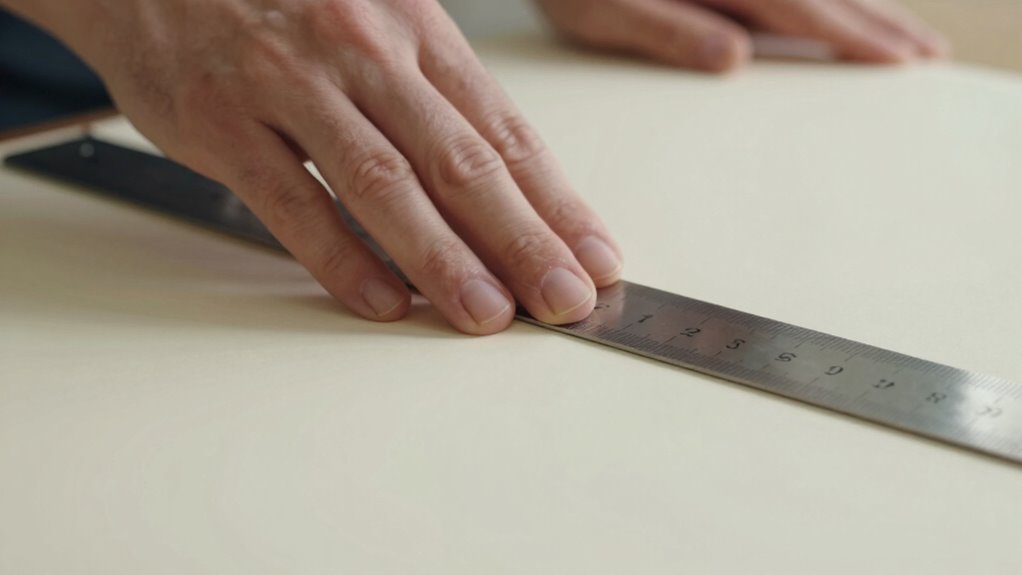

To score paper without tearing, choose thinner, flexible paper and prepare a clean, flat workspace. Lightly mark guide lines with a ruler and pencil to guarantee straight folds. Use a gentle, consistent pressure with a bone folder or scoring tool along the lines, avoiding heavy force or sawing motions. Test the fold and deepen the score if needed for a smooth, clean edge. If you’d like detailed tips, stay with us for more expert advice.
Key Takeaways
- Use a sharp, smooth-edged scoring tool like a bone folder for gentle, controlled pressure along guide lines.
- Lightly draw guide lines with a ruler and pencil to ensure accurate, straight scoring without excessive force.
- Adjust pressure based on paper thickness, applying gentle, steady pressure to prevent tearing.
- Score on a flat, protective surface with proper tools to minimize workspace damage and maintain control.
- Test the fold gently after scoring, and deepen the score gradually if needed, to achieve a clean, tear-free fold.

Scoring paper without tearing it can seem tricky, but with the right techniques, you can achieve a clean, precise fold every time. The key lies in proper scoring techniques and thorough paper preparation. Before you even start, select the right type of paper. Thinner, more flexible papers are easier to score accurately, while thicker cardstock may require more careful handling. Once you’ve chosen your paper, prepare your workspace. Clear a flat surface and gather your scoring tools—whether it’s a bone folder, craft knife, or a specialized scoring board. Proper paper preparation ensures your paper stays steady and minimizes the risk of accidental tears.
Choosing the right paper and preparing your workspace are essential for tear-free scoring.
Begin by measuring and marking where you want to score. Use a ruler and pencil to lightly draw a guide line. This step is *vital* because it helps you align your scoring tool correctly, ensuring a straight, even fold. When you’re ready, set your paper on a clean, flat surface. Place a protective layer beneath, like a scrap piece of cardboard or a cutting mat, to prevent damage to your workspace. Position your paper carefully along the guide line, making sure it’s aligned properly. Applying gentle, consistent pressure with your scoring tool is essential—press too hard, and you risk tearing; press too lightly, and the score won’t be deep enough.
For best results, use a scoring technique that involves a firm, controlled motion. If you’re using a bone folder, drag it smoothly along the guide line with moderate pressure. With a craft knife, run the blade lightly over the paper, maintaining the same pressure throughout the line. Avoid sawing or applying uneven force, as that can cause unwanted tears or jagged edges. Take your time during this process; a slow, deliberate score is more accurate and safer. Additionally, understanding the properties of your paper, such as its flexibility and thickness, can help you adapt your technique accordingly based on material characteristics.
Once you’ve scored the paper, test the fold gently. If it doesn’t fold cleanly, you can deepen the score slightly by running your tool over it again. Remember, proper paper preparation—like ensuring the paper is flat and well-aligned—makes a significant difference in achieving a neat fold. With patience and the right scoring techniques, you’ll find that scoring paper becomes an easy task, giving your projects a professional, polished appearance every time.
Frequently Asked Questions
Can Scoring Paper Damage Its Surface?
Scoring paper can damage its surface if you use improper techniques or apply too much pressure, especially on delicate paper textures. To avoid this, use gentle scoring techniques like a bone folder or a craft knife, and don’t press too hard. Proper tools and careful handling help maintain the paper’s integrity, ensuring a clean fold without tearing or damaging the surface, even on textured paper.
What Tools Are Safest for Scoring Delicate Paper?
Imagine gently pressing a feather to a whisper-thin sheet—your scoring tools should feel just as delicate. For paper safety, use a bone folder or a craft knife with a new, sharp blade. These tools give you control, reducing the risk of tears or damage. Always apply light pressure and score slowly, ensuring your delicate paper stays intact and beautifully folded.
How to Prevent Paper From Cracking When Scoring?
To prevent paper from cracking when scoring, you should use gentle scoring techniques and proper paper handling. Apply light pressure with a sharp, appropriate tool like a bone folder or scoring tool, avoiding pressing too hard. Keep the paper flat and stable, and score slowly along the fold line. This careful approach minimizes stress on the paper, ensuring a clean, crisp fold without cracks or tears.
Is There a Difference in Scoring Between Thick and Thin Paper?
Think of paper weight as the voice of your craft; thicker paper demands gentler, more precise scoring techniques to avoid tears. You’ll notice that scoring thick paper requires deeper, controlled pressure, while thin paper needs a lighter touch. Adjust your scoring tool and pressure accordingly, ensuring you don’t rip or crack the surface. Mastering these differences boosts your skill, making your project look professional and polished, no matter the paper weight.
Can Scoring Be Done on Glossy or Coated Paper?
Yes, you can score glossy or coated paper, but it requires careful paper preparation and the right scoring techniques. Before scoring, make sure the paper is clean and flat. Use a bone folder or a scoring tool with light pressure to avoid damaging the surface. Test on a scrap piece first, as coated papers can be more delicate. Proper preparation guarantees clean, precise folds without tearing the shiny surface.
Conclusion
So, next time you’re worried about tearing your paper, remember: the secret isn’t in forcing a score but in gentle care. Ironically, the more delicate you are, the cleaner your line will be—and the less you’ll have to start all over. It’s funny how a little patience saves a lot of frustration. So, take your time, score with confidence, and let the paper do the work. After all, sometimes, gentleness truly wins the day.