To remove tape residue from paper crafts without tearing, gently test a small hidden area first. Lightly dampen a soft cloth with water and mild soap, then softly dab the residue. For stubborn spots, apply a tiny amount of rubbing alcohol or use a craft eraser carefully. Avoid harsh scrubbing or excessive liquids that might damage your paper. With patience, you’ll find simple, cautious methods can preserve your craft while eliminating sticky residue. Keep going to discover more tips for safe removal.
Key Takeaways
- Test cleaning methods on a hidden area to ensure no damage or discoloration occurs.
- Gently dampen a soft cloth with water and mild soap to lift light adhesive residues.
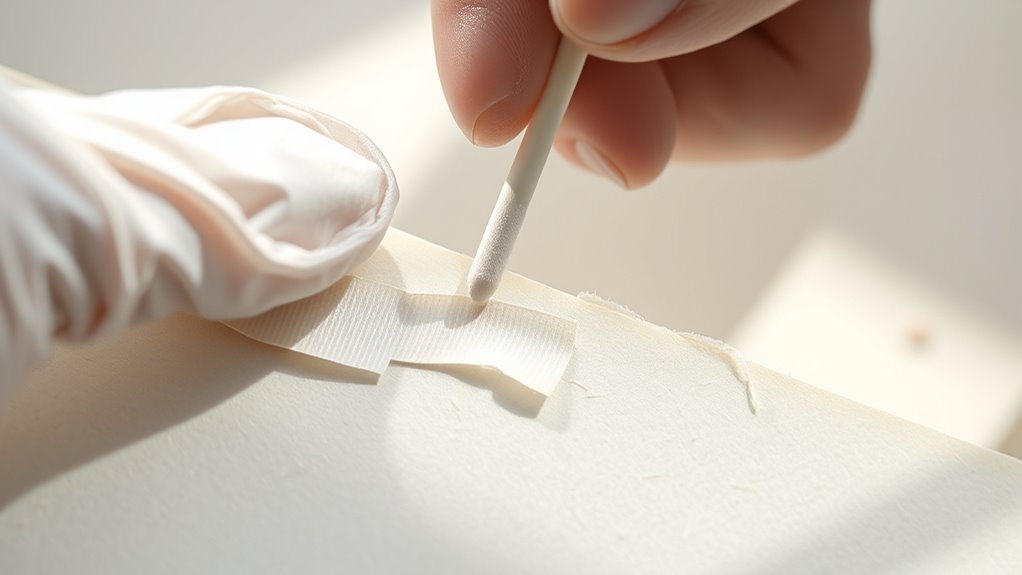
- Use a cotton swab with rubbing alcohol or hand sanitizer for stubborn tape residues carefully.
- Carefully slide a plastic scraper or old credit card under the residue to lift it without tearing paper.
- Avoid excessive liquid; work slowly and gently to preserve the integrity of your paper craft.
Removing tape residue from paper crafts can be tricky, but with the right techniques, you can clean your projects without causing damage. The key is understanding the different adhesive types involved and choosing suitable alternative removal methods to avoid tearing or smudging your work. Not all tape adhesives are created equal; some are more stubborn or delicate, so knowing what kind of adhesive you’re dealing with helps you pick the best approach. For example, masking tape and painter’s tape usually have less aggressive adhesives, making their residues easier to remove gently. Conversely, duct tape or double-sided tape often leave behind stronger, more adhesive residues that require a careful touch.
Understanding tape types helps remove residues gently without damaging paper crafts.
When tackling residue, start by examining the tape type. If it’s a light adhesive, you might find success with simple methods like using a soft cloth dampened with water and a mild soap. Gently rubbing the residue can lift it without risking tears. For more stubborn adhesives, alternative removal methods come into play. One effective approach involves applying a small amount of rubbing alcohol or hand sanitizer to a cotton swab or soft cloth. The alcohol breaks down the sticky residue without harming most paper surfaces. Be cautious and test on a small area first to ensure it doesn’t discolor or warp the paper. Understanding the adhesive properties of different tapes can help you select the most effective removal technique with minimal risk of damage.
Another useful method is using a craft eraser or a gentle adhesive remover designed for delicate materials. These tools can lift the residue without applying excessive force. Sometimes, placing a few drops of mineral oil or olive oil on the residue can loosen it, making it easier to wipe away with a soft cloth. Additionally, knowing the adhesive strength of various tapes can guide you in choosing the safest removal method to prevent tearing. It’s also helpful to consider paper type because different materials may respond differently to cleaning solutions.
If you’re dealing with more stubborn residues that refuse to budge, consider using a small plastic scraper or an old credit card. Carefully sliding it under the residue can lift it without scratching or tearing the paper. Patience is essential—rushing can cause tears or unwanted damage. Regardless of the method, always work in a well-lit area and use minimal liquid to prevent warping or staining.
Frequently Asked Questions
Can I Use Heat to Remove Tape Residue Without Damaging Paper?
Yes, you can use heat to remove tape residue without damaging paper. Apply gentle heat with a hairdryer set to low, keeping it a few inches away from the surface. The heat softens the adhesive, making it easier to peel off with minimal force. Use your fingers or a soft cloth for gentle peeling, ensuring you avoid excessive heat to prevent warping or tearing your paper craft.
What Household Items Are Best for Cleaning Tape Residue?
You can use household items like gentle adhesive removers or natural solutions to clean tape residue effectively. Rubbing alcohol or vinegar works well without damaging your paper. Apply a small amount on a soft cloth and gently dab the residue. Alternatively, a mixture of baking soda and water creates a natural solution that lifts sticky residue. Always test on a small area first to prevent any damage to your paper craft.
Will Rubbing Alcohol Harm Delicate Paper Crafts?
Rubbing alcohol can harm delicate paper crafts because it acts as a solvent that weakens adhesive strength and may cause the paper to tear or discolor. To protect your craft, test a small area first. If the adhesive isn’t too strong, gentle dabbing with a soft cloth dampened with alcohol might work. However, use caution, as solvent effects vary depending on paper type and adhesive used.
How Long Should I Wait Before Removing Tape From Paper?
You should wait at least 24 hours before removing tape from paper, giving it ample time to set and reduce the risk of damage. Timing considerations are vital for gentle removal. Use slow, careful techniques like lifting from the edge or applying a small amount of heat with a hairdryer to loosen the adhesive. Patience ensures your paper craft stays intact without tears or residue.
Is It Safe to Use Vinegar on Decorative Paper?
You might wonder if vinegar is safe on decorative paper, and the answer is yes, but with caution. Vinegar safety depends on its concentration; dilute it well to prevent damage. Test a small, hidden area first, as some decorative paper can be sensitive. If it holds up, gentle cleaning with vinegar can remove residue without harming your craft. Just don’t overdo it, and you’ll keep your project pristine.
Conclusion
Now that you know how to gently lift tape residue without tearing your paper crafts, you’re like a careful gardener tending delicate blooms. With patience and the right techniques, you can restore your projects’ beauty without causing any damage. Think of your craft as a precious garden—you want to nurture it back to life, not uproot it. Keep these tips in mind, and your paper masterpieces will stay vibrant and intact, ready to impress everyone.