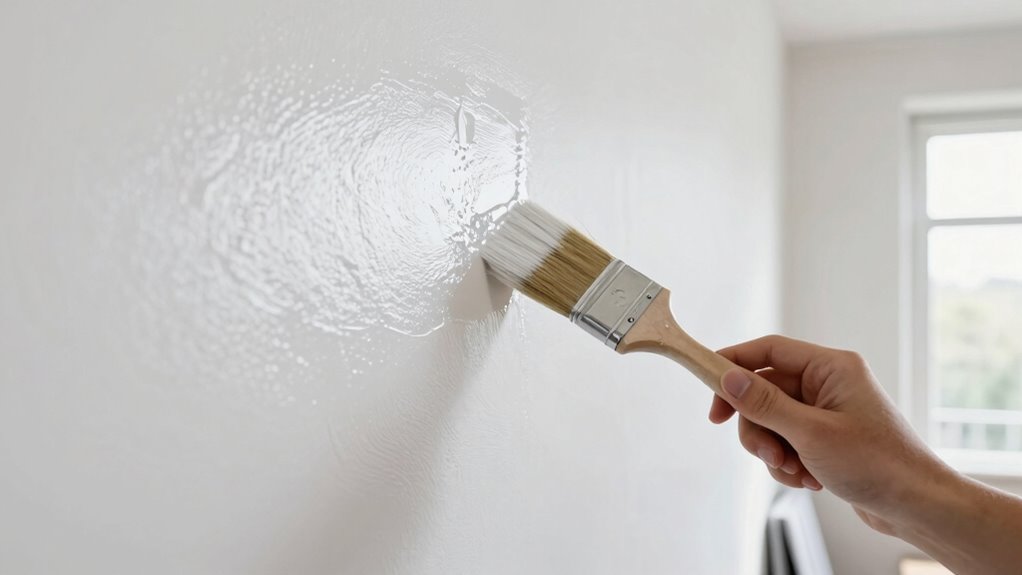
To stop paint from peeling on smooth surfaces, start by thoroughly cleaning and sanding the area to remove dirt, grease, and loose paint. Apply a high-quality primer suitable for the surface, ensuring it’s evenly coated. Use multiple thin coats of good-quality paint, applying steadily for an even finish. Maintain proper environmental conditions and allow each layer to dry completely. For more tips on achieving long-lasting paint, keep exploring proven techniques and surface prep methods.
Key Takeaways
- Properly clean, remove peeling paint, and sand the surface to create a smooth, dust-free base for better adhesion.
- Apply a high-quality, suitable primer evenly to promote strong bonding between the surface and paint.
- Use multiple thin coats of high-quality paint, allowing each layer to dry completely before applying the next.
- Maintain optimal environmental conditions—between 50°F and 85°F with low humidity—for better paint adhesion and drying.
- Lightly sand previously painted surfaces before repainting to improve adhesion and ensure a longer-lasting finish.

Peeling paint on smooth surfaces can be frustrating, but you can prevent it with proper preparation and application. The key to lasting paint jobs starts with understanding the importance of primer application. When you’re working on a smooth surface, skipping or rushing through primer application can lead to poor paint adhesion, which causes peeling over time. Primer acts as a bonding agent, creating a uniform base that helps the paint stick better and last longer. Choose a primer suited for your specific surface—whether it’s drywall, metal, or plastic—and apply it evenly, following the manufacturer’s instructions. Proper priming ensures that the paint adheres firmly to the surface, reducing the chances of peeling or flaking later on.
Proper primer application ensures paint adheres firmly and lasts longer on smooth surfaces.
Once your primer is dry, focus on the quality of your paint and the way you apply it. Use a high-quality paint designed for the surface you’re working on, and always stir it thoroughly before use. When applying the paint, avoid thick coats—multiple thin layers provide better adhesion and a smoother finish. Keep your brush or roller well-loaded but not overloaded, and work steadily to spread the paint evenly. If you’re painting over a previously painted surface, make sure to lightly sand it first. Sanding helps create a slightly rough texture that improves paint adhesion by giving the new layer something to grip onto. After sanding, remove any dust with a damp cloth so you don’t compromise the bond.
Temperature and humidity also play a role in preventing peeling. Paint adheres best in moderate conditions—ideally between 50°F and 85°F, with low humidity. If you’re painting during extreme weather, wait for better conditions or use paints formulated for challenging environments. Additionally, avoid rushing the drying process; give each coat enough time to cure fully before applying the next. Rushing can trap moisture or cause uneven adhesion, leading to peeling down the line.
Finally, proper surface preparation isn’t just about priming and sanding. Clean the surface thoroughly to remove dirt, grease, or any previous peeling paint. Use a gentle cleaner or a mixture of water and mild detergent, and then rinse well and dry completely. When all these steps are followed—priming correctly, applying paint evenly, working under suitable conditions, and preparing the surface—you considerably reduce the risk of paint peeling off your smooth surfaces. Good surface surface preparation is essential for achieving a durable, long-lasting finish. With patience and attention to detail, your painted surface will stay looking fresh and intact for years to come.
Frequently Asked Questions
Can Weather Conditions Affect Paint Adhesion on Smooth Surfaces?
Yes, weather conditions can affect paint adhesion on smooth surfaces. Moisture interference from rain or high humidity can cause paint to peel or bubble. To prevent this, guarantee proper surface preparation and avoid painting in extreme weather. Wait for dry, mild days, and always let the surface dry completely before applying paint. This helps the paint bond better and reduces the risk of peeling caused by weather-related moisture issues.
What Types of Paint Are Best for Peeling-Prone Surfaces?
You should choose high-quality, flexible paints designed for smooth surfaces, such as acrylic or elastomeric paints. These paints resist peeling by accommodating surface movement. Prioritize thorough paint preparation and surface priming to improve adhesion, ensuring the paint bonds effectively. Applying multiple thin coats instead of one thick layer helps prevent peeling. By selecting the right paint and following proper prep steps, you’ll create a long-lasting, smooth finish that resists peeling.
How Long Should I Wait Before Repainting After Peeling Occurs?
You should wait at least 24 to 48 hours after peeling occurs before repainting. This allows you to evaluate timing considerations and guarantee the surface is fully dry and properly prepared. First, remove any loose paint, clean the surface thoroughly, and let it dry completely. Proper surface preparation is essential for adhesion. Rushing this process can lead to more peeling, so take your time to get it right before applying new paint.
Are There Eco-Friendly Options to Prevent Paint From Peeling?
You can prevent paint from peeling by choosing eco-friendly options like eco-friendly primers and natural sealants. These products create a strong, breathable barrier that adheres well to smooth surfaces while reducing environmental impact. Apply the eco-friendly primer first, let it dry thoroughly, then seal with natural sealants. This approach helps improve paint adhesion and longevity, all while staying eco-conscious.
Does the Age of the Surface Influence Paint Adhesion?
Think of your surface as a blank canvas—its age influences how well paint clings. When the surface is old or worn, it’s like a fragile foundation that needs extra care. You must focus on proper surface preparation and guarantee paint compatibility. If you skip these steps, the paint’s grip weakens, leading to peeling. Age doesn’t doom your project, but neglecting preparation and compatibility can make it fail.
Conclusion
By following these tips, you can enjoy a smooth, lasting finish that stays put. Don’t let peeling paint ruin your space—imagine your walls looking fresh and flawless for years to come. Even if you’ve struggled before, a little prep and the right techniques make all the difference. Picture yourself confidently tackling your next painting project, knowing you’ve set yourself up for success. With patience and care, your surfaces will stay beautiful and peel-free.