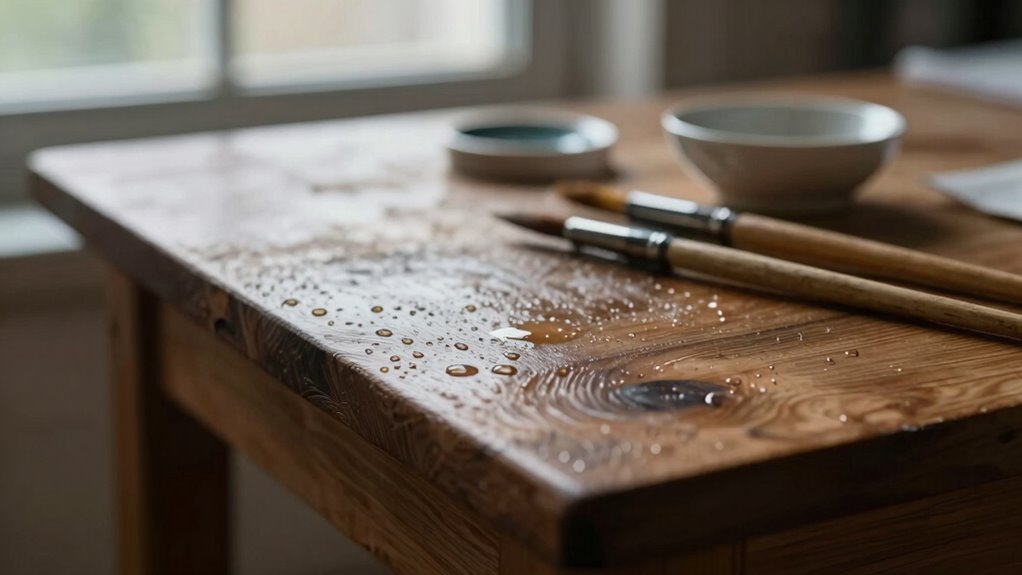
Humidity greatly impacts how crafts dry, often quietly altering your process. High humidity slows evaporation, meaning paints, glues, or clay take longer to set, risking surface issues or mold. Low humidity speeds drying but can cause cracks or warping if you’re not careful. Controlling moisture levels through vents or dehumidifiers can help you manage these effects. Understanding this quiet factor helps you perfect your craft; keep going to learn more ways humidity influences your projects.
Key Takeaways
- High humidity slows evaporation, extending drying times for crafts like paint, clay, and wood.
- Low humidity speeds up drying, increasing crack or warp risks if not managed properly.
- Controlling ambient moisture with fans or dehumidifiers helps optimize drying conditions.
- Adjusting coat thickness and drying schedules is crucial in humid environments to prevent defects.
- Understanding climate effects allows craftspeople to tailor techniques and environment controls for better results.
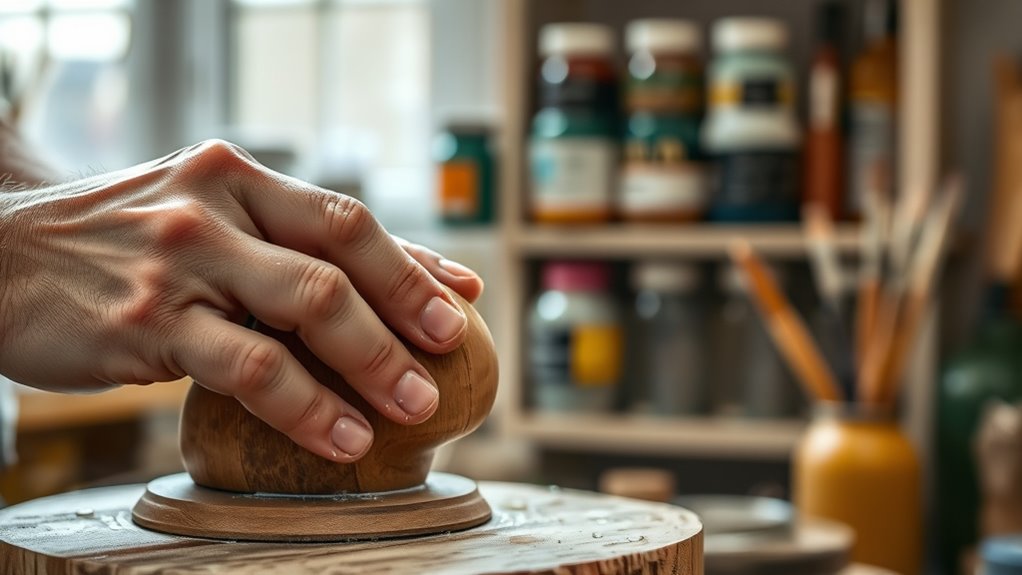
Humidity plays a crucial role in the success and quality of many crafts, influencing materials’ behavior and outcomes. Whether you’re working with paint, clay, wood, or textiles, the moisture level in your environment directly impacts how quickly and effectively your project dries. Recognizing how climate effects shape your drying process can help you adapt your techniques, ensuring better results and fewer setbacks. When humidity is high, the air holds more moisture, which slows down evaporation. This means your paint may take longer to set, your glue might remain tacky longer, and your clay or wood could stay damp for extended periods. Conversely, in low-humidity settings, drying occurs rapidly, increasing the risk of cracks, warping, or uneven finishes if you’re not careful. Understanding these climate effects allows you to tailor your drying techniques accordingly.
To combat high humidity, you might need to employ specific drying techniques to speed up the process or prevent issues like mold or uneven drying. Using fans or dehumidifiers can considerably decrease moisture in the air, helping your materials dry more uniformly. For paints and finishes, applying thin coats and allowing ample time between layers ensures proper curing despite the moisture-rich environment. When working with clay or ceramics, you can adjust your drying schedule by controlling humidity levels around your workspace, perhaps by placing your pieces in a well-ventilated area or using a controlled environment oven for accelerated drying. These techniques aren’t just about speeding things up; they’re about preventing problems like cracking, excess warping, or surface imperfections caused by inconsistent moisture loss. Additionally, understanding the role of humidity in drying can guide you in selecting the proper environmental controls for your specific craft.
In contrast, if you’re in a dry climate, your drying techniques might involve slowing down the process to avoid cracking or warping. Covering your work with plastic wrap, controlling airflow, or setting up a humidified environment can help regulate the moisture loss rate. For example, when drying delicate fabrics or paper, a controlled humidity environment prevents them from drying too quickly and becoming brittle or warped. Additionally, understanding climate effects helps you anticipate how long materials will need to cure before moving to the next stage of your craft. Patience becomes key, as rushing drying in a dry environment can compromise the integrity and appearance of your finished piece.
Frequently Asked Questions
How Does Temperature Influence Humidity’s Effect on Dry Times?
Temperature impacts humidity’s effect on dry times by increasing moisture absorption rates. When it’s warmer, the air holds more moisture, speeding up drying because the heat encourages faster evaporation. Conversely, cooler temperatures slow down moisture absorption, prolonging dry times. You’ll notice that in higher temps, your crafts dry quicker due to the enhanced temperature impact on moisture absorption. Adjust your environment accordingly to control dry times effectively.
Can Humidity Levels Vary Indoors to Affect Craft Drying?
Humidity levels can definitely vary indoors and markedly affect your craft drying process. If humidity control isn’t maintained, your projects could take forever—like waiting for paint to dry during a hurricane! Fluctuating humidity impacts dry times, so keep your environment stable for better craft drying. Using a dehumidifier or humidifier helps manage indoor humidity, ensuring your crafts dry faster and more evenly, saving you time and frustration.
Are Certain Crafts More Sensitive to Humidity Fluctuations?
Yes, certain crafts are more sensitive to humidity effects. If you’re working with watercolors, paper crafts, or clay, you’ll notice that fluctuations in humidity can cause delays or distortions. You should monitor indoor humidity levels closely, especially in sensitive projects, as high humidity may cause warping or mold, while low humidity can lead to cracking or uneven drying. Adjusting your environment helps guarantee consistent craft quality.
How Can I Measure Humidity Accurately for Craft Projects?
You can measure humidity accurately for craft projects by using a hygrometer. To guarantee precise readings, regularly perform hygrometer calibration, especially if it’s digital or analog. Keep it in the same environment as your project to monitor moisture content effectively. Don’t rely solely on built-in gauges; check calibration with a salt test or a professional device to avoid inaccuracies that could affect your craft’s dry time and quality.
What Tools Help Control Humidity During Crafting?
To control humidity during crafting, you should use a humidifier or dehumidifier, depending on your needs. Humidifier benefits include adding moisture to dry environments, which helps paints and glues dry evenly. Dehumidifier choices are ideal for reducing excess moisture, preventing mold and warping. Both tools regulate humidity levels, ensuring your projects dry consistently and look professional. Investing in the right device makes a noticeable difference in your craft outcomes.
Conclusion
So, next time you’re crafting, remember that humidity isn’t just background noise—it’s the silent puppeteer behind your dry time. Like a whisper in the wind, it influences your results more than you realize. By understanding this quiet factor, you hold the power to master your craft. Don’t let humidity be the unseen thief of your perfection; instead, harness its influence and let your skills shine through undisturbed.