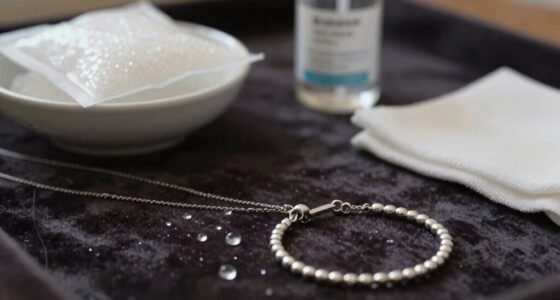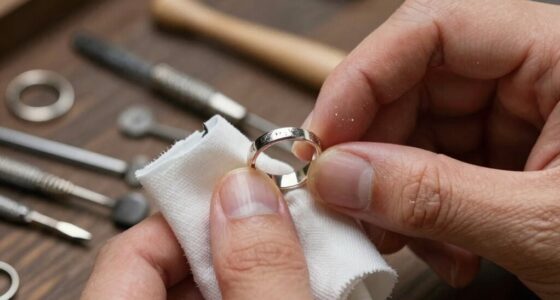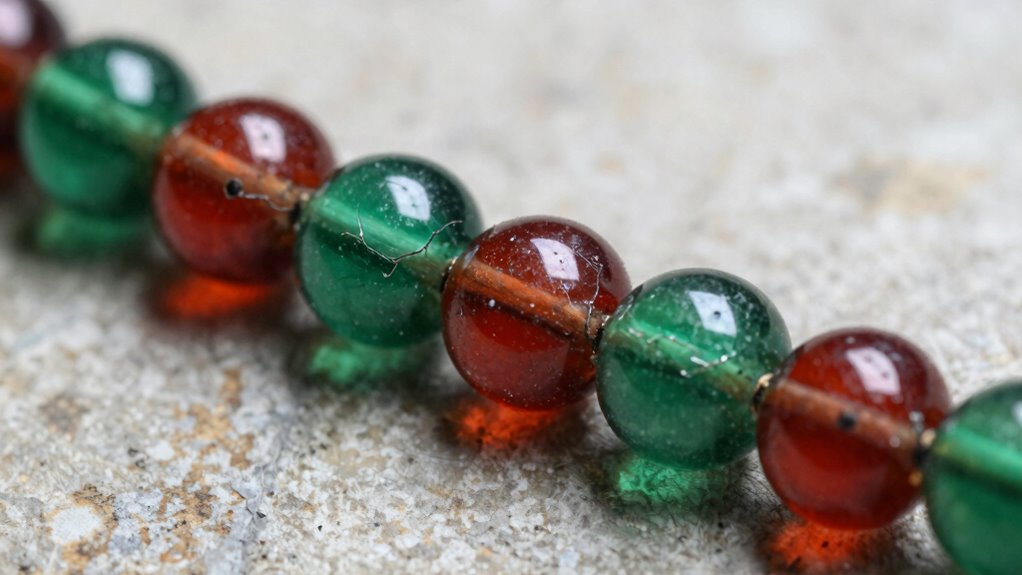

When you stretch or bend beads repeatedly, it weakens their internal structure, leading to tiny cracks and material fatigue. Over time, stress points become vulnerable, causing the beads to break or lose their elasticity. If you notice wear or tightness, it’s a sign they are nearing failure. By understanding these issues, you can better care for your beads and prevent unexpected breaks—continue for tips on how to extend their lifespan.
Key Takeaways
- Repeated stretching causes internal microcracks, weakening beads and increasing breakage risk over time.
- Stress points where beads are most stretched are prone to developing cracks and eventual breakage.
- Material fatigue from cyclic stress reduces elasticity, leading to permanent deformation and failure.
- Early signs like tightness, dull spots, or hairline cracks indicate impending breakage.
- Proper handling and replacing worn strands help prevent stress-related bead breakage.
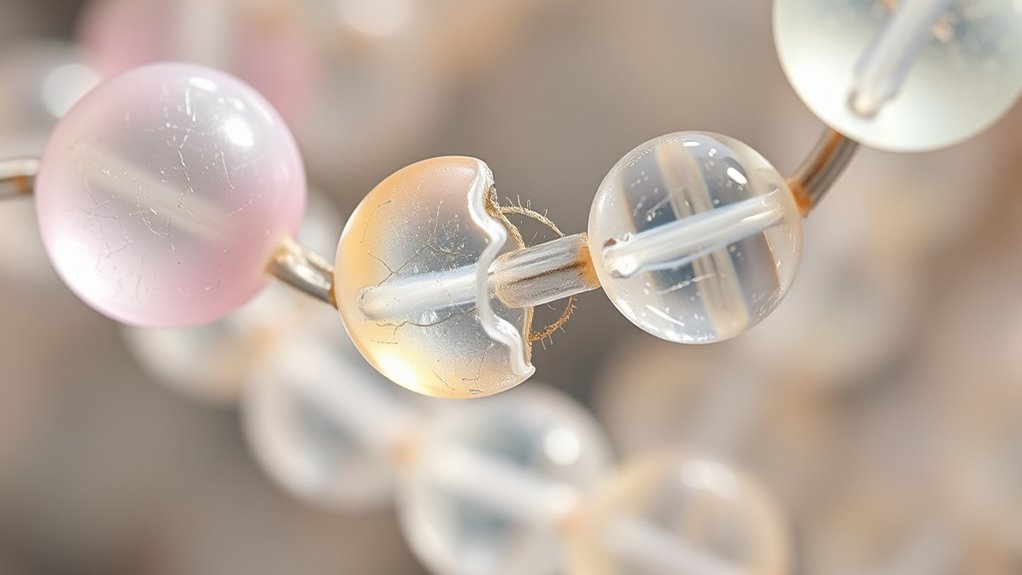
When you handle delicate beads, it’s almost inevitable that some will break over time. This isn’t just bad luck; it’s rooted in the fundamental weaknesses of the materials used and how they respond to repeated stress. Beads, especially those made from elastic materials like glass, plastic, or certain gemstones, are prone to elastic failure. Over time, the constant stretching and bending weaken the internal structure, making them more susceptible to breaking under less strain than when they were new. You might notice that a string of beads that once stretched easily now feels tight or shows signs of wear. This gradual decline is often caused by material fatigue—the process where repetitive stress causes microscopic cracks and weaknesses to develop within the bead’s material. Understanding the properties of elastic materials can help you better anticipate their wear and tear over time. When you pull or stretch beads repeatedly, you’re subjecting them to cyclic stress, which accelerates this fatigue process. The more often you stretch them, the more these microscopic flaws grow, weakening the overall integrity of the bead. Eventually, the bead can no longer withstand the tension and snaps, often at the stress point where the material has been most compromised. This failure isn’t sudden but a slow degradation that builds up over time. You might see tiny hairline cracks or dull spots forming before a complete break occurs. These signs are clear indicators that the bead’s material fatigue has reached a pivotal point.
Repeated stretching causes microscopic cracks, weakening beads over time and leading to eventual breakage.
Understanding elastic failure is vital because it highlights that the bead’s ability to stretch isn’t limitless. The elastic properties of the material allow it to return to its original shape after stretching, but only up to a certain threshold. Beyond that, the material loses its elasticity, leading to permanent deformation or breakage. When you notice beads that no longer bounce back or seem overstretched, you’re witnessing elastic failure. To prevent this, it’s wise to avoid excessive stretching or pulling on your beads and to replace worn-out strands before they snap unexpectedly.
In the end, the key to prolonging the life of your beads lies in recognizing early signs of material fatigue and elastic failure. Handle them gently, avoid overstretching, and replace them when they show signs of wear. Doing so helps avoid unexpected breaks, saving you the frustration and expense of losing or damaging your jewelry. Remember, every bead has its limits, and understanding these stress points can help you care for your collection more effectively.
elastic beading cord
As an affiliate, we earn on qualifying purchases.
As an affiliate, we earn on qualifying purchases.
Frequently Asked Questions
How Can I Prevent Beads From Breaking Over Time?
To prevent beads from breaking over time, you should guarantee proper bead sizing when selecting your jewelry and avoid overstretching the strand. Store your jewelry properly in a soft, padded container to reduce stress and friction on the beads. Regularly check for weak spots and restring beads if needed. By handling your jewelry gently and maintaining good storage habits, you can considerably extend the lifespan of your beads.
Are Certain Bead Materials More Prone to Breaking?
Ever wondered if certain bead materials are more prone to breaking? Some bead materials, like delicate glass or soft plastic, tend to be less durable compared to harder stones like quartz or metal beads. Durability factors include the bead’s material, quality, and how much stress they endure over time. Choosing high-quality, sturdy materials can markedly reduce breakage, making your jewelry last longer and stay beautiful.
What Tools Help Fix Broken Beaded Jewelry?
When your beaded jewelry breaks, you can use tools from a jewelry repair kit, like pliers and tweezers, to fix it. These kits often include bead stringing techniques, such as rethreading or replacing broken sections. Carefully remove damaged parts, then re-string the beads using the proper tools. With patience and the right kit, you can restore your jewelry quickly and keep its beauty intact.
How Do Stretching and Stress Points Develop?
Like a winding river carving through rock, your jewelry faces stress points over time. Stretching and stress points develop due to bead corrosion, which weakens the bead’s surface, and wire fatigue from repeated bending and tension. As these forces persist, the beads and wire weaken, creating vulnerable spots. Eventually, these fatigue points cause breakage, especially if you don’t handle your jewelry gently or avoid exposing it to harsh conditions.
Can Bead Design Choices Reduce Breakage?
Yes, your bead design choices can reduce breakage. Opt for beads with smooth surfaces to minimize surface wear and prevent stress points that lead to cracking. Using color-fade resistant coatings helps maintain the bead’s appearance, reducing the need for frequent replacement. Additionally, selecting flexible stringing materials distributes stress evenly, decreasing the chances of breakage caused by stretching or stress points. These choices enhance durability and preserve your jewelry’s beauty.
bead stretch repair kit
As an affiliate, we earn on qualifying purchases.
As an affiliate, we earn on qualifying purchases.
Conclusion
So, next time you hold a string of beads, remember they’re more than just pretty objects—they face stress and stretching, like us. Their fragile points remind us that even the strongest appear resilient until tested. Like a tightrope walker balancing on a wire, every bead balances tension and weakness. By understanding these stress points, you can prevent breakage and keep your beads shining. After all, isn’t life just a delicate string of moments waiting to be held together?
jewelry beading elastic string
As an affiliate, we earn on qualifying purchases.
As an affiliate, we earn on qualifying purchases.
bead stress point protectors
As an affiliate, we earn on qualifying purchases.
As an affiliate, we earn on qualifying purchases.