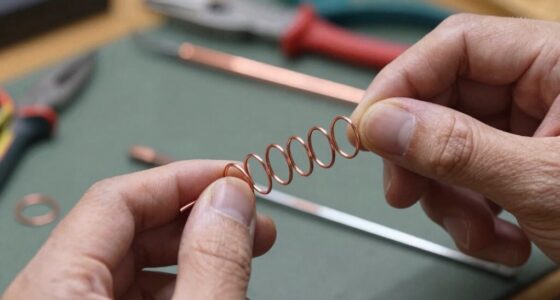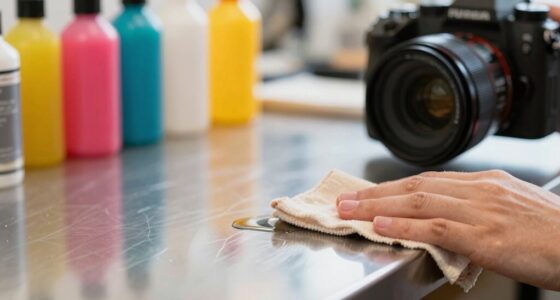
To polish jewelry without scratches, start by evaluating your piece’s material and condition, then clean thoroughly with gentle solutions. Choose the right tools and compounds suited for your jewelry type, and apply light, steady motions with soft fabrics or buffing wheels. Inspect for imperfections and re-polish if needed, ensuring a smooth finish. Finish with protective measures to prolong the shine. If you want to master each step, you’ll find more details ahead.
Key Takeaways
- Properly clean and assess jewelry material and condition before polishing to prevent damage.
- Select appropriate tools and compounds tailored to the jewelry’s metal and gemstone types.
- Use gentle, steady circular motions with light pressure to avoid scratches during polishing.
- Regularly inspect and correct surface imperfections with careful re-polishing if needed.
- Finish with a thorough final inspection and protective storage to maintain the polished surface.
Assessing Your Jewelry’s Material and Condition
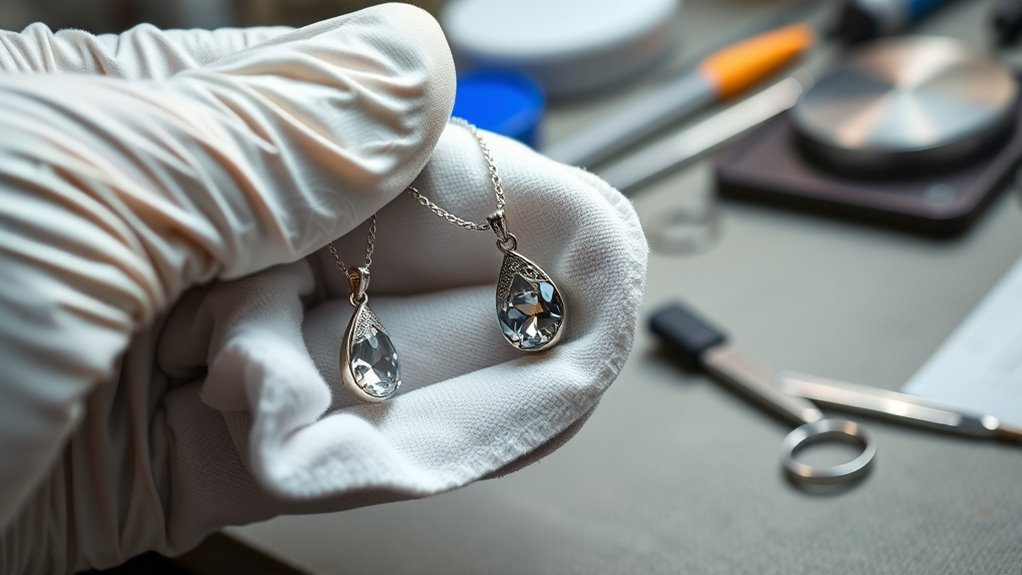
Before you begin polishing, it’s important to assess your jewelry’s material and condition. Knowing the gemstone types helps determine the best polishing approach, as some stones, like opals or pearls, are delicate and require gentle handling. Metal properties are equally vital; softer metals such as gold or silver may scratch easily, while harder metals like platinum withstand more abrasive techniques. Check for existing scratches, chips, or loose settings that could worsen during polishing. Understanding the jewelry’s overall condition guides you in choosing suitable tools and polishing compounds, preventing damage. Take a close look at the piece, identify the materials involved, and note any weaknesses. Being aware of precious metal classifications can help you select the appropriate polishing methods and avoid unnecessary damage. Additionally, knowing the properties of different metals allows for better selection of polishing techniques tailored to each material.
Cleaning Before Polishing: Removing Dirt and Residues
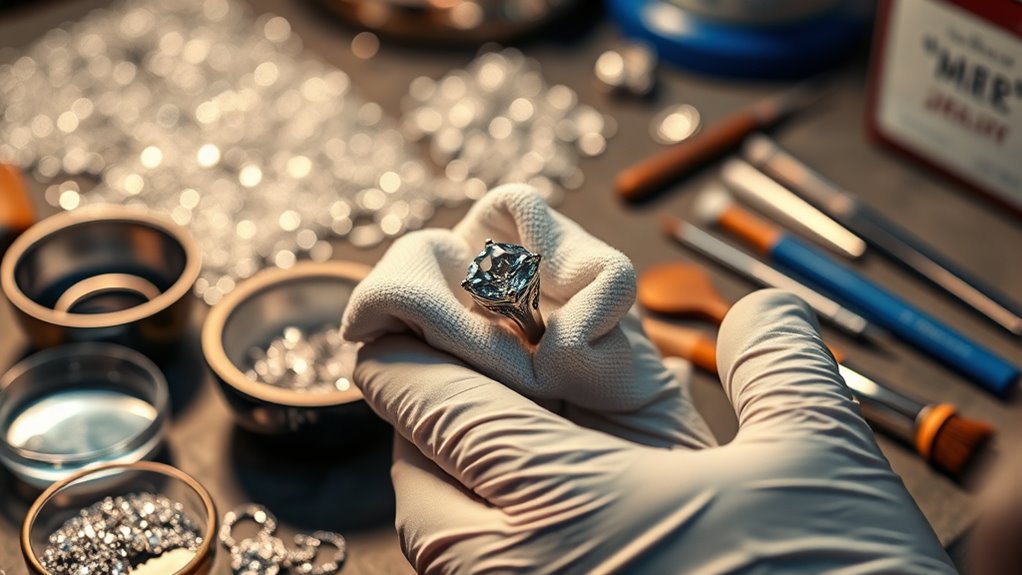
Cleaning your jewelry thoroughly is a crucial step that guarantees dirt, oils, and residues don’t interfere with the polishing process. Before you start, consider how you store your jewelry; proper jewelry storage prevents tarnish buildup and keeps pieces cleaner longer. Use gentle cleaning solutions like warm water with a mild soap or specialized jewelry cleaners to remove surface dirt. Avoid harsh chemicals that can damage delicate materials. Make sure to dry each piece completely to prevent moisture from causing tarnish or corrosion. Removing dirt and residues ensures a smooth surface, making polishing more effective and reducing scratches. Regular cleaning also supports tarnish prevention, keeping your jewelry shiny and beautiful. Prioritizing this step helps maintain your jewelry’s appearance and prolongs its lifespan. Proper cleaning techniques are also essential for air purifier maintenance to ensure optimal performance and air quality. Additionally, consistent cleaning routines align with professional practices in restoration projects to preserve jewelry integrity over time.
Selecting the Appropriate Polishing Tools and Compounds
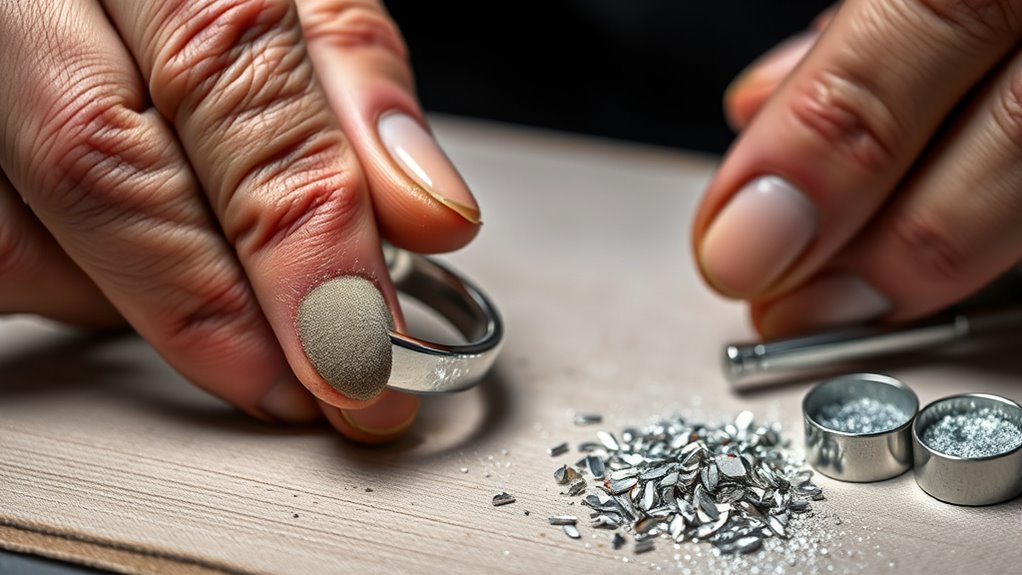
Choosing the right tools and compounds is essential for achieving a beautiful, polished finish. You need to match the tool to the jewelry’s material and the desired shine, while the right compound helps remove scratches without causing damage. By selecting suitable options, you’ll make the polishing process more effective and results more professional. Additionally, understanding the importance of Free Floating in maintaining a scratch-free surface can help you achieve optimal results. Recognizing passive voice detection techniques can also streamline your editing process and improve clarity in your writing. Incorporating appropriate polishing techniques and understanding cloud computing regulations can ensure that your jewelry remains pristine and enhances its natural beauty. Leveraging innovative cloud solutions can provide efficient storage and security for your jewelry design files, ensuring seamless workflow and data protection.
Choosing the Right Tools
Selecting the right polishing tools and compounds is essential for achieving a smooth, professional finish on your jewelry. Start by choosing tools that suit your jewelry’s material and design, such as soft cloths for delicate pieces or felt wheels for intricate details. Ensure your jewelry storage keeps pieces separate to prevent scratches and maintains gemstone security during polishing. Using the correct tools minimizes the risk of damage, especially to fragile gemstones or delicate surfaces. Always opt for high-quality polishing compounds tailored to your jewelry’s metal type—silver, gold, or platinum—to attain the best results. Proper tool selection ensures you can polish effectively without risking scratches or loosening gemstones. Remember, the right tools are key to a flawless, scratch-free shine.
Applying Suitable Polishing Compounds
After gathering the right tools, the next step is to apply the appropriate polishing compounds to achieve a mirror-like finish. Choose compounds based on your jewelry’s material—soft compounds for delicate pieces and more abrasive ones for tougher metals. Proper selection prevents scratches and guarantees professional polishing results. Store your jewelry properly to avoid damage before polishing. Use clean, soft cloths or buffing wheels to distribute the compound evenly. Always start with a small amount to prevent over-application. Keep in mind that different jewelry types require specific compounds for maximum shine. Effective digital asset management can also help maintain your jewelry’s condition by tracking its care history and ensuring proper handling. Regularly clean your polishing tools to maintain effectiveness. When storing your jewelry after polishing, guarantee it’s in a safe, scratch-free environment to preserve the high-quality finish. Additionally, understanding piercing care and hygiene is essential for maintaining jewelry and preventing infections that could compromise the finish. Incorporating proper water protection methods can also help extend the lifespan of your polished jewelry by preventing tarnish and corrosion. Using appropriate storage solutions further safeguards your jewelry from scratches and environmental damage, maintaining its pristine appearance over time. To ensure the best results, consider the quality of your polishing equipment, which significantly impacts the final shine and overall finish.
Applying Polishing Technique: Gentle and Consistent Motion

To achieve a polished shine, you should use light pressure and keep your movements steady. Maintain a consistent speed and focus on using small, circular motions. This gentle, rhythmic approach helps prevent scratches and guarantees an even finish. Using proper polishing techniques ensures your jewelry stays in top condition over time. Additionally, choosing high-quality Suprem fabric for polishing tools can enhance the effectiveness of your process and protect delicate surfaces. Incorporating proper technique can further reduce the risk of damage and improve overall results. Being mindful of careful handling practices also plays a key role in maintaining the jewelry’s integrity and appearance. Understanding material compatibility is essential to avoid unintended damage during polishing.
Use Light Pressure
When polishing jewelry, applying light pressure is essential to achieve a smooth, high-quality finish. Pressing too hard can scratch the surface or remove too much of the polish. Instead, use gentle, consistent pressure to avoid damage and assure an even shine. Wearing rubber gloves helps you grip tools better and prevents oils from your skin from transferring to the jewelry. Keep your jewelry stored properly in soft pouches or fabric-lined boxes to prevent scratches during polishing sessions. Focus on maintaining a steady hand and smooth motion, which will lead to a more professional result. Remember, patience and finesse matter more than force when polishing jewelry effectively. This approach preserves your jewelry’s integrity and enhances its brilliance without risking scratches. Proper storage and maintenance are also crucial to keep your jewelry looking its best over time. Additionally, understanding the polishing process can help you choose the right materials and techniques for different types of jewelry surfaces. Using the right tools and materials can further improve the quality of your polishing results. Developing a good technique ensures consistent results and reduces the likelihood of accidental damage during polishing.
Maintain Steady Speed
Maintaining a steady speed while polishing guarantees an even, professional finish. Proper speed control helps you keep a consistent polishing rhythm, preventing scratches caused by uneven pressure or inconsistent motion. Focus on gentle, continuous movements rather than rushing, which can lead to damage. To emphasize the importance of rhythm, consider this table:
| Steady Speed | Inconsistent Speed |
|---|---|
| Ensures uniform shine | Creates uneven surfaces |
| Reduces risk of scratches | Increases damage risk |
| Builds confident rhythm | Disrupts polishing flow |
Keeping a consistent speed helps you achieve smooth, flawless results. Remember, patience and gentle, steady motion are key to polishing jewelry without scratches, ensuring a professional finish every time.
Use Circular Motions
Using circular motions while polishing guarantees you evenly distribute the abrasive material across the jewelry’s surface. This technique helps prevent scratches and ensures a smooth, consistent finish. Gentle, consistent movements also aid in dirt removal, preventing debris from scratching your jewelry. Remember to keep your tools well-maintained—clean tools improve polishing efficiency and reduce dirt buildup. Using circular motions encourages better control, reducing the risk of applying uneven pressure that could damage delicate areas. To optimize your polishing process, focus on smooth, controlled circles rather than harsh scrubbing. This approach maintains surface integrity and prolongs your tools’ lifespan. Proper technique combined with diligent tool maintenance guarantees a polished finish free of scratches and keeps your jewelry looking its best. Incorporating proper maintenance practices into your routine helps ensure long-term performance and safety of your polishing tools.
Checking for Surface Imperfections and Repeating if Necessary

Have you ever noticed tiny surface imperfections on your jewelry after polishing? These small blemishes can ruin an otherwise flawless shine. To guarantee your jewelry looks perfect, inspect the surface closely after each polishing session. Look for surface imperfections like scratches, dull spots, or uneven areas. If you find any, don’t hesitate to repeat polishing on those specific spots. Sometimes, a gentle buffing or a second pass with your polishing cloth is all it takes to eliminate imperfections. Remember, patience is key—rushing through the process can cause more scratches or uneven results. Carefully checking your work helps you identify areas needing extra attention, enabling you to repeat polishing precisely where necessary. This process guarantees a smooth, mirror-like finish on your jewelry.
Final Inspection and Protective Measures for a Lasting Shine

After inspecting your jewelry for surface imperfections and making any necessary touch-ups, it’s time to perform a final check to guarantee your piece achieves that perfect, mirror-like shine. This step ensures all polishing safety measures are followed, preventing scratches or damage. Once you’re satisfied, consider applying a protective coating or sealant to maintain the shine longer. Proper jewelry storage tips are essential; store pieces separately to avoid scratches and tarnish. Regularly inspecting your jewelry helps catch any issues early, preserving its beauty. Remember, a meticulous final inspection combined with protective measures extends your jewelry’s lifespan and keeps it looking stunning.
A thorough final inspection and proper storage ensure your jewelry stays beautiful and lasts longer.
- Use soft, lined jewelry boxes or pouches for storage
- Avoid exposing jewelry to harsh chemicals or direct sunlight
- Reapply protective coatings periodically for long-lasting shine
- Handle jewelry with clean hands to prevent oils and dirt transfer
Frequently Asked Questions
How Do I Identify the Type of Metal in My Jewelry?
To identify your jewelry’s metal, start with metal testing kits available at jewelry stores or online. These kits help you determine if your piece is gold, silver, or another alloy. You can also seek professional alloy identification through a jeweler, who can perform more precise tests. Always handle testing carefully, and remember that some metals may require specialized testing methods for accurate results.
Can I Use Household Products to Polish My Jewelry Safely?
Did you know that over 60% of household cleaners contain harsh chemicals? You shouldn’t use household products to polish your jewelry safely because they can damage or discolor your pieces. Instead, try a homemade polish with gentle ingredients like baking soda and water. Always test a small area first, and avoid abrasive cleaners to keep your jewelry shiny without scratches or harm.
What Are Signs That My Jewelry Is Too Damaged to Polish?
You’ll know your jewelry is too damaged to polish if you notice deep scratches, missing stones, or visible cracks, which are clear damage indicators. If the piece shows significant dents or bends, it’s best to contemplate repair considerations before attempting to polish. Trying to polish severely damaged jewelry can worsen the damage, so it’s wise to consult a professional jeweler to assess whether repairs are needed first.
How Often Should I Polish My Jewelry to Maintain Its Shine?
Think of your jewelry like a garden that needs regular tending. You should polish your jewelry every few months to keep its shine bright, but avoid overdoing it. Follow jewelry cleaning frequency tips to prevent damage, and adjust based on how often you wear each piece. A good polishing schedule helps maintain its beauty without risking scratches or wear, keeping your jewelry looking stunning for years to come.
Are There Specific Safety Precautions for Using Polishing Compounds?
When using polishing compounds, you should always prioritize safety. Wear protective gear like gloves and eye protection to prevent chemical exposure and avoid skin irritation. Make sure good ventilation in your workspace to reduce inhalation risks. Read and follow the manufacturer’s instructions carefully, as they provide essential chemical safety guidelines. Taking these precautions helps protect you from potential hazards and ensures a safe, effective jewelry polishing process.
Conclusion
By following the right sequence—assessing your jewelry, cleaning thoroughly, selecting proper tools, applying gentle technique, inspecting carefully, and protecting your shine—you guarantee your jewelry stays beautiful and scratch-free. Each step builds on the last, creating a smooth, effective process. Embrace patience, stay consistent, and enjoy the gleam of your polished jewelry. When you care for each detail, you extend its beauty, preserve its value, and keep it shining brilliantly for years to come.