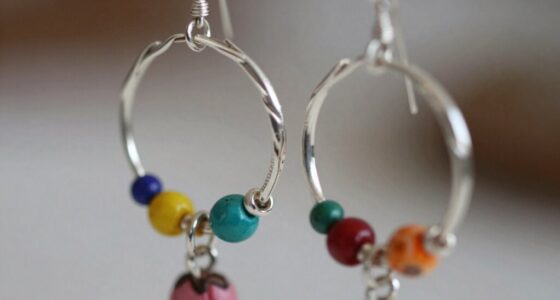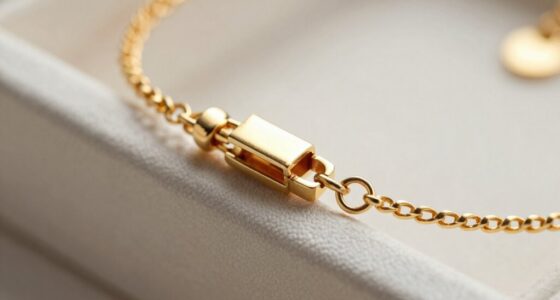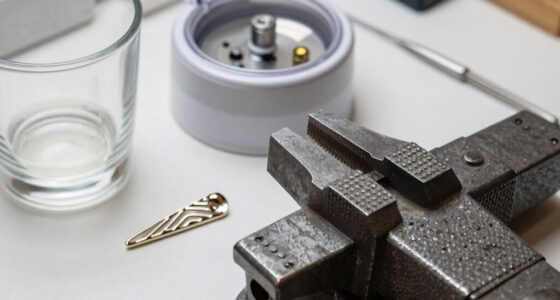
To build jewelry designs that feel cohesive, focus on establishing a clear theme or concept. Use color harmony by choosing shades that complement or match, and combine textures thoughtfully—smooth metals with matte stones or delicate chains with bold beads. Pay attention to proportion and scale to create balance, ensuring small details support larger focal points. By carefully unifying elements with purpose and maintaining overall harmony, your designs will feel polished and unified. Keep exploring to discover more ways to perfect your style.

Get business pricing on tools and workshop supplies
- Business-only prices and quantity discounts
- Tax-exempt purchasing
- Multiple users, one account, clear invoices
Key Takeaways
- Establish a clear theme or concept to guide color, material, and style choices.
- Use consistent color schemes like complementary, analogous, or monochromatic palettes.
- Pair materials thoughtfully, balancing textures, weights, and finishes for harmony.
- Ensure proportions and scale create natural flow and emphasize focal points.
- Simplify designs by removing unnecessary elements to maintain overall balance.
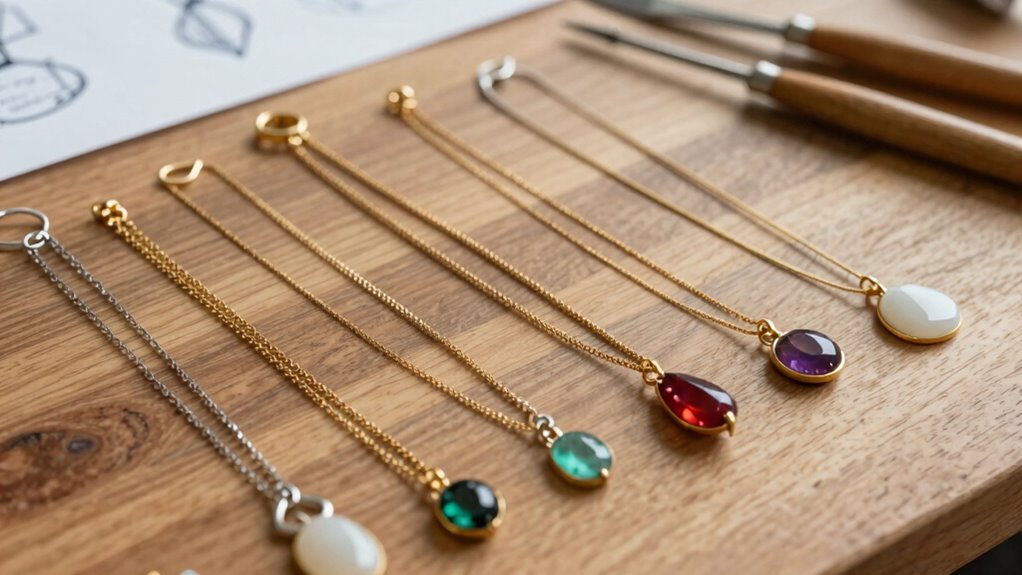
Achieving jewelry design cohesion is essential for creating pieces that feel harmonious and visually appealing. When you’re designing jewelry, the goal is to make each element complement the others, resulting in a unified look. A key part of this process involves understanding color harmony. You want your colors to work together, whether you’re using contrasting shades for boldness or similar hues for subtle elegance. Think about the mood you aim to evoke—cool blues and silvers can create a calming effect, while warm reds and golds evoke energy. Ensuring your color choices align with your overall design helps your piece feel balanced and intentional.
Achieving harmony through color choices enhances jewelry’s balance, mood, and overall visual appeal.
Material pairing is just as important as color harmony. When selecting materials, consider how different textures and finishes will interact. Combining smooth, polished metals with matte stones can add depth, while mixing delicate chains with chunky beads creates contrast and interest. Be mindful of the weight and durability of your materials; pairing heavy metals with lightweight elements can lead to discomfort or imbalance. Additionally, the tactile experience matters—smooth and rough textures should be thoughtfully combined to enhance the sensory appeal of your jewelry. By carefully pairing materials, you can craft pieces that are not only visually cohesive but also comfortable and engaging to wear. Incorporating natural elements can also inspire unique material choices and accents that add authenticity and depth to your designs.
To build jewelry that feels cohesive, start by establishing a clear theme or concept. This will guide your choices in color, material, and style, ensuring all elements work toward a common aesthetic. When selecting colors, think about color harmony—whether you’re employing complementary colors, analogous shades, or monochromatic schemes, consistency is crucial. For material pairing, consider how different textures, weights, and finishes will interact. Don’t be afraid to experiment, but always keep in mind the overall balance. A well-balanced piece avoids clutter and chaos; instead, it feels intentional and polished. Understanding biodiversity in natural elements can also inspire unique material choices and accents that add authenticity and depth to your designs. Paying attention to proportion and scale further ensures that each element contributes to the overall harmony of the piece.
Pay close attention to proportion and scale as well. Small accents should complement larger focal points without overpowering them. When you combine elements thoughtfully, your jewelry will have a natural flow that guides the eye smoothly across the piece. Keep your choices deliberate—every bead, charm, or clasp should serve a purpose in reinforcing your design’s cohesion. In the end, successful jewelry design hinges on your ability to harmonize colors and pair materials skillfully, creating pieces that are visually unified, stylish, and truly mesmerizing.
Popular right now

Hisense 43-Inch S5 DécoTV Series 4K UHD Smart Fire TV with Hi-QLED Color, Dolby Vision and Atmos (43S5QF, 2026 Model)

De'Longhi Classic Signature Espresso Machine with Adjustable Milk Frother

Ninja CREAMi 7-in-1 Ice Cream Maker, NC301
As an affiliate, we earn on qualifying purchases.
Frequently Asked Questions
How Do Color Schemes Influence Jewelry Cohesion?
Color schemes greatly influence jewelry cohesion by creating harmony or striking contrast. You should aim for color harmony using complementary or analogous colors to guarantee your pieces feel unified. Contrast techniques, like pairing light and dark shades, add visual interest without disrupting cohesion. When you thoughtfully combine these approaches, your jewelry designs will look balanced, intentional, and visually appealing, making each piece feel like part of a well-crafted collection.
What Materials Best Create a Cohesive Jewelry Collection?
Don’t worry—using a mix of materials can still create a cohesive collection. Focus on durable options like sterling silver, gold, and high-quality beads, which guarantee longevity and appeal. Incorporate versatile materials that suit various styles, like leather or semi-precious stones, to unify your designs. This approach balances durability with design flexibility, helping your collection feel harmonious while allowing you to experiment and express your creativity.
How Can I Incorporate Personal Meaning Into Cohesive Designs?
You can incorporate personal meaning into your cohesive jewelry designs by weaving symbolic storytelling into each piece. Use cultural influences that resonate with your identity or heritage, making each design a reflection of your story. Select meaningful charms, symbols, or motifs that speak to your experiences or beliefs. This approach not only creates a unified collection but also guarantees each piece carries a deep, personal significance.
What Role Does Scale Play in Cohesive Jewelry Sets?
Scale plays a vital role in creating cohesive jewelry sets by ensuring size harmony and visual balance. When you match the scale of different pieces, they complement each other rather than compete. For example, pairing a bold necklace with smaller earrings maintains harmony. Pay attention to proportion and size variations, so each piece supports the overall look, making your jewelry set feel unified and thoughtfully designed.
How to Balance Trendiness With Timelessness in Cohesive Designs?
To balance trendiness with timelessness, you should create fashion statements that blend current trends with classic elements. Incorporate cultural influences to add depth and uniqueness, ensuring your designs stay relevant yet enduring. Mix contemporary shapes or finishes with timeless materials like gold or pearls, making your jewelry versatile. This approach helps your pieces feel fresh without sacrificing their long-lasting appeal, creating a cohesive collection that resonates across styles and eras.
Conclusion
By blending bold beads, balancing bright and subtle hues, and paying close attention to details, you create jewelry that feels unified and unique. Embrace your eye for elegance and experiment with elements that inspire you. Remember, cohesion comes from consistency and creativity combined. With passion and patience, your jewelry designs will radiate harmony and style, leaving a lasting impression. Keep crafting, keep creating, and watch your wonderful work weave a seamless story of style and sophistication.