
TL;DR
Decorator Juan Pablo Molyneux and his wife, Pilar, bought Château de Pouy-sur-Vannes in 2012 and renovated the property after it had fallen into serious disrepair. A 2018 Veranda report describes the restored château, its historic features and the couple’s blend of antiques, custom interiors and modern amenities.
Decorator Juan Pablo Molyneux and his wife, Pilar, restored Château de Pouy-sur-Vannes, an 800-year-old French property that was in serious disrepair when they bought it in 2012, turning it into a private country retreat about 30 miles south of Paris. A 2018 Veranda report describes the renovation, which Molyneux said took one and a half years, and the residence’s combination of protected historic fabric, antiques and contemporary amenities.

Get business pricing on tools and workshop supplies
- Business-only prices and quantity discounts
- Tax-exempt purchasing
- Multiple users, one account, clear invoices
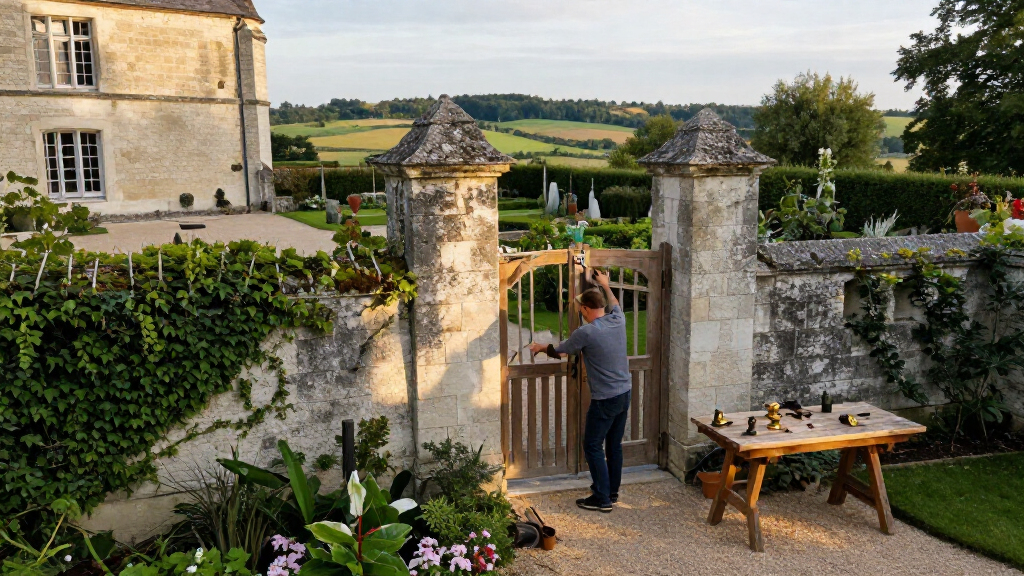
The château began as a 12th-century fortress and carries features accumulated across the centuries, according to Veranda. Its weathered façade and an expansive attic with soaring roof beams are protected as French historical monuments. The property had previously been operated as a hotel and was in serious disrepair before the couple’s restoration.
Molyneux and Pilar bought the estate in 2012, after a prior buyer’s deal fell through. The designer told the magazine he completed the work in about 18 months. The report documents rooms furnished with period pieces and custom designs, including a grand salon, dining room, sculpture gallery and tower salon. In the tower, artist Frédéric Monpoint decorated original paneling with a hot-air-balloon motif.
The grounds and outbuildings also serve as living and entertaining spaces. A large pool occupies a multi-windowed building that was likely a 17th-century orangery, the report says; the couple use it throughout the year. The estate also has two tennis courts, one clay and one grass, and grounds with a moat, formal garden and animals including peacocks, swans, ducks and geese.
Historic Fabric Meets Private Life
The restoration offers a documented example of how a protected historic property can be adapted for present-day domestic use while retaining parts of its architectural past. The château is not presented merely as a preserved monument: the report shows it functioning as a home, with a pool, tennis courts and rooms designed for daily life and entertaining.
That mix also makes the project relevant to readers interested in heritage restoration and interior design. Molyneux’s approach placed antiques and historic paneling alongside commissioned decoration and modern amenities. The article does not provide a restoration budget, conservation plan or detailed account of regulatory approvals, so it cannot establish the cost or technical methods behind the work.
Popular right now

Dyson Cyclone V10 Origin Cordless Vacuum

Breville Barista Pro Espresso Machine with Grinder, Brushed Stainless Steel

Dyson Airwrap i.d. 6-in-1 Multi-Styler and Dryer
As an affiliate, we earn on qualifying purchases.
From Château Search to Restoration
The couple had experience living in a historic French residence before buying Pouy-sur-Vannes: they had rented a wing of Château du Marais in the Chevreuse Valley. Molyneux said he first contacted a broker after seeing a photograph of Pouy-sur-Vannes, but was told the property had already been sold. The couple continued their search and later called the original broker again; by chance, the earlier buyer’s deal had fallen through that same morning.
The property’s history shaped the restoration described in the 2018 report. The building’s 12th-century origins coexist with later additions and interiors, while protected façade and attic elements put limits on how parts of the structure could be treated. The report focuses on the finished home and the couple’s design choices, rather than offering a full architectural or conservation history.
““I don’t have a style. I have a lifestyle.””
— Juan Pablo Molyneux, speaking to Veranda
Costs and Conservation Details
The Veranda account does not disclose the purchase price, renovation budget or the names of architects, contractors and preservation specialists involved. It also does not detail which changes required approvals or how the restoration addressed the château’s protected status. The former use of the pool building as an orangery is described as likely, not confirmed.
The report was published in 2018 and describes the property at that time. It does not establish whether the château, its facilities or the couple’s ownership arrangements have changed since publication. No newer update is included in the source material.
No Later Update Reported
The source material offers no announced next phase, sale, reopening or public access plan. It presents the finished château as the couple’s private retreat and records their use of its rooms and grounds in 2018.
Any claims about the property’s present condition or future plans would require more recent information from the owners or a current report. The available account establishes the purchase in 2012 and the renovation timeline Molyneux gave, but does not document developments after the 2018 feature.
Key Questions
Where is Château de Pouy-sur-Vannes?
The château is in Pouy-sur-Vannes, about 30 miles south of Paris, according to the Veranda report.
When did Juan Pablo Molyneux and Pilar buy it?
The couple bought the property in 2012, after an earlier buyer’s deal fell through.
How long did the renovation take?
Molyneux told Veranda he completed the renovation in about one and a half years. The source does not provide a detailed construction timeline.
What amenities does the estate have?
The report describes a year-round indoor pool in a building likely once used as a 17th-century orangery, two tennis courts, a formal garden and a moat. It also notes that the grounds are home to several kinds of birds and other animals.
Is the château open to visitors?
The source describes it as the couple’s home and does not say that it is open to the public. Its current access arrangements are not established by the 2018 report.
Source: veranda.com