
TL;DR

Get business pricing on tools and workshop supplies
- Business-only prices and quantity discounts
- Tax-exempt purchasing
- Multiple users, one account, clear invoices
A Livingetc report outlines four Japanese-inspired ways to set an autumn table: combine individual place settings with shared dishes, choose personal bowls and chopsticks, match vessels to food, and signal the season through tableware. The advice is design guidance, not a report of a new product launch or formal trend data.
Livingetc has published four Japanese-inspired table-setting lessons for autumn hosting, focused on how people serve food and choose tableware rather than on adding more decoration. The report, drawing on a collaboration with Nakagawa, a craft maker and retailer founded in Nara in 1716, describes ways to combine personal settings, shared dishes and seasonal vessels at a Western-style dinner table.
The first suggestion is to mix individual place settings with shared dishes. The report describes an oshiki, or flat tray, arranged for each diner with a rice bowl, soup bowl and small plate, while larger platters sit in the middle for everyone to share. It calls each person’s area meimei no ba. The approach combines some structure of a plated meal with the ease of family-style serving.
A second lesson is to consider the person using each item instead of aiming for a fully matching set. The report says family members may have their own rice bowl and chopsticks, chosen for preferences such as hand size and grip. It presents that personal choice as a small way to make a table feel considered, while allowing pieces to differ in color, shape or pattern.
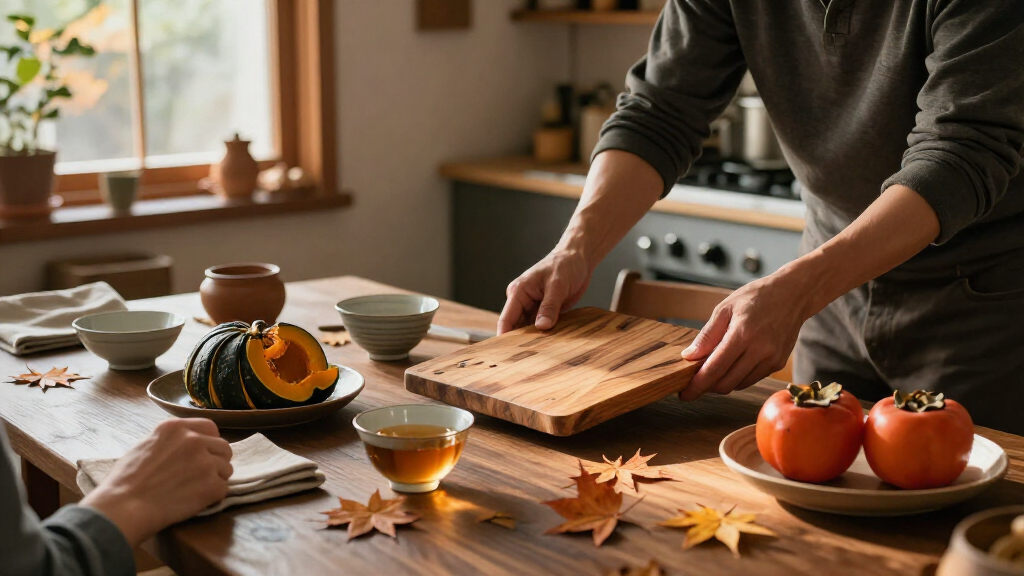
The remaining advice concerns how tableware relates to food and season. The report describes a Japanese phrase that compares a vessel to a kimono for food, and recommends paying attention to a plate’s empty space as well as a bowl’s weight and warmth. For autumn, it suggests replacing summer glass and white porcelain with warm clay and persimmon or rust glazes, then adding one restrained seasonal detail, such as a chrysanthemum-shaped chopstick rest or a small plate.
A More Personal Autumn Table
The recommendations offer hosts a way to change the feel of a meal without replacing the whole dining set or adding elaborate decor. A mix of individual bowls and shared platters can make serving flexible, while personally chosen pieces can make a setting feel less uniform. Seasonal tableware provides a visual cue for autumn without requiring a full redesign.
These are practical design suggestions, not evidence that Japanese table-setting customs are newly adopted or that the ideas produce a measured effect on guests. Their relevance is in the adaptable details: a host can try one or two changes using items already at home, then decide whether the arrangement suits the meal and household.
Popular right now

Apple AirPods Pro 3 Wireless Earbuds

Ninja CREAMi 7-in-1 Ice Cream Maker, NC301

iRobot Roomba Max 715 Pet Robot Vacuum with AutoEmpty Dock
As an affiliate, we earn on qualifying purchases.
The Four Habits in the Report
The source is a Livingetc advice article about Japanese autumn tablescaping, rather than a survey, market study or announcement by a retailer. Its author says the ideas were developed while working with Nakagawa, described as a Nara-based craft maker and retailer founded in 1716. The supplied material does not identify the author or give the article’s publication date.
The report’s four habits are: blend plated-course and family-style dining; consider the person using each vessel; treat the vessel as part of the dish; and change plates and bowls to reflect the season. It also names small plates called mame-zara and recommends using them singly or in a mix. The seasonal arrangement, or shitsurai, is described as a small accent rather than a reason to alter the entire table.
For autumn, the article proposes warm-toned ceramics and a restrained seasonal object, with the arrangement set slightly ahead of the season. It contrasts those choices with summer glass and white porcelain. These descriptions are the report’s guidance; it does not claim every Japanese household follows the same customs.
“A Japanese table is laid as two things at once. A private setting in front of each person, and shared dishes in the middle for everyone to take from.”
— Livingetc report
What the Advice Does Not Establish
The supplied report does not provide research showing how widespread these practices are across Japan, or whether they differ by region, household or occasion. It presents them as habits that can transfer to a Western table, not as rules followed by all Japanese diners. The source also does not provide reader testing, expert comparisons or evidence that the styling changes make hosting more comfortable.
The article mentions tableware examples and retailers, but the supplied material does not confirm current prices, stock, availability or whether the listed products are essential to recreate the ideas. It also gives no publication date, so the timing of the report cannot be narrowed further here.
How Hosts Can Apply the Ideas
The report does not announce a forthcoming event or product release. For readers who want to try its approach, the next step is practical: keep each guest’s basic place setting, put shared dishes within reach, and choose bowls and plates that suit the menu and the people using them. A host can begin with one change, such as a warm-toned serving bowl or a small seasonal plate, rather than buying a coordinated collection.
Any further developments would depend on Livingetc or Nakagawa publishing additional guidance, product information or seasonal recommendations. The supplied source does not specify a follow-up date or planned announcement.
Key Questions
What are the four Japanese tablescaping lessons?
The Livingetc report recommends combining individual settings with shared dishes, choosing some tableware for the person using it, matching vessels to the food, and changing plates or bowls to reflect the season.
What does an oshiki hold?
The report describes an oshiki as a flat tray for one diner, holding items such as a rice bowl, soup bowl and small plate. Larger dishes are placed in the center for sharing.
How does the article suggest making a table feel seasonal?
For autumn, it suggests using warm clay and persimmon or rust tones, with one small accent such as a seasonal chopstick rest or a small plate. It contrasts these choices with summer glass and white porcelain.
Does the report say these customs are universal in Japan?
No. The source presents the practices as Japanese-inspired habits that can be adapted elsewhere; it does not establish how common they are across Japanese households or regions.
Source: livingetc.com