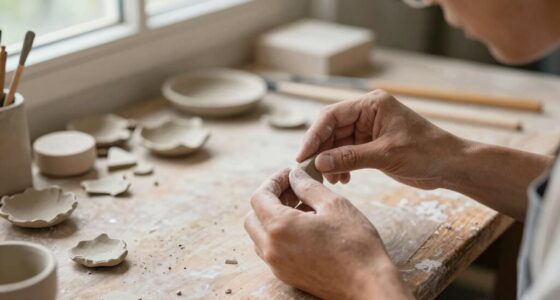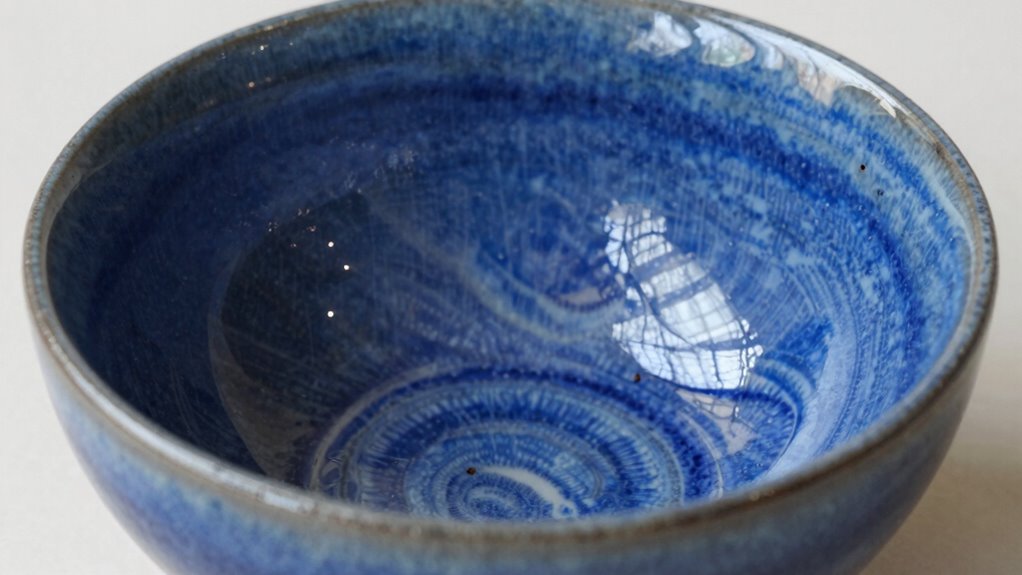

To know when to stop tweaking your handmade piece, pay attention to signs of over-tweaking like frustration or trembling hands. Embrace imperfections, realizing they add character and authenticity. Set realistic goals and avoid obsessing over every detail. Develop strategies to step back and detach, fostering balance and clarity. Trust your intuition and recognize the moment your work feels complete. Stay curious—if you want to discover how to strike that perfect balance, there’s more to explore.
Key Takeaways
- Recognize signs of over-tweaking, such as frustration or trembling hands, to prevent diminishing the piece’s authenticity.
- Accept imperfections as part of the creative process, adding character and unique storytelling to your work.
- Set clear boundaries and deadlines to avoid endless perfectionist loops and maintain momentum.
- Trust your intuition and focus on progress, not perfection, to preserve spontaneity and genuine expression.
- Seek external feedback and celebrate completed work to gain perspective and know when your piece feels truly finished.
handmade craft finishing tools
As an affiliate, we earn on qualifying purchases.
As an affiliate, we earn on qualifying purchases.
Recognizing the Signs of Over-Tweaking

Sometimes, in the pursuit of perfection, you might find yourself over-tweaking your work. It’s easy to get caught up, constantly adjusting details, hoping to perfect every inch. Recognizing the signs of over-tweaking means paying attention to your feelings and the work itself. If you notice frustration creeping in or your hands trembling as you make tiny changes, it’s a clear sign to step back. Crafting patience is key—you need to trust your intuition and know when enough is enough. Over-tweaking can strip away the natural charm of your handmade piece, making it less authentic. When you start second-guessing every decision, it’s time to pause. Trust that your initial instincts often hold the right balance, and sometimes, letting go is the best move forward. Additionally, embracing sustainable and secure practices can help you feel more confident in your work, knowing your process aligns with energy-efficient cloud solutions. Being aware of how contrast ratio influences the perceived image quality can also prevent unnecessary adjustments that don’t enhance the overall effect.
artistic perfectionism guidebook
As an affiliate, we earn on qualifying purchases.
As an affiliate, we earn on qualifying purchases.
Understanding the Value of Imperfection

You might find that your flaws make you uniquely you and add depth to your beauty. When you accept imperfection, you see that true charm lies in authenticity, not flawlessness. Embracing these imperfections allows you to appreciate yourself more fully and genuinely. Recognizing that healing time varies for different piercings can help set realistic expectations and reduce unnecessary worry. Understanding the science of healing can empower you to care for your piercings effectively and patiently. Incorporating water-based therapies, such as hydrotherapy, can further support your healing process and overall well-being. Additionally, eco-friendly travel practices can also foster a deeper connection to your personal journey.
Embracing Unique Flaws
Embracing your unique flaws can be a powerful step toward genuine self-acceptance. Instead of obsessing over perfect crafting symmetry or choosing uniformity at all costs, recognize that imperfections add character and authenticity. These flaws tell a story about your process and individuality, making your handmade piece truly one of a kind. When you accept flaws as part of the process, you shift focus from achieving flawlessness to celebrating what makes your work special. This mindset encourages creativity and reduces the pressure to perfect every detail. Remember, the beauty of handmade items often lies in their imperfections, which highlight your personal touch. By embracing these flaws, you honor your craftsmanship and foster a deeper appreciation for the natural beauty you create. Recognizing the value of imperfection can foster greater joy and satisfaction in your creative journey.
Beauty in Imperfection
Imperfection often reveals a deeper beauty that perfection cannot replicate. When you embrace flaws, you notice how subtle asymmetries and irregularities create a unique charm. These imperfections often enhance the overall symmetry balance, making your handmade piece more engaging and authentic. Color harmony might be slightly varied, adding depth and richness that uniformity can’t achieve. Rather than aiming for flawlessness, appreciate how imperfections contribute to character and story. They reflect your effort, creativity, and individuality. Recognizing beauty in imperfection helps you see that “perfect” isn’t necessary for meaningful craftsmanship. Instead, it’s the natural irregularities that breathe life into your work, making it memorable and truly one-of-a-kind. Sometimes, imperfections are what make your piece more beautiful than any pristine, perfect creation. Outdoor‑kitchen essentials and accessories also benefit from embracing imperfections, adding a rustic charm that enhances their character. Embracing craftsmanship flaws can transform your project into a reflection of genuine artistry rather than a sterile, perfect replica. Additionally, understanding the value of handmade quality can deepen your appreciation for the process and outcome. Recognizing these imperfections as part of the process can help you develop a more relaxed and joyful approach to craftsmanship. Incorporating vetted materials ensures that even with imperfections, the durability and safety of your work are maintained.
creative process self-assessment tools
As an affiliate, we earn on qualifying purchases.
As an affiliate, we earn on qualifying purchases.
Setting Realistic Expectations for Your Work
Setting realistic expectations for your work is essential to maintaining motivation and preventing burnout. Recognize that craftsmanship standards and quality benchmarks serve as guides, not perfection goals. While aiming for high standards is admirable, obsessing over every minor flaw can hinder progress and drain your enthusiasm. Instead, focus on steady improvement and celebrating your growth. Understand that imperfections are part of the creative process and add character to your handmade pieces. By setting achievable goals and accepting that your work will evolve over time, you’ll stay motivated without feeling overwhelmed. Remember, the goal isn’t perfection but creating something meaningful and true to your craft. Cultivating an awareness of passive voice can help you refine your writing and communicate more effectively. This mindset helps you enjoy the journey and develop a healthier relationship with your work. Additionally, understanding quality benchmarks as flexible guidelines rather than rigid standards allows you to maintain a sustainable creative practice. Recognizing that investment strategies can be tailored to your personal goals ensures you stay adaptable in your approach. Embracing a growth mindset encourages continual learning and resilience in your craft. Incorporating self-compassion into your process can further support your progress and enjoyment.
artwork display and framing
As an affiliate, we earn on qualifying purchases.
As an affiliate, we earn on qualifying purchases.
Developing a Tuning-Out Strategy
Developing a tuning-out strategy is essential for maintaining focus and protecting your mental energy during the creative process. Practicing mindful detachment helps you step back and view your work objectively, preventing obsessive tweaking. Incorporate intentional pauses to give yourself space and time to assess whether further adjustments are truly necessary. These pauses allow you to reset your mindset, avoid burnout, and gain clarity on when your piece feels complete. By intentionally detaching from the constant pursuit of perfection, you create mental boundaries that keep you grounded. This approach helps you recognize when enough is enough, reducing the temptation to over-refine. Plus, integrating techniques like automation can streamline repetitive tasks, freeing up your mental bandwidth. Additionally, adopting responsible use and privacy practices ensures your creative process remains secure and respectful of your personal boundaries. Recognizing the importance of sleep solutions for new parents can also help maintain your mental clarity and emotional resilience during intense creative periods. Incorporating mindfulness practices into your routine can further enhance your ability to detach and stay focused. Developing a self-awareness practice can help you better understand your limits and when to step back, fostering healthier creative habits. Ultimately, a well-designed tuning-out strategy keeps you balanced, encourages healthy self-awareness, and preserves your passion for crafting.
The Impact of Continuous Refinement on Creativity
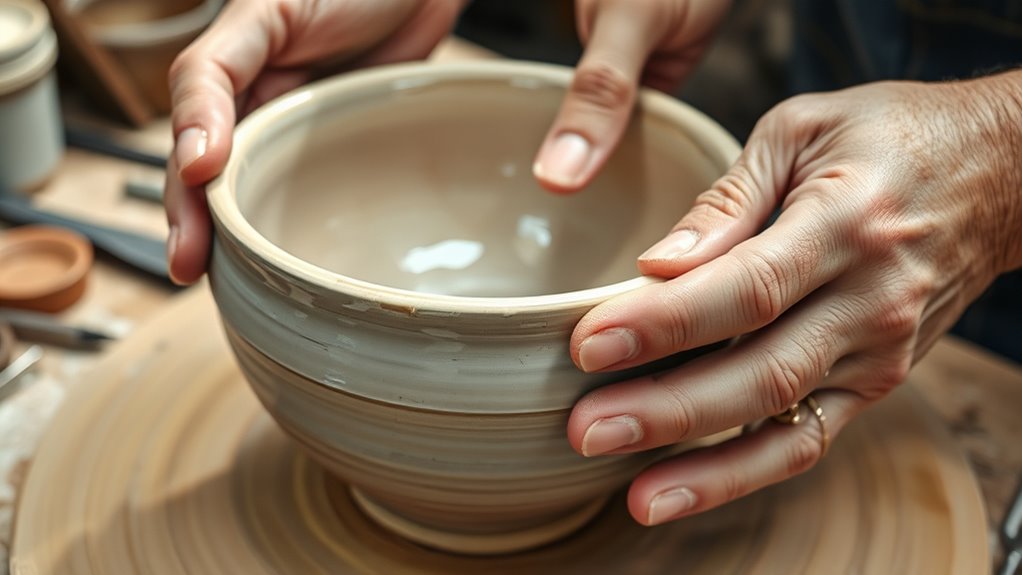
When you focus on continuous refinement, you often find that chasing perfection can stifle your creativity. Prioritizing progress over perfection allows you to stay flexible and open to new ideas. Embracing this mindset helps you produce more authentic and innovative work without getting stuck on every detail.
Creativity vs. Perfectionism
While aiming for perfection can drive you to refine your work endlessly, it often hampers your creative flow. When you focus too much on perfecting every detail, you risk losing sight of your original vision and spontaneity. Embracing crafting intentionality helps you set clear boundaries, ensuring effort is balanced and directed toward meaningful improvement rather than endless tweaking. Perfectionism can create a cycle of doubt and over-correction, stifling your ability to experiment and innovate. Instead, shift your mindset to valuing progress over perfection. By consciously deciding when a piece feels complete, you preserve your creativity and maintain the joy of making. Remember, true craftsmanship involves both effort and freedom—striking that balance fuels your artistic growth without sacrificing spontaneity.
Progress Over Perfection
Pursuing continuous refinement can considerably impact your creative process, often shifting your focus from meaningful progress to endless tweaking. This mindset can erode your crafting patience and hinder your ability to celebrate progress. To counter this, consider these steps:
- Recognize when your tweaks become perfectionist loops, not improvements.
- Set clear boundaries for revisions to avoid over-polishing.
- Take time to acknowledge small wins and progress made.
- Remember that imperfections can add character and authenticity to your work.
Seeking Feedback and Fresh Perspectives

Have you ever wondered why seeking feedback and fresh perspectives can be a game-changer for personal growth? When you invite others to review your work through a collaborative critique, you gain insights you might have missed. Fresh perspectives challenge your assumptions and open new avenues for creativity. Sometimes, your own view becomes too narrow or biased, making it hard to see the flaws or potential improvements. By sharing your project with trusted friends, mentors, or fellow creators, you tap into collective wisdom that can elevate your craft. These external viewpoints don’t just refine your work—they inspire you with new ideas and approaches. Embracing feedback helps you recognize when your piece is truly finished and prevents endless tweaking driven by perfectionism.
Embracing Completion and Moving Forward
Reaching a point of completion can be challenging, especially when you feel the urge to keep refining your work. However, embracing completion is essential to honor your craftsmanship standards and artistic expression. To do this:
- Trust your instincts and recognize when further tweaks risk diminishing your original vision.
- Set a clear deadline to prevent endless adjustments.
- Celebrate your progress, acknowledging how far you’ve come.
- Remember that imperfection often adds character and authenticity.
Frequently Asked Questions
How Do I Know When My Piece Is Truly Finished?
You know your piece is finished when your finishing touches feel right and your artistic intuition signals completion. Trust your instincts; if you stop obsessing over tiny details and the piece resonates with you, it’s time to move on. Sometimes, stepping back and taking a break helps you see it with fresh eyes. Remember, perfection is less important than feeling satisfied and confident in your craftsmanship.
Can Over-Tweaking Ruin the Overall Aesthetic of My Work?
Over-tweaking can definitely ruin your work’s aesthetic balance. Imagine a potter obsessively refining a bowl, losing its natural charm and character—crafting patience is key. When you constantly tweak, you risk making your piece look overly polished or uneven. Knowing when to stop helps preserve its authentic beauty and harmony. Trust your instincts, step back, and recognize that sometimes, imperfections add unique charm rather than diminish your craft’s overall appeal.
What Are Common Signs I Should Stop Refining?
You should stop refining when your piece reaches a high level of quality control, with no visible flaws or inconsistencies. Watch for signs like diminishing returns, where further tweaks don’t improve the piece, and avoid over-tweaking that could damage its aesthetic. Managing your time effectively helps prevent unnecessary adjustments, so set a limit and trust your judgment—perfection often lies in knowing when enough is enough.
How Does Perfectionism Affect My Creative Process?
Perfectionism can secretly sabotage your creativity, feeding self-criticism and causing perfection paralysis. You might find yourself endlessly tweaking, never satisfied, fearing mistakes will ruin your work. This relentless pursuit of flawlessness stifles your flow, making progress feel impossible. Recognize when your self-criticism becomes unproductive, and trust that imperfection is part of the process. Sometimes, letting go is the bravest step toward truly expressing your unique artistry.
Is It Better to Seek External Opinions Early or Late?
It’s better to seek external opinions during the early stages of your project, as collaborative feedback helps you identify areas for improvement and keeps you from over-tweaking. Trust your self-assessment timing, but don’t wait too long; early input can guide your adjustments without causing unnecessary perfectionism. Balancing self-awareness with external insights ensures your handmade piece reaches its potential without endless tweaking.
Conclusion
Just like a sculptor stepping back to see their completed masterpiece, you need to know when to stop tweaking your work. The process is a delicate dance between perfection and progress. If you keep chiseling, you risk erasing the beauty of your original vision. Trust your instincts, embrace imperfection, and remember—sometimes, the most authentic art is born from knowing when to let go and move forward.