To start a craft journal that boosts your skills, focus on detailed documentation of each project, including materials, steps, and challenges faced. Use photos, sketches, and active reflections to track progress and identify patterns. Organize your pages with templates and clear sections to stay consistent. Keep your journal flexible with adaptable layouts, so it evolves with your growth. If you keep working on it, you’ll discover even more ways to refine your craft journey.
Key Takeaways
- Use detailed descriptions, sketches, photos, and reflect on challenges to turn your journal into a learning tool.
- Organize pages with consistent layouts, including project details, process notes, and results for easy review.
- Incorporate visual documentation like photos and annotations, and back up digitally for progress tracking.
- Utilize flexible organizational methods, such as binders or dividers, to adapt your journal as skills and projects evolve.
- Dedicate sections for different crafts, create a project calendar, and focus on pattern recognition to enhance skill development.
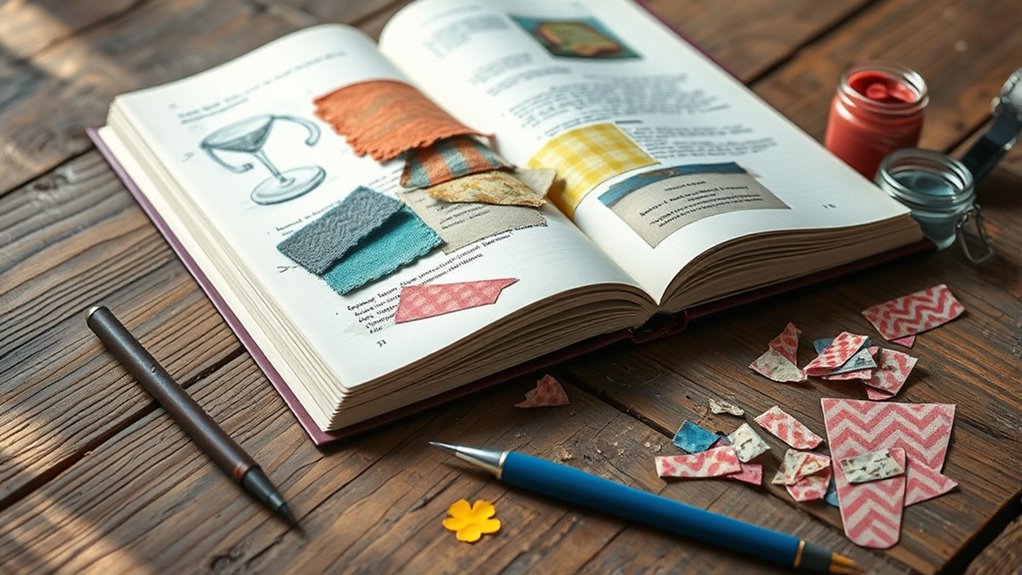
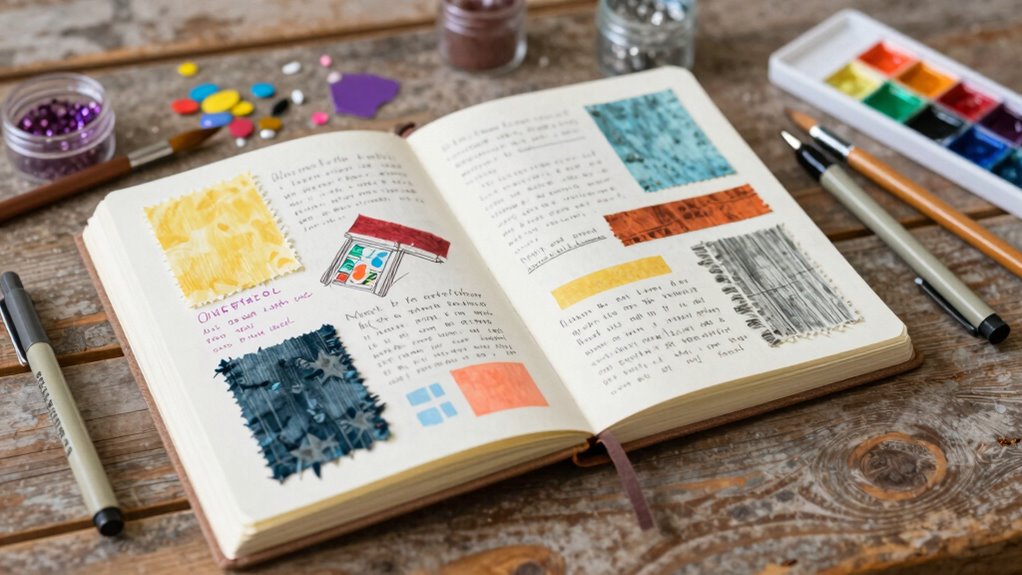
Starting a craft journal is a great way to organize your ideas, track your progress, and inspire your creativity. When you begin, one of the most important steps is to develop effective techniques to record your work. This means using clear, detailed descriptions of your projects, including materials used, steps taken, and any challenges you faced. Incorporate sketches, photographs, or samples to visually document your progress. These visuals serve as valuable references for future projects and help you identify patterns or techniques you want to improve. As you record, don’t just jot down what you did—note what worked well and what could be improved. This active reflection transforms your journal into a learning tool, not just a collection of pretty notes.
Organizing your pages is equally essential. You might start by dedicating specific sections for different crafts, such as knitting, painting, or paper crafts. Use tabs, dividers, or color-coded pages to keep everything easy to find. When you organize your pages effectively, it becomes simple to look back at previous projects and identify growth areas. You can also create a project calendar, outlining upcoming ideas or deadlines, which keeps your craft journey focused. Incorporate a consistent layout for your entries—perhaps a template that includes project name, date, materials, process notes, and final results. This consistency makes your journal more functional and less cluttered, so you spend more time creating rather than searching.
Additionally, understanding the importance of color accuracy and how it impacts the visual quality of your projects can help you select the right materials and techniques to enhance your craft outcomes. Another technique to record your work efficiently involves using digital tools alongside your physical journal. Take photos of your projects and insert them into your pages with captions or annotations. Digital backups guarantee you don’t lose valuable memories and make it easier to share your progress online or with friends. For organizing your pages, consider using a binder system or a ring-bound journal, which allows you to rearrange pages as your collection grows. This flexibility keeps your journal dynamic and adaptable to your evolving skills.
craft journal notebook with templates
As an affiliate, we earn on qualifying purchases.
As an affiliate, we earn on qualifying purchases.
Frequently Asked Questions
How Often Should I Update My Craft Journal?
You should update your craft journal regularly, ideally after each project or new technique you try. Use techniques to record ideas and experiment with color coding systems to keep everything organized. This way, you reinforce your skills and easily find inspiration later. Whether daily, weekly, or after each session, consistent updates help track your progress, refine techniques, and make sure your journal becomes a valuable resource for improving your craft.
What Tools Are Essential for an Effective Craft Journal?
You need the essentials that turn your craft journal into a powerhouse of creativity and growth. Grab colorful pens for vivid color coding that makes ideas pop and organize your notes effortlessly. Invest in a flexible notebook with a great layout design, so your thoughts flow smoothly across pages. Add a ruler and scissors for precise sketches and cut-outs. These tools transform your journal into an inspiring, skill-boosting masterpiece!
Can I Include Digital Sketches in My Journal?
Yes, you can definitely include digital sketches in your craft journal. Digital sketching allows you to experiment quickly and easily, and integrating digital journaling helps you track your progress and ideas seamlessly. You might use a tablet or stylus to create sketches, then embed or link them to your written notes. This blend of digital tools keeps your journal dynamic and versatile, enhancing your skills and keeping your creative process organized.
How Do I Organize Different Craft Projects?
A place for everything and everything in its place—start by categorizing your projects by type or stage to stay organized. Use sections or color-coding for easy project categorization, and track materials for each craft to avoid confusion. Regularly update your journal with progress notes and material lists. This way, you can quickly find what you need and see your skills grow, turning chaos into clarity.
What’s the Best Way to Track My Progress Over Time?
You should track your progress by using techniques to measure progress, like setting specific goals and noting improvements in skills or techniques. Incorporate reflection prompts into your journal, asking yourself what worked, what didn’t, and what you’d like to try next. Regularly reviewing these reflections helps you see growth over time, keeping you motivated and highlighting areas for further improvement. This method keeps your craft journey focused and meaningful.
digital photo backup for craft projects
As an affiliate, we earn on qualifying purchases.
As an affiliate, we earn on qualifying purchases.
Conclusion
Starting your craft journal is like planting a seed—you nurture it with your ideas, mistakes, and progress. Over time, it blooms into a vibrant garden of skills and inspiration, each page a flower showing your growth. As you write and reflect, you’re watering your passion and patience. Remember, your journal isn’t just a notebook; it’s a mirror of your creative journey—a symbol of how far you’ve come and how beautifully you’ll continue to grow.
ring-bound craft journal organizer
As an affiliate, we earn on qualifying purchases.
As an affiliate, we earn on qualifying purchases.
sketching and annotation pens for crafts
As an affiliate, we earn on qualifying purchases.
As an affiliate, we earn on qualifying purchases.