To practice craft skills without wasting expensive materials, focus on repurposing household items like scraps, jars, or leftover yarn. Use basic tools like scissors and glue, and experiment with low-cost techniques like homemade dyes or textures from salt and baking soda. Focus on making the most of what you have and start small to avoid waste. If you keep exploring, you’ll discover even more ways to craft sustainably and creatively while saving money.
Key Takeaways
- Use leftover or recycled materials like scrap paper, broken jewelry, and household items for practice projects.
- Focus on basic tools and techniques that require minimal or inexpensive supplies.
- Create homemade dyes and textures with common household ingredients to experiment affordably.
- Repurpose existing items at home to develop skills without purchasing new materials.
- Practice small-scale projects to maximize resourcefulness and reduce material waste.
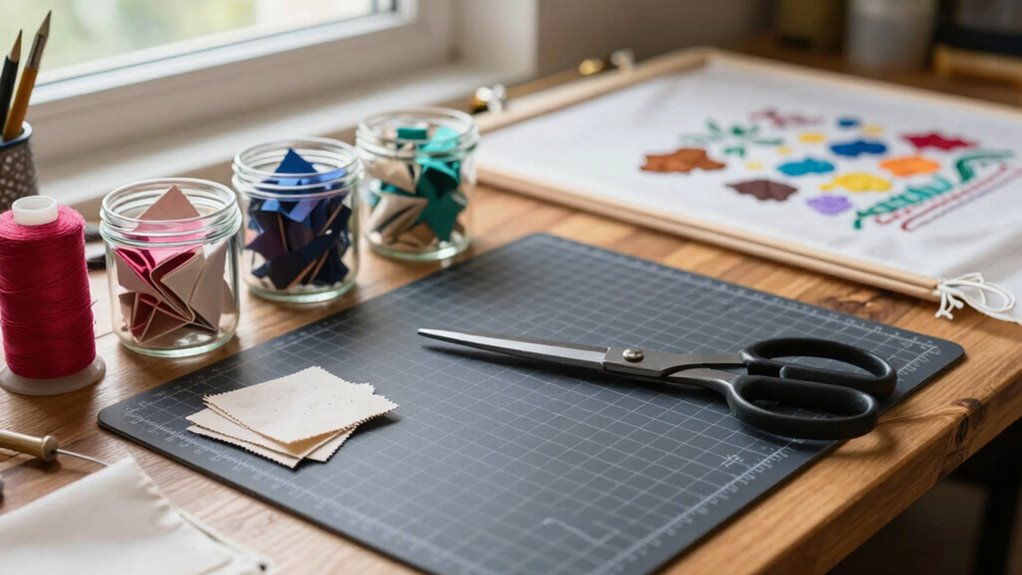
Ever wondered how you can hone your craft skills without draining your budget on costly materials? The key lies in embracing material recycling and budget-friendly techniques. Instead of constantly buying new supplies, you can turn everyday items and scraps into valuable resources for your projects. Recycling materials also reduces waste, making your crafting more environmentally friendly. Incorporating Recycling materials into your projects fosters sustainability and enhances your upcycling skills.
Discover how recycling everyday items sparks creativity and saves money in your crafting journey.
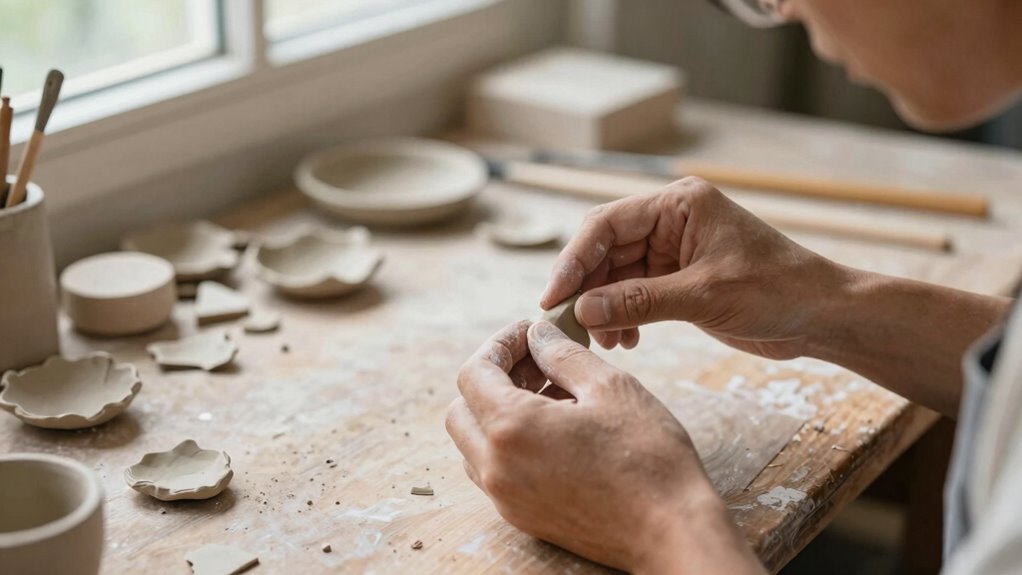
To get started, assess what you already have at home. Look for items that are usually discarded but can be repurposed. Glass jars, bottle caps, or leftover yarn can become part of your craft stash. You might be surprised how many materials you can reuse with a little imagination. For example, shredded paper can be used as stuffing, and broken jewelry can be turned into decorative embellishments. This method encourages you to develop skills like upcycling and problem-solving, all while sticking to a tight budget. It also helps you become more mindful of your consumption habits and the lifecycle of everyday objects.
Using budget-friendly techniques involves more than just recycling; it’s about making smart choices to maximize your resources. For example, you don’t need expensive tools or specialty supplies to get started. Many craft projects can be done with basic tools like scissors, glue, and a few household items. Look for tutorials that focus on low-cost or no-cost materials. You can also save money by purchasing supplies in bulk or during sales, but the emphasis should be on making the most out of what you already have.
Another tip is to experiment with different mediums and techniques that don’t require expensive materials. For example, painting with homemade dyes or creating textures using simple household items like salt or baking soda can add depth to your work without extra expense. Additionally, practicing techniques such as origami or paper cutting can be done using scrap paper, reinforcing skills without the need for costly supplies. These approaches foster a mindset of creative resourcefulness****, encouraging you to see potential in everyday objects.
Ultimately, honing your craft skills without wasting expensive materials is about resourcefulness. By recycling materials and adopting budget-friendly techniques, you challenge yourself to innovate and develop a diverse skill set. This not only makes crafting more accessible but also more sustainable. With a little effort and creativity, you’ll find that you can produce beautiful, meaningful work while keeping costs low and your environmental impact minimal.
reusable craft supplies
As an affiliate, we earn on qualifying purchases.
As an affiliate, we earn on qualifying purchases.
Frequently Asked Questions
Can I Practice Craft Skills Digitally Before Using Real Materials?
Yes, you can definitely practice craft skills digitally before using real materials. Virtual tutorials and digital simulations give you a chance to learn techniques, experiment with designs, and build confidence without wasting expensive supplies. These tools allow you to refine your skills, troubleshoot problems, and visualize your projects. By practicing digitally, you save resources and gain valuable experience, making your real-world crafting more efficient and enjoyable.
Are There Inexpensive Alternative Materials for Practice?
Yes, there are cost-effective options for practice. You can use alternative materials like scrap fabric, foam, or recycled paper to hone your skills without spending much. These materials are inexpensive and readily available, making them perfect for experimenting and improving. By choosing these alternatives, you save money while still gaining valuable experience, ensuring you don’t waste your expensive supplies during the learning process.
How Can I Measure My Progress Without Wasting Resources?
They say “what gets measured gets managed,” and that’s true for tracking improvements in your craft skills. To measure your progress without wasting resources, set small goals and document each attempt. Take photos or notes, compare your work over time, and reflect on improvements. This way, you can effectively track progress, boost confidence, and see growth without using extra materials, keeping your practice efficient and resourceful.
What Safety Precautions Should I Take With Cheap Practice Materials?
You should wear safety gear like gloves and goggles to protect yourself when working with cheap practice materials. Make sure you work in a well-ventilated area to avoid inhaling fumes or dust. Always read the material’s safety instructions and keep your workspace organized to prevent accidents. Taking these precautions helps you practice safely, even with inexpensive supplies, so you can focus on improving your craft skills confidently.
Can I Share My Practice Projects to Get Feedback?
Sharing your practice projects for feedback can boost your skills considerably—did you know that collaborative critique improves learning speed by up to 50%? Yes, you should share your work! Engaging in feedback not only offers fresh perspectives but also fosters community. Embrace collaborative critique, and you’ll discover new techniques, build confidence, and refine your craft faster. Don’t be afraid to show your progress; constructive feedback accelerates your growth.
DIY upcycling craft kits
As an affiliate, we earn on qualifying purchases.
As an affiliate, we earn on qualifying purchases.
Conclusion
By mastering these techniques, you’ll become a crafting wizard, turning mere scraps into masterpieces without draining your wallet. Imagine your workspace bursting with endless creations, each one a proof to your skill and resourcefulness. No longer will expensive materials hold you back; instead, they’ll fuel your creativity like a roaring fire. So, go ahead—practice fearlessly, innovate boldly, and watch your craft skills soar to heights you never thought possible, all while saving a fortune!
homemade dye kit
As an affiliate, we earn on qualifying purchases.
As an affiliate, we earn on qualifying purchases.
craft tools for beginners
As an affiliate, we earn on qualifying purchases.
As an affiliate, we earn on qualifying purchases.