Relying solely on “hours times rate” oversimplifies how you should price handmade items. It ignores material costs, marketing expenses, and the value your craft offers to customers. This approach can lead to underpricing and missed profits. To truly price your work fairly and sustainably, you need to take into account all costs, your brand’s uniqueness, and market trends. Keep exploring to find out how a well-rounded pricing strategy can boost your business.
Key Takeaways
- Relying solely on hours times rate undervalues craftsmanship and ignores product uniqueness.
- Material costs and marketing expenses are often overlooked but crucial for accurate pricing.
- Market demand and perceived value justify higher prices beyond simple time calculations.
- Fixed “hours × rate” pricing fails to adapt to changing costs and market conditions.
- A holistic approach considers costs, value, and market trends for sustainable profitability.

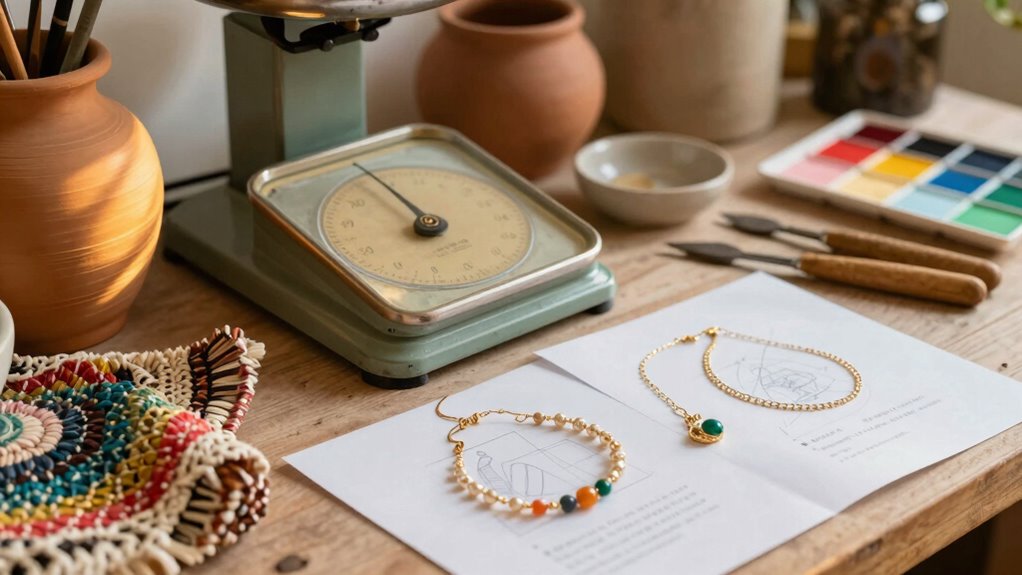
Have you ever wondered if your pricing strategies for handmade crafts are based on facts or just myths? It’s easy to fall into the trap of thinking that your price should simply be your hours worked multiplied by a standard rate. But this “hours times rate” approach doesn’t tell the whole story. When setting prices, you need to consider more than just the time you spend creating your work. Material costs, for example, can vary widely and often get overlooked. If you’re not accounting for the materials used—be it fabric, clay, paint, or beads—you risk undervaluing your products. Remember, every piece of material you purchase adds to the actual cost of your craft, and these costs must be covered in your final price.
Beyond materials, marketing overhead is another vital factor often ignored. Marketing overhead includes expenses related to promoting your work—such as website hosting, social media ads, packaging, and even the time you spend photographing and updating listings. These costs are real and directly impact your bottom line. If you don’t factor them into your pricing, you might find yourself struggling to make a profit, especially as your business grows. A common myth is that your craft’s value is solely based on the hours you put in, but that ignores how much it costs to bring your craft to potential buyers.
Pricing based only on time also sidesteps the importance of perceived value. Handmade items often carry a story, uniqueness, and quality that can justify higher prices. If you’re charging only for your hours, you might undervalue your work and miss out on what the market is willing to pay. Recognizing the worth of your craftsmanship, along with covering material costs and marketing overhead, allows you to set a price that truly reflects the product’s value.
Another myth is that pricing should be fixed and never adjusted. In reality, market conditions, demand, and costs fluctuate. Regularly reviewing and adjusting your prices ensures you stay profitable. If you ignore these factors, you could either leave money on the table or price yourself out of the market. So, instead of relying solely on a simple “hours × rate” formula, develop a holistic pricing strategy that includes material costs, marketing overhead, perceived value, and market trends. Doing so helps you create sustainable pricing that respects your craft, covers expenses, and recognizes your worth. By understanding the full scope of costs involved, you can accurately determine your pricing and ensure your handmade business remains viable and rewarding.
handmade craft pricing calculator
As an affiliate, we earn on qualifying purchases.
As an affiliate, we earn on qualifying purchases.
Frequently Asked Questions
How Do I Determine the Right Pricing for My Handmade Items?
To determine the right pricing for your handmade items, start with your costs and then consider pricing psychology to set a value that appeals to your target audience. Incorporate branding strategies by emphasizing quality and uniqueness, which can justify higher prices. Don’t forget to test different price points and gather feedback, so you find a balance that reflects your craftsmanship while resonating with customers’ perceptions of worth.
What Factors Influence the True Cost of Handmade Products?
Cost calculation is complex, combining craftsmanship, materials, and time to create clarity. You must consider the cost analysis—factoring in everything from raw resources to your unique skills—and how customers perceive value. Remember, pricing isn’t just about expenses but also about perception. By balancing these elements, you craft a compelling price point that captures true value, making your handmade products both meaningful and marketable.
How Can I Balance Affordability With Fair Compensation?
To balance affordability with fair compensation, you need to understand pricing psychology and customer perception. Set prices that reflect your craft’s value while remaining accessible. Communicate your craftsmanship and unique story to justify your pricing, making customers see your work’s worth. Offer tiered options or discounts for loyal buyers to maintain affordability, and always be transparent about your costs. This approach helps you maintain fairness without undervaluing your talent.
Should I Consider Market Demand When Setting Prices?
Did you know 78% of consumers prioritize product uniqueness over price? Yes, market demand and customer preferences should influence your pricing. By studying market trends, you can set prices that match what buyers value most, ensuring your work remains competitive and attractive. Ignoring these factors risks undervaluing your craft or pricing yourself out of the market. Stay aware of trends to balance fair profit with customer expectations.
How Do I Handle Pricing for Custom or One-Of-A-Kind Pieces?
When pricing custom or one-of-a-kind pieces, you should consider pricing psychology and customer perception. Highlight the uniqueness and craftsmanship to justify a higher price, emphasizing the value rather than just time and materials. Communicate clearly why the piece costs more, making customers see it as a special investment. This approach taps into their appreciation for exclusivity, ensuring they understand and value the artistry behind your work.
artisan marketing and packaging supplies
As an affiliate, we earn on qualifying purchases.
As an affiliate, we earn on qualifying purchases.
Conclusion
Think of pricing your handmade work as tending a garden. Focusing only on hours and rates is like watering one plant and ignoring the soil, sunlight, and patience needed to truly flourish. To grow a thriving business, you must nurture every element—value, market demand, and your unique story. Remember, a garden’s beauty isn’t just in each flower but in how all parts work together. Embrace the full picture, and your prices will naturally bloom.
materials for handmade jewelry
As an affiliate, we earn on qualifying purchases.
As an affiliate, we earn on qualifying purchases.
craft business pricing guide
As an affiliate, we earn on qualifying purchases.
As an affiliate, we earn on qualifying purchases.