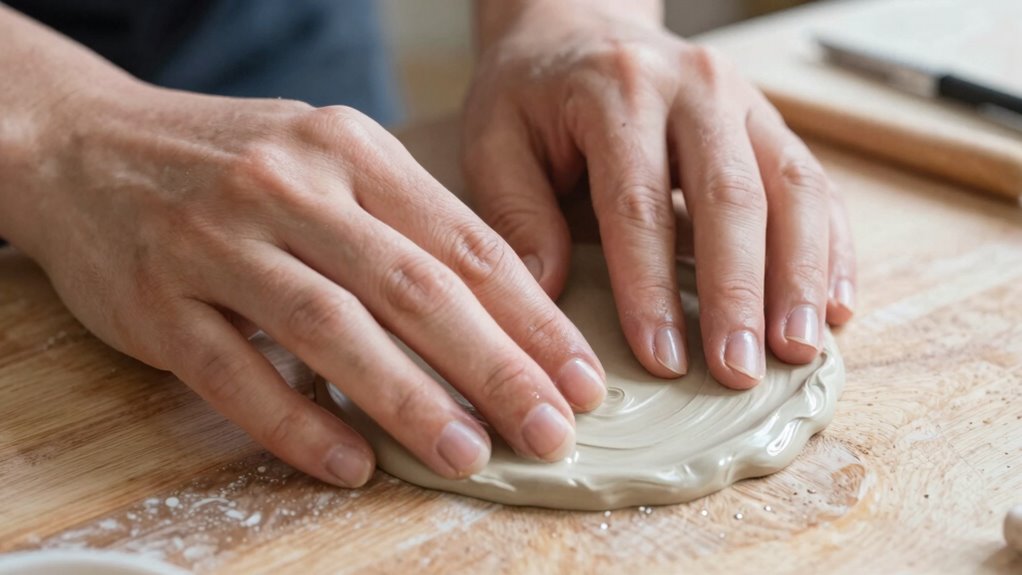

To prevent cracks later, you need to properly compress your clay by applying even pressure with your fingers, tools, or sponges, especially on thick or uneven areas. Focus on removing air pockets and excess moisture, which helps create a smooth, compact surface that dries evenly. Controlling moisture levels during compression diminishes internal stress and shrinkage, preventing cracks and warping. Mastering this trick ensures a stronger, more durable finish—keep going to discover more helpful tips for perfecting your clay work.
Key Takeaways
- Proper compression removes air pockets and excess moisture, reducing the risk of cracks during drying.
- Applying consistent pressure with fingers or tools ensures even density and moisture distribution across the clay surface.
- Focusing on thick or uneven areas during compression prevents stress points that can cause cracks later.
- Covering clay with plastic or damp cloth during compression maintains optimal moisture levels for effective bonding.
- Adequate compression before drying minimizes internal tension, leading to a smoother finish and less warping over time.
Have you ever wondered how to make your clay projects stronger and more durable? One simple yet effective trick is compressing the clay before it dries. When you work with air drying clay, moisture control becomes vital. If you don’t manage the moisture properly, your piece can crack or warp as it loses water unevenly. Compressing the clay helps eliminate air pockets and excess moisture, which are common causes of cracks later. It’s a straightforward step that can make a significant difference in the longevity of your creation.
Compressing air drying clay before drying prevents cracks and warping, enhancing durability and overall finish.
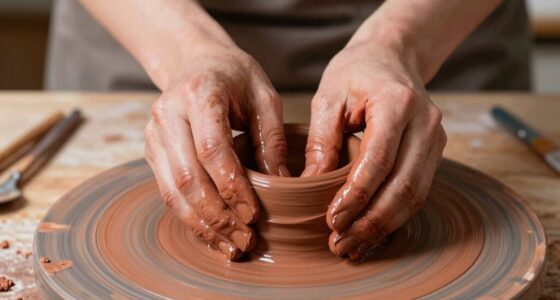
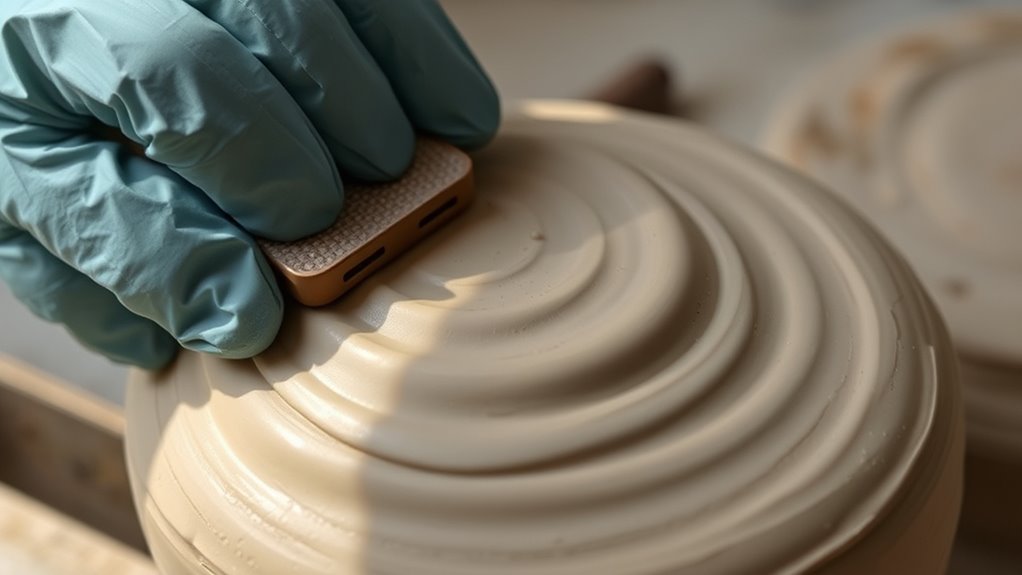
To start, make sure your clay is at the right consistency—firm but pliable. When you press down on your project, you’re forcing out any trapped air and excess moisture, both of which can cause problems during drying. Use your fingers, a rubber tool, or a smoothing sponge to gently press the clay surface. Focus on areas that are more thick or uneven, as these are prone to cracking. By applying consistent pressure, you create a more compact, even surface that dries uniformly.
Moisture control is essential during this process. If you leave the clay too moist, it may shrink unevenly and crack as it dries. Conversely, if it’s too dry, it can become brittle and prone to breaking. Compressing the clay helps balance this moisture content by pushing out excess water, reducing the risk of cracks. Remember, air drying clay loses moisture gradually, so controlling the initial moisture level through compression ensures that the drying process happens more smoothly. Additionally, maintaining proper moisture levels can help prevent cracking and warping, which are common issues in clay projects.
Another key point is to keep the clay covered with plastic or a damp cloth during the compression process. This prevents it from drying out too quickly or unevenly, which can lead to surface cracks. As you compress, check the surface for any air bubbles or uneven spots, and smooth them out gently. This not only improves the strength of your piece but also enhances its visual appeal.
Once you’ve compressed the clay thoroughly, allow it to dry slowly in a protected environment. Rapid drying increases tension within the material, promoting cracks. By compressing first, you’ve already reduced internal stress, making the drying process less prone to issues. When the piece is fully dry, it will be more resistant to cracking, warping, or breaking.
Amazon Product B0F78Q4697
As an affiliate, we earn on qualifying purchases.
Frequently Asked Questions
How Long Should Compressed Clay Dry Before Further Work?
You should let compressed clay dry for at least 24 to 48 hours before further work. During this time, focus on clay sealing to prevent cracks and maintain moisture retention. Cover the clay with plastic to slow drying and keep it pliable, especially in dry environments. Check its firmness regularly; it’s ready for additional shaping or detailing when it’s firm but not completely hard. Patience guarantees a smooth, crack-free finish.
Does Compressing Clay Vary With Different Types of Clay?
Yes, compressing clay varies with different clay textures. For smooth, plastic clays, you can use gentle compression techniques to shape and strengthen your piece. In contrast, rougher or more brittle clays require careful, light compression to avoid cracks. Always consider the specific clay’s properties, adjusting your compression techniques accordingly. This guarantees your project maintains its integrity and prevents issues like cracking later in the process.
Can Improper Compression Cause Cracks in the Future?
Yes, improper compression can cause cracks in the future. When you don’t compress the clay correctly, it affects clay stability, making it more prone to shrinking and cracking as it dries. To prevent this, make certain you apply even pressure during compression, focusing on all areas. Proper compression promotes crack prevention by reducing air pockets and ensuring uniform drying, ultimately helping your clay piece stay intact and durable over time.
What Tools Are Best for Compressing Clay Effectively?
You should use tools like wooden paddles, rubber ribs, or metal scrapers to effectively compress clay. These tools help you control clay density and apply consistent pressure, which is essential for proper compression techniques. By focusing on even pressure and steady strokes, you prevent air pockets and cracks. Remember, the right tool makes a big difference in achieving smooth, well-compacted clay that resists cracking over time.
Is There a Risk of Over-Compressing Clay?
You should be mindful of over-compression risks, as pressing too hard can make the clay overly dense and prone to cracking later. When you compress clay, aim for even pressure to achieve the right density without risking damage. Over compression effects include making the clay too stiff, which can hinder shaping and cause cracks during drying or firing. So, gentle, consistent pressure helps maintain the clay’s flexibility and integrity.
Amazon Product B00L0OTDYE
As an affiliate, we earn on qualifying purchases.
Conclusion
By mastering the art of compressing clay correctly, you can considerably reduce the risk of cracks forming later. Some believe that applying consistent pressure aligns particles better, creating a stronger, more durable surface. While this theory holds merit, ongoing research suggests that combining compression with proper drying techniques yields the best results. So, next time you work with clay, remember: gentle yet firm compression might just be the secret to flawless, crack-free creations that stand the test of time.
Amazon Product B0CS4F4T7R
As an affiliate, we earn on qualifying purchases.
Amazon Product B07YK2VR5B
As an affiliate, we earn on qualifying purchases.