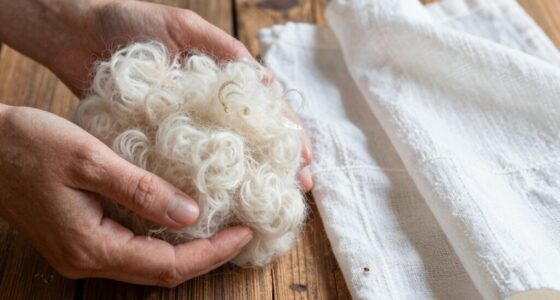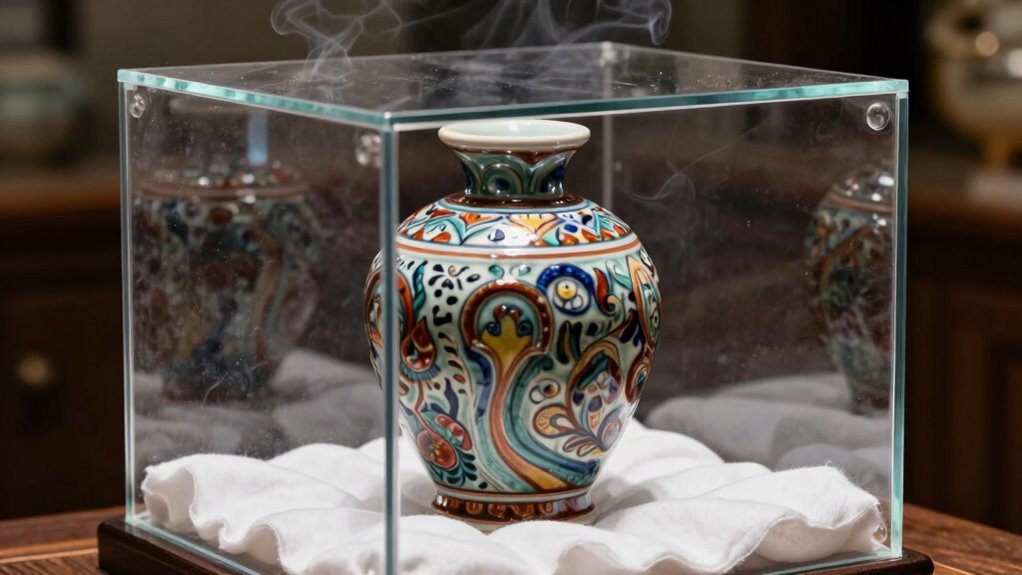

To protect your handmade items from smoke, odors, and holiday cooking fumes, start by cleaning them gently with mild solutions and avoid harsh chemicals. Store delicate materials in airtight or breathable containers, wrapped in acid-free tissue, and keep them in cool, dry places away from direct sunlight. Air out items regularly and use odor absorbers like charcoal or baking soda nearby. To learn more about maintaining and safeguarding your treasures, keep exploring these helpful tips.
Key Takeaways
- Store handmade items in airtight containers or sealed plastic bins to prevent odor absorption from smoke and fumes.
- Use breathable storage materials like cotton or muslin bags to allow airflow while protecting delicate items.
- Place activated charcoal or baking soda nearby to absorb odors and maintain a fresh environment.
- Keep items away from kitchen areas and sources of smoke or strong cooking odors; regularly air out stored items.
- Maintain a clean environment with air purifiers and proper ventilation to minimize airborne fumes affecting your handmade goods.

Have you ever wondered how to keep your handmade items safe from theft or damage? Protecting your creations from smoke, odors, and fumes from holiday cooking requires more than just careful placement; it involves effective cleaning techniques and smart storage solutions. First, understanding how to clean your items properly is essential. Gently dust or vacuum your handmade pieces regularly using a soft brush or a low-suction vacuum attachment to remove surface dirt and prevent the buildup of dust that can trap odors. When cleaning more delicate materials like fabric, yarn, or paper, avoid harsh chemicals. Instead, use a mild soap solution or a specialized cleaner suited for your item’s material, and always test a small area first. For wooden or painted items, a soft cloth dampened with water can remove grime without damaging the finish. It’s crucial to dry items thoroughly after cleaning to prevent moisture from seeping in and causing mold or warping. Additionally, choosing projectors with high contrast ratios can help you better evaluate the true colors and details of your handmade work under different lighting conditions. Proper storage methods are also vital to prevent odors from settling into your handmade items over time. Next, storage solutions play an essential role in safeguarding your handmade items from lingering smells and accidental damage. Store your creations in airtight containers or sealed plastic bins, especially if you anticipate a period of non-use or exposure to potential fumes. Incorporate breathable storage options like cotton or muslin bags for items that need ventilation, but ensure they are kept away from direct exposure to smoke or strong odors. When storing textiles, wrapping them in acid-free tissue paper helps prevent discoloration and odor absorption. Keep your items in cool, dry places, away from direct sunlight, which can fade colors and weaken materials over time. For holiday cooking fumes, consider installing air purifiers with HEPA filters in your storage areas to trap airborne particles, reducing the chance that odors will cling to your handmade pieces. Additionally, placing activated charcoal or baking soda nearby can absorb residual smells. To further enhance odor control, regularly air out your stored items in fresh air when possible. Incorporating odor-neutralizing products can also provide extra protection against persistent smells.
Amazon Product B0F25T39CL
As an affiliate, we earn on qualifying purchases.
Frequently Asked Questions
Can I Use Commercial Sprays to Protect My Handmade Items?
Yes, you can use commercial sprays to protect your handmade items, but you should check the label for chemical safety information first. Make sure the spray is intended for the material of your item and avoid those with harsh chemicals that could damage or discolor your work. Test the spray on a small, hidden area first to verify it won’t cause any issues, and always follow the manufacturer’s instructions carefully.
How Often Should I Reapply Protective Coatings?
You should reapply protective coatings based on their durability and exposure. Typically, reapplication frequency depends on how often your items are handled or exposed to smoke, odors, or fumes. For most coatings, reapplying every 3 to 6 months works well to maintain protection. Always check the manufacturer’s instructions for specific reapplication recommendations, and consider reapplying sooner if you notice signs of wear or diminished effectiveness.
Are There Natural Alternatives to Chemical Protectants?
Yes, there are natural alternatives to chemical protectants. You can use natural repellents like beeswax or plant-based oils, which create a barrier against smoke and odors. Eco-friendly sealants made from natural ingredients also offer protection without harsh chemicals. These options are safe for your handmade items, environmentally friendly, and effective at shielding your crafts from fumes and smells, especially during the holiday season.
Will Protecting Items Affect Their Appearance or Texture?
You might notice that applying surface treatment or protective coatings can subtly change the look or feel of your items, like a gentle sheen or slight texture variation. However, if you choose the right products and apply them carefully, these effects are minimal. Protecting your handmade pieces from smoke and odors doesn’t have to compromise their appearance or texture—just pick coatings that suit your craft, and enjoy lasting beauty and protection.
How Do I Store Protected Items During the Holidays?
During the holidays, you should store protected items in a cool, dry place using holiday storage solutions like airtight containers or acid-free tissue paper. Wrap delicate items with protective methods such as bubble wrap or soft cloth to prevent damage. Keep them away from direct sunlight, heat, and humidity. Label containers clearly, and guarantee they’re sealed tight to maintain protection from smoke, odors, and fumes throughout the season.
Amazon Product B009YNG21U
As an affiliate, we earn on qualifying purchases.
Conclusion
Now that you know how to shield your handmade treasures from smoke, odors, and holiday fumes, think of your creations as delicate butterflies in a protected garden. With a little care and the right precautions, they’ll stay vibrant and beautiful, untouched by the smoky clouds that drift nearby. Keep these tips close like a secret recipe, and your cherished items will continue to shine, telling their stories brightly for years to come.
Amazon Product B0D9NJZHJS
As an affiliate, we earn on qualifying purchases.
Amazon Product B00EKT30JK
As an affiliate, we earn on qualifying purchases.