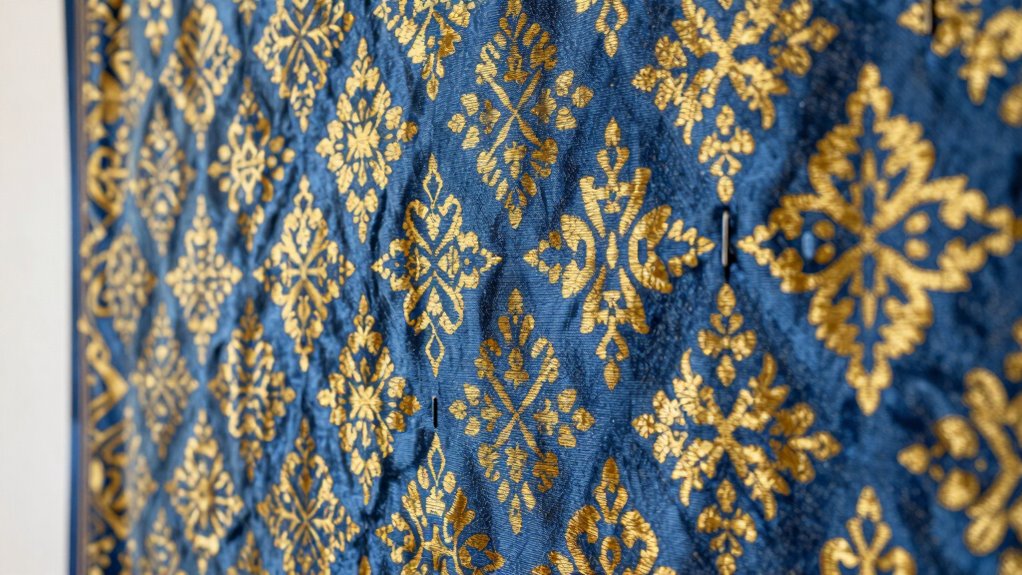

To prevent textile wall art from sagging, focus on maintaining proper tension and weight distribution. Use a sturdy frame or support system that keeps the fabric taut without overstretching. Secure the piece at multiple evenly spaced points to distribute weight evenly. Regularly check and adjust supports to address stretching or loosening over time. If you follow these tips, you’ll keep your artwork looking smooth and flawless — and there’s more to uncover if you continue exploring.
Key Takeaways
- Secure the textile at multiple points to distribute tension evenly and prevent sagging.
- Use a sturdy frame or support system that maintains consistent tension without overstretching.
- Support heavy textiles with a rod or wall rail for even weight distribution and reduced strain on mounting points.
- Regularly check and adjust mounting hardware to maintain proper tension and prevent fabric from loosening.
- Ensure mounting hardware is appropriate for the fabric’s weight and size to avoid sagging over time.
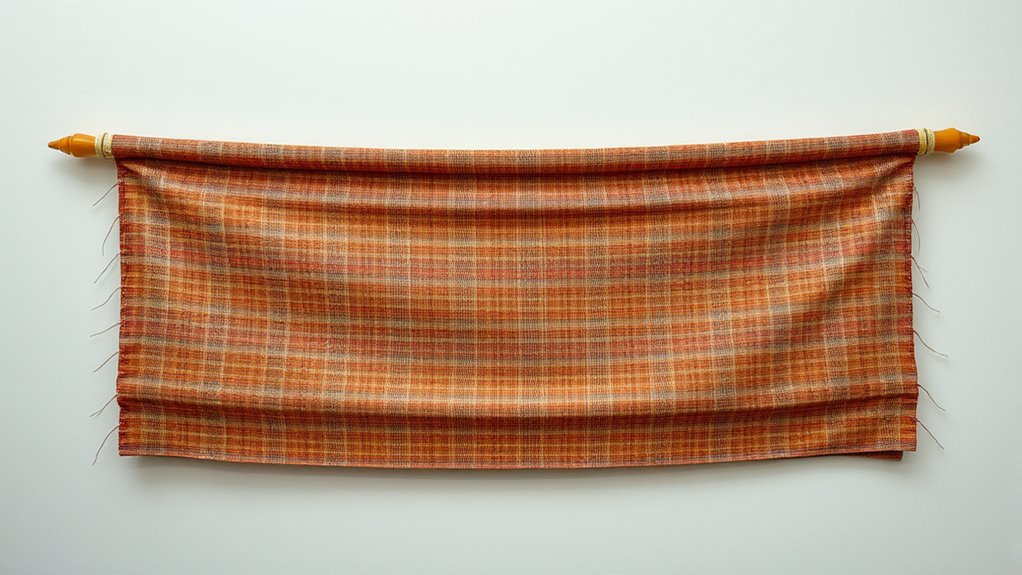
Hanging textile wall art can instantly add warmth and texture to any space, but many people overlook an essential rule that guarantees it looks polished and balanced. The secret lies in understanding fabric tension and weight distribution. When you hang textile art without considering these factors, you risk sagging, unevenness, and a cluttered appearance. To avoid this, you need to pay attention to how the fabric sits on your wall and how its weight is distributed across the mounting points.
First, think about fabric tension. If the textile is too loose, it will sag in the middle, creating a draped or wrinkled look that can ruin the aesthetic. Conversely, if it’s stretched too tightly, it might warp or cause stress on the fabric, leading to premature wear. The goal is to achieve just enough tension so that the fabric appears smooth and even, without any puckering or drooping. You can do this by using a sturdy, appropriately sized frame or mounting system that keeps the fabric taut but not overstretched. When attaching the textile, secure it at multiple points to evenly distribute the tension across the entire piece. Properly managing fabric tension involves understanding the fabric tension and how it interacts with the support system.
Weight distribution is equally essential. Heavier textiles, such as tapestries or thick woven pieces, require more support to prevent sagging. If you only hang the fabric from a single nail or hook, gravity will cause it to pull downward, creating an unattractive droop. Instead, consider using a mounting system that spreads the weight evenly—like a rod with brackets or a rail that runs along the top of the piece. This distributes the weight more uniformly, reducing strain on any single point and helping the textile hang flat and straight. If you opt for a frame, ensure it’s deep enough to support the fabric’s weight and keep it flush against the wall.
Another tip is to regularly check and adjust your hanging method. Over time, fabric can stretch or loosen, and the weight distribution can shift, leading to sagging. By maintaining an even tension and ensuring your supports are secure, you keep your textile art looking its best. Remember, the key is to find a balance—too tight, and it’ll warp; too loose, and it’ll sag. Paying attention to fabric tension and weight distribution will keep your textile wall art looking polished, balanced, and beautifully displayed.
Frequently Asked Questions
How Often Should I Re-Hang My Textile Art to Prevent Sagging?
You should re-hang your textile art every 6 to 12 months to prevent sagging. Use proper framing techniques to support the fabric’s weight distribution evenly, reducing strain on any single point. Regularly check the wall hooks and hanging hardware, and adjust as needed. This routine guarantees your textile art remains taut and visually appealing, avoiding long-term damage caused by gravity or poor support.
Can Different Hanging Techniques Improve the Durability of Textile Wall Art?
Using different hanging techniques can definitely improve your textile wall art’s durability. You should consider frame reinforcement to strengthen the artwork’s edges and prevent sagging. Additionally, choose the right hanging hardware, like sturdy hooks or wire, to evenly distribute weight and reduce stress on the fabric. This approach not only keeps your art looking great but also prolongs its lifespan, so you can enjoy it for years.
What Types of Wall Surfaces Are Best for Hanging Textiles Securely?
Imagine your wall as a sturdy stage for your textile masterpiece. For best results, you want smooth, solid surfaces like drywall or plaster that can hold wall anchors securely. Use quality hanging hardware designed for these surfaces, ensuring your art stays in place without sagging. Avoid delicate or uneven surfaces, which may require special anchors or mounting techniques. With the right hardware on a solid wall, your textile art will hang beautifully and securely.
Are There Specific Cleaning Methods to Maintain Textile Wall Art?
You should regularly spot clean your textile wall art with a gentle, damp cloth to remove dust and dirt. For deeper cleaning, opt for dry cleaning or professional services, especially if it’s delicate or heavily soiled. Avoid harsh chemicals or excessive moisture, as they can damage the fabric. By maintaining a consistent cleaning routine, you’ll keep your textile art looking fresh and vibrant without risking sagging or deterioration.
How Does Ambient Humidity Affect the Sagging of Textile Wall Hangings?
You notice your textile wall hanging sagging slightly, and ambient humidity is likely the culprit. Higher moisture levels cause the fabric to absorb moisture, making it more prone to sagging, especially if the material is sensitive. Keep humidity levels consistent and use a dehumidifier if needed. This simple step prevents excess moisture from weakening the fibers, helping your art stay taut and beautiful for longer.
Conclusion
Remember, the secret to flawless textile wall art is like a gentle breeze guiding a sail—subtle yet essential. When you follow the hidden rule, your art stays perfectly poised, transforming your space into a gallery of grace. Don’t let sagging steal the show; instead, embrace this simple trick and let your wall art hang with confidence. After all, a well-hung masterpiece is the silent poetry that elevates your home’s beauty.