If you’re unsure of your jewelry’s material, keep it simple and gentle. Use a soft cloth dampened with warm water and a small amount of mild dish soap to clean surfaces without risking damage. Avoid soaking or using harsh chemicals, especially on delicate or costume pieces. Store jewelry properly in soft pouches or lined boxes to prevent tarnish and scratches. Want some expert tips to keep your jewelry shining safely? Keep exploring for more helpful ideas.
Key Takeaways
- Use a soft, damp cloth with warm water and mild soap for gentle cleaning.
- Avoid soaking jewelry long, especially if its material is unknown, to prevent damage.
- Refrain from ultrasonic or steam cleaning unless you can confirm the jewelry’s safe to treat this way.
- Test cleaning methods on a small, inconspicuous area first to prevent unintended harm.
- Store jewelry properly in soft pouches or lined boxes to minimize tarnish and scratches.
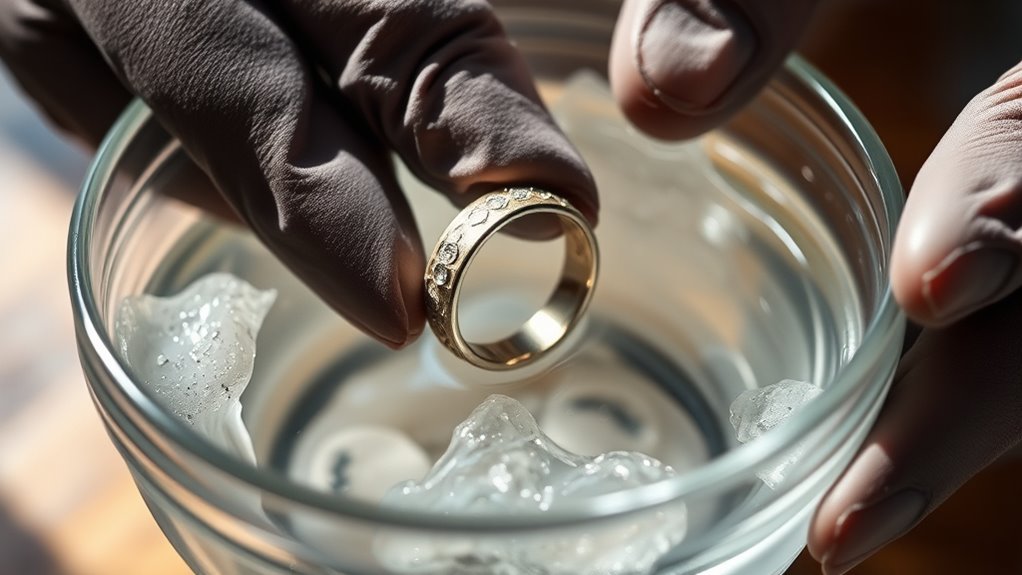
Have you ever wondered how to restore your jewelry’s sparkle? When you’re unsure of the material, cleaning can feel formidable, but there are safe ways to bring back its shine without risking damage. The first step is understanding that different jewelry types require different cleaning methods. Without knowing the material, it’s best to stick with gentle approaches and prioritize proper jewelry storage to prevent further tarnish or scratching.
Start by inspecting your jewelry closely. If it’s costume jewelry or pieces that look delicate, avoid harsh chemicals or abrasive cleaning tools. Instead, opt for mild solutions like a soft cloth dampened with warm water or a gentle jewelry cleaner specifically labeled safe for mixed materials. For more stubborn grime, a mixture of mild dish soap and warm water can work effectively. Dip a soft cloth or a soft-bristled toothbrush into the solution and gently clean the surface. Be careful not to soak pieces for too long, especially if you’re unsure about the metal or stones, as prolonged exposure to moisture can cause damage or tarnishing.
Inspect jewelry carefully and use gentle cleaning methods to avoid damage or tarnishing.
When it comes to jewelry storage, always keep your pieces in a clean, dry environment. Use soft pouches, cloth-lined boxes, or individual compartments to prevent scratches and tangling. Proper storage not only preserves the jewelry’s appearance but also makes future cleaning easier. If you notice tarnish or dullness over time, consider storing jewelry in anti-tarnish pouches or using silica gel packets to absorb moisture. Avoid exposing your jewelry to direct sunlight or humid environments, as these can accelerate tarnishing and deterioration. Additionally, proper cleaning techniques can help maintain the longevity of your jewelry and prevent damage caused by improper handling.
If your jewelry has stones, avoid ultrasonic cleaners or steam cleaning unless you’re sure about the material. Instead, gently wipe around stones with a soft cloth, making sure not to dislodge or scratch them. For metal parts, a jewelry polishing cloth can help restore some shine without the risk of damage. Remember, when in doubt about the material, less is more. Gentle cleaning and proper storage are your best bets to maintain your jewelry’s beauty and safety.
Amazon Product B07GKHQYCM
As an affiliate, we earn on qualifying purchases.
Frequently Asked Questions
Can I Use Household Cleaners on Unknown Jewelry?
You shouldn’t use household cleaners on unknown jewelry because they can cause unwanted chemical reactions, damaging the piece. Always test a small area first and avoid harsh chemicals. Instead, clean your jewelry gently and infrequently to prevent damage. Regular cleaning isn’t necessary every day; focus on a safe cleaning frequency to preserve its appearance. When unsure of the material, opt for professional cleaning to keep your jewelry in great shape.
How Do I Identify the Material of My Jewelry?
You can identify your jewelry’s material through metal testing and gemstone identification. Start by observing its color, weight, and markings; these clues help narrow down the type. Use a metal testing kit for an accurate assessment, or consult a professional gemologist for gemstone identification. Avoid guessing to prevent damage, especially if you’re unsure about the material’s sensitivity to cleaning agents. Accurate identification guarantees safe cleaning and proper care.
Is Ultrasonic Cleaning Safe for All Jewelry Types?
Ever wondered if ultrasonic cleaning is safe for all jewelry types? It’s not always the case. Ultrasonic risks exist, especially with certain materials like porous stones, pearls, or vintage pieces, which may get damaged. Material compatibility varies, so you should check if your jewelry can handle ultrasonic cleaning. When in doubt, it’s best to consult a professional or opt for gentle cleaning methods to prevent any harm.
What Are Natural Cleaning Methods for Mysterious Jewelry?
You can try DIY solutions like a mixture of mild soap and warm water for gentle cleaning of mysterious jewelry. Use a soft brush or cloth to scrub lightly, avoiding harsh chemicals or abrasive materials. These gentle techniques help preserve unknown materials while removing dirt and grime. Always test a small area first, and if you’re unsure about the jewelry’s material, consult a professional before using any cleaning method.
How Often Should I Clean Jewelry With Unknown Materials?
You should clean jewelry with unknown materials as often as a full moon—carefully and sparingly. Every few months is ideal, but always start with pH testing to avoid damage. If unsure, consult a professional appraisal first. Over-cleaning can wear down delicate pieces, so err on the side of caution. Regular gentle cleaning maintains their shine without risking harm, making your jewelry look stunning for years to come.
Amazon Product B0BWYJWPG9
As an affiliate, we earn on qualifying purchases.
Conclusion
Remember, cleaning jewelry without knowing its material is like walking a tightrope—you want to stay balanced and avoid a fall. I once tried cleaning a necklace without checking its metal, only to find it tarnished worse. Always test a small spot first, like dipping a toe into water before swimming. With patience and care, you’ll keep your jewelry shining safely, just as a gardener tends delicate blooms—gently, and with respect for each unique piece.
Amazon Product B0DT8PV51T
As an affiliate, we earn on qualifying purchases.
Amazon Product B0CGRKMT3F
As an affiliate, we earn on qualifying purchases.