To match plaids and stripes without wasting fabric, start by choosing one dominant pattern to anchor your look, ensuring it sets the tone and appears intentional. Coordinate colors carefully, matching stripe hues to plaid tones for cohesion. Balance pattern sizes—pair large plaids with narrow stripes and vice versa—while considering fabric textures for harmony. Strategic pattern placement helps minimize waste, and maintaining proportion keeps your outfit visually balanced. Keep these tips in mind to create stylish combinations efficiently; more tricks await if you continue.
Key Takeaways
- Start with a dominant pattern to establish the outfit’s visual anchor and set the tone.
- Match stripe colors to plaid tones for cohesive color harmony and avoid clashing hues.
- Use pattern size contrast—large plaids with narrow stripes or small stripes with subdued plaids—for balance.
- Strategically place patterns to minimize fabric waste, leveraging pattern repeats and fabric grain direction.
- Pair lightweight fabrics for both patterns to ensure visual harmony and ease of matching without excess fabric.
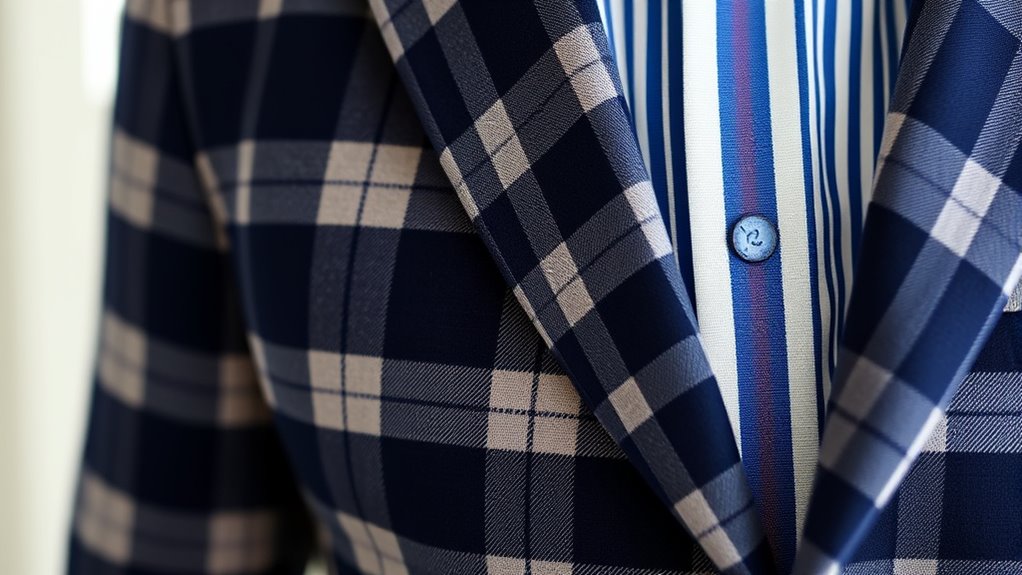
Matching plaids and stripes can seem tricky, but with a few simple guidelines, you can create stylish and cohesive outfits. The key lies in understanding fabric coordination and pattern balancing. When you’re working with different patterns, it’s essential to think about how the fabrics and designs work together. You want your outfit to look intentional, not chaotic or mismatched. To achieve this, start by selecting one dominant pattern—usually the larger or more eye-catching one. This helps set the tone for the rest of your outfit and provides a visual anchor.
Start with a dominant pattern to create cohesive, stylish outfits.
Once you’ve chosen your main pattern, think about how the other pattern will complement it. For example, if you’re wearing a bold plaid, opt for narrower stripes that don’t compete for attention. This contrast helps balance the overall look. Pattern balancing isn’t just about size; it’s also about color harmony. If your plaid features warm tones, choose stripes in similar warm shades to create a cohesive palette. Conversely, if the plaid is cool-toned, keep the stripes in cooler hues for a unified appearance. This attention to color coordination enhances the overall aesthetic without needing to match exactly.
Fabric coordination is another vital element. Different fabrics can have varying textures and weights, which can influence how patterns pair together. Light, crisp cotton plaids work well with smooth, fine-striped shirts or accessories. Avoid mixing bulky or textured fabrics with delicate patterns, as this can throw off the visual harmony. When you’re planning your outfit, consider how the fabrics will interact and aim for a balanced look. For example, pairing a lightweight plaid shirt with a sleek, striped silk scarf creates a refined, coordinated appearance. Additionally, understanding the fabric composition can help you select patterns that will wear well together over time.
Remember to pay attention to scale and proportion. If your plaid is large and bold, keep the stripes narrow and subtle. Conversely, if you’re working with small, delicate stripes, a more subdued plaid can keep the outfit from feeling overwhelming. Pattern balancing is about creating a visual rhythm—alternating large and small patterns that complement each other rather than clash. This approach minimizes fabric waste because you can selectively use parts of your fabric to highlight the best features of each pattern. No need to cut into large pieces or discard fabric; instead, focus on strategic pattern placement and proportion.

Alimens & Gentle Mens Solid Oxford Shirt Long Sleeve Dress Shirt Work Casual Button Down Shirts with Pocket,Striped-Black White,Large
- Material: High-quality breathable cotton
- Design: Long sleeve, button-down, adjustable cuffs
- Occasions: Casual, work, formal events, gifts
As an affiliate, we earn on qualifying purchases.
As an affiliate, we earn on qualifying purchases.
Frequently Asked Questions
Can I Mix Different Colors of Plaids and Stripes Effectively?
Yes, you can mix different colors of plaids and stripes effectively by focusing on color coordination and pattern balance. Choose colors that complement each other, like matching shades or contrasting tones, to create harmony. Keep the patterns in proportion—pair bolder stripes with subtler plaids—and avoid overwhelming your look. This approach guarantees your outfit looks stylish and coordinated without wasting fabric or creating visual chaos.
What Fabric Types Are Best for Matching Plaids and Stripes?
You should choose fabrics with similar weights and pattern scales for matching plaids and stripes. Lightweight cotton or linen works best for casual looks, while medium-weight fabrics like wool or twill suit more structured styles. Keep pattern scale in mind: pairing large plaids with big stripes creates balance, while smaller patterns blend seamlessly. Matching fabric weight and pattern scale guarantees your designs look intentional and polished.
How Do I Choose Accessories That Complement Mixed Patterns?
Think of your accessories as the finishing brushstrokes on a masterpiece. For pattern coordination, choose solid colors or subtle textures that echo the hues in your prints. Keep accessory selection simple—delicate jewelry or classic belts work wonders. This balance ensures your mixed patterns don’t compete but harmonize. You want your accessories to enhance the visual symphony, making each pattern play its part without overwhelming the overall look.
Are There Specific Occasions Suited for Matching Plaids and Stripes?
You can confidently match plaids and stripes for casual settings and seasonal occasions like picnics, weekend outings, or holiday gatherings. These patterns work well together when you keep the color palette cohesive and balance the sizes of the prints. Avoid overly formal or business settings, as mixing patterns might seem too bold. Instead, embrace the playful vibe of casual and seasonal events to showcase your style effortlessly.
How Can I Tailor Clothing to Better Match These Patterns?
To tailor clothing for better pattern matching, focus on precise pattern alignment and seam matching. Carefully cut fabric so that stripes and plaids line up at seams, ensuring a seamless look. Use tailor’s chalk or pins to mark matching points before sewing, and take your time during construction. This attention to detail guarantees your patterns align perfectly, creating a polished, professional appearance that highlights your craftsmanship.

New Look N6347 Women's Dress Sewing Pattern, Length & Sleeve Variations, Sizes 10-22
- Size Range: Women's sizes 10-22
- Included Materials: Printed tissue pattern and instructions
- Design Quality: On-trend, easy-to-follow sewing patterns
As an affiliate, we earn on qualifying purchases.
As an affiliate, we earn on qualifying purchases.
Conclusion
Now that you’ve revealed the secret to matching plaids and stripes, you’re like a fashion chef perfectly blending ingredients to create a stunning dish. With a little patience and an eye for detail, you can turn any outfit into a harmonious masterpiece without wasting fabric. Remember, it’s all about balancing patterns and paying attention to your lines. So go ahead, experiment confidently—you’re now equipped to weave style magic and look effortlessly put together!

JISTL Green Pinking Shears Comfort Grips Crafts Zig Zag Cut Sewing Scissors,Professional Handheld Dressmaking
- Versatile Cutting Applications: Cuts fabric, paper, leather, and more
- High-Quality Material: Made of hardened stainless steel
- Ergonomic Handles: Comfortable ABS grip for easy use
As an affiliate, we earn on qualifying purchases.
As an affiliate, we earn on qualifying purchases.

1940's Sewing Pattern: Wartime Fitted Frock Coat – Bust: 36” (91cm)
- Size: Vintage size 18, Bust 36 inches
- Fabric Required for Coat: Approx. 4 to 4.4 yards depending on fabric width
- Fabric for Lining: About 11 yards of bias binding and ¼ yard lining fabric
As an affiliate, we earn on qualifying purchases.
As an affiliate, we earn on qualifying purchases.