TL;DR
TikTok creator @BlessedColette demonstrates covering an empty yogurt container with coiled jute rope to make a small countertop storage basket. The project uses a hot glue gun, scissors and rope; the instructions describe a decorative craft, not a food-safe or washable container.
A DIY tutorial from TikTok creator @BlessedColette, described in a Hunker article about the project, shows how to turn an empty yogurt container into a small rustic countertop basket by wrapping it in jute rope secured with hot glue. The project offers a way to reuse a household container for lightweight odds and ends, though neither the tutorial nor the article establishes that the finished basket is washable or suitable for food storage.

Get business pricing on tools and workshop supplies
- Business-only prices and quantity discounts
- Tax-exempt purchasing
- Multiple users, one account, clear invoices
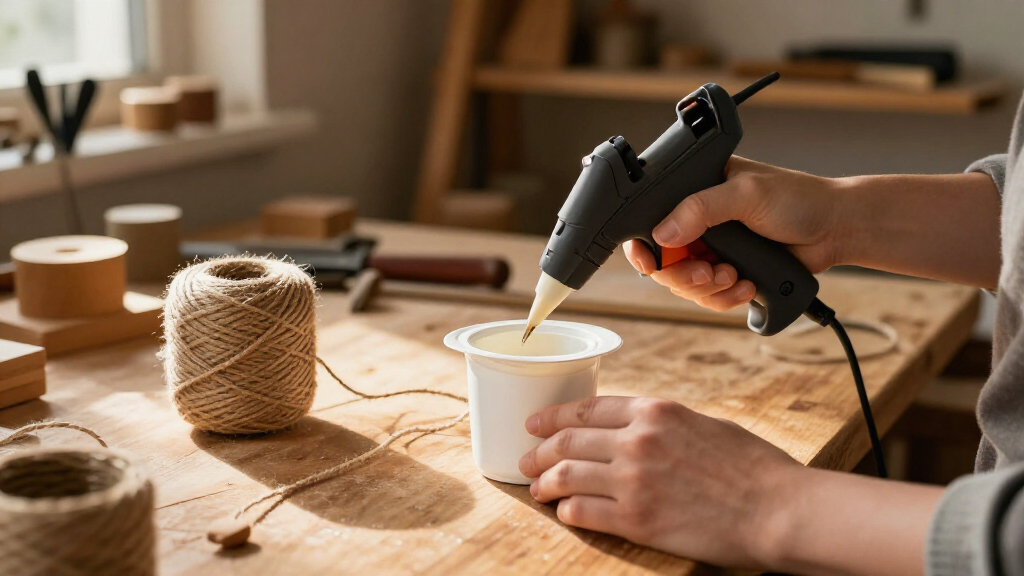
According to the Hunker article’s summary of the craft, it calls for a clean, empty yogurt container, preferably a short, squat one, plus scissors, a hot glue gun and jute rope. The article says the tutorial’s accompanying guidance lists rope online for about $9; that is an example price, not a guaranteed current cost. It also advises removing plastic labels before starting.
The article describes the tutorial’s steps this way: cut a length of rope and glue its ends to opposite sides of the container to form a handle. Then make a tight rope coil at the center of the base. Continue wrapping outward across the bottom and up the sides, adding hot glue as needed. The instructions say to cover the surface without gaps and secure the rope’s end at the rim.
In the example described by Hunker, Colette decorates the result as an Easter basket, adding paper grass and candy eggs. For year-round use, the accompanying instructions suggest painting the inside with acrylic paint formulated to adhere to plastic, or continuing the rope coil inside the container. The article does not cite testing or care guidance for either option, and the tutorial does not specify how much rope is needed or give a measured project time.
Give a yogurt tub a rustic second life
A TikTok tutorial turns an empty container into a small jute-covered basket. It is decorative storage, with care and food safety still unverified.
What you need
Use a clean, dry, preferably short and squat tub.
Jute rope
The example price is about $9; the amount needed depends on the tub.
Hot glue gun
Glue secures the rope as you wrap.
Scissors
Cut rope to form the handle and cover the tub.
How the makeover works
Glue rope ends to opposite sides near the top.
Coil rope tightly from the center outward.
Add glue as needed, cover gaps, and secure the rope at the rim.
Choose the finish
Decide how you plan to use the basket before finishing its interior.
- Add paper grass and candy eggs, as in the example.
- Decorative use does not confirm food safety.
- Paint inside with acrylic paint made to adhere to plastic.
- Or continue the rope coil inside the tub.
Best suited to light storage
A Second Use for Yogurt Tubs
The idea turns packaging that might otherwise be recycled or discarded into a small holder for lightweight household items, such as paperclips, stamps or spare condiment packets. It also relies on a container many households already have, rather than requiring a purpose-made basket. That makes the project an inexpensive craft option, although the rope, glue and any finishing materials still have a cost.
The practical value depends on what the finished container is used to hold. The tutorial frames it as countertop storage and seasonal decoration, not as a replacement for a sturdy basket. A plastic tub provides the underlying shape, while the jute covering changes its appearance; the instructions do not show that the makeover increases the container’s load-bearing strength or makes it suitable for damp environments.
Popular right now

Sony WH-1000XM4C (M4 2nd Gen) Wireless Noise-Cancelling Headphones, Black

Shark PowerPro Reveal Plus Cordless Stick Vacuum, Charcoal (IZ376H)

Ninja Foodi DualZone Smart XL Air Fryer, 10-Quart, 6-in-1, Black, DZ550
As an affiliate, we earn on qualifying purchases.
How the Rope-Covering Method Works
The tutorial’s central technique, as summarized in the Hunker article, is to cover the container from the bottom upward. Starting the coil at the center of the base gives the rope a continuous path over the bottom and around the sides. Hot glue holds the jute in place as the wrapping progresses, while the separate loop attached near the top forms a handle.
The finished exterior can hide the original packaging, but the interior may still look like a yogurt tub. The article says the instructions offer two ways to address that: add a suitable acrylic paint inside or continue wrapping rope on the interior. It does not provide a tested paint product recommendation beyond naming FolkArt Paint for Plastic as an example, nor does it provide detailed preparation or drying instructions.
Durability and Care Are Unspecified
The tutorial and the Hunker article do not say how well the basket holds up over time, whether the glue remains secure with regular handling, or how to clean the finished piece. They also do not provide a safety assessment for placing food directly inside it. The example uses wrapped candy eggs, but that decorative use does not establish that the container is food-safe.
Project time and materials can vary with the tub’s size and the amount of rope used. Although the instructions describe the craft as quick and low-cost, they do not give a measured completion time, a full materials budget or a precise rope quantity. Hot glue can cause burns, so makers should handle the gun and fresh glue carefully and follow the tool maker’s safety directions.
Choose a Use Before Finishing
Anyone trying the project can first decide whether the container will be a seasonal decoration or a year-round holder for small items. That choice affects whether to add paper grass and candy, paint the inside, or cover the interior with rope. Before gluing, clean and dry the tub, remove its labels and check that the rope length is sufficient to cover the surface.
No further update, product test or follow-up from Colette is included in the Hunker article. The next practical step is to make the basket and judge its fit for a specific use; claims about long-term durability, cleaning and food contact remain unverified.
Source: Hunker
Key Questions
What materials does the yogurt-container basket require?
The tutorial, as summarized in the Hunker article, lists a clean yogurt tub, jute rope, scissors and a hot glue gun. Paint or decorative items are optional, depending on the intended finish.
How is the rope attached?
According to the tutorial steps reported by Hunker, glue a rope loop to opposite sides of the container for a handle, then coil rope from the center of the base outward and up the sides, applying hot glue as needed.
Can the finished container hold food?
The instructions described in the Hunker article do not confirm that it is food-safe or washable. They describe decorative use and storage for small items, so food-contact suitability should not be assumed.
Can the inside be covered too?
The Hunker article says the instructions suggest either painting the plastic interior with acrylic paint intended to adhere to plastic or continuing the jute-rope coil inside.
Source: hunker.com