TL;DR
A House Beautiful report outlines four design approaches to improve stair safety: add low-glare lighting, secure a patterned runner tightly, provide a continuous handrail and close excessive gaps between balusters. The recommendations are design guidance, not a substitute for checking local building codes or having stair work assessed by a qualified professional.
House Beautiful has reported four staircase design recommendations from designers and a Certified Aging in Place specialist, focusing on lighting, runner installation, continuous handrails and baluster spacing. The suggestions address fall risks for people including young children, older adults and small pets, while allowing homeowners to use finishes and patterns that suit their interiors.

Get business pricing on tools and workshop supplies
- Business-only prices and quantity discounts
- Tax-exempt purchasing
- Multiple users, one account, clear invoices
Terri Fiori, founder of Fiori + Co. and a Certified Aging in Place specialist, recommends adding light to stairways, where shadows or dim conditions can make steps harder to see. In a renovation described in the report, she paired recessed stairwell lighting with touch-activated LEDs beneath handrails. The approach adds light near the steps without relying only on bright overhead fixtures. The report does not provide measurements of the lighting’s effect or independent safety data.
For stairs that use a runner, Fiori recommends a tightly secured “Hollywood” installation, in which the material follows each step’s contour and is fixed beneath the nosing and to the riser. She cautions against a waterfall installation, where the runner falls from one tread to the next, saying that it can move or stretch. Designer Caroline Aycock, owner of Koukla Collective, also recommends runners for narrow, steep staircases, and says patterns such as stripes can add visual interest.
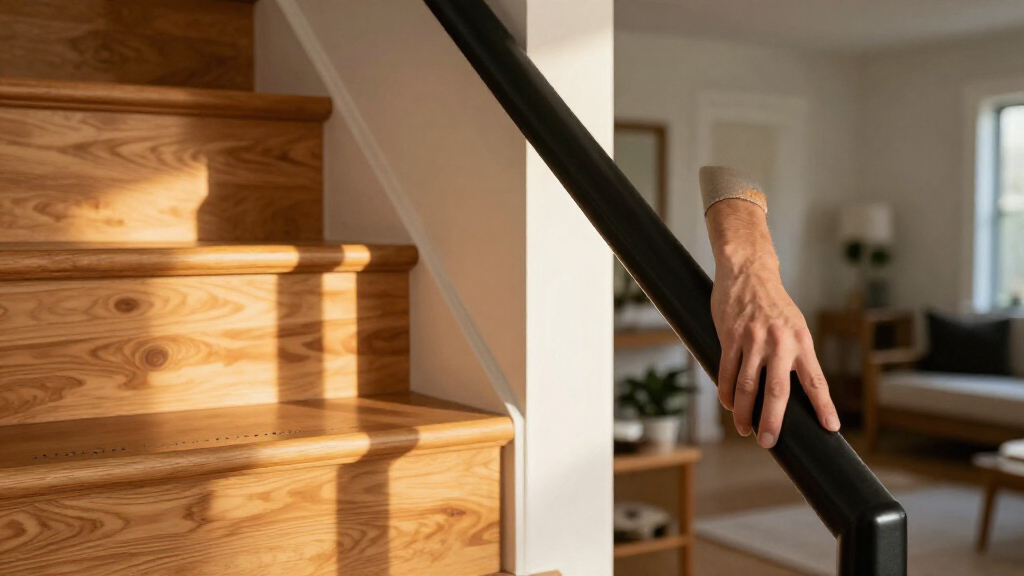
Handrails and balusters are the other two areas highlighted. Designer Prudence Bailey recommends a second continuous handrail where a break at a landing leaves a section without a steady grip. Designer Shannon Crain favors closely spaced vertical balusters when existing gaps are too wide for a household with children or pets. The source gives four inches as a general rule of thumb for baluster spacing, while cautioning that building-code requirements vary by location.
Design Choices That Reduce Stair Risks
Stair safety depends on more than appearance. Low light, an unsecured runner, gaps in a handrail and wide baluster openings can each create hazards, particularly for people who have difficulty seeing steps, maintaining balance or avoiding openings. These concerns can be relevant to households with young children, older residents and small pets.
The recommendations also show that safety measures do not have to be visually separate from a home’s design. A patterned runner, a contrasting handrail or a considered metal finish can be part of a renovation’s look while serving a practical purpose. That does not mean a stylish choice is automatically safe: materials need secure installation, handrails need to be sturdy and accessible, and dimensions must meet applicable rules.
For homeowners planning changes, the advice offers a checklist for discussing a stairway with a designer or contractor. Lighting placement, runner attachment, handrail continuity and baluster spacing can be reviewed together rather than treated as purely decorative decisions. The report does not claim that these changes eliminate falls or establish a quantified reduction in risk.
Popular right now

Dyson V9 Motorbar Cordless Vacuum

TCL 55-Inch T7 Series 4K QLED Smart Google TV (55T7)

De'Longhi Classic Signature Espresso Machine with Adjustable Milk Frother
As an affiliate, we earn on qualifying purchases.
Four Staircase Features in Focus
The recommendations in the House Beautiful report come from designers who work on home interiors and, in Fiori’s case, aging-in-place design. The article frames stairways as spaces where visibility and a dependable grip matter alongside materials and appearance. Its examples include a custom ombré runner in a historic Pittsburgh home and lighting added as part of a renovation.
Each suggestion addresses a different part of the stairway. Lighting makes treads easier to see; a fitted runner is intended to reduce movement underfoot; a continuous handrail supplies a grip across a landing; and closely spaced balusters reduce open gaps. The four measures are not presented as a single required package. Which changes are suitable depends on the existing staircase, the needs of its users and local requirements.
The report’s four-inch spacing reference is expressly a general rule of thumb, not a universal code statement. Rules can differ by jurisdiction and project type, so homeowners should check local requirements before altering stair rails or openings. Any work that affects the structure or requires permits should be handled by qualified professionals.
““Recessed lighting plus handrail lighting ensured that shadows on the steps were eliminated and a trip to the ER avoided.””
— Terri Fiori, founder of Fiori + Co. and a Certified Aging in Place specialist, as quoted by House Beautiful
Code Rules and Project Details Vary
The report does not identify a universal code requirement for baluster spacing; it says rules vary by location and gives four inches only as a rule of thumb. Homeowners should confirm the applicable requirements with their local building authority or a qualified professional before making changes.
It is also unclear from the source how much each recommendation changes the likelihood of a fall. The article provides designers’ advice and one renovation example, not controlled research, cost estimates or a comparison of safety outcomes. It does not specify lighting levels, exact runner materials or installation details for every kind of staircase.
No single recommendation suits every stairway. Existing construction, the people using the stairs, accessibility needs and local regulations can affect what is appropriate. The source does not report a new building standard, product launch or formal safety guidance from a government agency.
Check the Stairway Before Renovating
The House Beautiful report presents practical design ideas rather than a formal program with announced next steps. For homeowners, the next step is to review the stairway for dim areas, loose or poorly fitted floor coverings, gaps in handrails and openings between balusters. Before purchasing materials or starting work, check local codes and discuss installation with a qualified contractor or stair professional.
Any renovation that changes stair structure, rails or other regulated components may require permits or professional assessment, depending on local rules. A designer can help coordinate colors and finishes, but visual choices should not replace secure installation or code compliance. Whether any of the four changes is appropriate will depend on the home’s existing stairs and the needs of the people who use them.
Key Questions
What four changes do the designers recommend?
The report recommends adding stair lighting, installing a tightly fitted runner, maintaining a continuous handrail and using closely spaced balusters. The appropriate choices depend on the stairway and local requirements.
What does a Hollywood-style stair runner mean?
In the report, it means a runner that follows the shape of each tread and is secured beneath the step’s nosing and to the riser. Fiori contrasts this with a waterfall installation, where the runner hangs from tread to tread.
Is four inches a universal baluster-spacing code?
No. The source describes four inches as a rule of thumb and says building codes vary by location. Check local rules before changing baluster spacing.
Do these design changes guarantee safer stairs?
No guarantee or measured reduction in falls is given in the report. The recommendations are design guidance from professionals; safe installation and compliance with applicable codes still matter.
Source: rss