
TL;DR

Get business pricing on tools and workshop supplies
- Business-only prices and quantity discounts
- Tax-exempt purchasing
- Multiple users, one account, clear invoices
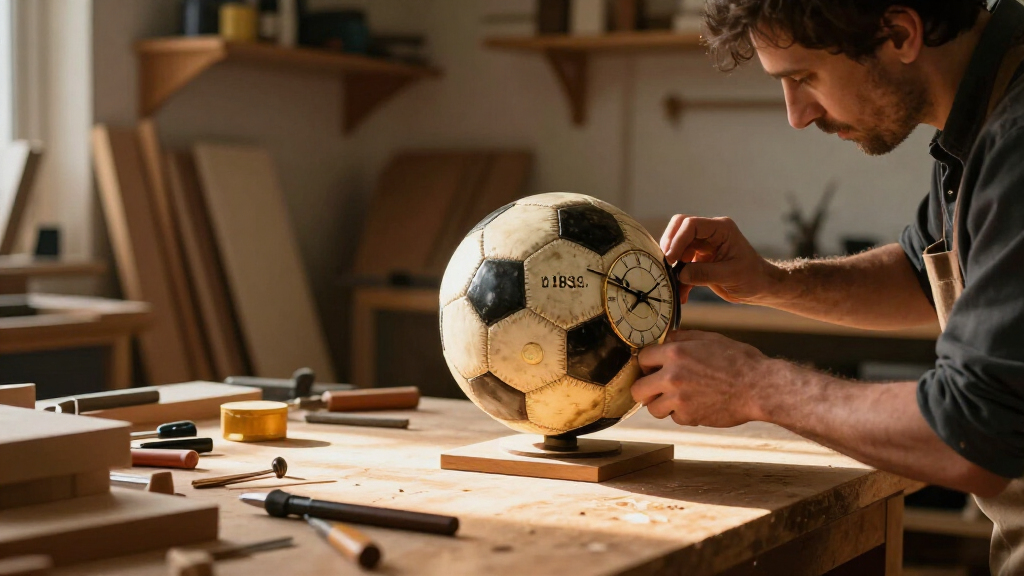
L’Épée 1839 has created a unique kinetic clock sculpture from a soccer ball, featuring an 8-day power reserve. This innovative piece combines art, sport, and horology, drawing significant attention.
L’Épée 1839, the Swiss luxury watchmaker renowned for its inventive timepieces, has unveiled a new sculpture that reimagines a soccer ball as a kinetic clock with an 8-day power reserve. This development highlights the brand’s commitment to blending art, engineering, and sport, and has attracted widespread attention from horology enthusiasts and art collectors alike.
The sculpture, created by L’Épée 1839, transforms a standard soccer ball into a functioning kinetic clock. The clock mechanism is integrated within the ball, which is designed to move and power itself through kinetic energy generated by motion. The clock boasts an 8-day power reserve, a notable achievement in the realm of kinetic horology, allowing it to run for over a week without external winding or recharging.
This innovative piece was showcased at a recent event in Geneva, drawing interest from collectors, sports fans, and horology experts. The company has not disclosed the exact materials used, but images suggest a combination of high-quality metals and durable composites designed to withstand movement and display the clock’s intricate mechanics. The project exemplifies L’Épée 1839’s signature approach of merging craftsmanship with unconventional design.
Why This Fusion of Sport and Horology Matters
This creation signifies a novel intersection between sports memorabilia and luxury horology. By transforming a soccer ball into a kinetic clock, L’Épée 1839 pushes the boundaries of traditional watchmaking, emphasizing innovation and artistic expression. The 8-day power reserve demonstrates advances in kinetic energy storage, which could influence future designs in high-end timepieces. Additionally, the piece’s sport-inspired aesthetic broadens the appeal of horological art, potentially attracting new audiences to the luxury watch world.
Moreover, the project highlights the growing trend of integrating dynamic sculptures with functional mechanics, reflecting a broader movement towards interactive and kinetic art forms in luxury markets. This development could inspire other brands to explore similar hybrid creations, blurring lines between sports, art, and engineering.
As an affiliate, we earn on qualifying purchases.
The Evolution of Kinetic and Artistic Clocks
High-end horology has long explored kinetic energy, with many brands developing self-winding and manual-winding movements that harness wearer motion. L’Épée 1839 is known for its innovative approach, often producing complex, artistic clocks that serve as both functional objects and sculptures.
The idea of transforming everyday objects into horological art is not new, but recent years have seen a surge in such hybrid creations. The trend is driven by a desire to combine craftsmanship with contemporary art forms, appealing to collectors seeking unique, conversation-starting pieces. The recent spike in search interest around this project indicates a broader curiosity about innovative clock sculptures, although the specific development remains unconfirmed as a commercial product or limited edition.
As an affiliate, we earn on qualifying purchases.
Details Still Unconfirmed and Development Status
It is not yet clear whether this soccer ball kinetic clock is a one-off art piece, a limited edition, or a prototype for future commercial release. The exact materials used, the mechanism’s technical specifications, and the manufacturing process remain undisclosed. Additionally, the timeline for potential availability or sale has not been announced, and the company has not confirmed whether this is part of a broader collection or a standalone project.
As an affiliate, we earn on qualifying purchases.
Next Steps and Future Prospects for the Innovation
Further details are expected to emerge from L’Épée 1839 in the coming months, including potential editions, technical specifications, and availability. The company may also showcase additional kinetic sculptures or expand into new thematic designs inspired by sports or other dynamic art forms. Industry observers will be watching to see if this project influences future horological innovations or sparks collaborations between artists, designers, and watchmakers.
As an affiliate, we earn on qualifying purchases.
Key Questions
Is this soccer ball clock available for purchase?
It has not been confirmed whether the piece is available for sale. Currently, it appears to be a showcase or concept piece, with further details to be announced by L’Épée 1839.
What materials are used in the clock sculpture?
The exact materials have not been disclosed. Images suggest high-quality metals and durable composites, but official details are pending.
How does the clock generate power?
The clock uses kinetic energy generated by the movement of the sculpture itself, allowing it to run for 8 days without external winding, thanks to an advanced energy storage mechanism.
Could this design influence future luxury clocks?
Yes, the innovative integration of kinetic sculpture and high-end horology could inspire new designs that combine art, sport, and engineering, expanding the boundaries of luxury clockmaking.
Source: local
Halloween Picks
halloween
As an affiliate, we earn on qualifying purchases.