
To prevent clay from drying too fast in a drafty room, create a stable environment by using a humidifier to keep humidity levels between 40-50%, and cover your work with plastic wrap or damp cloths. Insulate your workspace with curtains, foam boards, or cardboard to reduce airflow and moisture loss. Position your work away from drafts and windows, and monitor conditions carefully. Keep exploring for more tips to maintain ideal moisture during your project.
Key Takeaways
- Enclose the workspace with thick curtains, foam boards, or cardboard to block drafts.
- Use plastic wrap or damp cloths to cover clay when not actively working.
- Position work away from windows, doors, and vents to minimize airflow exposure.
- Maintain stable room temperature and humidity to prevent rapid moisture loss.
- Create a micro-environment with damp cloths or a partially covered workspace to retain moisture.

When working with clay in a drafty room, it’s easy for the material to dry out too quickly, which can ruin your project. To prevent this, you need to focus on humidity control and workspace insulation. These two factors are essential because they directly influence how fast your clay loses moisture. A drafty environment pulls moisture away from your work, causing it to crack or become unworkable before you finish shaping it.
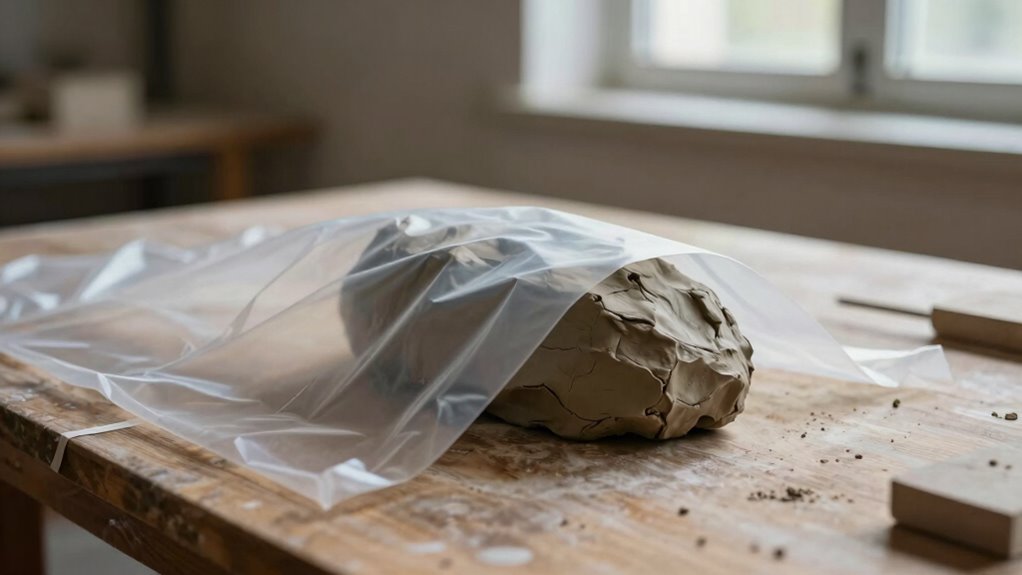
Start by managing humidity levels in your workspace. Using a humidifier can be a game-changer, especially in environments where air circulation is strong or heating systems tend to dry out the air. Keep the room’s humidity at a consistent level—around 40-50%—to make sure your clay retains enough moisture during the working process. If you don’t have a humidifier, covering your work with plastic wrap or a damp cloth can help trap moisture close to the clay. These simple methods create a micro-environment that slows down the drying process, giving you more time to work on your piece.
Managing humidity with a humidifier or plastic wrap keeps clay moist longer during work.
In addition to humidity control, workspace insulation plays a key role. You want to create a barrier between your clay and the drafty air currents. Insulate your workspace by enclosing your work area with barriers like thick curtains, cardboard panels, or even foam boards. This reduces airflow directly over your clay, helping it stay moist longer. If possible, work near a wall or corner that offers some natural protection from drafts. Placing your work on a table away from windows and doors also minimizes exposure to sudden gusts of air that speed up drying.
Another tip is to cover your clay with damp cloths or plastic when you’re not actively working on it. This keeps the surface moist and prevents uneven drying, which can cause warping or cracking. When shaping or smoothing the clay, frequently rewrap or cover areas that are not being worked on to maintain a consistent moisture level. Remember, patience is key—rushing through the process increases the risk of drying out your clay prematurely.
Additionally, understanding the importance of environmental conditions like airflow and temperature can help you better control drying times. By actively managing humidity and insulating your workspace, you greatly reduce the chances of your clay drying out too fast. This makes your work more controllable and ensures your final piece remains smooth, pliable, and intact.

GOOHOCHY 5pcs Terracotta Ceramic Sugar Saver Humidifier Discs 3.7cm Leaf Shape Clay Moisture Control Sheets for Cigar Humidors and Food Storage
- Low Maintenance: Long-lasting, minimal upkeep
- Preserves Product Freshness: Prevents staleness and breakage
- Optimal Humidity Control: Balances dryness and excess
As an affiliate, we earn on qualifying purchases.
As an affiliate, we earn on qualifying purchases.
Frequently Asked Questions
Can I Reuse Dried Clay That Cracked or Dried Out?
You can reuse cracked or dried clay by repairing it with water or slip and blending the cracks smoothly. Reusing cracked clay is possible if you soften and work it back into a workable state, but large cracks may weaken the final piece. Repairing dried clay involves carefully smoothing the cracks and adding moisture. Keep in mind, dried-out clay might not restore perfectly, but with patience, you can often salvage it for your next project.
What Types of Clay Are Most Resistant to Rapid Drying?
You’ll find that polymer clay is most resistant to rapid drying because it remains flexible and doesn’t air dry like air dry clay. Air dry clay tends to dry quickly, especially in drafty rooms. To prevent cracking, choose polymer clay for projects requiring longer working times or when you want to resist fast drying. Keep your workspace sealed and work steadily to maintain your clay’s moisture and workability.
How Does Humidity Affect Clay Drying in a Drafty Room?
Humidity affects clay drying by controlling moisture levels; higher humidity slows evaporation, helping you prevent rapid drying in a drafty room. You should manage air circulation carefully—too much creates drafts that speed up drying, while too little traps moisture. Use humidifiers or cover your work with plastic to maintain consistent humidity, and position your workspace away from direct drafts to keep moisture in the clay longer, ensuring a better working process.
Are There Specific Tools to Keep Clay Moist Longer?
Yes, you can use moisture retaining covers to keep your clay moist longer, especially in drafty conditions. These covers trap humidity and slow drying. Additionally, dampening sponges are handy—they help you add moisture directly to the clay’s surface. By regularly using these tools, you’ll prevent your clay from drying out too quickly, making it easier to work with and ensuring your project stays workable longer.
Can I Add Water to Partially Dried Clay Without Damaging It?
Yes, you can add water to partially dried clay, but you need to do it carefully to avoid damaging it. To maintain moisture retention and improve clay conditioning, sprinkle a small amount of water evenly over the surface and knead thoroughly. This helps rehydrate the clay without compromising its integrity. Keep in mind, gradual addition works best, and avoid adding too much water at once to prevent cracks or weakening.

Misoclean Professional Plastic Wrap 15.75 in x 1,476 ft – Heavy Duty Food Wrap with Strong Cling & Stretch
- Strong Cling & Stretch: Adheres securely to containers
- Excellent Sealing: Maintains freshness by blocking air
- Hygienic Storage: Keeps food clean and protected
As an affiliate, we earn on qualifying purchases.
As an affiliate, we earn on qualifying purchases.
Conclusion
To keep your clay workable longer, it’s tempting to believe that simply sealing it will prevent quick drying. But, in reality, moisture loss is influenced by air circulation and humidity. Embrace the idea that controlling drafts isn’t just about convenience—it’s about respecting the nature of your craft. When you foster a stable environment, you’re not just protecting your clay; you’re honoring the artistry and patience it takes to create something beautiful.

BUBOS 6-Pack Acoustic Panels, Wood Grain Sound Absorbing Panels, 23.6"x23.6"
- Professional Acoustic Clarity: Neutralizes echoes for clear audio
- Stylish Wood Grain Design: Elegant wood print for modern decor
- Durable, Odorless Material: Impact-resistant and long-lasting
As an affiliate, we earn on qualifying purchases.
As an affiliate, we earn on qualifying purchases.

BESPORTBLE 2pcs Round Pottery Throwing Cloth with Double Hole Design, 30cm Blue PVA Absorbent Pad for Pottery Clay and Density Boards, Keeps Workspace Tidy and Adapts to Multiple Surfaces,
- Universal Fit: Compatible with various pottery bats and clay types
- Multi-Purpose Use: Suitable for clay, ceramic, and modeling projects
- Keeps Workspace Clean: Absorbs mud and water for easy cleanup
As an affiliate, we earn on qualifying purchases.
As an affiliate, we earn on qualifying purchases.