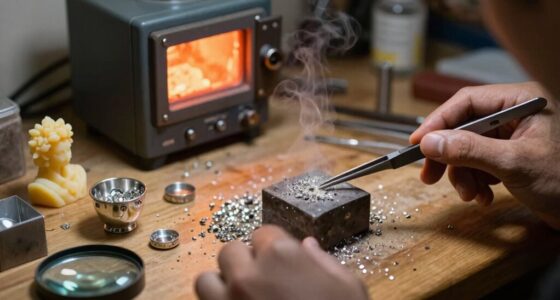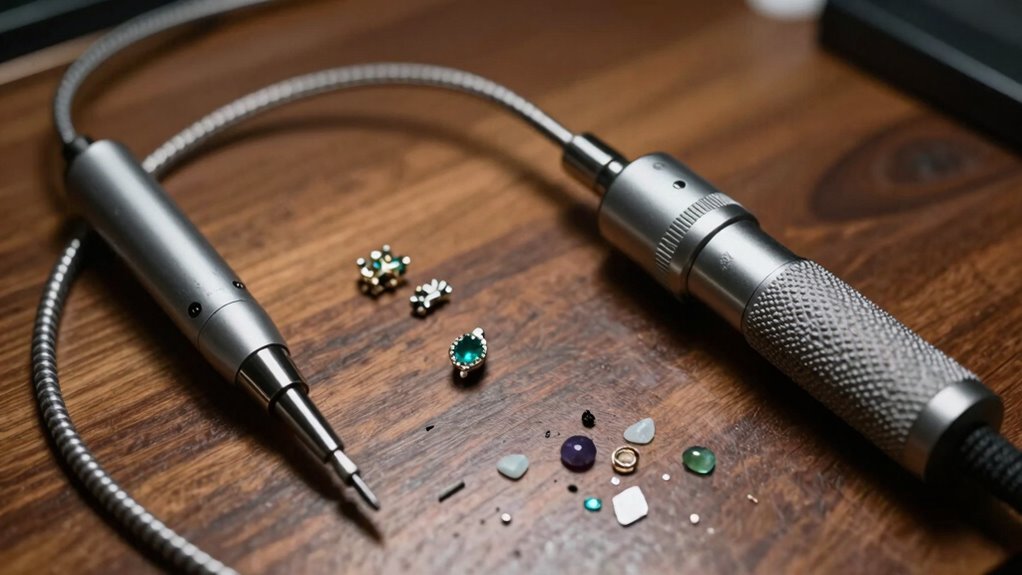

A flex shaft offers you better control and precision for delicate jewelry tasks like engraving and polishing, thanks to its flexible handpiece and tactile feedback. In contrast, a rotary tool is more powerful and suited for heavy shaping and rough cuts, making it faster for large projects. If you’re focused on detailed work, a flex shaft is ideal, while a rotary tool handles bulk material removal. Keep exploring to discover which tool matches your jewelry making needs best.
Key Takeaways
- Flex shafts offer greater precision and control for detailed jewelry work, while rotary tools provide more power for shaping and material removal.
- Flex shafts are ideal for delicate tasks like engraving and polishing, whereas rotary tools excel in rough shaping and bulk work.
- Flex shafts have a slender, flexible handpiece that enhances tactile feedback and reduces fatigue during intricate projects.
- Rotary tools operate at higher speeds, making them suitable for quick, large-scale shaping, unlike the slower, more precise flex shaft.
- Choosing between them depends on project complexity: use flex shafts for finesse and rotary tools for power and efficiency.
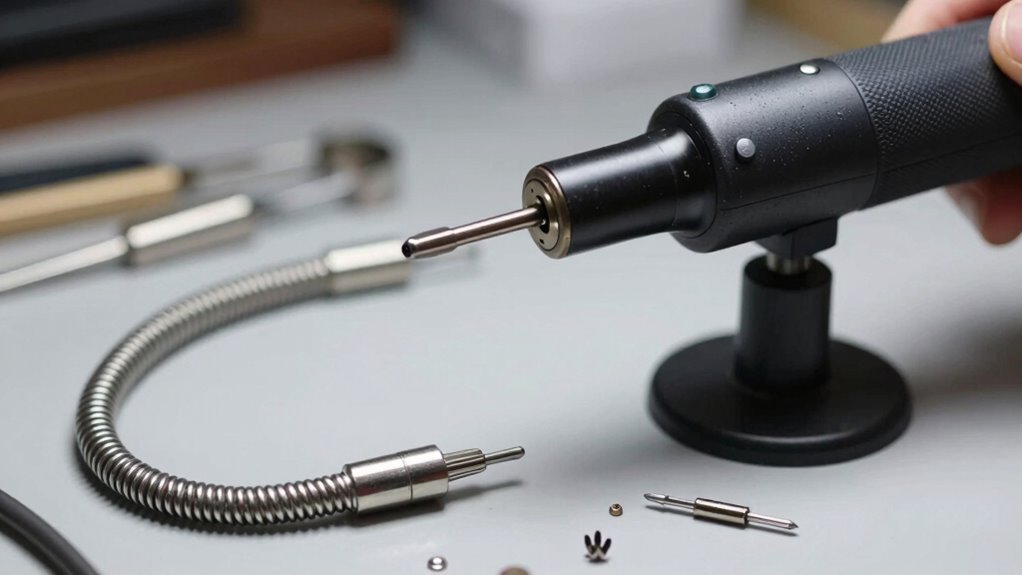
When it comes to jewelry making, choosing the right tool can considerably impact your workflow and results. Both a flex shaft and a rotary tool are popular choices among jewelers, but understanding their differences helps you decide which one best suits your needs. If you’re into intricate tasks like diamond cutting or engraving techniques, your choice becomes even more crucial. A flex shaft offers precision and control, making it ideal for delicate work. Its flexible, slender handpiece allows you to maneuver easily around small or detailed areas, giving you better accuracy when working on fine details or intricate designs. This flexibility is especially beneficial when performing delicate tasks such as engraving or polishing, where steady hands and precision are essential. The flex shaft’s design also helps reduce fatigue during long periods of detailed work, ensuring consistent precision throughout your project. Additionally, its ability to adapt to various attachments enhances its versatility for different jewelry tasks. For example, tool versatility allows jewelers to switch between tasks seamlessly without needing multiple devices. Furthermore, the ergonomic design of the flex shaft contributes to comfort during extended use, which is vital for maintaining steady craftsmanship. Incorporating high-quality handpiece materials can also improve durability and comfort during prolonged sessions.
Flex shafts provide the precision and control essential for intricate jewelry tasks like engraving and polishing.
On the other hand, a rotary tool is generally more powerful and versatile. With its motorized design, it can handle heavier tasks, such as shaping or removing material from larger pieces. If you’re working on rough shaping or broad cuts, a rotary tool provides the speed and power needed to get the job done efficiently. However, it can sometimes feel less precise for detailed work, especially when you’re trying to cut or engrave tiny patterns. When considering diamond cutting, for example, the finesse needed often favors a flex shaft because it allows for more refined control, reducing the risk of mistakes. Similarly, when applying engraving techniques, the ability to adjust speed and control the tool’s movement becomes a key factor, making the flex shaft a preferred option for precision engraving.
Both tools accept various attachments and bits, but their operation and handling differ significantly. The flex shaft’s design allows you to hold the small handpiece comfortably in your hand, giving you better tactile feedback and control. You can easily switch between different bits for polishing, drilling, or engraving, which makes it versatile for a range of jewelry-making tasks. Meanwhile, the rotary tool’s motor is often more powerful and can operate at higher speeds, making it efficient for bulk work or rough shaping. Choosing the right tool also depends on your project complexity, as the flex shaft is better suited for intricate and detailed work, while the rotary tool excels in larger-scale tasks.
Ultimately, if your focus is on detailed, precise work such as diamond cutting or engraving techniques, a flex shaft is often the better choice. It provides the level of control needed for intricate designs while reducing fatigue over long periods. A rotary tool, however, excels in tasks requiring more power and speed, such as initial shaping or material removal. Knowing the strengths of each helps you select the right tool for your specific jewelry projects, ensuring better results and a smoother workflow.
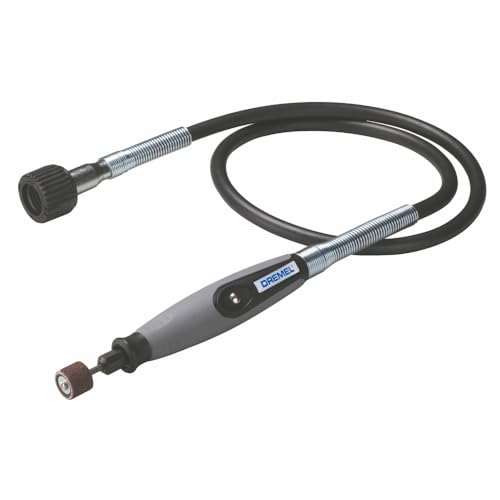
Dremel Flex Shaft Rotary Tool Attachment with Comfort Grip and 36” Long Cable – Engraver, Polisher, and Mini Sander- Ideal for Detail Metal Engraving, Wood Carving, and Jewelry Polishing, 225-02
TAKE YOUR ENGRAVING, ETCHING, SANDING, AND CARVING TO THE NEXT LEVEL
As an affiliate, we earn on qualifying purchases.
As an affiliate, we earn on qualifying purchases.
Frequently Asked Questions
Which Tool Is Better for Beginners in Jewelry Making?
For beginners in jewelry making, a flex shaft is often the better choice because it’s more beginner-friendly, offering better control and comfort. You should consider your skill level and the type of projects you want to create. Flex shafts tend to be easier to handle for those just starting out, while rotary tools can be more versatile but might require more practice. Start simple, and choose the tool that best matches your skill level considerations.
Can Both Tools Be Used for Engraving?
Yes, both tools can be used for engraving, but their versatility varies. A rotary tool is highly adaptable for different engraving techniques, making it ideal for detailed designs. A flex shaft offers more control and precision, especially for intricate work, but may require additional attachments. Overall, your choice depends on the specific engraving techniques you prefer and the level of tool versatility needed for your jewelry projects.
What Safety Precautions Should I Take With Each Tool?
Think of your tools as trusty steeds. To keep them safe and your work smooth, always wear safety gear like goggles and masks. Guarantee tool compatibility before use to prevent mishaps, and keep your workspace tidy. With a cautious approach, you’ll avoid accidents and extend your tools’ life. Remember, respecting each tool’s power and safety needs helps you ride confidently through your jewelry projects, creating beautiful pieces safely.
Are There Specific Accessories Recommended for Each Tool?
You should choose accessories compatible with each tool to maximize their versatility. For a flex shaft, use burs, drills, and polishing attachments designed specifically for its attachment system, enhancing its tool versatility. For rotary tools, select grinding stones, sanding drums, and cutting wheels suited for quick swaps and diverse tasks. Always check accessory compatibility to guarantee safety and peak performance, making your jewelry work more efficient and enjoyable.
How Do Maintenance and Cleaning Differ Between the Two?
To prolong your tool lifespan, prioritize proper maintenance and cleaning. Flex shafts require regular lubrication and gentle wiping to prevent buildup, while rotary tools need frequent brush cleaning and debris removal. You should clean each tool after every use to keep them operating at their best. With consistent care, both tools stay in top shape, ensuring your jewelry projects progress smoothly and efficiently. Proper maintenance maximizes performance and extends their useful life.

Flex Shaft Rotary Tool Attachment with Comfort Grip and 36”Long Cable, Polisher, and Mini Sander- Ideal for Detail Metal Engraving, Wood Carving, and Jewelry Polishing, Cleaning (Black)
Rotary tool accessories: Compatible with most rotary tools via M19*2 threaded connector for easy accessory replacement
As an affiliate, we earn on qualifying purchases.
As an affiliate, we earn on qualifying purchases.
Conclusion
Choosing between a flex shaft and a rotary tool for jewelry work isn’t just about tools—it’s about your passion and precision. The flex shaft offers delicate control, whispering patience into every detail. The rotary tool, meanwhile, sparks speed and versatility, igniting your creativity. Both have their place, but your true artistry lies in how you blend these tools with your vision. Embrace the difference, and let your jewelry tell your story.

HARDELL Mini Cordless Rotary Tool, 5-Speed and USB Charging Rotary Tool Kit with 69 Accessories, Multi-Purpose 3.7V Power Rotary Tool for Sanding, Polishing, Drilling, Etching, Engraving, DIY Crafts
【Versatile Rotary Tool Set】This rotary tool set includes a high-performance and low-noise rotary tool with 69 of the…
As an affiliate, we earn on qualifying purchases.
As an affiliate, we earn on qualifying purchases.

TMAX Precision Handle, for Flexible Shaft on Rotary Grinder, fits 3/32 Inch and 1/8 Inch collets/shank
TMAX Precision Handle for Flexible Shaft/ Rotary Grinder, fits 3/32 Inch (2.35mm) and 1/8 Inch (3mm) collets/shank
As an affiliate, we earn on qualifying purchases.
As an affiliate, we earn on qualifying purchases.