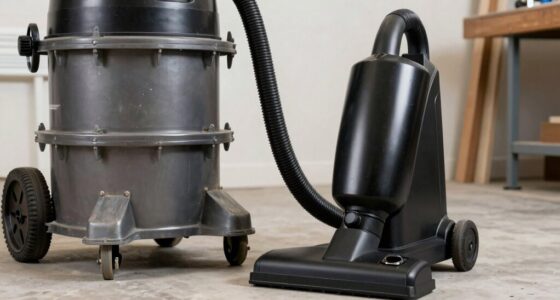

To choose the right dust collection system for a small woodworking space, focus on size, power, and tool compatibility. Opt for compact or attachable units for handheld tools, and verify the system has adjustable airflow controls. Prioritize safety features like sealed collection bags and proper grounding. Regular maintenance and filter checks boost performance, while selecting the right system for your workflow keeps your space clean and safe. Keep exploring to discover more tips for an ideal setup.
Key Takeaways
- Select compact, space-efficient dust collectors with adjustable airflow for small workspaces.
- Ensure compatibility with your most-used tools, opting for portable or attachable units where appropriate.
- Prioritize systems with sealed collection bags and safety features to prevent dust escape and hazards.
- Consider ease of maintenance, such as simple filter access and regular cleaning routines.
- Match the system’s power and suction capacity to your woodworking tools’ dust output for effective collection.
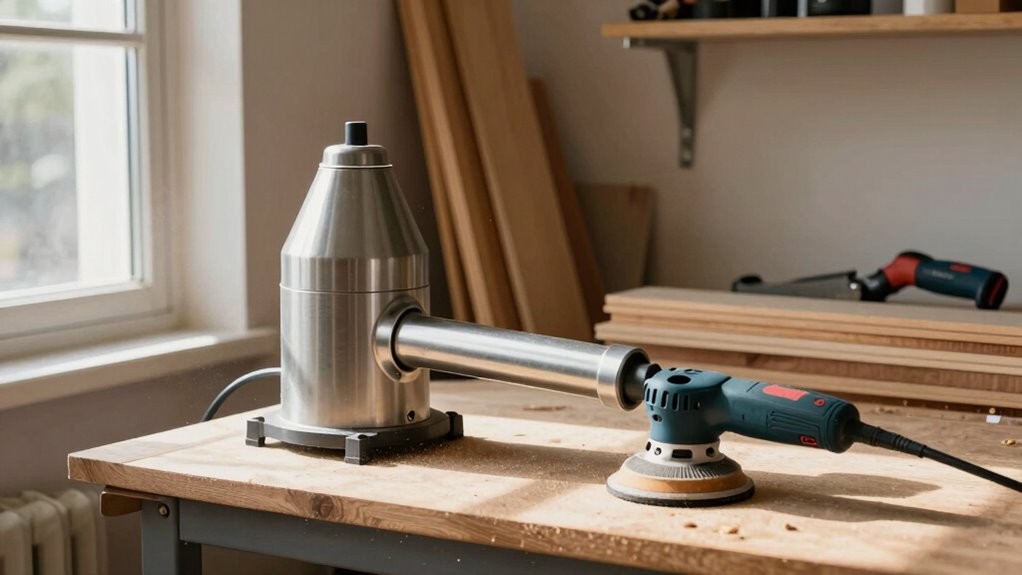
Are you overwhelmed by the variety of dust collection options available? It’s a common feeling when you’re trying to set up a small woodworking space. The key is to find a system that effectively manages dust and debris while fitting into your limited space. First, you need to contemplate air filtration. Unlike larger workshops, small spaces can quickly become filled with airborne dust, which can be harmful if not properly filtered out. Look for a dust collector that includes a high-quality air filtration system, such as HEPA filters, to trap fine particles before they circulate in the air. This not only improves air quality but also helps keep your workspace cleaner and safer. Ensuring your system incorporates biodiversity-friendly practices can also contribute to healthier indoor environments by minimizing harmful emissions. Safety precautions are equally critical when choosing a dust collection system. Wood dust is more than just a nuisance—it’s a health hazard. When selecting equipment, prioritize models with secure, sealed collection bags or containers to prevent dust from escaping back into your workspace. Make sure your system has proper grounding and electrical safety features, especially if you plan to run it for extended periods. Properly installed dust collectors reduce the risk of fire hazards caused by sawdust accumulation and minimize the chances of respiratory issues down the line. Regular maintenance, including inspecting hoses and seals, can further enhance safety and efficiency. Additionally, choosing a system with effective filtration can greatly reduce airborne dust levels and improve overall air quality. Incorporating air filtration technology can further enhance the system’s ability to purify the air in your workspace. A well-designed system can also help control dust dispersion, preventing dust from settling on surfaces and reducing cleanup time. Always wear appropriate safety gear, such as dust masks and eye protection, when operating your system, and ensure your workspace has adequate ventilation. Size and power also matter. In a small woodworking shop, space is limited, so choose a compact dust collection system that still provides sufficient suction. Look for units with adjustable airflow controls, so you can tailor their performance based on the task at hand. A system with a smaller footprint that can be easily stored or tucked away when not in use is ideal for tight spaces. Additionally, consider the type of tools you use most often. If you primarily work with handheld power tools, a portable or attachable dust collector might be enough. For larger machinery, a more robust, stationary system will be necessary. Finally, think about maintenance and ease of use. A system that’s straightforward to clean, change filters, or empty collection bags will save you time and frustration. Regular maintenance not only prolongs the lifespan of your equipment but also ensures it operates at peak efficiency, keeping your workspace cleaner and your health protected. Incorporating proper ventilation complements the effectiveness of your dust collection system by reducing airborne dust levels. By carefully pondering air filtration, safety precautions, size, power, and ease of maintenance, you’ll be able to select a dust collection system that keeps your small woodworking space safe, clean, and efficient.
small woodworking dust collector
As an affiliate, we earn on qualifying purchases.
As an affiliate, we earn on qualifying purchases.
Frequently Asked Questions
What Is the Ideal Dust Collection System for Limited Space?
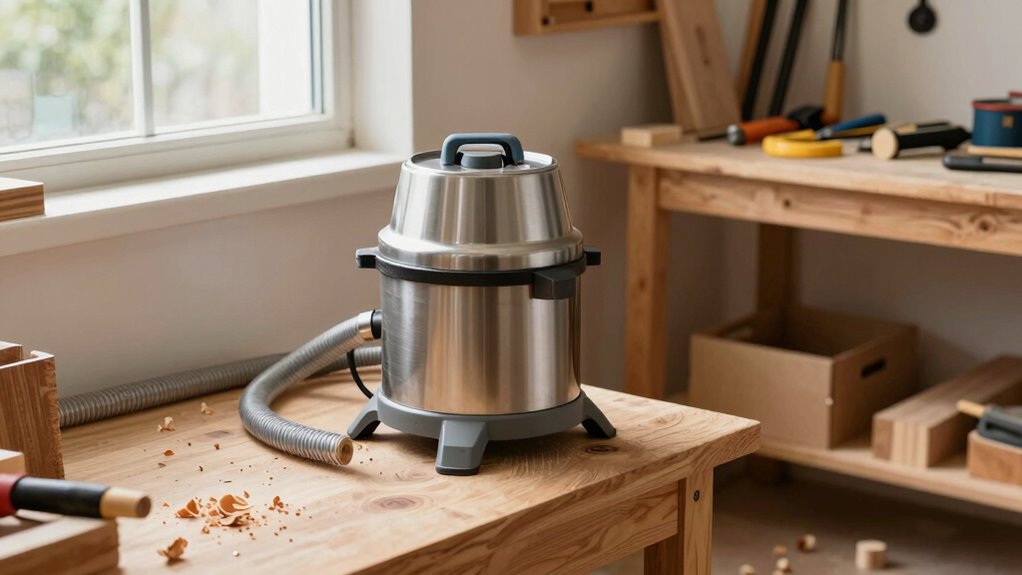
For limited space, a compact design dust collection system with air filtration is ideal. It efficiently captures sawdust and debris without taking up much room, keeping your workspace clean and safe. Look for units with adjustable hoses and easy maintenance. These systems help you maintain air quality while fitting snugly into tight spaces, making your woodworking area safer and more organized without sacrificing performance or convenience.
How Much Airflow Capacity Do Small Workshops Need?
For small workshops, you need an airflow capacity that guarantees good air quality and maintains ventilation efficiency. Aim for at least 350-400 CFM (cubic feet per minute) to effectively remove sawdust and fumes. This helps prevent buildup, keeping the air clean and safe. Proper airflow also improves ventilation efficiency, so choose a dust collector that matches your workspace size and tool usage to ensure maximum dust extraction.
Can I Upgrade My Dust Collector Later?
Yes, you can upgrade your dust collector later. When upgrading, focus on improving filtration efficiency to capture finer dust particles and reduce health risks. Consider models with better filters and higher airflow capacity. Also, look for features that enhance noise reduction, making your workspace more comfortable. Upgrading allows you to tailor your dust collection system to your evolving needs, ensuring better safety and efficiency as your woodworking projects grow.
What Safety Features Should I Look for in a Dust Collector?
Safety features are your shield in the workshop. Look for air filtration systems that trap tiny particles, preventing dust from escaping into the air. Dust containment features, like sealed cabinets and efficient hoses, keep debris from spreading. A reliable emergency shut-off switch adds peace of mind, ensuring you can quickly stop the system if needed. Prioritize these safety measures to protect your health and maintain a clean, safe workspace.
How Do I Maintain My Dust Collection System Effectively?
To maintain your dust collection system effectively, regularly check and replace air filters to guarantee peak airflow and filtration. Clean or replace filters as needed, and inspect hoses and connections for blockages or leaks. Proper dust disposal methods are also essential; empty dust bins frequently and dispose of waste according to local regulations. Consistent upkeep keeps your system running efficiently and maintains a safer, cleaner workspace.
compact air filtration system for woodworking
As an affiliate, we earn on qualifying purchases.
As an affiliate, we earn on qualifying purchases.
Conclusion
Now that you know the essentials of choosing the right dust collection system, imagine the scene: a cleaner, safer workspace where your projects thrive without the mess. But there’s one final step—will you go for a powerful cyclone system or a compact, budget-friendly option? The choice isn’t just about tools; it’s about transforming your woodworking experience. Stay tuned, because the best decision might just be the game-changer your shop’s been waiting for.
attachable dust collection unit for handheld tools
As an affiliate, we earn on qualifying purchases.
As an affiliate, we earn on qualifying purchases.
As an affiliate, we earn on qualifying purchases.