To keep your handmade textiles fresh in storage, guarantee they are thoroughly cleaned and completely dry before storing in breathable containers like cotton bags or wooden chests. Use natural preservatives such as dried lavender or cedar chips to prevent mold and add a pleasant scent. Regularly check and replace these agents, and monitor humidity levels to avoid moisture buildup. Proper care and maintenance help preserve their vibrancy and quality—continue for more tips on long-term preservation.

Get business pricing on tools and workshop supplies
- Business-only prices and quantity discounts
- Tax-exempt purchasing
- Multiple users, one account, clear invoices
Key Takeaways
- Ensure textiles are thoroughly cleaned and completely dried before storage to prevent mold growth.
- Use natural preservatives like dried lavender or cedar chips to keep textiles smelling fresh and mold-free.
- Store textiles in breathable containers such as cotton bags or wooden chests to allow airflow and prevent moisture buildup.
- Maintain optimal storage conditions by regulating humidity and regularly monitoring for signs of deterioration.
- Replenish natural preservatives every few months and inspect textiles periodically for early detection of mold or damage.
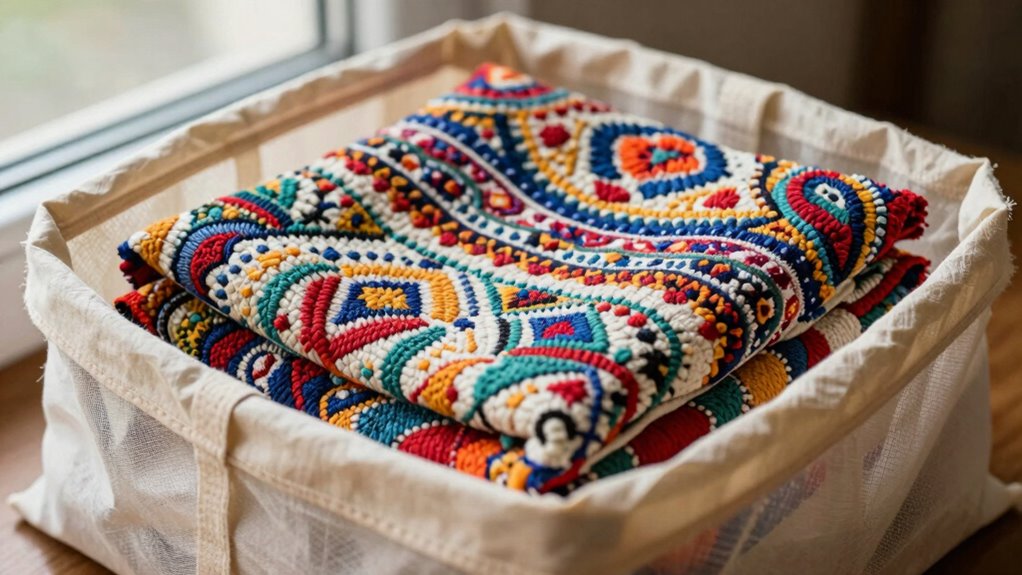
Have you ever wondered how to preserve the beauty and freshness of your handmade textiles while they’re stored away? Keeping your textiles in pristine condition requires more than just placing them in a box; it’s about using the right methods to protect them from damage over time. One essential step is incorporating natural preservatives that help prevent mold and maintain their vibrancy. Instead of relying on chemical treatments, you can opt for natural solutions like dried lavender, cedar chips, or herbal sachets. These not only serve as effective mold preventers but also add a subtle, pleasant aroma that keeps your textiles smelling fresh.
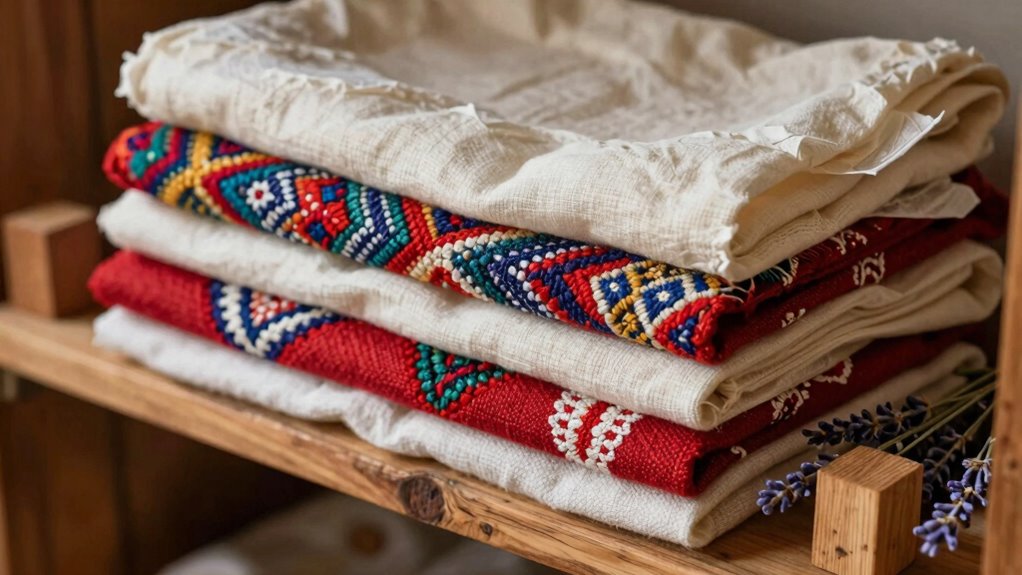
Use natural preservatives like dried lavender or cedar chips to protect textiles and keep them smelling fresh.
When storing your handmade pieces, always guarantee they’re clean and completely dry. Moisture is a primary enemy because it creates the perfect environment for mold and mildew to develop. Before storing, gently wash or brush off any dirt, dust, or debris, and let your textiles dry thoroughly in a well-ventilated area. Once dry, consider placing natural preservatives like dried lavender or cedar chips inside your storage containers. These natural agents repel pests, inhibit mold growth, and preserve the fabric’s integrity without introducing harsh chemicals. Placing herbal sachets directly on the textiles or in the storage container’s corners helps create an inhospitable environment for mold spores. Additionally, choosing proper storage techniques can significantly impact the longevity of your textiles. Incorporating proper environmental control** ensures your textiles are stored in optimal conditions, further safeguarding their quality over time. Regularly monitoring storage conditions** is also key to preventing unseen damage and maintaining their vibrancy.
Choosing the right storage container is equally important. Opt for breathable materials like cotton bags, linen boxes, or wooden chests that allow air circulation while protecting against dust and pests. Avoid plastic containers that trap moisture and encourage mold growth. If you do use plastic, line it with acid-free tissue paper or muslin cloth to add a breathable barrier. Additionally, periodically inspecting your stored textiles helps catch any early signs of mold or deterioration. Replacing natural preservatives every few months helps maintain their effectiveness and continue to safeguard your textiles. Proper environmental control is essential for maintaining optimal storage conditions and preventing damage over time. Including humidity regulation techniques can further enhance preservation by keeping moisture levels ideal.
As an affiliate, we earn on qualifying purchases.
Frequently Asked Questions
Can I Store Handmade Textiles in Plastic Containers?
Yes, you can store handmade textiles in plastic containers, but choose ones with good durability to prevent cracking or breaking over time. Make sure the containers are airtight to control textile storage humidity, which helps prevent mold, mildew, and deterioration. Avoid using cheap or flimsy plastic, as it may not protect your textiles well. Properly sealed, durable plastic containers can keep your handmade textiles safe and fresh for longer.
How Often Should I Air Out Stored Textiles?
Imagine a gentle breeze wafting through your textiles, keeping them fresh. You should air out stored textiles every 3 to 6 months to maintain fabric preservation. During this time, check storage humidity levels and make certain they stay low, preventing mold or mustiness. Regular airing helps fabrics breathe, reducing musty odors and keeping your handmade textiles vibrant for years to come.
Are Mothballs Safe for Handmade Textile Storage?
Mothballs aren’t the safest choice for handmade textiles. Instead, try mothball alternatives like cedar blocks, lavender sachets, or herbal pouches to protect your textiles. These options are safer and help preserve your fabrics without harmful chemicals. Follow textile preservation tips such as storing items in breathable cotton bags, keeping the storage area cool and dry, and regularly inspecting your textiles to prevent damage and keep them fresh over time.
What Natural Repellents Work Best for Textiles?
Think of your textiles as delicate treasures that need protecting from unwelcome guests. Natural essential oils like lavender, cedar, or eucalyptus act as potent repellents, filling your storage with calming, aromatic scents while warding off pests. Herbal sachets packed with herbs such as thyme or rosemary add a charming, fragrant barrier. Together, these natural repellents create a fresh, inviting environment, keeping your handmade textiles safe and beautifully preserved.
Should I Fold or Roll Textiles for Storage?
You should prefer rolling textiles over folding, as it reduces creases and stress on the fibers. Use gentle rolling methods, starting from one end and rolling tightly but carefully to prevent damage. For delicate or heavily textured fabrics, folding with proper techniques—like layering with acid-free tissue—can work better. The key is to avoid sharp folds or overly tight rolls, ensuring your textiles stay smooth and preserved in storage.
cedar chips for fabric preservation
As an affiliate, we earn on qualifying purchases.
As an affiliate, we earn on qualifying purchases.
Conclusion
By taking these simple steps, you’ll help your handmade textiles rest peacefully, wrapped in gentle care and quiet comfort. With a little attention, they’ll remain vibrant and inviting, like cherished memories softly preserved. Treat them with love and patience, and they’ll reward you with years of warmth and beauty. Remember, the secret lies in your thoughtful touch—your gentle stewardship keeps their spirit alive, ready to warm your days whenever you need a tender reminder of craftsmanship’s quiet magic.
As an affiliate, we earn on qualifying purchases.
As an affiliate, we earn on qualifying purchases.
Fall Picks
fall essentials
As an affiliate, we earn on qualifying purchases.