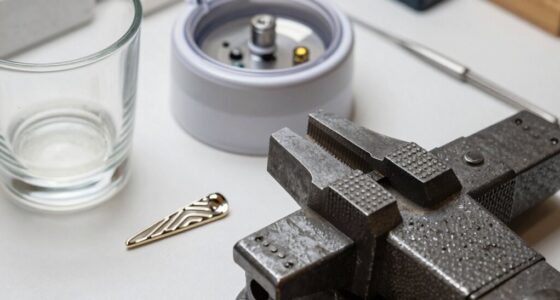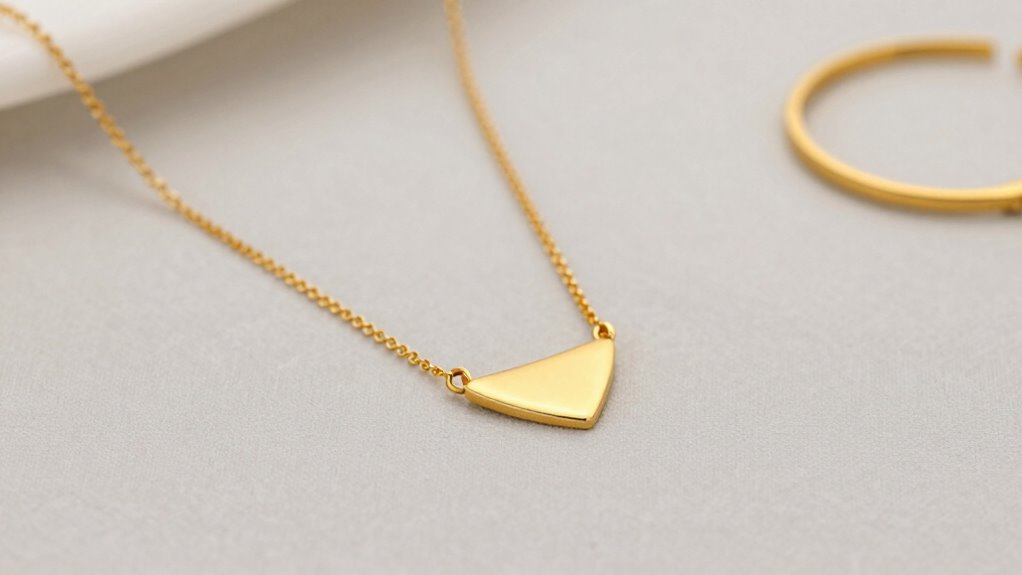
To avoid crowded focal points in jewelry design, keep it simple and focused. Use a cohesive color palette and select materials with pleasing contrast, but don’t overdo it. Place supporting elements carefully, making sure they highlight rather than compete with the main feature. Aim for balance and minimize visual noise, so each part enhances the overall look. If you want to create elegant, impactful designs, you’ll find essential tips to refine your style if you keep exploring.
Key Takeaways
- Keep the focal point simple and uncluttered, avoiding excessive embellishments around it.
- Use a cohesive color palette to direct attention without visual chaos.
- Incorporate material contrasts thoughtfully to highlight the main feature without overwhelming it.
- Ensure supportive elements are understated and strategically placed to complement, not compete with, the focal point.
- Prioritize minimalism to enhance clarity and maintain visual balance in the design.
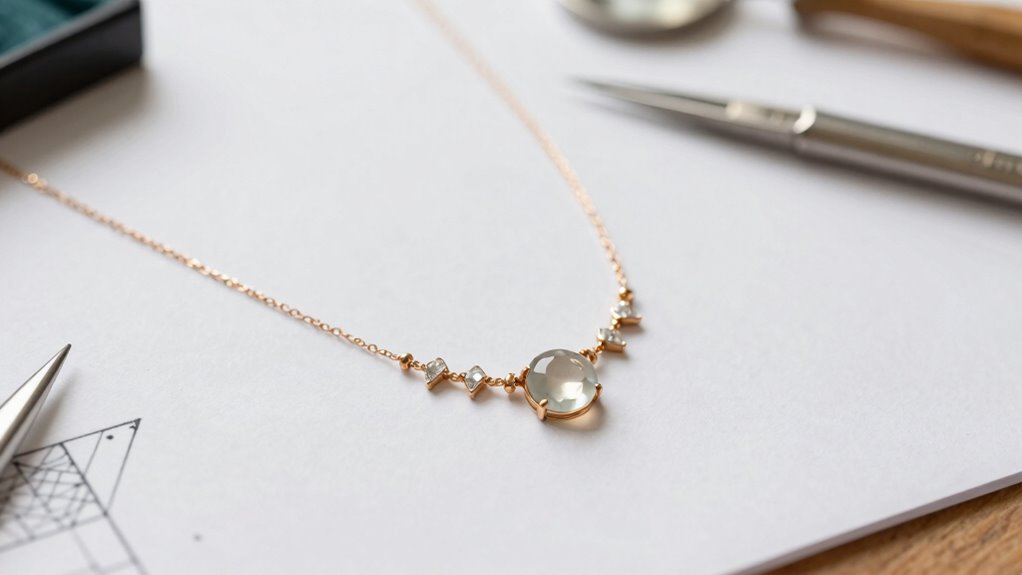
Designing jewelry can be both an exciting and rewarding process, but it requires a clear understanding of key principles to create pieces that stand out. One common pitfall is overcrowding the focal point, which can make a piece feel cluttered and diminish its visual impact. To avoid this, you need to pay close attention to how elements like color harmony and material contrast work together. When selecting colors for your design, aim for harmony rather than chaos. Using a cohesive color palette helps the eye move smoothly across the piece without feeling overwhelmed. For example, pairing analogous colors or sticking to a monochromatic scheme can create a balanced look that draws attention without competing for it. Avoid using too many contrasting hues that clash, as this can divert focus and make the design appear chaotic. Instead, opt for a limited, well-chosen color palette that complements the overall style, letting the focal point shine without unnecessary distraction.
Material contrast is another crucial element. When you combine different textures, finishes, or materials, it can add depth and interest to your design, but too much variation can also cause visual clutter. To prevent this, strike a balance by pairing contrasting materials thoughtfully. For instance, a shiny gold element paired with matte leather can create a striking yet harmonious contrast that emphasizes the focal point without overwhelming the eye. Be deliberate about where you place these contrasts—use them to guide the viewer’s gaze toward the main feature rather than scattering attention across the entire piece. Keep in mind that simplicity often enhances clarity; a single, well-defined focal point benefits from supporting elements that are understated and serve to highlight it. This means avoiding excessive embellishments or multiple competing features that can split attention and create a crowded appearance. Paying attention to visual balance helps ensure that every component contributes to a unified design. Additionally, understanding how color harmony influences perception can help you craft more appealing compositions.
Ultimately, your goal is to craft a design that feels cohesive and focused. Achieving this involves carefully balancing color harmony and material contrast, ensuring each element supports the main focal point rather than competing with it. Remember that less is often more—by minimizing visual noise and concentrating on strategic contrasts, you help your jewelry piece communicate elegance and clarity. When you keep these principles in mind, your design will naturally steer clear of crowded focal points, resulting in a piece that is visually appealing, balanced, and truly memorable.
As an affiliate, we earn on qualifying purchases.
Frequently Asked Questions
How Do Color Choices Affect Focal Point Balance?
Color choices directly influence focal point balance by creating harmony or contrast. Using color harmony, you guarantee the focal point doesn’t overpower the design, keeping it balanced. Shade contrast highlights or downplays elements, guiding attention smoothly. You should choose colors that complement each other and carefully consider contrast levels, so no single area dominates, maintaining a visually pleasing and balanced jewelry piece.
Can Asymmetry Help Lessen Crowded Focal Points?
Yes, asymmetry balance can help lessen crowded focal points. By intentionally designing jewelry with uneven elements, you create a visual flow that guides the eye naturally without overwhelming any single area. This technique reduces focal point distraction, making the overall piece feel more harmonious and balanced. You can experiment with asymmetry to achieve a dynamic look that draws attention without cluttering or overloading any specific part.
What Role Does Scale Play in Focal Point Distribution?
Scale plays a essential role in focal point distribution by establishing proportional harmony and guiding the visual hierarchy. When you vary the size of elements, larger pieces draw attention, creating a balanced focal point, while smaller details support without overwhelming. By thoughtfully adjusting scale, you guarantee no single element dominates excessively, allowing your design to feel cohesive, harmonious, and visually engaging without crowding or confusion.
How Does Texture Influence Visual Focus?
Texture can make or break your jewelry’s visual focus. By playing with surface patterns and material contrast, you guide the eye naturally. A smooth surface next to a textured one creates a visual tug-of-war, drawing attention without crowding the piece. Remember, a little goes a long way—using varied textures strategically helps highlight key areas without overwhelming the design. Keep it balanced, and your jewelry will shine!
Are There Specific Design Techniques to Minimize Focal Point Overcrowding?
To minimize focal point overcrowding, you should adopt a minimalist approach, keeping designs simple and uncluttered. Use negative space strategically to give each element room to breathe, preventing the eye from becoming overwhelmed. Balance intricate details with open areas, guiding focus smoothly across the piece. This technique helps create a harmonious design, ensuring no single focal point dominates, and maintains visual clarity and elegance.
As an affiliate, we earn on qualifying purchases.
Conclusion
As you step back to review your jewelry design, you realize that sometimes, a simple touch—a tiny, unexpected gem or a delicate curve—can transform a crowded focal point into a harmonious masterpiece. It’s funny how, just like finding the perfect moment in a busy day, the smallest detail can make everything feel balanced. Trust your instincts, and let those subtle touches guide your eye to create jewelry that feels effortless and truly enchanting.
metal and material contrast jewelry supplies
As an affiliate, we earn on qualifying purchases.
As an affiliate, we earn on qualifying purchases.
jewelry focal point display stand
As an affiliate, we earn on qualifying purchases.
As an affiliate, we earn on qualifying purchases.