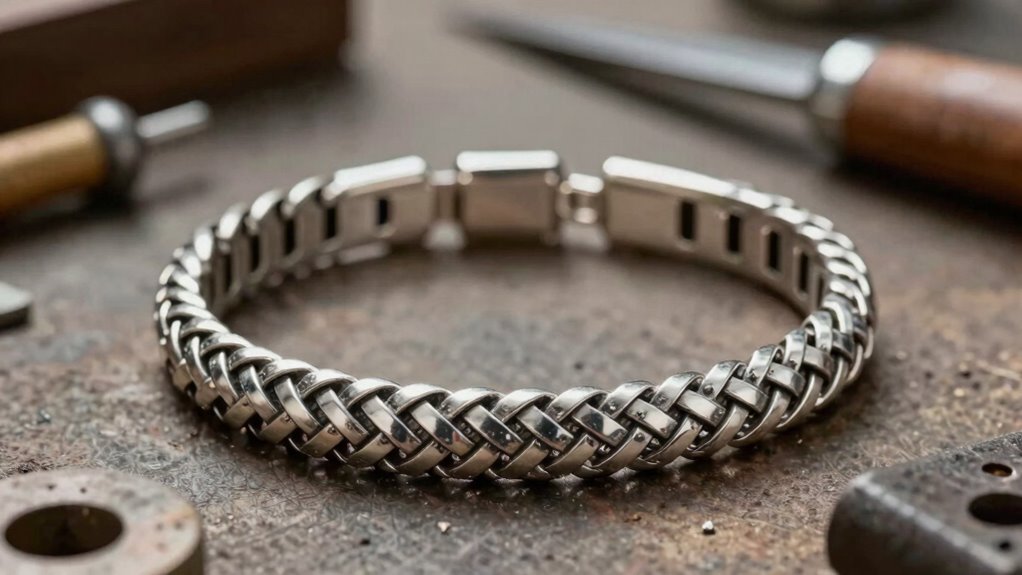
The secret to stronger bracelet design lies in selecting durable materials like stainless steel, titanium, or rubber, which resist scratches, breaks, and tarnishing. Pair these with reinforced construction techniques, such as secure clasps and internal reinforcements, to evenly distribute stress and prevent damage. Balancing aesthetics with function guarantees your bracelet not only looks great but endures daily wear. Stay with us to discover how combining these elements can elevate your bracelet’s strength and style even further.

Get business pricing on tools and workshop supplies
- Business-only prices and quantity discounts
- Tax-exempt purchasing
- Multiple users, one account, clear invoices
Key Takeaways
- Select durable materials like stainless steel or titanium that resist scratches, breaks, and tarnishing over time.
- Incorporate reinforced construction techniques such as secure clasps and internal reinforcements to distribute stress.
- Use finishes like matte or brushed surfaces to hide minor scratches and maintain appearance.
- Balance aesthetic elements with material strength to ensure visual cohesion without compromising durability.
- Consider lifestyle exposure, choosing water- or sweat-resistant materials like silicone or rubber for added resilience.
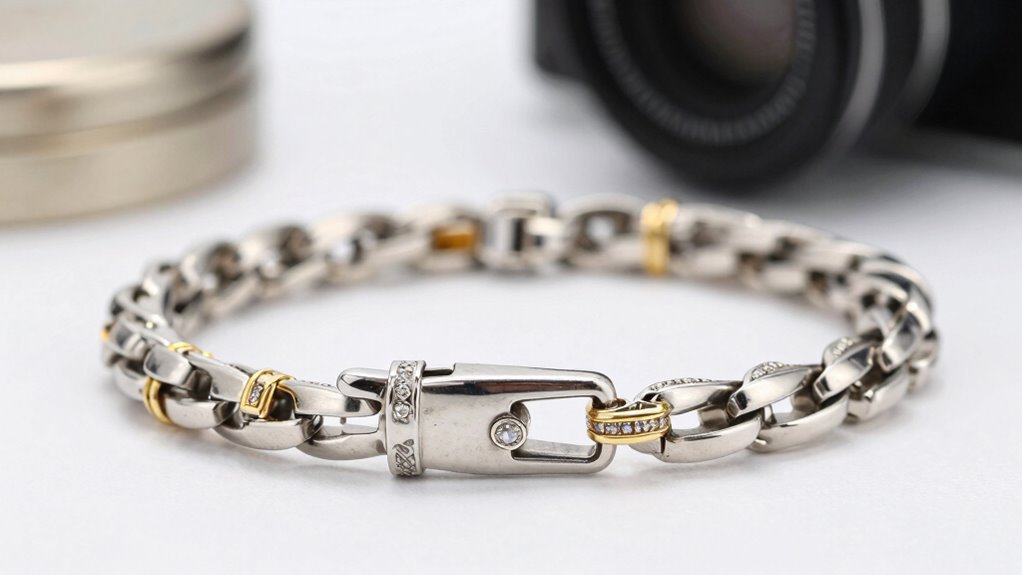
Creating a durable bracelet isn’t just about choosing the right materials; it’s about understanding how those materials come together to withstand daily wear. When you’re designing a bracelet, material durability plays a pivotal role. You want something that resists scratches, breaks, or tarnishes over time. Metal choices like stainless steel or titanium are popular because they’re tough and long-lasting, but don’t overlook the importance of selecting materials that match your lifestyle. For example, if you’re often exposed to water or sweat, materials like silicone or rubber might be better suited. The key is balancing strength with comfort, so your bracelet remains intact and comfortable without sacrificing style.
Aesthetic balance is just as important as material durability. You need your bracelet to look good, even after months of use. This means considering how the materials’ appearance complements the overall design. For example, if you’re working with metals, think about finishes—polished, matte, or brushed—that can hide minor scratches and still look attractive. When combining different elements like beads or charms, make sure they harmonize visually. Too many contrasting textures or colors can disrupt the aesthetic balance, making the bracelet look cluttered or off-balance. Achieving this balance involves thoughtful material selection and careful arrangement to create a piece that’s both sturdy and visually appealing. Additionally, using reinforced construction techniques can help prevent damage from daily activities.
Incorporating reinforced design techniques can further enhance the bracelet’s strength. Think about using secure clasps, double knots, or internal reinforcements that prevent breakage. These small details matter because they distribute stress more evenly across the bracelet, reducing weak points. Additionally, understanding how material durability impacts the overall design helps you make informed choices that ensure longevity. A good understanding of material properties can guide you in selecting the best combination for both durability and style. Using techniques like reinforced construction methods can also help prevent accidental damage and extend the lifespan of your piece. When you combine high-quality materials with reinforced construction, you’re creating a piece that’s built to last without sacrificing its aesthetic integrity. The goal is to craft something that not only withstands the rigors of daily life but also maintains its beauty over time.
Ultimately, the secret to a stronger bracelet design lies in understanding how material durability and aesthetic balance work together. You need durable materials that can endure daily wear, but you also want a design that looks good and feels right. When you pay attention to these aspects, you create a bracelet that’s both resilient and stylish, making it a reliable accessory for years to come. Remember, the best designs marry function and beauty seamlessly, giving you a piece that’s as enduring as it is attractive.
stainless steel bracelet with secure clasp
As an affiliate, we earn on qualifying purchases.
As an affiliate, we earn on qualifying purchases.
Frequently Asked Questions
What Materials Are Best for Maximizing Bracelet Durability?
You should choose materials with good flexibility, like silicone or flexible metals, to maximize bracelet durability. These materials resist cracking and breaking during daily wear. Surface treatments, such as coatings or sealants, also help protect against scratches, corrosion, and wear, extending the bracelet’s lifespan. Combining flexible materials with proper surface treatments guarantees your bracelet stays strong, looks good, and endures through everyday activities.
How Does Clasp Design Affect Bracelet Strength?
Think of your bracelet’s clasp as the gatekeeper to durability; a well-designed clasp guarantees clip security and maintains tension balance, making it stronger. A sturdy clasp distributes stress evenly, preventing weak points that cause breakage. Opt for clasps with reinforced mechanisms, secure closures, and smooth operation. When tension balance is prioritized, your bracelet remains resilient through daily wear, turning it into a lasting piece rather than a fleeting accessory.
Can Design Aesthetics Compromise Bracelet Strength?
Yes, design aesthetics can sometimes jeopardize bracelet strength. Fashion trends often prioritize appearance, leading to delicate or intricate designs that may weaken the bracelet. Cultural influences may also favor ornamental features over durability. If you focus too much on trendy looks or cultural motifs, you might use thinner materials or fragile components, risking breakage. Balancing aesthetic appeal with structural integrity ensures your bracelet remains stylish and durable.
What Tools Are Essential for Strengthening Bracelet Construction?
You’ll want tools like pliers, rivet setters, and a sturdy clamp to bolster your bracelet’s strength, ironically turning delicate designs into durable pieces. For personalization, a rotary engraver helps with personalized engraving, while a sizing tool guarantees adjustable sizing for perfect fit. These essential tools transform fragile-looking materials into resilient accessories, proving that a little craftsmanship goes a long way in creating beautiful, strong bracelets with personalized touches and adjustable features.
How Do Environmental Factors Impact Bracelet Longevity?
Environmental factors greatly impact your bracelet’s longevity. Exposure to environmental wear, like moisture, sunlight, and chemicals, can weaken materials over time. To guarantee durability, choose materials with corrosion resistance, such as stainless steel or coated metals. Regularly clean and store your bracelet properly to minimize environmental damage. By understanding these influences and selecting resistant materials, you can extend your bracelet’s life and maintain its appearance longer.
titanium bracelet durable design
As an affiliate, we earn on qualifying purchases.
As an affiliate, we earn on qualifying purchases.
Conclusion
Remember, a strong bracelet isn’t just about materials; it’s about thoughtful design and craftsmanship. When you focus on the details that matter—like secure clasps and balanced links—you create jewelry that lasts. Don’t forget, “A chain is only as strong as its weakest link,” so pay attention to every connection. By applying these principles, you’ll craft bracelets that stand the test of time and impress everyone who wears them.
water-resistant silicone bracelet
As an affiliate, we earn on qualifying purchases.
As an affiliate, we earn on qualifying purchases.
reinforced bracelet construction techniques
As an affiliate, we earn on qualifying purchases.
As an affiliate, we earn on qualifying purchases.
Halloween Picks
halloween
As an affiliate, we earn on qualifying purchases.